Chapter 1:
The Art of Almost Promising
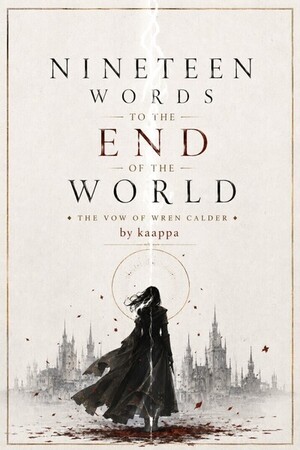
NINETEEN WORDS TO THE END OF THE WORLD
A woman stood in the fog.
It wasn't the ordinary mist that hung over the lake near her town on cold mornings, thin, familiar, the kind you could see your own breath through. This was different. This was thick enough that she couldn't see past her own outstretched hand. The world outside the fog might have been anything. Might have been nothing at all.
The woman's name was Wren Calder, and she had just said nineteen words.
She could still taste them in her mouth, each one distinct, like a stone she'd picked up and set down somewhere permanent. They had changed the world in a way she couldn't yet see, those words. They had lifted a weight from her shoulders that she'd been carrying so long she'd forgotten what she felt like without it. Her shoulders still ached, though. They ached from the lifting itself, the way a limb aches when the numbness finally wears off and the blood comes back.
But that was still a long way off.
So let's start from a normal work day.
It was a summer morning, and the sun was climbing high, guiding its light down onto the town of Thistledown.
The market stalls were opening one by one, shutters rattling up, awnings stretching out, the whole square arranging itself into something bigger than an ordinary day.
The air smelled like fresh bread and dust and the faint, green sweetness of cut hay from the fields beyond the town's edge. Anyone watching from a distance would have said the whole place felt close-knit, the kind of town where everybody knew everybody's business, and mostly didn't mind.
Up the street from the square stood a narrow two-story building, squeezed between an abandoned shop on one side and an inn on the other.
The inn had a painted sign that read THISTLE'S BEST INN in cheerful, peeling letters. It was an odd name, given that it was the only inn in Thistledown, which meant the best part was either a boast or a joke, depending on how you felt about the ale.
The building in the middle had a smaller, plainer sign hanging from its door:
NOTARY OFFICE
Halvard Pryce, Clerk
And beside it, on a hand-painted wooden board that had been hung with slightly crooked care:
Wren Calder, Junior Clerk
Inside, behind the front counter, Wren was sitting.
In front of her, two stacks of paper. The one on the left was tall, that was the pile she still had to get through. The one on the right was shorter, but growing, one stamped sheet at a time. She had been at it since the shutters first rattled open, and her neck was beginning to ache from the angle she'd been holding it at.
"Honestly," she muttered, not looking up, "when will this end. Wren wants to enjoy the harvest fair too."
Her head stayed tilted down. Her hand moved in a quick, practiced rhythm, pick up a paper, check the seal line, press the stamp down hard enough to leave a clean impression, set it aside.
She did not look up once. She'd read the same phrase — hereby witnessed and attested — so many times this morning that it had stopped looking like language and started looking like a pattern someone had scratched into the desk for no reason.
A knock at the front door made her head come up.
It was a real knock, three short, solid raps. The door rattled faintly in its frame.
"Come in," Wren called.
The door opened with a long, unhappy creak. When will Old Man Pryce fix that door? Wren thought, not for the first time.
It's going to fall right off its hinges one of these days, and then we'll be a notary office with no door, and where will the dignity be then?
A farmer stepped inside, holding a paper in his hand.
He stepped up to the counter. "Is Mr. Pryce here?"
"Well." Wren looked at him. "What work do you have?"
"I want to get a vow on this contract."
Wren pointed toward a table at the side of the room. It was bigger than hers, broader, better-lit, with a proper leather-backed chair behind it. A small brass nameplate sat on the desktop, polished to a shine: Halvard Pryce, Clerk.
"Can you see someone sitting there?" Wren asked. "Because from where Wren's standing, she can't see anyone."
The farmer squinted at the empty chair as if Pryce might materialise in it if he stared hard enough.
Wren added, helpfully: "He must be having fun helping set up the harvest fair."
The farmer looked at the empty table for another moment. Then he shrugged, turned around, and started to leave.
Wren jumped up. "Woah, woah... wait a minute!"
The farmer paused, one hand already on the creaky door.
Wren tapped the nameplate on her own desk, the small, hand-painted one that read Wren Calder, Junior Clerk.
"Look," she said. "So Wren can do the vow on the contract too."
The farmer stepped back up to the counter and held out the paper. "It's the contract for this year's wheat sales."
Wren took it. She read it seriously, her eyes moving down the page with the kind of focus that looked like she was trying to see through the paper itself. After a long moment, she set it down.
"Hmm. No trickery here. Looks like a fair price." She tapped the figure with her finger. "You got yourself a good buyer, this time around."
The farmer exhaled, relieved. But Wren didn't exhale with him.
She joined her hands on the desk. Something in the room shifted — the air stopped moving, as if it had paused mid-breath. The dust motes drifting in the morning light from the window hung still. The whole room was listening. The whole room was gathered around her, waiting.
Wren hesitated. Just for a moment. Just long enough to see, if you were watching closely, and the farmer was, that she was almost scared.
Then the sound came.
It wasn't the simple voice she'd been using until now. It was her voice, yes, but heavier. Weighted. And underneath it, following a half-beat behind like a second set of footsteps, came another voice, deeper and older, overlapping hers perfectly.
The double-voice filled the small office.
"We petition the Chorus who hears us. Grant protection to this contract, and let all who sign it be bound by it."
Just as she finished the sentence, the whole room felt as if it shifted, like a held breath finally released. The air started moving again. The world remembered how to be ordinary.
The farmer, for his part, behaved as if nothing remarkable had happened at all. He didn't step back in awe. He just picked up the contract, now faintly warm to the touch, though he didn't seem to notice, and asked, "How much will it be?"
"Thirty impos," Wren replied.
The double-voice was still a remnant in her throat, a faint vibration that hadn't quite faded. But her breathing had steadied. Her hands, she noted with some relief, were not shaking.
The farmer counted out the coins, placed them on the counter, and left with his newly-bound contract tucked under his arm. The door creaked shut behind him.
Then the door at the back of the office, the one near Pryce's empty desk, banged open.
"Wren!"
A child burst through, barely taller than the table she'd just cleared, a pastry clutched in one hand and a smear of jam at the corner of her mouth. Della. Ten years old, copper curls escaping from a lopsided braid, fingers gripping the pastry like it might try to escape.
She reached Wren's chair in approximately three steps and grabbed her arm. "Come on, let's go out!"
Wren turned toward her. "Wait. Wren's got work to do." She raised an eyebrow. "And she thinks she gave Della an assignment."
"I did it!" Della shoved her free hand into her pocket and pulled out a crumpled piece of paper, holding it up like a trophy. Her fingers — all of them — were stained with ink. "Here. The contract."
Wren took it. "And what are the terms?"
"I tried making your contract," Della said, bouncing slightly on her heels.
"Mine? What?"
"The one that prevents you from saying 'I'."
Wren's eyes widened. Just for a moment. Then her expression settled back into something calmer, something practiced, and she reached out and patted Della's head. "Good girl."
The contract, this small, earnest, entirely unmagical thing, was the trickery she'd used months ago to stop Della from prying. She'd told the girl she'd made a contract by accident and accidentally bound a vow to it.
It was a lie, obviously. A convenient one. She couldn't say the truth.
She was a coward. She knew that.
Della, oblivious to any of this, reached up toward Wren's hair. Her small fingers found the white streak — that stark fork of absence running through the dark brown — and tucked it gently back behind Wren's ear. It was a gesture so casual, so automatic, that it was clear she'd done it a hundred times before.
Then she grabbed Wren's hand. "Well, let's go!"
She ran, dragging Wren out of the building.
"Wren is going to get scolded by Old Man Pryce," Wren called out, stumbling after her.
"I'll scold him back for you!" Della answered with a wide, gap-toothed grin.
The door swung shut. The sign reading Wren Calder, Junior Clerk rattled against its nail.
And then they were out on the street, the harvest fair spilling around them in a riot of colour and noise and the smell of something sweet frying somewhere nearby.
Della guided Wren through the crowd, tugging her by the hand even though Wren was perfectly capable of walking on her own. They headed toward the main central square, where the harvest fair had transformed the usual market space into something almost unrecognisable.
Temporary stalls lined the square, draped in bright cloth, each one offering something different — games with small prizes, a woman selling candied apples, a man calling out invitations to try his luck at a ring-toss.
Some children spotted Della and called her name. She dropped Wren's hand without a second thought and ran off to join them, copper curls bouncing, disappearing into the knot of shrieking, laughing bodies.
Wren watched her go.
And in the distance, beyond the stalls and the crowd, she saw Old Man Pryce.
He had grey hair — silver, really, when the light caught it — and he walked with a cane, though he never seemed to lean on it as much as he ought to. Right now he was standing near the centre of the square, talking with a small group of people.
Wren started walking toward him.
She moved through the crowd without trying, and heads turned as she passed — not because she was trying to be noticed, but because at twenty she had grown into something quietly striking. Dark brown hair fell to her shoulders, neat and unadorned, and the white streak at her temple only made the rest of it look darker by contrast. She didn't seem to notice the glances. She never did.
She came to a stop beside Pryce.
He was in the middle of discussing the decorations for the night's festivities — where the lanterns should hang, whether the banner-poles were spaced evenly. Upon seeing her, he turned and placed a hand on her shoulder.
"This is my assistant, Wren," he said to the group.
Wren bowed her head. "Nice to meet you."
One of the men, grinned at her. "Well, assistant... how are the decorations coming along?"
Another one joined in before she could answer. "Is there anything you'd change?"
"Anything...?" Wren repeated.
"Sure." He shrugged, smiling. "Just say what you mean."
Say what you mean.
The line stayed in her mind. It lodged there, small and sharp, like a splinter she couldn't work free. And the longer it stayed, the faster her breathing became. Her heart picked up, just a little, just enough to feel.
Pryce stepped in before the silence could stretch too far. "No, it's already very good." He patted Wren's back, firm, grounding. "Thank you for asking."
He guided her to the side, away from the group, his hand still resting between her shoulder blades. Wren's breathing was already slowing. The splinter was still there, but it was buried again. Manageable. She didn't look at him. She didn't need to.
To change the subject, he shifted his focus to the crowd. "There's quite a lot of people today. More than last year."
Wren, steadier now, nodded. "Yeah. It's more than usual."
She took a deep breath in, and let it out slowly.
"Where's Della?"
"She went with her friends." Wren pointed toward a stall at the edge of the square, where Della was visible among a cluster of children, utterly absorbed in some kind of game involving tossed rings.
"She's over there."
Just as Wren lowered her hand, the air around her shifted.
It wasn't a breeze. It wasn't the ordinary stir of a crowd moving through a square. It was deeper than that, a silence that pressed against her ears from the inside. The air itself seemed to be telling her something, the way it had in the office during the vow, but different. Sharper. Wrong.
"Something's coming," Wren said.
She grabbed Old Man Pryce's hand.
She didn't think about it. Her fingers closed around his before her mind caught up to the instinct. Pryce looked at her, and whatever he saw in her face made him go still.
And then — all at once, like a ripple spreading outward from where she stood — the rest of the square felt it too.
A woman near the bakery stall stopped mid-sentence, her hand suspended over a loaf of bread. The children at the ring-toss stall paused, their laughter dying in their throats. The man calling out prizes lowered his voice, then stopped calling altogether.
One by one, every face in the square turned toward the town entrance.
No one spoke.
The music from the festival fiddler stuttered and went quiet.
Something was coming.





Please sign in to leave a comment.