Chapter 30:
Hiding Something, Badly (Tomohiro, before)
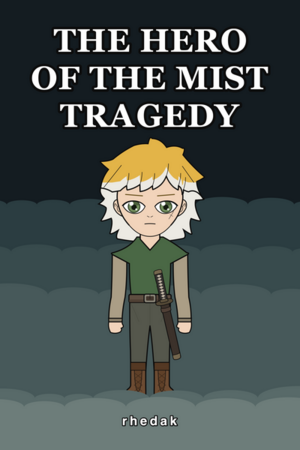
The Hero of the Mist Tragedy
Tomohiro, before
I do not know how long I lay in that basin before I understood I was still in it to know anything. Long enough that the light overhead had changed twice, gray to a deeper gray to something that might have been evening. Long enough that when I finally moved, my body felt borrowed, unfamiliar, a coat put on a size too large.
The mist had not left. It filled the basin and the passage above it and, I would learn over the following days, a great deal more, but it was not the same mist that had cohered against Natsume on the ridge.
It surrounded me now with the stillness of a room where the shouting has only just stopped.
Present, watchful, and, for reasons I could not have explained to anyone and did not try to, uninterested in finishing what it had started against me directly. I understood, without anyone telling me, that whatever I had woken was not finished being angry.
I understood, just as clearly, that it was not aiming that anger at getting the rest of them killed. It wanted the valley emptied of everyone who did not belong to it any longer, not annihilated in an afternoon.
It wanted, I think, the chance to be left alone with what I had done to it. And it was willing, for reasons that were never mine to question, to let the leaving happen slowly enough that most of them could manage it. Two of the newly cohered things met me on my way out of the ruin that had been the basin’s chamber, both of them pure the way nothing born of an animal ever is, all wrongness and no history behind them.
Neither one closed the distance. They held their ground at the edges of my reach, restless, plainly hungry for it, straining like a dog against a leash it has already learned not to fight.
I did not understand, walking past them with my legs barely holding my weight, that I was being allowed to leave rather than failing to attract their attention. I understood it later, on the road, turning the memory over with everything else I didn’t yet have language for.
Whatever I had made would get its chance to be angry with me again. Not today, and not, it seemed, until I had actually tried to be something worth being angry at.
The capital did not go all at once. I want that on the record too, since I am the only witness left who watched it happen from the inside rather than from a fleeing column’s back.
The mist spread as it had in that first hour, unhurried, patient, more like slow water finding every low place in a floor than like fire finding a roof. It gave the city days, not hours, and most of the capital used them.
Some did not believe the warnings, or believed them and gambled anyway that a wall or a locked door would be enough, or could not move fast enough with what little they had left to carry. I passed, on my way out through streets already half emptied, a market stall owner nailing his own shutters closed from the inside instead of joining the column filing past his door.
Certain, in the way frightened men get certain, that staying put was the safer choice.
I let him nail his shutters shut without a word. I no longer had the strength to argue with anyone, and some part of me, the part that had not yet finished learning what I had done, still believed that surviving what I’d caused entitled me to something.
It did not. I have never been able to decide, in the year since, whether he made it out in the end.
I have decided, instead, to let that uncertainty cost me exactly what it should. I dyed my hair three days later, in a farmhouse ditch a full day’s walk from anything that still called itself the capital.
I used a crush of small yellow-flowering weeds, recognized from a childhood spent noticing exactly this kind of unglamorous, useful plant along exactly this kind of unglamorous, useful road. It did not come out blond so much as a dull, unconvincing gold, patchy wherever I had worked without a mirror to check by, and it did not need to be better than that.
It only needed to not be white going to black at the roots, the one pattern anyone who had ever known Tomohiro would have recognized on sight. I have been re-dyeing that rough color every few weeks for a year now, and I have gotten better at it, as I get better at anything I decide is worth the effort.
I have never once managed to make it look like anything other than exactly what it is.
A man hiding something, badly, and hoping nobody looks closely enough to notice how badly.
The refugee road toward Kiriguchi was already crowded by the time I joined it.
Carts and handcarts and people carrying less than they’d meant to when they started walking.
Everyone moving in the same direction, with the silence of people who have already said everything they have to say to each other about what they’re leaving behind. I passed, a half-day short of the district line, a grave dug too shallow and too fast at the edge of the road, marked with two crossed sticks and no names.
A woman resting nearby told me, before I could think to ask her not to.
It held two boys. Brothers, by the look of them, who had gone back for something neither of them would say afterward. Daring each other closer to the mist’s edge than either one should have, certain a fog that moved this slowly could not possibly be as dangerous as everyone kept saying it was.
It moved slowly. It was still exactly as dangerous as everyone kept saying. I have thought of that grave more often, in the year since, than I have let myself think of almost anything else from that road. It was the first proof I had, days old and already undeniable, that the mercy I had been given did not extend automatically to everyone standing near enough to need it.
I did not have a name yet for who I was going to be at the end of that road. I only knew, somewhere past the district line with the mist already a pale smear behind me instead of a wall ahead, that I was not going back to being the man who had walked into that basin. Certain he already knew everything a working like that one could ask of him. I had a village near this valley’s edge.
A shrine that had raised me since before I was old enough to remember any other roof. A family the valley itself had never taken from me, because there had been nothing left of one to take by the time I was old enough to notice the gap.
And a name I had spent two years teaching myself to answer to less and less. The shrine had always written it and called it Satoshi, plain, unremarkable, the reading a village gives a name when all it wants from it is to know who’s being spoken to.
Tomohiro was the very same characters read the other way, sharper, more deliberate, the reading a name takes on when it wants to sound like it belongs to someone worth remembering. I had started answering to it myself the day I decided the village’s reading of me no longer fit.
I had not renamed myself so much as chosen, once, which of my own two names to actually use.
The answer, to whoever asked from here on, would be only that I had lost them, and they would reach, unprompted, for the kinder story on their own: that the mist had been what took them. I did not plan to correct that assumption.
It would not even be a lie, only the first of many silences I intended to let stand in a lie’s place. Somewhere on that road, long before I smelled woodsmoke off an inn I hadn’t yet learned to call home, I decided I would go back to being the boy from that village instead. And let the valley itself decide, whenever it finally came looking for him, whether he had earned anything the prodigy in the basin hadn’t.











Please sign in to leave a comment.