Chapter 36:
Afterword and Appendix
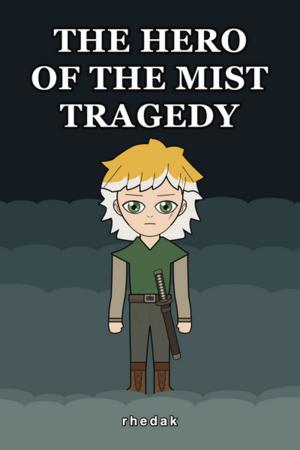
The Hero of the Mist Tragedy
*warning: full spoilers ahead. If you haven't finished the story please do so first.*
Thank you for reading The Hero of the Mist Tragedy. The story is based on an idea I have carried with me for many years, and recent events finally gave me the push to get it onto the page.
My approach was “write what you would like to read,” and that is what I did. I read a lot of detective fiction, but also classic fantasy and many, many light novels. Listing every author who inspired me would be a long job, so let me just name the main ones: Agatha Christie, Brandon Sanderson, Reki Kawahara, Matsuri Isora, Kazuki Miya, Yoshiki Tanaka.
The original idea was to combine a Christie-style murder mystery with a hard magic system in a light-novel-inspired story. The unreliable narrator was inspired by The Murder of Roger Ackroyd, though I must admit Christie did a far better job of hiding her narrator’s secret. In the end I pivoted from a whodunit to a how-catch-them hard magic fantasy adventure with layered secrets, which is what made the story work. I hope you enjoyed it. Any feedback, even harsh criticism, is welcome.
What follows is an appendix built from my notes for writing the story, mostly explaining the setting and the magic systems. It ran quite long, so read only the parts that interest you.
***
Appendix: The Mist and the CrystalA reference to the world and its magic, with chapter pointers in parentheses.
***
Two kinds of powerEvery nation on the continent runs on mana, and each draws it in a different physical form (see “The Sleeping Gods” below).
Okiri’s was the valley’s mist, a gaseous mana that is ambient and everywhere, cheap to use where it hangs in the air and worthless once carried past the valley’s rim. Okiri’s entire industrial base rested on that fact, and it is also why the kingdom eventually gambled everything on the Kami: Natsume makes the case in Chapter 8 for wringing far more power from the valley than Okiri had ever asked of it (Chapters 1 to 6 for the day-to-day economy).
The Wodensreich mines a solid, coal-like mana and refines it into a dense, portable crystal called Donarsblut. Donarsblut travels, which is the point, because it lets the empire project magical force far beyond its borders, including into a valley that was never its own. It is volatile, finite, and dangerous to handle, and the Wodensreich faith treats mastering it as a sacred discipline rather than a convenience.
***
The mistBound to the valley. The mist works only where it already is. Its power comes from being ambient and continuous, not from anything an engineer managed to bottle. Even solidified, a charge taken past the valley’s rim will not hold: the solid loosens back into invisible gas and thins away to nothing. Abundant as it was at home, the mist never became the kind of portable strategic force the Wodensreich made of Donarsblut. This is a separate limit from the valley’s natural output ceiling. Okiri only ever cared about the ceiling, because their strategy was to hold the valley and fight there if it came to it (Chapter 8); the Wodensreich, wanting the valley’s power to reach Devran, runs into the portability wall instead (Chapter 26). A third problem sat on top of both after the cataclysm: the mist was now toxic, and for a year the Wodensreich could not draw a usable measure from it at all.
Before the cataclysm the mist was harmless. It lit the valley dimly at night, so that Okiri life ran on after dark as a matter of course. It turned mist-mills, lifted water into the rice terraces, and powered small craft work. Where a household had no mill, a Kiri-no-Miko guided a channel’s flow by hand through prayer, the same practice performed as temple ceremony but at the scale of one field. (Recalled throughout the flashbacks; present-day Kiriguchi keeps its nights dark and watched, and anyone old enough feels the difference.)
Waves, phase, and amplitude. The mist is not one even thing but many overlapping waves, slightly out of step, each on its own rhythm. Okiri learned to solidify it by bringing a few waves into agreement: match the phase of two or three, and the mist between them sets into a stable, storable, explosive solid. Dr. Keiko Natsume named the technique resonance solidification (Chapter 12). Phase, where a wave sits in its cycle, is where the work is; amplitude, how hard a wave is running, is “how loud you shout once you’ve agreed on the note,” as Tomohiro dismissed it. The trivial lever turned out to matter: Satoshi later flattens a whole advancing wall of Kirijuu to near-nothing by amplitude alone (Chapter 31).
The two-layer connection. Reaching the Kiri no Magatsu, or the mist at large, requires two things, and neither alone is enough. The first layer is breath, a trainable discipline of matching one’s breathing to the mist’s rhythm. A novice holds it briefly, an adept under strain, the rare master permanently and without thought, even asleep. The first layer can touch, sense, wake, or briefly draw on the entity; it cannot safely govern what happens next. The second layer is genuine acceptance, and it cannot be trained. It has to be arrived at: humility toward the Kami as a force to live beside rather than a problem to solve or a resource to strip, which is exactly the Okiri Faith’s “respect rather than obedience.” This is why the Kiri-no-Miko, not the kingdom’s researchers, were the real experts on the thing the weapon program never cracked. Forcing the second layer is possible, and it is the system’s central danger. Enough raw power, enough Donarsblut, or plain overconfidence in first-layer skill can fake it, briefly and unstably, and the connection then slips, spikes, or tears loose. Tomohiro did this at the summoning, and Oberst-Researcher Reinhard von Falkenrath, the Wodensreich officer who leads the expedition, does it again by another route (Chapter 32). Satoshi trains the first layer across the book, reaches the second involuntarily over Chiyo in Chapter 6, and on purpose for the first time in Chapter 32.
Mana poisoning is progressive corruption from breathing dense mist, with no direct contact required: heightened senses, then hallucinations, then loss of control. Reinhard names the first two stages to the column as it enters the mist, and leaves the third unsaid because everyone already knows it (Chapter 10). Satoshi’s own too-sharp senses, planted from Chapter 1, are a lingering trace of the first stage after a year’s exposure. Heightened senses are also the sign of brushing the connection’s second layer, whether reached by poison or by prayer: the same door, opened with or without consent.
Touched by the Kiri, the Wodensreich’s clinical “Mist-burns,” is the acute injury from direct contact with the mist: burn scarring, hair losing color toward white, often premature aging. Severe cases mostly die or are permanently broken; milder marks are uncommon but far from unheard of, common enough that a scarred, white-haired survivor draws no attention. Satoshi hides inside the category rather than from it. His case is the worst anyone survived, from standing at the exact center. Undisguised, his hair would grow in black and fade to white, the pattern everyone would expect of Tomohiro, so he dyes the new growth blonde on the schedule the ongoing effect forces on him (his scar and white-tipped hair are in Chapter 1; Natsume names Chiyo Touched in Chapter 7; the disguise is spelled out in Chapter 30).
Residual spells. Touched survivors get a withdrawal tail, weeks of nausea and disorientation as the body clears the last contamination. Satoshi’s never ended, and what looks like recovery is active suppression by the same breathing discipline, held at all times. When his breath slips, a spell follows, nausea and a thin curl of gray vapor, ended by resettling it (first full spell in Chapter 3; again at Chiyo’s hearth in Chapter 7; fades across Chapters 11 and 17 as the connection deepens).
***
The Kiri no MagatsuThe Kami sleeping under the valley, worshipped by the Okiri Faith as a primal, volatile force, neither evil nor kind, nearer to weather than to a god who answers prayer. The legend that it slept beneath the valley, its rest tied to the mist’s output, was literally true.
Okiri’s weapon program needed more mist than the valley gave, so it went after the source: wake the Kami, harness its tie to the valley’s mana. The experiment woke it and failed at everything else, converting the harmless ambient mist into the toxic fog that filled the valley until the book’s final chapters, destroying the capital, and ending the kingdom.
The entity is partly sentient and is specifically angry with Satoshi for forcing a connection it never granted. That anger runs through the Kirijuu, which single him out, and through the contamination he still carries. It is the exact inverse of Reika Mizuki’s bond with the same being: genuine acceptance reads as peace, a forced connection as enmity, one system with opposite results.
Satoshi survives the summoning not through the forced connection but through the one moment he turned the reach outward, shielding the fleeing witnesses from a Kirijuu. The entity felt the nearest thing to real acceptance it had had from him and declined to finish consuming him: not a reward, a second chance (Chapter 29). The climax is that same shape repeated, on purpose and fully earned.
After the calming, the mist at the true center is no longer a hazard, and it holds firm against a bare hand, a kinetic-pull crystal, and a thermal-push discharge without harming anyone. The book does not show whether Satoshi lived through his final act. What it shows is the mist going quiet, closing around the place he fell, and sealing every approach against the rest of the expedition, which Lieutenant Viktor Grau reads as the Kami wanting privacy (Chapter 35). Whatever it shelters there, a calmed Kami is not a forgiving one: the connection Satoshi finally reached was real but never complete.
***
Reversing the cataclysmWhat Tomohiro forced, Satoshi undoes by asking. The crude method, the one that broke the valley, forces every wave in the mist into phase at once and holds it there. Satoshi can still do it, starts to on the way in, and stops, because it is a fist around a wave rather than a hand asking one to move (Chapter 31). The mature technique is the reverse: shift the waves out of phase so they cancel instead of compounding, and flatten their amplitude until the mist carries nothing. Done at valley scale, with real second-layer acceptance under it, this pulls the toxic fog back toward the harmless mist it was. It is not free: a final act, its cost never itemized, settles the Kami and completes the reversal, and Satoshi collapses as it finishes (Chapter 33).
***
KirijuuValley animals fused with the contaminated mist, the one word both cultures kept. Not undead and not demons: living creatures the mist has grown through, more parasite or symbiote than curse. A Kirijuu looks recognizably descended from a real animal but wrong, patches gone to drifting fog, movement too fluid or too sudden, mist venting from a wound instead of blood; on contact it is cold and solid, never soft.
The escalation follows mist concentration and depth, not rising stakes for their own sake: deer and boar near the edge, bear-tier on the forest road (Chapter 14), then a city’s worth of dog- and cat-Kirijuu in the capital ruins (Chapter 17). At the highest concentrations comes the exception, the pure Kirijuu, with no animal origin at all, mist cohering straight into a hostile, near-humanoid body, the deadliest non-human threats in the book (first in Chapter 24; pure Kirijuu also cohere at the summoning itself in Chapter 29; the word is first used on the page in Chapter 6).
***
Donarsblut: Wodensreich crystal-workIgnition. Refined crystal releases its mana only on contact with bare skin, which ignites it and burns the skin at the point of contact at once. The burn is shallow: the skin blanches, then reddens and stings, but it does not blister under normal use and leaves no lasting scar, so what a wielder can stand is a matter of endurance, not of permanent damage. Skin is the conductor, so mana pours in continuously only while contact holds. Break contact and the crystal keeps burning, because it cannot be safely stopped once lit, but the mana now disperses into the air, useless and a mana-poisoning risk to anyone nearby. Hence the gloves, harnesses, and tongs, with bare hands only for the instant of use; Captain Elara Sturm’s fingerless gloves and Magus-Sergeant Krista Bastler’s crystal harness are for carrying, not casting. A spent crystal leaves only ash.
Manaleiter is a refined conducting metal that stands in for skin. A crystal seated in a Manaleiter fixture and touched once to ignite feeds its burn into whatever the fixture is wired to, with no one gripping it, which is what makes hour-long installations possible.
Rationing. A lit crystal burns for a fixed time set by its size, and because it must be held bare-skinned the whole time and that burn is only bearable for so long, crystals are cut to single-use, burn-duration pieces before ignition rather than wasting a large charge on a short fight. Bastler carries the cutting tool. The same cut is the only way to limit an already-burning crystal, saving whatever is still unlit past the cut.
Type and attribute. Every crystal is exactly one type and one attribute, and that fixed grid is the whole vocabulary; there is no open-ended spell list. Type is the effect, a small set of deliberately technical categories: thermal, kinetic, and atmospheric are named in use, and others such as ferrous exist but are never shown. Attribute is direction: push projects the type outward, and pull draws it inward, either toward an object or reflexively into the wielder’s own body. Named in the book are kinetic-push (a barrier, Sturm’s stake line, and scaled up, the mist-repelling device), thermal-push (fire, the Kirijuu-killing spearheads), kinetic-pull (a burst of speed from a forearm crystal), and atmospheric-pull (a medical use, drawing mist contamination out of a wound, safe to grip normally). The system is shown whole in Chapter 6, and atmospheric-pull in Chapter 15.
Mana-pull, a rare sixth type (Chapter 17), runs backward: contact with any living skin, wielder or target, draws that body’s mana into the crystal, which brightens and grows while its victim weakens and dies. It never distinguishes wielder from target, so it is thrown with tongs and never gripped, and it binds to the first tissue it touches like a magnet, so freeing it from a mage’s own skin means cutting the flesh away with it. On open mist it cannibalizes itself to ash; on a target it must be cut free at the moment of death or the harvested charge is lost. It is a battlefield kill-tool, not a way to harvest mana at scale, and it does nothing for Reinhard’s real goal.
The Spirit crystal, or Connection crystal, fits neither type nor attribute. It forms only in seam-bonded pairs, one half answering the other, and a lone half does nothing, which is why Wodensreich researchers spent years finding no use for it. Reinhard finds one: he anchors his forced connection to the Kami along the pair-bond, the crystal shielding only the hand that holds it (grumbled about as junk in Chapter 9, defined in Chapter 26, used in Chapter 32). It marks him like any forced connection, a white streak at one temple that Satoshi watches appear during the duel, with more of it there when Reinhard wakes in the final chapter, none of it earned by anything he remembers doing.
***
The Nebelschieber, or mist-repelling deviceThe rig the expedition carries in, without which the toxic depths would kill them; the Wodensreich name means “mist-pusher.” A single large, slow-burning kinetic-push crystal in a Manaleiter fixture projects a standing barrier that holds the mist off the party for hours. Two traditions run it together: Bastler ignites and monitors the raw Donarsblut push, and Dr. Keiko Natsume shapes it to repel contaminated mist specifically rather than act as a generic kinetic wall, using Okiri mist-economy knowledge the Wodensreich lacks. It is the small, working, uncorrupted version of the industry Natsume once wanted to build. Its drawback is structural: a crystal that large, burning that long, is as loud to a Kirijuu as the expedition’s bulk cargo, so it draws them continuously. The device that keeps the party alive is also what keeps finding them. Reika Mizuki disapproves of it on doctrine. It first appears in Chapter 10, “The Pocket of Still Air.”
***
The Sleeping GodsThe continent’s oldest doctrine, and the source of the series title. Each power has one or more gods sleeping in the ground beneath it, and the mana that power runs on is what its god gives off as it sleeps, gathering in the earth around it in a form particular to that god. A god that woke would give off far more, not less, which is the premise Okiri’s weapon program staked everything on. Legend holds the gods once warred openly until the fighting was destroying the world and their own worshippers, so they made a pact to sleep, brokered by the first human kings, each royal line charged with keeping its god’s rest. Okiri’s folk belief about the mist sleeping and waking was not a special case but the one visible instance of a true continent-wide pattern.
The four forms:
Wodensreich: Woden the All-Father and his disciple-gods, and a solid, coal-like mana, so the empire is in effect mining and burning its own ancestor-god.Okiri: the Kiri no Magatsu, and a gaseous mana, the mist.
The Tumen, the nomadic plains peoples: many unnamed nature-gods, and an invisible, energy-like mana that cannot be mined and is taken in directly by the plains’ magical animals.
Devran: the Great Dev, and a liquid, oil-like mana.
Every faith holds the full legend literally, and almost every government treats it as a quaint story, the Wodensreich and Devran most of all, both extracting their gods’ substance without reverence. The Tumen keep the pact most strictly, their doctrine forbidding any shaping of nature to a people’s ends, which is why they built no cities and mined nothing. Okiri sat between: its Faith took the charge seriously, but its research culture had already stepped past that restraint, and that step is what let the cataclysm happen. Because none of this is common knowledge, the cataclysm reads as a local disaster, and no other power has reason to think a Kami was actually woken (a dinner joke in Chapter 3 about Woden the All-Father covering the Donarsblut bill; Kurogane’s warning about the Tumen in Chapter 24).
***
The two calendarsBoth cultures use a year of thirteen months of twenty-eight days, and count it differently. The Wodensreich calendar has a fixed epoch from the first Kaiser, never resets, opens in deep winter, and numbers its months plainly. The present day is year 493, and popular dread of the round year 500 is a low-grade echo of the Faith’s Great Twilight doctrine. Wodensreich paperwork, including the notice that opens the expedition, dates this way. The Okiri calendar is reign-based, resetting with each king, and since the cataclysm ended the monarchy, survivors count years since the catastrophe, so the present day is the second such year. It opens in spring, and its months are named for the mist through the seasons, from Kasumizuki, the Haze Moon, to Kirinemurizuki, the Mist-Sleep Moon, when the Faith holds the valley’s mist itself sleeps before waking. No one in the book connects that last name to what the Kami is (new-year observances open Chapter 1; the year-493 notice is in Chapter 2).
***
PlacesThe Valley of Mists: the former Okiri heartland, its depths toxic fog and uninhabitable for the year the book covers. The reversal in the closing chapters pulls that fog back to the low, harmless mist it had once been (Chapters 33 and 35), so the valley is survivable again by the epilogue; what becomes of the emptied land after that is left open.
Kiriguchi, or Nebelmark: the village at the valley’s mouth and the story’s starting point, now under Wodensreich rule. Kiriguchi is the Okiri name, “mist’s mouth,” and Nebelmark the imperial rename, and which one a character uses signals where their loyalty sits (Chapter 1).
Kasumikyo: the former capital, near the valley’s center but not quite at it, destroyed in the cataclysm. The expedition spends most of Act 2 in its ruins, where the evidence is (named in Chapter 8; present-day ruins from Chapter 17).
Kiri no Sato: Tomohiro’s home village and shrine near the valley’s edge, where he was raised. Left unnamed as the expedition passes through it, and named only in his dying thoughts; his persona name, Satoshi, was an echo of it all along (Chapter 33).
The Basin: the valley’s true center and the actual summoning site, a separate, deeper place than the capital, reached by a sealed passage behind the throne room or by an old ridge road. A shallow stone basin sunk into the bedrock inside a ring of mountains, holding the densest mist in the valley; the book ends here (Chapter 29 onward).
Eisenhort: the Wodensreich capital, seat of the Kaiser and the war council (Chapter 26).
The Sultanate of Devran: the distant rival power whose mana comes as a liquid, named but never visited (Chapter 24).
***
The Okiri Faith worships the Kiri no Magatsu as a Kami that demands respect, not obedience, and is served by the Kiri-no-Miko, the “Mist Maidens,” whose doctrine opposed the weapon program. That doctrine is not merely devout but mechanically correct: “respect rather than obedience” is the second layer of the connection in plain words, and the Miko’s practice is the traditional path to it. The program’s fatal error was treating that practice as raw material to strip for parts. Reika Mizuki is the book’s one demonstration of a real second-layer connection: Kirijuu do not gather where she is, and she crosses broken ground with her eyes shut without slowing.
The Wodensreich Faith centers on Woden the All-Father, god of wisdom, magic, and sacrifice, and Donar, god of strength and industry, with state, army, and faith deeply intertwined. The bare word “Woden” is also the everyday name for the empire and its language. Donarsblut is doctrinally sacred, a gift demanding discipline and sacrifice, which is why Bastler’s devotion is orthodoxy and her friction with Reika is a genuine clash of faiths. The battlefield mourning rite is two fingers to one’s own closed eyes, then flat to the ground, speaking the dead’s name and asking something of the All-Father. “The Great Twilight” is the imperial belief that expansion and resource-hunger are preparation for a prophesied end, so falling behind in the mana race is, within the faith, a failure to prepare, and that is the deeper register under Reinhard’s agenda (mourning rite in Chapters 25 and 27; the Great Twilight weighted most in Chapter 26).
The military orders named in the book are Woden’s Ravens (research and intelligence; Reinhard and Lieutenant Viktor Grau), Donar’s Hammers (front-line battle-mages; Captain Elara Sturm), and the Crystal Conclave (Donarsblut refinement, and the field practice around handling and rationing it; Magus-Sergeant Krista Bastler).
***
A note on two namesThe protagonist’s name is written with one set of characters that reads two ways. The shrine that raised him used the plain reading, Satoshi; he took the other, Tomohiro, when he left; and after the valley fell he went back to the plain one as a name to disappear behind. He never invented a false name, only changed how he read his own. Everyone believes Tomohiro died at the center of the valley, which is what lets him hide: to the world, Tomohiro is not someone who could still be alive to suspect. It does not hold, though, because Reinhard has been quietly certain since Chapter 13 and says nothing until the declaration in Chapters 27 and 28. Okiri’s character-based script is called Kirimoji, “mist-script,” and Satoshi reads it fluently, having been an Okiri child prodigy (the name is first spoken aloud in Chapter 11; the two readings are explained in Chapter 30).
The device is borrowed from Japanese, where one written name can carry several readings depending on who is speaking it. The characters 智史, for instance, are read Satoshi, Tomofumi, or Tomohiro, among others; the story uses the first and the last.








Please sign in to leave a comment.