Chapter 3:
A New Page
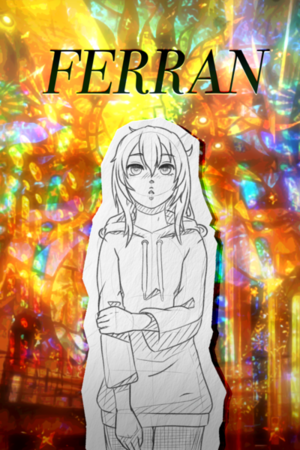
Ferran
After a few days and several meetings, the authorities determined that Ferran’s complex qualified as historical heritage.
This meant I had two major options.
I could either sell the whole place for what they considered a fair price or remain its owner, as long as I took every measure necessary to preserve it and complied with strict administrative requirements.
It also meant the place couldn’t be dismantled and sold piece by piece without their approval. Although this drastically lowered its monetary value, I was glad.
The authorities agreed with my interpretation that Ferran’s creations were interconnected, forming a larger work of art rather than a collection of isolated pieces.
I asked for some time to think it through. They gave me a month and, thanks to Laia, also provided security for the property following the massive attention the discovery had attracted.
Laia moved in with me for the entire month, considering this her most important case by far.
I also requested a leave of absence from work.
After that, I became obsessed with Ferran’s work. The authorities recognized me as the owner and, after seeing my respect for and understanding of his work, granted me permission to investigate it.
I spent entire days inside the complex, reading his work, finding connections, and diving into his world and stories.
I really had become Ferran’s biggest and only fan.
At first, Laia joked about being my housewife. Later, she joked about being my mother. She cooked and fed me, made me touch grass, and came down to fetch me from the gallery so I could get proper sleep.
Meanwhile, she studied everything she could about historical heritage and my rights as an owner, so that whatever I chose, we could make the most of it.
Besides obsessing over Ferran’s work, I was searching for blueprints of the cellar. Given how much he had written and designed, there were probably notes somewhere that could help me repair the damage caused by the appraiser.
The more I investigated, the more I understood.
He worked for hours every day, writing, painting, sculpting, and learning any craft that could bring more life to his work.
Not all of his work was perfect either. I found many early pieces that were clearly not as good as his later ones. He hadn’t started out as a master. He had made himself one through practice and study.
The countless notes, books, and plans weren’t just the work of decades. They were the work of someone obsessively in love with his stories and characters, devoted to making them as real as they could possibly be.
I knew what that felt like: wishing I could devote myself to creative work.
I admired him for doing so and envied him for having the opportunity.
But at the start of the final week before my deadline, I found something different.
Inside his underground bedroom was a diary with a leather cover.
Wearing white cotton gloves, I gently opened it.
Every entry included a full date, and the last had been written over five decades ago.
I spent a moment flipping through the diary by the light of a camping lamp I had recently bought.
I immediately noticed that most of the later entries were accompanied by silly doodles.
There was warmth in them.
Over the next few hours, I read Ferran’s diary. Hopefully, he wouldn’t curse me from the afterlife if I read it with enough care and respect.
What struck me most was how it had all started.
News reports had revealed that before moving into this house, he had worked as a junior mechanical draftsman, which made sense given his skills in both drawing and engineering.
What no one talked about was that, for a time, he had tried to become a professional artist.
He had tried painting commercially and had actually landed a few gigs. However, he found no joy in creating for others, and even less so when working under a deadline. His passion wasn’t just painting. It was bringing his own ideas to life.
He had also tried writing an early version of his story, but as soon as others read it and gave him feedback, his anxiety skyrocketed. Even though the response was mostly positive, the exposure soon burned him out.
The truth was that he had tried to become a professional artist and had ended up hating it.
For a few years, Ferran could draw almost nothing but blueprints.
Unable to create art and feeling that his artistic career had failed, he sank into a deep depression.
Then one day, he unexpectedly inherited several properties from a great-uncle who had no descendants.
He quit his job and moved to the countryside, away from the foul industrial air. With the help of a real estate agent, he rented out the properties in the city.
He thought he would dedicate himself to winemaking.
But things turned out differently.
After resting for some time, Ferran began creating again. He drew and wrote just for fun.
There was no one to see his work, so he didn’t have to face the anxiety of showing it.
There was no one setting deadlines for him, so he was free to create at his own pace.
He could create whatever he wanted, and that fulfilled him.
Contrary to what he had expected, this freedom made him more productive. He naturally developed a habit of working on his ideas every day. Even while cooking or tending the vines, he thought about the story he wanted to create.
That project became his life.
He wanted to bring it to life as well as he possibly could.
He practiced every day, turning his studies into material for the project. At the same time, everything he created helped him improve.
At first, he wrote about loneliness and creative frustrations, but as he reflected on them, he began to find answers.
His negative thoughts faded as the pages went on. Then, at some point, the diary simply ended.
I realized that Ferran had used the diary to untangle his thoughts. He probably no longer needed it after that.
I could see in his later work that he had learned to channel his emotions, thoughts, ideas, and even experiences into his characters, stories, and worldbuilding.
He had poured the rest of his life into his fantasy world.
I closed the diary at last.
I had spent the whole day underground.
Laia was probably coming to get me soon. I’d rather save her the trouble.
It was already dark when I walked back through the cellar. The only light came from my own lamp.
I looked at each statue as I walked past. Now I knew these characters and some of their stories. I couldn’t wait to read more about them, find paintings of new scenes, discover the sheet music for a song they sang during their travels, or even find more notes about their psychology.
They were no longer just beautiful statues. They were ideals, life lessons, vulnerable moments, and brave choices.
They were people I had grown to love thanks to Ferran. If he wanted them to feel real, then he had succeeded, at least for me.
When I finally walked back up to the kitchen, I found Laia asleep at the dining table. The lights were dim, and her laptop was still open in front of her with its screen dark.
She had been working for my sake this whole time. I could probably never repay her for everything she had done for me these past weeks, but at least I could start doing things right.
I carefully put a blanket over her.
“Hm…?” Laia opened her eyes. “Nuria…? You’re back.”
“Sorry, I didn’t mean to wake you up.”
Laia rubbed her eyes, trying to wake herself up.
“It’s okay. I meant to go get you, but I guess I passed out.”
Laia looked at me as she slowly became more alert.
“You look… better,” she said with a hint of relief.
I didn’t know what she meant.
“I’ve made up my mind,” I said.
Laia straightened up and faced me. “Oh? So what will you do?”
“I’ll sell this place to the government.”
Laia didn’t react. She waited.
“I’ll need your help, though. I want to set some conditions.”
Laia tapped a key to wake her laptop and prepared to type. “Go on.”
“First, it must be turned into a museum that honors Ferran’s work and helps people understand it. If we find the blueprints, the cellar should also be arranged as Ferran intended.”
Laia typed.
“Second, nothing must be removed or altered.”
Laia continued typing.
“Lastly, I want free access to the museum for the rest of my life.”
Laia pressed Enter.
“That sounds reasonable. I’ll need to check whether all the conditions are viable. They’ll probably need to add some infrastructure to turn it into a proper museum, but we can work that out.”
I nodded.
“The government actually made quite a good offer after the last appraisal. You should be able to buy several homes like this one or even a mansion with that money.”
I brought a hand to my chin as I walked around the table.
“I was thinking…” I said as I sat across from Laia. “I could buy several homes and rent them out.”
“That could be profitable.”
“Maybe we could start your real estate agency too. I could provide the properties.”
Laia’s face lit up. I felt warmth in my chest.
“Wait… Are you serious?”
“Of course I am.”
Laia looked down at the table. Then she smiled. Then she laughed.
“Okay, you’ve got yourself a partner,” she said as she looked back up at me, beaming. “But let’s work out the details after we’re done with all this. Make sure to enjoy this house while you still can.”
“I will!”
I went back to my room and sat on my futon.
My suitcase was right next to it.
I took out my sketchbook and opened my pencil case.
A blank page lay before me.
I didn’t need to draw for anyone or show it anywhere. I didn’t even have to finish anything.
I put my mechanical pencil to the page and started drawing one of my characters.









Please sign in to leave a comment.