Chapter 1:
A Short Story
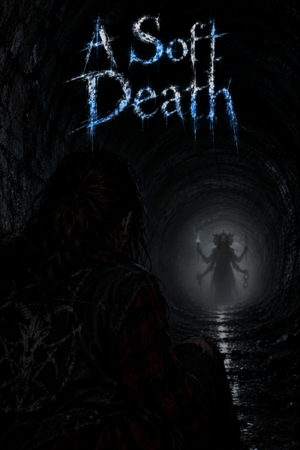
A Soft Death
I’m lost. At least, I think that I am lost. I guess that is the problem with not remembering where you are. You aren’t sure whether you are really lost or where you’re supposed to be.
I shift. The rock beneath me is cold, damp, and the movement sends a sharp ache through my hip, followed by the dry rustle of fabric. I look down. My clothes are too big, a faded denim jacket over an oversized flannel shirt that smells faintly of woodsmoke and a laundry detergent I can almost name but can’t quite grasp.
I focus on the ground beneath me. My hands run along the texture. It is black, but too smooth to be any kind of stone.
In the distance I think I hear the ocean.
Is it the ocean?
It’s like a roar of cars passing over a tunnel. Speaking of tunnels, I look up and down, and even around. Nothing. No light. Just an endless darkness stretching out before me and behind me.
“Okay,” I say out loud, but my voice doesn’t echo.
Nothing answers.
Well, that’s good at least.
I wiggle my fingers and my toes. Good news I can still feel them.
I decide to look above. The cave ceiling climbs into absolute, devouring blackness. There are no streetlamps here, only the slow, rhythmic plop... plop… plop of water striking a stone basin somewhere deep in the dark. It sounds like a heart beating out of time.
My fingers dig into the pocket of the oversized jacket. There my hand closes around two things: a plastic tube of cherry lip balm, worn smooth at the edges, and a heavy, jagged piece of green sea glass. My thumb traces the frosted edge of the glass. My body tells me I shouldn't be here, in the dark, under the earth. My body tells me I should be somewhere with bright lights, arguing with someone I love about a curfew I can no longer remember.
“Right,” I say more to myself to help ease the loneliness I feel.
The name doesn’t come back all at once. It arrives in pieces, like a word spoken underwater. A woman's voice, tired and sharp with worry, calling out across a gravel driveway while the porch light hums.
It is a memory. I try to stand up, and that’s when I remember my name.
My name is Ayla Isabella Michaelidis. I am sixteen years old, I’m terrified of heights and the idea of being on an airplane, and I love a girl named Hillary who does not even know I exist.
“Well, sitting here won’t do me any good.” I say more to myself against the eerie and endless silence. I look in front of me and behind me, again. Unsure which direction to go.
“Guess I’ll just head this way.” I say into the void around me. A sense of dread fills me as I keep walking along the hard polish floor, and that’s when I notice I’m wearing boots. Whoever I was I do appreciate the fact that I have a good sense of style.
The cave goes on in both directions with no end in sight, black mouthed, endless, yet there is an ever-present grey glow that allows me to see just enough to keep walking. I look and the grey seems to come from the walls of the cave itself, almost as if it is sweating.
Curious, I walk up and touch the cave wall.
Big Mistake.
While the texture looks hard and jagged, when my finger presses against it, it is squishy and gross.
I gag.
“Ewwwww. What the hell is this place?” I wipe the wetness onto my pants. I breathe out but there is no foggy breath despite the condensation. The air does feel cold and I shiver. I’m pretty sure I should be able to see my own breath, but whatever. I keep moving forward in the dark.
“Hello?” I try again raising my voice, but despite the loudness of it, my echo does not carry back.
“Great,” I mutter. “Just great.”
I keep walking until eventually I see light at the end. The light isn’t the clean, yellow sunlight of the world I lost, but a thick, amber glow that smells of old tallow and burnt hair. My legs move before my mind can give the order, my boots slapping against the damp stone floor as I sprint toward the brightness, desperate to escape the devouring dark behind me. I burst through a massive, looming stone archway and slide to a halt, the breath rattling in my throat.
What lies beyond isn't the open sky. It is a chamber where a narrow, solitary stone ribbon of a path extends. On either side of me, the ground simply ceases to exist. It is a sheer drop into an absolute, bottomless abyss. At the end of the path there is a platform with a towering stone archway.
“It’s okay, you’ll be okay.” I mutter to myself as I walk down the narrow path. I step through the stone archway and see thousands of gray, weathered wooden sticks woven together, forming two massive, overlapping circles before they funnel deeper into a completely different tunnel.
But it’s what stands exactly where the two circles intersect that makes me freeze.
A towering stone statue of a woman looms over the path. She has four arms, each one extended with an terrifying, quiet purpose. In one hand, a stone torch that seems to cast no shadows. In the second, a heavy iron key. In the third, a wicked, slender dagger. In the fourth, a coil of thick rope. At her feet, carved with such precision I expect them to twitch, lies a great stone serpent and a massive, curled black dog.
But I can't look at them. I can only look at her head. A heavy, stone veil drapes completely over her face, smooth and featureless.
My hand creeps back into my pocket, my fingers instantly finding the cold, frosted edge of my green sea glass and the little plastic tube of lip balm. The girl who bought that lip balm at a brightly lit drugstore wouldn't know what this place is, yet as I stare at the statue a vague and heavy recognition weighs down in my chest.
I swear I have see this before.
Suddenly my head throbs.
“Ah!” I hiss, rubbing my temples, and the tunnel drops away from under me.
I was eleven. My Yiayia's kitchen smelled like lemon and dill, and she was braiding my hair too tight, the way she always did, humming something in Greek that had no English in it at all. "Ela, kaneis," she said. Sit still. On the counter sat a little dish of bread and oil that she set out every month without fail, at the place where two roads crossed a mile from our house. An offering, she called it, for the Lady who walks between. "Who's the Lady?" I asked. Her mouth went thin and careful. "Someone you thank," she said, "so she keeps walking past you and not to you."
The memory lets go of me like a hand releasing a wrist, and I stagger, blinking. I look down and find a red hair tie in the palm of my hand.
"I don't remember losing this," I tell the emptiness. I look down and notice I am on a patch of grass. Still inside the cave. It sits like a circle that wasn’t there before.
The grassy path goes past the weird statue and behind it down into another hallway. Hesitantly I peer down into the tunnel and noticed a bulb of white light. The hair tie soon begins to glow as well, a sterile and pale color that illuminates this place.
I use it to peer over the edge and this time I do see the bottom. Flowers. Daffodils and marigolds, poppies and asphodels, and other flowers I can’t name.
The longer I stair at the flowers, the more unsettling I feel. Flowers push up between the stones, small and orange gold, layered petals like something folded from paper. I know them the way you know your own hands. Cempasúchil. Marigolds. My abuela grows them every October on the windowsill.
“Mija,” she always says, “the smell and the color call the dead home for one night a year. Don't ever let them wilt before the second of November, or the ones you love won't find their way back to you.”
These don't wilt. They don't move at all, not even the small ones on the thinnest stems, and I stand there working out why that bothers me so much before it lands.
"There's no wind down here," I say quietly. "There's no wind, and I'm not cold even though I should be freezing, and I can't find my own heartbeat." I look down at my bare arms. No goosebumps. Nothing. "Okay. That's fine. That's totally fine, Ayla. Keep it together."
For a terrifying, fractured second, the paper-thin orange petals don't look like petals anymore. They stretch. They lengthened into tiny, multi-jointed fingers, a thousand small, golden hands reaching up from the cracks in the stone, their palms turned toward me.
And then comes the sound. It isn't a voice, not really. It's the dry, papery scrape of a million petals rubbing together, a collective, breathless sigh that rattles through the cave:
...turn back... turn back... Ayla, turn back...
The hands flex once, toward the tunnel I just left, before freezing back into ordinary, motionless flowers.
I don't scream. I want to. I just go very still, the way you go still around something that might notice you if you move.
"You're not real," I whisper.
The flowers do not answer. I look, and they are flowers again, orange, closed, and silent, and I could almost believe I imagined it if my hands weren't shaking. That’s when I notice something.
It looks like a locket. I decide to bend over and reach for it. It sits on the edge of one of the stones before dropping into the pit where the flowers are. I manage to grab it, it is silver, with the hinge stiff with something that is almost like rust. I open it. Inside there is no picture, but instead a curl of hair, and a photograph so worn it has gone the soft brown color of a dead leaf. I can't make out the picture inside when suddenly another memory comes.
I was thirteen and my father's voice was coming through the wall in that flat, ugly register he used for my mother, and for me when he was drunk. A door slammed. Something broke. I sat on my bed with my knees to my chest and I did the thing I always did when he would yell, I went somewhere else in my head, a beach I'd never seen, a version of my family that laughed instead of flinched, until the house went quiet, the particular quiet that meant it was safe to exist again. And if the yelling continued, I would climb out the window with a bag in hand and call a friend. Always ready to stay somewhere else.
I drop the locket. It makes no sound hitting the ground.
The memory fades slowly, peeling away from the edges of the cave like burnt paper. The sound of my father's flat, heavy voice stays in the air longer than the image of my old bedroom, a cold weight that settles right behind my eyes. I can still feel the exact phantom-ache of my chin pressing against my knees, waiting for the yelling to stop, waiting for the house to become safe again.
"I don't want the next one," I say. My voice cracks in the middle. "Please. I don't want to see any more of them."
The flowers in the abyss don’t answer. I look back up at the two tunnels, unsure which tunnel to take. The paper-orange flowers give way to something else. Another memory is already waiting, and I hear a sudden wrestle of wind. The air ahead thickens, smelling faintly of sea salt, cigarettes, and rain on hot asphalt. Something is taking shape in the dark, a jagged fracture of light that looks like the passenger-side window of a car.
The locket didn't open itself. Something is pulling these pieces out of me, stripping away the blankness of my amnesia only to fill the void with everything I ever ran from.
I chose the tunnel that has a familiar scent.
Come closer.
A voice murmurs in the dark.
"Hello?" I whisper, crouching despite everything in me that says don't. "Can you hear me? Do you know how to get out of here?"
You already know the way out, another voice answers in the tunnel, you don't want to find it.
"That doesn't make any sense." My voice shakes. "I want to go home. I want to go home right now."
Neither voice answers that. Yet the echo keeps repeating within my head that sets me on edge.
Turn back… turn back…
But I don’t listen. Instead, I push on, because turning back feels like giving something what it wants, and I am so tired of doing that. The tunnel pinches into a throat of rock, and there, snagged on a spur of stone like something spat out and forgotten, is a single converse sneaker, laces untied, the rubber worn through at the heel exactly the way my own shoe wears through, because I run everywhere, I have been running for months.
"No," I say, very quietly, backing up a step. "No, I don't want to touch that one."
Throughout my life, I have heard of spooky stories, strange occurrences with ghosts or the unexplained. I believed them. Both of my grandmothers were superstitious. One being Greek and the other Mexican yet both deeply religious.
So I keep walking, my eyes fixed straight ahead, refusing to look at the fracture of light or focus on the smell of rain in this damp tunnel. I walk until the stone walls of the tunnel narrow, pinching together tighter and tighter until they simply meet in a solid, unyielding dead end of gray rock.
I stop. I press my palms flat against the cold stone, expecting a hidden door, a latch, anything. Nothing.
So I turn around. I take three paces back the way I came, intending to find the platform, but the tunnel doesn't open up into the garden of marigolds. Instead, my boot strikes something small and heavy on the floor.
It makes no sound.
I look down. It isn't the silver locket. It is a single, worn-out sneaker, the converse frayed at the heel, the laces tangled into a knot that my hands recognize but my mind refuses to place. The exact same shoe I passed minutes ago.
I am right back where I started. The tunnel isn't a straight line; it’s a circle.
"No," I whisper, the word dying instantly in the windless dark. "No, no, no."
I turn and run in the opposite direction, my silent footsteps frantic against the stone, but within a dozen paces, there is the shoe. Again.
I sigh. Unsure of what else to do I decide to touch it.
I was sixteen, out past curfew with Maria, Jacob, and Taylor, three flashlights and a dare between us, the old quarry cave down near the coast, the one the older kids swore was haunted, the one none of us believed was haunted until we were standing inside it. We found the chest by accident, wedged under a rockfall that had come down long before any of us were born. A handful of tarnished coins. A ring too small for any of our fingers. And the shard, green sea glass with runes on it. It was warm and cold all at once, tucked in what looked like a nest with old burned down candles around it. Strange markings were etched on the back as well as into ribbons that were wrapped around it. Jacob wouldn't touch it. Said his aunt always told him you don't take from a cave without leaving something behind, an old rule, older than any of us. I laughed at him. I took the shard anyway, and I didn't leave anything in its place. Then a noise. Something old, tall, and unnatural. Suddenly I am running down the dark, narrow, shoulder of the cave path at eleven at night in October, my backpack heavy against my shoulders, my breath rattling. In front of me, I see the flashlights of my friends are getting smaller, swallowed by the dark, where the path bends into a view of the high tide rolling in. I am crying and I am terrified, but I keep my eyes locked on the exit. My stomach leaps into my throat as my boots slip on something wet. The light of the sky vanishes, tilting upward, and the last thing I feel is the cold, rushing wind before the dark takes me completely.
The shard is warm in my hand now, the way it was warm then, and for the first time I understand that some debts do not go away just because you managed to forget them. They only wait.
"I didn't leave anything," I whispered. "I didn't listen."
I remember something else. Pain. Terrible pain. I come back to myself on my knees in the tunnel, screaming without any sound coming out at all, the shoe still clenched in my fist, and something warm is running down my chin. I touch it. My fingers come away red, and there's no cut anywhere I can find, and it is only then, staring at blood that came from nowhere, that I understand.
"I'm not lost," I whisper. "I'm dead. Oh God. I'm dead."
I don't remember standing back up. I don't remember walking the rest of the way. But the tunnel empties out, finally, into another chamber, a space is the same size as a cathedral. When my eyes adjust, I do not see any stones, but shelves, from the floor to the ceiling, and every shelf is crowded with small things. Buttons. Baby teeth. A single boot. Rings. Thousands of them, some fresh, and some look to be centuries old, yet still somehow hold their shape.
I understand now, with a nausea that has nowhere to go in a body that no longer needs to be sick, sitting exactly where life stopped.
In the center of it all, She is waiting.
My Yiayia had a little clay statue on the highest kitchen shelf, three faces looking three directions at once, and she'd light a candle under it and murmur in Greek and never once let me ask why. This is that, and it is not that at all. Where the statue's faces were serene, a grandmother's idea of a protector, this thing has faces like water has a surface, always moving, sliding over each other the way drowned things slide under ice, never settling into one shape long enough to be looked at.
Her voice, when it comes, is not one voice. It's dozens, layered thin over each other, a woman's and a child's and something much, much older underneath both, and the whole chamber smells, all at once, of wet earth, rain, wet iron, and copper.
"You found the last one faster than most," She says, gentle, almost kind.
"What are you." My own voice comes out smaller than I want it to.
"I am the silence that waited before the first fire was struck, and the dark that will swallow the last dying ember," She says. "But I am also the crossroads or am simply the doorway. And you have been walking toward me since you touched what is mine.”
"That's not an answer."
"It's the only one you're ready for."
"I'm not," I say, and stop, because I can hear myself starting to repeat it, I'm not — I don’t want to be dead. "I have school on Monday. Hillary is supposed to text me. I'm not —"
"You have a body on a floor where my pet found you as the high tides rolls in," She says, not unkindly. That softness is somehow so much worse than any cruelty would have been. It offers no edge to fight against, no anger to match my own.
“There are two healers working very hard who have found you,” she continues. “And a mother who will not, this time, be the one who has to explain the bruises, because there will not be anything left to explain."
My legs give out. I go down onto the not stone floor and I cry the way I never once let myself cry in the house on Larkspur Street, ugly and complete.
"I don't want to die," I say, when there's anything left of my voice to say it with. "I ran so I wouldn't have to be scared anymore. But your pet killed me!" I yell in anger.
"Your pet killed me! I want to go back!"
"Then go back," She says.
I look up. "What?"
"Don't die." The faces turn, all at once, toward the shelves, toward the buttons, the teeth, the ten thousand small stolen things. "There is a door behind me that only opens one way. On the other side of it is quiet, and no one will ever raise a hand to you again, and no one will remember the shape you made when you were afraid. That is what waits if you walk to me and let me open it. Or."
"Or what."
"Or you stay." The faces settle, for just a moment, into something almost patient, almost tender, and that is the most frightening thing they've done yet. "I am very old, little one, and you have stolen a treasure of mine that you cannot return in your current state.”
“I don’t understand.”
She huffs. “You would not age. You would feel no pain. But no love either. You would walk beside me and assist me until someone else can carry the unwrap shard.”
“But how can I stay alive and live?”
“It is too late for that now. So choose.”
"What's the catch." I wipe my face with the back of my hand, a very ordinary, very alive gesture, and it strikes me, distantly, that I am still doing things like that even though I no longer need to. "There's always a catch. My dad always said there's always a catch."
"There is a price," She agrees. "There always is. I am only asking what every door has ever asked of everyone who walked through it."
"Which is what."
"Offer yourself to me," She says, and smiles with a mouth that is, very briefly, my own mother's mouth, which is the cruelest thing She has done yet, "and you need not die today."
I think of the marigolds turning toward my voice, slow and patient and starving. I think of Hillary, who will never get my text back, who will forget me by the end of the week. I think of my mother facing my father’s wrath again when he takes to the bottle, and how I will never again have to know that pain, that I will never go searching for random things in sea caves again because of a stupid dare.
I want to stop being scared, I think. I could be done being scared, forever.
"Okay," I say, out loud, in a voice that sounds almost like my own again. "Okay. I offer myself. Just, please. Let me live"
"And you will live," She says.
It doesn't hurt, and that is somehow the worst part, because I braced for pain and got instead a vast, gentle unspooling, like a thread that unwinds and is being drawn out slowly into a shape. The shape of me. I feel my own name start to come loose from the rest of me, the way a tooth comes loose before it falls out, a small deep wrongness I can't stop touching.
"Wait," I try to say, feeling something shift that I did not agree to, not in these words, not really. "Wait, what's happening, what are you doing to me."
"Hush now," She says, and it is, unbearably, my own voice saying it back to me. "You already agreed. Don't look behind you. You promised yourself you'd stop being afraid."
I feel Her step into my skin the way you'd step into a coat left out in the rain, not cruelly, almost respectfully, the way you might wear a precious coat.
Instead I realize what is happening too late.
She is stepping into a dead girl's body, my body, and I feel my face settle onto someone else's intentions. I feel my eyes go on looking out at the world while whatever used to look through them gets folded smaller and smaller, and the last thing I feel with anything like my own hands is my own pulse, finally, faintly, starting to beat again in a chest that is no longer going to be mine.
I feel myself land, not in the body now rising and walking calmly with paramedics toward the tunnel mouth wearing my face, my red hair tie, my mole behind the left ear, but in something small. Something I passed without noticing on my way in. A marigold gone slightly brown at the edges, wilting though nothing down here is supposed to wilt, tucked into a crack of stone where the light doesn't quite reach.
She missed this one, I think, and the thought is already going thin, already losing its edges, the way a voice goes thin underwater. She has thousands. She won't come back for one flower. She won't even know.
The last thing I hear, from very far away and getting farther, is my own voice, no, not my own, never my own again, saying something warm and easy to the mouth of the cave, to the grey light, to the world waiting patient and unsuspecting on the other side of it.
"I'm awake," the voice that used to be mine says, in a tone with all the person scraped carefully out of it. "I don't remember how I got here."
Cold and unfeeling, it walks out into the rain, into the arms of my mother, and somewhere behind it, folded into a flower no one will ever miss, I am still screaming, and no one, not ever again, is going to hear me.
Nine years later, a man named Feliks Marek pays four dollars for a shoebox marked assorted botanical's, pressed in the Victorian style, at an estate sale. Feliks makes his living finding things other people have stopped valuing and selling them to people who value them again. Flea markets, dead men's attics, the occasional dig site when a permit and a bribe line up right. He has an eye. He does not, as a rule, have nightmares about shoeboxes.
He has one that night.
Under a layer of foxed tissue paper he finds a single marigold, brown edged, pressed flat and seemingly growing out of a piece of wrapped up green sea glass in a way that Victorian botanists absolutely did not do, in a way that looks, if he is honest with himself, more like something had been trapped than preserved. He kept this oddity because the marigold seemed to be growing from a glass shard. Such a rare oddity.But he never dared to unwrap the ribbon fully form the glass shard.
He holds it up to the lamp. "Huh," he says, to his empty apartment, turning it in the light. "That's not right."
The glass is warm. Even through the ribbon. That is the detail he will tell people about later, in bars, half joking, watching their faces to see if they believe him. The glass is warm, like a held hand, and for one half a second he is sure he hears something. Not words. Nothing as clean as words. Just the ghost shape of a girl's voice, worn thin as static, saying something that might, if he leans close enough to hear, could, have been the word “please.”
But some nights, lying in the dark, he swears he can hear it breathing. And somewhere far below the world, unhurried and patient as weather, the Keeper of the crossroads goes on filling Her shelves, one small, missed, forgotten thing at a time, and She is never, ever done collecting.






Please sign in to leave a comment.