Chapter 1:
CHAPTER 1: THE BOY WHO FOUND A STAR
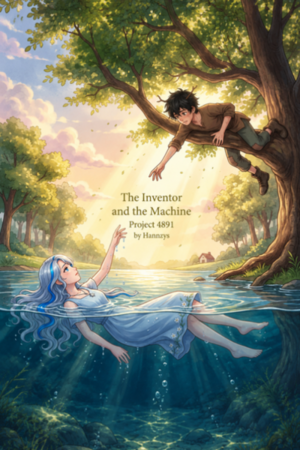
The Inventor and the Machine. Project 4891.
Year 2356. Seven years after the end of the Human-AI War.
Northern European Farmland. The Joshua Family Farm.
The morning sun hung low over the Greenfield farm, casting long golden fingers across the rolling hills of wheat and the weathered wooden fence where twelve-year-old Elio Joshua stood, his small hands extended toward the gentle creature nuzzling his palms.
"Mio, eat gently..."
The calf was barely three months old—all knobby knees and wide brown eyes, with a patch of white fur on her forehead that looked like a splatter of milk. She munched the dried wheat stalks with the enthusiasm of someone who had never been fed in her entire life, her tail swishing back and forth like a dog's.
Elio giggled as Mio's rough tongue scraped against his fingers, tickling him. "I said gently, you greedy girl!"
Mio mooed. It was a long, dramatic sound—the kind of moo that clearly said I am starving, I have never been fed, I am practically a skeleton, please give me more or I shall simply perish right here in this field.
"You are not starving," Elio said, pulling his hand back and wiping the cow slobber on his worn trousers. The fabric was patched in three places—one on each knee and a mismatched square on his rear that he'd tried to hide with a belt. It didn't work. Everyone could see it. Mama had offered to fix it properly, but Elio had insisted on doing it himself.
It looks like a map of a weird island, he thought, glancing down at his handiwork. A weird, ugly island.
Mio pressed her wet nose against his arm, demanding more food. When Elio didn't immediately comply, she let out another moo—this one shorter, sharper, more insistent. The kind of moo that said excuse me, I am speaking to you, why are you not listening, this is unacceptable.
"Okay, okay!" Elio laughed—a bright, unguarded sound that echoed across the farmyard. He scooped up another handful of wheat from the burlap sack at his feet. "You know, if you keep eating like this, you're going to be as big as Old Man Hemsworth's prize bull. And then what? You won't fit through the barn door. You'll have to sleep outside. In the rain. And I'll have to bring you an umbrella and—"
Mio mooed again, cutting him off. I don't care about umbrellas. I care about wheat. Give me the wheat.
"You're so bossy," Elio grumbled, but he was smiling. He always smiled around Mio. She was more than just a cow—she was his best friend. His partner in crime. The only one who listened to his rambling stories without judgment.
Well. She didn't really listen. But she didn't walk away either. That counted for something.
Mio was the first calf born on the farm after the war ended. Elio had been there when she came into the world—a wet, wobbly, confused little thing who couldn't even stand up straight. He'd stayed up all night with her, feeding her from a bottle, whispering encouragement.
You can do it, he'd said. Come on, Mio. Just stand up. You're not going to let a little thing like gravity beat you, are you?
She'd stood up eventually. And then she'd immediately fallen over again. But that was okay. They'd both learned.
Now, three months later, Mio was strong and healthy and insufferably demanding.
"I love you," Elio said, scratching behind her ears. "But you're a menace."
Mio leaned into his touch, her eyes half-closing in contentment. She didn't deny it. She was a menace. She wore it like a badge of honor.
"ELIO!"
The shout came from the farmhouse—a sturdy two-story structure of weathered timber and stone, with a chimney that puffed lazy gray smoke into the autumn sky. Elio winced, his shoulders hiking up toward his ears.
Busted.
He turned, still clutching the wheat sack, and saw her standing in the doorway. Mama. Her real name was Sergeant Maria Lawson—or it had been, once, a lifetime ago—but to Elio, she was just Mama. She stood with her hands on her hips, her graying brown hair pulled back in a practical bun, wearing a simple woolen dress the color of dried sage. An apron was tied around her waist, dusted with flour, and her face—weathered by years of war and worry—wore an expression that Elio had learned to recognize as the calm before the storm.
"Elio Joshua," she called again, her voice carrying that particular tone that mothers everywhere seemed to master instinctively, the one that could make a boy's spine snap to attention from fifty paces. "Lunch is ready! Stop bothering that poor cow and get in here!"
Elio pouted. He actually pouted—lower lip pushed out, eyebrows drawn together in an exaggerated display of tragedy that would have been at home on a theater stage.
"Mama, please, can I continue feeding Mio?" He held up the wheat sack as evidence of his noble purpose. "She's still hungry! Look at her! She's wasting away!"
Mio, at that exact moment, chose to let out a loud, satisfied burp.
Elio's pout deepened. Traitor.
A second figure appeared in the doorway—a tall man with broad shoulders and kind eyes, his brown hair streaked with premature gray, though he was only in his early forties. Papa. His real name was Thomas Lawson, and he had the calloused hands of a farmer and the gentle smile of someone who had seen too much violence and decided to dedicate the rest of his life to growing things instead of destroying them. He walked with a slight limp, his left leg replaced by a wooden prosthetic from the knee down—a reminder of the war that everyone else seemed to have forgotten. He placed a hand on Maria's shoulder and looked at Elio with warm amusement.
"Son, you have to listen to your mother." His voice was deep and steady, like the rumble of distant thunder. "She's calling you to have lunch. Come on. Mio can wait."
Elio sighed—a dramatic, full-body sigh that made his thin shoulders rise and fall like a deflating balloon.
"Okay, Papa. I am coming..."
He gave Mio one last pat on her head, then trudged toward the house, dragging his feet with exaggerated reluctance. The grass was cool and damp beneath his bare feet—he'd lost his shoes somewhere near the creek three days ago and hadn't bothered to find them. Mama would scold him about it later. She always did.
But that's a problem for future Elio, he decided. Present Elio has lunch to eat.
Mio watched him go, then turned back to the wheat sack he'd left behind. She nudged it with her nose. When nothing happened, she nudged it again.
Then she started eating directly from the sack.
No one was watching. It was fair game.
The kitchen smelled like heaven.
Elio inhaled deeply as he stepped through the door, his bare feet slapping against the worn wooden floorboards. The aroma of fresh bread, herbs, and something savory wrapped around him like a warm blanket. The farmhouse kitchen was modest—a heavy oak table scarred by years of use, mismatched chairs that had been repaired so many times they were more patch than original wood, and a stone hearth where a cast-iron pot hung over glowing embers. Dried herbs hung from the ceiling beams, filling the air with the scent of rosemary and thyme.
On the table sat a simple meal: a loaf of dark bread, a wedge of hard cheese, a bowl of pickled vegetables, and a small pot of honey that Papa had traded three sacks of potatoes for at the market last week. It was a feast by post-war standards.
"Wash your hands," Mama said without turning around. She was at the counter, cutting the bread into thick slices. "And I mean actually wash them, Elio. With soap. Not just the ritual of holding your hands under the water for two seconds."
Elio, who had been inching toward the table with his dusty hands hidden behind his back, deflated.
"How do you do that?" he muttered, trudging to the washbasin by the window. "You didn't even look at me."
"I'm a mother," Maria said dryly. "I have eyes in the back of my head. It's a requirement."
Papa chuckled, settling into his chair at the head of the table. His wooden leg creaked as he shifted his weight. "Better listen to her, son. She's got a sixth sense for mischief. I've been married to her for nine years and I still haven't figured out how she does it."
"Nine years of marriage and you still haven't learned to put your boots by the door instead of leaving them in the middle of the hallway," Maria countered, but there was warmth in her voice. "I nearly broke my neck last night."
"I was tired," Papa protested weakly.
"You're always tired."
"I'm a farmer."
"That's not an excuse, Thomas."
Elio grinned as he scrubbed his hands with the rough lye soap, watching his parents banter. This was normal. This was home. The back-and-forth, the gentle teasing, the way Mama's eyes crinkled when she tried not to smile at Papa's ridiculous excuses—it was all part of the rhythm of their lives, as familiar as the sunrise.
I'm lucky, Elio thought, drying his hands on a rough cloth. I'm really lucky.
He didn't know how lucky. He didn't know that the woman slicing bread and the man laughing at his own jokes were not his biological parents. He didn't know that his real mother had died in a rain of blood and bullets, her heart ripped from her chest by a machine that wore a human face. He didn't know that his father was out there somewhere, a hero who had saved humanity and then vanished into the shadows, carrying a burden no one should have to bear.
He didn't know any of it.
And for now, that was a mercy.
Lunch was a lively affair.
Elio sat between his parents, his legs swinging beneath the table since his feet couldn't quite reach the floor. He tore into his bread with the enthusiasm of a growing boy, dipping it in honey and getting the sticky sweetness all over his fingers and, somehow, a bit on his nose.
"Elio, you're getting honey everywhere," Mama said, but she was smiling.
"It's delicious," Elio said through a mouthful of bread. "Mmf. Best honey ever. Did you get this from the Henderson farm, Papa?"
"Sure did," Papa said, leaning back in his chair with a satisfied sigh. "Old Man Henderson said it was the best batch he's had in years. I traded three sacks of potatoes and a wheelbarrow for it."
"A wheelbarrow?" Elio's eyes went wide. "Papa, that was our only wheelbarrow!"
"It was worth it," Papa said solemnly. "You can't put a price on good honey."
"You literally just put a price on it," Mama pointed out. "Three sacks of potatoes and a wheelbarrow."
"That's not a price. That's a bargain."
Elio laughed, honey dripping from his chin. "Papa, you're terrible at bargaining. Remember when you traded our best chicken for a 'magic bean' that turned out to be a regular bean?"
"That bean grew into a very nice beanstalk," Papa said with dignity.
"It died in two weeks."
"It was a learning experience."
Mama shook her head, but she was laughing too. "Thomas, you're lucky I love you."
"I know," Papa said, reaching over to squeeze her hand. "I thank my lucky stars every day."
Elio made a gagging noise. "Gross. You two are gross."
"Someday you'll understand," Mama said, her eyes soft. "Someday you'll meet someone who makes you feel like the whole world is brighter just because they're in it."
Elio scrunched up his nose. "Girls are weird. They scream at bugs and cry when you put frogs in their lunch boxes."
"That's because you put frogs in their lunch boxes, Elio," Mama said flatly.
"They were friendly frogs. They were trying to make friends."
"Frogs cannot make friends with screaming nine-year-old girls."
"They could if they tried harder."
Papa burst out laughing, a deep, rumbling sound that shook the table. "Son, you're going to be a handful for whatever poor girl ends up with you."
"I'm not going to end up with any girl," Elio declared. "Girls are gross. I'm going to live on this farm forever and take care of Mio and all the other cows and never talk to a girl ever."
Mama and Papa exchanged a look—the kind of look that parents share when they know something their child doesn't, a look full of secret amusement and fond exasperation.
"We'll see," Mama said mysteriously.
"We'll see?" Elio repeated suspiciously. "What does that mean? Why are you looking at each other like that? Stop it."
"We're not looking at each other like anything," Papa said innocently.
"You're doing it right now!"
"I have no idea what you're talking about."
Elio narrowed his eyes, but before he could press further, Mama stood up and began clearing the dishes.
"Alright, troublemaker, finish your bread. After lunch, we're going to do some work in the garden. The tomatoes need staking and the weeds are getting out of control."
Elio groaned. "But Mama, it's such a nice day! Can't I go explore the forest instead?"
"The forest can wait. The tomatoes cannot."
"Tomatoes are boring."
"Tomatoes are food, Elio. Food that we need to survive the winter."
"I'd rather survive on honey."
"Then you'd better hope Old Man Henderson keeps trading us honey, because we're not buying any more wheelbarrows."
Elio grumbled, but he finished his bread and helped clear the table, stacking the bowls and carrying them to the washbasin. Mama kissed the top of his head as he passed, and Papa ruffled his hair, and for a moment—just a moment—Elio felt so full of warmth and love that he thought his chest might burst.
This is what happiness feels like, he thought. This is what it feels like to be safe.
He didn't know how precious that feeling was. He didn't know how easily it could be taken away.
But he would learn.
The afternoon passed in a blur of sunlight and hard work.
Elio helped Mama in the garden, pulling weeds and staking the tomato plants with long wooden poles. His hands got dirty, his knees got scraped, and he accidentally uprooted an entire pepper plant thinking it was a weed, which earned him a ten-minute lecture on the difference between peppers and pigweed.
"How was I supposed to know?" he protested. "They look the same!"
"They look nothing alike, Elio. The pepper plant has—" Mama stopped herself, pinching the bridge of her nose. "You know what? Never mind. Just... just help me replant it."
"Can we pretend it was a weed and never speak of this again?"
"No."
"Worth a try."
Papa, meanwhile, was out in the fields, tending to the wheat and checking the fences for any signs of damage. The farm was small—barely fifty acres—but it was everything to them. It was their sanctuary, their safe haven, their proof that life could go on after the horrors of the war.
Elio had heard stories about the war. Everyone had. The teachers at the village school talked about it in hushed voices, their eyes distant and haunted. Eight years of bloodshed. Eight years of machines hunting humans through ruined cities and burning fields. Eight years of terror and loss and death on a scale that was almost impossible to comprehend.
But Elio had been born during the war. He didn't remember any of it. To him, the war was just a story—a scary bedtime tale that parents told to make their children appreciate the peace they now enjoyed.
They're just stories, he thought as he yanked another weed from the soil. The war is over. The robots are gone. Everything is fine now.
He didn't know that the war had ended only seven years ago.
He didn't know that his parents still had nightmares about it—Mama especially, who had been a soldier on the front lines, who had seen things that no human being should ever have to see.
He didn't know that his real mother had died in front of those very soldiers, had given her life so that he might live.
He didn't know.
And for now, that was a mercy too.
By late afternoon, Elio was covered in dirt, sweat, and a suspicious amount of tomato juice (don't ask). Mama had declared the garden sufficiently weeded and the tomatoes sufficiently staked, and had retreated inside to start preparing dinner. Papa was still out in the fields, and Elio found himself with something he rarely had: free time.
He stood in the farmyard, looking out toward the edge of the property where the small forest began—a cluster of ancient oaks and maples that had somehow survived the war, their branches reaching toward the sky like gnarled fingers. Wildflowers dotted the forest floor, and the light filtered through the leaves in patches of gold and green.
It's so pretty, Elio thought. I want to go explore it.
He knew he shouldn't. Mama had told him a hundred times not to wander too far into the woods—there were still old war machines scattered around, she said, dangerous things that could hurt him if he wasn't careful. But Elio had explored the forest dozens of times before and had never found anything more dangerous than a grumpy badger.
And I've never gone that far, he reasoned. I'll just go a little ways in. Just to the big oak tree. That's all.
He glanced back at the farmhouse. Mama was inside, probably busy with dinner. Papa was in the fields. No one would notice if he slipped away for a few minutes.
Just a few minutes, he promised himself. Then I'll come right back.
He took off running toward the forest, his bare feet pounding against the soft grass.
Mio followed him.
"Go back, Mio!" Elio called over his shoulder. "I'm just going for a quick walk!"
Mio did not go back. Mio never went back. Mio was loyal and stubborn and absolutely convinced that wherever Elio went, she needed to be there too.
"Fine!" Elio sighed. "But if something eats you, I'm not carrying you back!"
Mio mooed happily, which Elio took to mean I accept these terms.
The forest was alive.
Sunlight dappled through the canopy, painting the ground in shifting patterns of gold and shadow. Birds sang from the branches, their melodies weaving together in a chaotic symphony. A squirrel chattered at Elio from a nearby trunk, scolding him for intruding on its territory.
"I'm just passing through," Elio told it. "Don't get your tail in a twist."
The squirrel responded by throwing an acorn at his head.
"Ow! Okay, okay, I'm going!"
He ducked deeper into the forest, dodging low-hanging branches and stepping over fallen logs. The air was cooler here, carrying the sweet scent of wildflowers and damp earth. Elio found himself smiling, his earlier frustrations about garden work forgotten.
This is the life, he thought. Just me and the forest and the—
He stopped.
Ahead of him, nestled among the roots of a massive oak tree, was a cluster of flowers he'd never seen before. They were beautiful—delicate petals of pale blue and soft purple, glowing faintly in the shaded light. Elio approached slowly, crouching down to examine them.
"Whoa..." he breathed. "Mama would love these."
He reached out to pick a few, planning to surprise his mother with a bouquet. But as his fingers brushed against the petals, something caught his eye.
Beyond the flowers, half-hidden by moss and fallen leaves, was a shape.
A rock.
But not just any rock. It was perfectly triangular, its edges too sharp and too smooth to be natural. It looked... wrong somehow, out of place among the organic chaos of the forest.
Elio frowned, tilting his head.
"That's weird," he muttered.
He should have turned back. He should have picked his flowers and returned to the farm and never thought about the strange rock again.
But Elio was twelve years old, and twelve-year-olds are constitutionally incapable of leaving mysterious things alone.
He took a step forward.
Then another.
Mio, behind him, made a nervous sound. A low, worried moo.
"It's okay, girl," Elio said, not looking back. "It's just a rock."
He reached out to touch it—
And the ground gave way beneath him.
"WHOA—!"
Elio fell.
It wasn't a long fall—maybe ten feet—but it was enough to knock the wind out of him.
He landed on something hard. Something cold.
Metal?
He groaned and sat up, rubbing his head.
And then he looked around.
He was in a hallway.
A metal hallway.
The walls were smooth and gray, lit by dim lights that flickered weakly. A glass tube ran along the ceiling, filled with a glowing purple liquid that pulsed like a heartbeat.
Elio stared.
What the...
He stood up. His legs were shaking—but not from fear.
From excitement.
This is... this is amazing!
He looked up. The hole he'd fallen through was about ten feet above him—not too high. He could probably jump and reach it if he needed to.
But he didn't want to leave.
Not yet.
What is this place? he thought, his heart pounding. Is this... is this someone's house?
He knew about underground bunkers. During the war, people had built them to hide from the robots, to protect themselves from the machines that hunted them. Maybe this was one of those bunkers. Maybe someone lived down here.
But it looks... abandoned, he thought, noticing the layer of dust on the floor, the flickering lights, the general air of neglect. No one's been here for a long time.
He followed the tube.
The hallway twisted and turned—left, right, left, left, left, right—until he reached a door.
A triangle door.
With a keypad.
Elio stared at it.
"Aw, man..."
He sat down on the floor and huffed. "Now... what is this again?"
He scratched his head.
"Oh, right. Code. It needs a code. Like Mama said."
He sighed.
"I want to give up."
He leaned back against the wall and stared at the ceiling.
But then he saw it.
A sign.
Room Experiment: 4891
Elio blinked.
Then he grinned.
"Welp. Here goes nothing."
He punched in the numbers.
4-8-9-1.
DING.
The door slid open.
Cold air rushed out, making Elio shiver.
"B-brrr!"
He stepped inside.
The room was dark. Dusty. Abandoned.
Computers lined the walls, their screens flickering with lines of code that Elio couldn't read. Chairs were overturned. Papers were scattered across the floor.
This is definitely a lab, Elio thought. Like the ones in the stories. A science place.
He wandered deeper into the room, his bare feet making soft sounds against the cold metal floor. The air was still and silent, broken only by the soft hum of the machines and the distant pulse of the purple liquid flowing through the tubes.
What happened here? he wondered. Where is everyone?
He turned a corner—
And stopped dead.
In front of him was a tank.
A huge glass tank, tall and cylindrical, filled with that same glowing purple liquid.
And inside the tank, floating suspended in the liquid like a sleeping angel...
Was a girl.
Elio's heart stopped.
The girl was... she was beautiful. That was the first thing he noticed. Her hair was silver, long and flowing, with a single streak of blue that ran from her temple to her tips like a ribbon of sky. Her skin was pale and smooth, unblemished, almost luminous in the purple glow of the liquid.
She looked older than him—maybe fourteen, maybe fifteen. Her body was... developed. Curved in ways that made Elio's face suddenly feel very hot and his brain suddenly feel very empty.
Girls are gross, he reminded himself. Girls are gross. Girls are—
She was really pretty.
—gross.
He shook his head violently.
Focus, Elio!
The girl wore a thin white suit that covered her from neck to toe, clinging to her form like a second skin.
And her face...
Her face was peaceful. Serene. Her eyes were closed, her expression relaxed, as if she were simply sleeping.
She's drowning, Elio thought, panic flooding through him. She's drowning in there and no one's helping her!
He ran to the tank, pressing his hands against the glass.
"Hey! Hey, can you hear me?!" He pounded on the glass, his fists leaving smudges on the surface. "Wake up! You have to wake up!"
The girl didn't move. She floated there, motionless, her silver hair drifting around her like seaweed in a current.
Elio looked around frantically, searching for something—anything—he could use to break the glass. He spotted a chair lying on its side and grabbed it, swinging it at the tank with all his might.
CLANG.
The chair bounced off. The glass didn't even crack.
"No no no no no..." Elio tried again. CLANG. Again. CLANG. Again. CLANG.
Nothing.
"Come ON!" he screamed, tears pricking at his eyes. "BREAK!"
He threw the chair aside, his hands shaking. He looked around, desperate, and spotted something on the wall—a red canister with a hose attached. A fire extinguisher. He'd seen one at the village school, during a safety demonstration.
He grabbed it, nearly dropping it—it was heavy—and dragged it to the tank.
"Okay," he panted. "Okay, here we go."
He swung the extinguisher at the glass with all his strength.
CRACK.
A tiny fissure appeared in the surface.
"Yes!" Elio swung again. CRACK. And again. CRACK. And again and again and again, his arms burning, his breath coming in ragged gasps, until finally—
CRASH.
The tank shattered.
Purple liquid exploded outward, knocking Elio off his feet and drenching him from head to toe. He sputtered, wiping the strange, warm liquid from his eyes, and saw the girl tumbling out of the tank, her body limp and lifeless.
"No!" He scrambled to his feet and caught her before she hit the ground, cradling her in his arms. She was lighter than he expected, her body cold and still.
"Hey, hey!" He shook her gently, his voice cracking. "Can you hear me? Hello? Are you okay? Hello? Wake up! Wake up!"
She didn't respond. Her eyes remained closed, her face slack.
Is she breathing? Elio leaned down, pressing his ear to her chest, listening for a heartbeat.
Nothing.
No heartbeat. No breath. Nothing.
"No no no no no..." Tears streamed down Elio's face, mixing with the purple liquid. "You can't—you can't be—please—"
He shook her harder.
"WAKE UP! PLEASE WAKE UP!"
And then—
Her eyes opened.
They were the color of the ocean—a deep, luminous blue that seemed to glow in the dim light of the lab. They blinked once. Twice.
And then they focused on him.
System booting...
Scanning...
Subject detected: Male. Age: Approximately 12 years. Heart rate: Elevated. Emotional state: Distress.
Threat level: None.
...
Who is this?
She blinked.
The boy was staring at her. His eyes were wide. His face was red. He was holding her.
She tilted her head.
"Oh," she said. "Hi."
Elio's brain short-circuited.
"Hi?!"
She just... said hi.
She almost died and she said hi.
"Are you—are you okay?!" he stammered. "Can you move?!"
She blinked again.
Then she shook her head.
She can't move.
"Okay," Elio said, his voice shaking. "Okay, it's okay. I'll—I'll carry you. I'm getting you out of here."
He tried to lift her.
She was heavy.
Really heavy.
"Oof—!"
He staggered, his face turning red from effort.
The girl watched him. Her head tilted again.
Why is he making that face?
Elio gritted his teeth. "Don't worry... I've got you..."
He stumbled forward.
The girl stared.
She didn't understand.
But she felt... something.
Something warm.
He carried her through the hallway.
He found the hole he'd fallen through.
"Okay... okay, I'm gonna lift you up first."
He strained, pushing her up through the opening. She tumbled onto the grass above.
Then Elio jumped, grabbing the edge and pulling himself up.
He collapsed onto the ground, gasping.
"Wow..." he wheezed. "You are very heavy... you must be very special."
He smiled at her.
It was a warm smile. A kind smile.
The girl stared.
Special?
She didn't know what that meant.
But she liked the way he said it.
Mio was waiting for them.
The calf took one look at the strange girl, snorted, and backed away.
"It's okay, Mio," Elio said. "She's friendly. I think."
Mio did not look convinced.
Elio carried the girl through the forest.
The sun was setting. The sky was orange and pink.
"Don't worry," he said. "I'll get you out of here."
The girl rested her head against his shoulder.
She could hear his heartbeat.
Ba-dump. Ba-dump. Ba-dump.
It was... nice.
They emerged from the forest.
And then—
"ELIO!"
Maria was running toward them. Thomas was behind her.
"YOU IDIOT! WHERE WERE YOU?!"
Elio winced. "Mama, I—"
Maria stopped.
She saw the girl.
Her face went pale.
"Elio..." she whispered. "Who... who is that?"
Elio smiled.
"Mama, I found this girl in the forest! She's heavy. Please help."
He made a goofy face—the kind of exaggerated, struggling expression that only Elio could make.
Maria stared.
Something in her gut tightened. Something old. Something trained.
She couldn't explain it. The girl looked human. Completely human. But something about her—something in the way she held herself, the emptiness in her eyes—made Maria's instincts scream.
Danger.
She pushed the thought down.
She's just a child. A lost child.
"Okay," she said. "Okay. Let's get her inside."
Maria moved forward, her hands reaching for the girl. But Elio shook his head.
"I got her, Mama."
"Elio, you can barely stand—"
"I got her."
There was something in his voice—something stubborn, something proud—that made Maria pause. She looked at her son. Twelve years old. Scrawny. Covered in dirt and purple liquid and exhaustion.
And carrying a girl who was clearly heavier than him.
"Fine," Maria said quietly. "But if you drop her, I'm not carrying both of you."
"I won't drop her."
Thomas stepped forward. "I'll get the door."
He limped ahead, his wooden leg creaking with each step, and held the farmhouse door open.
Elio adjusted his grip on the girl—she was still limp, still silent, her ocean-blue eyes staring at everything and nothing—and started walking.
The grass was soft beneath his bare feet. The evening air was cool, carrying the scent of wheat and wildflowers. In the distance, the sun was painting the sky in shades of orange and pink and purple.
She's heavy, Elio thought, his arms burning. Really heavy. Like carrying a sack of potatoes. A really pretty sack of potatoes.
He immediately felt weird about that thought.
Not potatoes. Not potatoes. That's weird.
The girl's head rested against his shoulder. She wasn't moving—not even a little. Her body was stiff, unnatural, like a doll that had been posed but never taught how to move.
Is she okay? Elio wondered. She opened her eyes. She said 'hi.' But she can't move. Why can't she move?
He wanted to ask her. But something told him she wouldn't have an answer.
The porch steps creaked as he climbed them. One. Two. Three. Each step sent a jolt through his tired legs, but he didn't stop.
Mio followed behind them, her hooves clacking against the wooden porch. She mooed softly—a worried sound.
"It's okay, Mio," Elio said, breathless. "She's just... tired. I think."
Mio didn't look convinced.
Thomas held the door open. "Careful. The hallway's narrow."
Elio nodded and stepped inside.
The farmhouse was warm. The smell of dinner still lingered in the air—bread and herbs and something savory. Oil lamps flickered on the walls, casting dancing shadows across the wooden floors.
The girl's eyes moved. Slowly. Taking in everything.
What is this place?
Her thoughts were... strange. Disconnected. Like puzzle pieces that didn't quite fit together yet.
Wood. Warm light. The smell of... food? What is food?
She knew the word. She knew what it meant. But she had never experienced it.
And the boy. The boy is carrying me. Why is he carrying me?
She looked at his face. He was straining. Sweating. His jaw was clenched.
He's struggling. Because of me. Because I'm... heavy?
She didn't understand why that mattered. She didn't understand why he didn't just put her down.
Why is he helping me?
"Stairs," Thomas said, gesturing to the narrow staircase at the end of the hall. "Think you can make it?"
Elio looked at the stairs. Then at the girl in his arms. Then at the stairs again.
"...Yeah," he said, not sounding convincing at all. "Yeah, I got this."
Maria appeared beside him. "Elio—"
"I got this, Mama."
He started climbing.
The stairs were old. They creaked with every step. Elio's legs screamed. His arms burned. His lungs heaved.
But he kept going.
One step. Two steps. Three steps.
The girl watched his face.
He's in pain, she thought. Because of me. He should put me down. Why doesn't he put me down?
She tried to move her arms. Nothing. Her body felt like it was filled with sand—heavy, slow, unresponsive.
I want to help him. But I can't. Why can't I?
"Almost there," Elio gasped. "Almost... there..."
Four steps. Five steps. Six.
The hallway upstairs was short—just three doors. Elio's room was at the end.
Thomas had already opened the door. "In here, son."
Elio stumbled through the doorway and crossed to his bed—a small, simple cot with a worn quilt and a pillow that had seen better days.
He tried to lower the girl gently. His arms gave out.
She flopped onto the mattress with a soft thump.
"Sorry!" Elio winced. "Sorry, sorry—are you okay?"
The girl blinked.
Are you okay?
She didn't know how to answer that.
Elio's room was small. Cluttered. A desk in the corner, covered in papers and old books. A window that looked out over the wheat fields. A wooden chest at the foot of the bed.
The girl's eyes moved across all of it.
What are these things?
She recognized the words—bed, desk, window—but the meanings felt hollow. Empty. Like reading a dictionary in a language she didn't speak.
I know what a bed is, she thought. I'm lying on one. But I've never... felt one before.
She pressed her fingers into the mattress. The fabric was rough. Soft. Real.
This is new.
Maria appeared in the doorway.
She stood there for a long moment, her arms crossed, her gray eyes fixed on the girl.
Something was wrong.
She couldn't explain it. The girl looked human. Completely human. Pale skin, silver hair, ocean-blue eyes. A thin white suit that looked like something from before the war.
But something was off.
Maria had been a soldier. She had spent eight years fighting HAIUs—watching them move, watching them kill, watching them pretend to be human. She had learned to spot the difference.
The way they held themselves. The way they looked at things. The way their eyes never quite focused the way human eyes did.
No, she told herself. The war is over. All the HAIUs are dead. This is just... a lost girl. A victim. Nothing more.
She forced herself to relax.
"I'll get food," she said. "Elio... stay with her."
"Okay, Mama."
Maria left.
Thomas lingered.
He looked at Elio. Then at the girl. Then back at Elio.
"You scared your mother half to death," he said quietly.
Elio looked down. "I know. I'm sorry."
"But..." Thomas knelt down, placing a hand on Elio's shoulder. "You also saved someone. That matters, son. That matters more than you know."
Elio looked up.
Thomas smiled.
"Just... try to listen next time, okay? Your mother worries."
"I will, Papa."
"No, you won't." Thomas ruffled his hair. "But I appreciate the effort."
He left.
Elio sat beside the bed.
The girl stared at him.
He stared back.
"So..." he said. "What's your name?"
The girl blinked.
She didn't answer.
"Can you talk?"
She tilted her head.
"Okay... that's fine. You don't have to talk. I'm Elio. Elio Joshua."
He pointed at himself.
"E-li-o."
The girl stared.
Then she pointed at herself.
"...?"
Elio laughed. "You don't have a name?"
She shook her head.
"Okay. I'll call you... hmm..."
He thought for a moment.
Then he grinned.
"How about... Luna? Because your hair is silver like the moon."
The girl blinked.
Luna.
She didn't know what it meant.
But she liked the way he said it.
Feet pounded on the stairs.
"Elio!"
Maria appeared in the doorway, carrying two bowls. Steam curled from them, filling the room with the smell of rice and chicken and garlic.
"Here," she said, handing one to Elio. "Feed her. She looks weak."
Elio nodded. "Okay."
He took the bowl and scooped up some rice. The chicken was cut into small pieces, mixed with black pepper and fried garlic. It was his favorite. His mouth watered.
But he didn't eat.
He turned to the girl.
"Hey," he said, tapping her shoulder. "I'm gonna feed you, okay?"
The girl turned to him.
He held the spoon to her lips.
"Say ahhh."
She blinked.
Then she opened her mouth.
"Ahhh."
Elio fed her.
She chewed.
Her eyes widened.
This... this is good.
She ate faster.
Elio laughed. "Slow down! You're gonna choke!"
She didn't slow down.
She finished the bowl in seconds.
Then she burped.
Elio burst out laughing.
"Did you just—did you just burp?!"
The girl tilted her head.
What's funny?
Elio was doubled over, tears streaming down his face.
"OH MY GOD—"
Maria smiled.
Thomas chuckled from the hallway.
And the girl—Luna—watched them all.
She didn't understand.
But she felt... warm.
Later that night, after the bowls were empty and the lamps were dimmed, Elio sat on the floor beside his bed.
Luna lay under the quilt, staring at the ceiling.
"You can have my bed," Elio had said. "I'll sleep on the floor."
Luna didn't understand why.
Why would he give up his bed?
She watched him as he arranged a thin blanket on the floorboards. He was small. Scrawny. His hair was messy and his clothes were patched and his feet were bare.
But his eyes were kind.
Why is he kind?
She didn't know.
She had no memories. No context. No understanding of what kindness was or why it mattered.
But she felt... something.
Something warm.
Something safe.
Elio yawned. "Goodnight, Luna."
He closed his eyes.
Luna watched him.
She watched his chest rise and fall. She watched his face relax. She watched him drift into sleep.
Sleep, she thought. What is sleep?
She didn't know.
But she closed her eyes anyway.
And for the first time in her existence—
She rested.
END OF CHAPTER 1





Please sign in to leave a comment.