Chapter 1:
Episode One: The Liberty Engine
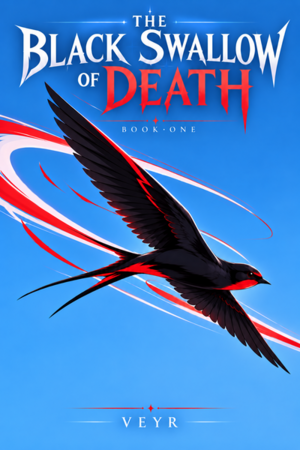
The Black Swallow of Death: Book One
The engine hung six inches above its cradle, and Roland Morano could hear something rubbing where nothing should have moved.
“Hold there,” he said.
The hoist stopped. Across the restoration bay, Mara kept one hand on its pendant control while Roland leaned close enough to locate the sound. He stayed outside the yellow line around the suspended load. Twelve cylinders, dark metal, carefully cleaned fittings: the Liberty engine looked almost ready to deserve its museum label.
Almost was where they lived. “Chain?” Mara asked.
“Could be the sling settling. I want to look before we lower it.”
“You always want to look.”
“That's why you pay me the impressive graduate-student rate.”
She smiled without taking her eyes off the engine. “We pay you to stop telling visitors that impressive things were also terrible ideas.”
Roland crouched beside the cradle. The scrape had ceased. One strap lay at an angle he didn't like, but he couldn't see its underside from here. He stood and went around the marked area rather than reach underneath.
Behind him, rain tapped the high windows. Washington had been gray since breakfast. A volunteer had left a paper cup on the workbench with Roland's name misspelled, and his phone lay beside it, displaying a message from his mother.
Dinner Sunday? Actual dinner. Not you eating bread over the sink.
He had meant to answer twenty minutes ago.
“Set it back down,” he told Mara. “We'll check the attachment.”
“Copy.”
The engine descended slowly. Roland watched the cradle's near support, then the far one. Their block was a teaching restoration, not an engine they intended to run; most of his work involved recording what previous restorers had changed and undoing the changes that concealed how it had originally worked. Today it needed to move so they could inspect the inaccessible mounting surfaces.
He knew its history better than he knew the hoist. That was why Mara operated it. The scrape returned.
Mara stopped the descent immediately. This time there was a sharper sound beneath it, a small metallic crack that seemed absurdly quiet for what followed.
One end of the engine dropped.
The whole assembly swung toward Roland.
He tried to step back, struck the wheel of a tool cart, and lost the distance he needed. Mara shouted his name. There was enough time to recognize that the moving mass had already passed the yellow line, but not enough time to get out of its path.
It hit him below the shoulder and drove him against the bench. Something gave inside his chest. He couldn't tell whether the noise came from him or the wood behind him. The engine shifted again, trapping him, and his feet ceased to touch anything useful.
Mara was still shouting. He wanted to tell her to stay clear, because the load wasn't stable, because coming closer would make two people instead of one. No air came out.
His phone slid off the bench. He saw the bright screen fall, absurdly distinct among everything else.
Dinner Sunday?
He hadn't answered. The pressure continued after sensation began to disappear. He felt a violent effort in his throat, then nothing there at all. The bay's lights dimmed without switching off. Mara's face was above him now, too close, and he could no longer make sense of what she was saying.
Rain still touched the windows.
He tried once more to breathe.
The breath came in burning hot.
Roland jerked forward against a strap. Air struck his face hard enough to force his eyes shut. An engine hammered ahead of him, not hanging motionless over a cradle but running badly, each irregular beat traveling through the seat into his spine.
He coughed. His chest moved. It hurt, but it moved. For a moment that was all he could understand.
Then he opened his eyes.
There was no restoration bay. He sat in a narrow cockpit behind a windscreen smeared with oil. Beyond it, a propeller made a blurred circle against clouds. Smoke streamed from the left side of the cowling and whipped back past his shoulder.
His right hand gripped a control stick.
He let go as if it had bitten him. The nose dropped immediately, lifting his stomach against the harness. He caught the stick again and pulled too hard. The engine note changed, the sky filled the windscreen, and something behind the instrument panel began to rattle.
“Easy,” he said, though there was nobody to hear him. “Easy.”
He eased the stick forward. Sky and cloud returned to approximately where they had been.
That wasn't skill. It was one mistake corrected before the next. The cockpit smelled of hot oil, leather, and a sweetness like overheated varnish. A brown coat covered his arms. Heavy gloves had been tucked into a pocket beside his left thigh. He had been wearing a museum shirt a moment ago.
No. Not a moment. He didn't know how long.
He looked down at his hands. The white scar at the base of his thumb was still there, the one he'd acquired opening a stubborn packing crate at nineteen. His fingers shook over it.
He had no explanation for any of this. A simulator didn't put oil in your mouth. A hospital didn't have clouds beneath the wheels. Fire appeared along the edge of the cowling.
Roland stopped looking at his hands.
He had flown a little with a friend in a two-seat trainer, always with the friend making the decisions and saving him from his own corrections. He had never landed anything. Restoring old aircraft didn't make you able to fly one, whatever visitors liked to believe.
Still, he knew what an engine fire could do.
He kept the horizon steady and searched the panel. A large round dial trembled. Another needle sat against a red arc. The labels were made of unfamiliar letters, narrow shapes joined by hooks, so even the simplest instruction had been taken from him.
Wood framed the cockpit. Cables ran beneath the seat. A polished brass tube disappeared through the bulkhead, and beside it a thin transparent line pulsed with blue light.
Light moved forward inside the line in separate beads. When the engine missed a beat, the beads stopped, crowded together, and burst apart.
There shouldn't have been anything inside that tube except perhaps fuel or air. Neither should have shone through the brass fittings.
A hard crack sounded ahead. A piece of metal struck the windscreen and left a white star beside his face.
He ducked, then forced himself upright. The plane had banked while he wasn't watching. He corrected, too abruptly again, and smoke rolled into the cockpit.
Below the clouds lay water and a dark strip of land.
Land meant a chance. Water meant a different chance he didn't know how to take. He put both hands on the stick, then made himself release one. He needed to find a way to stop feeding the fire without sending the aircraft straight down.
“One thing at a time,” he whispered.
The engine stuttered. The blue line flared bright enough to show the bones of his wrist through his skin.
And the fire kept coming toward him.





Please sign in to leave a comment.