Chapter 4:
CHAPTER 3: LEARNED TO WALK
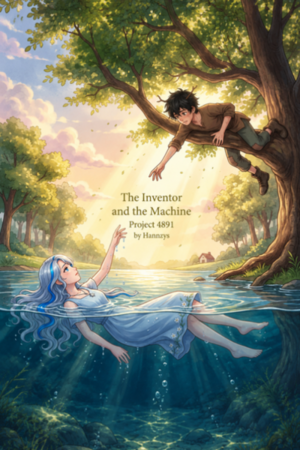
The Inventor and the Machine. Project 4891.
Year 2356. Seven years after the end of the Human-AI War.
Northern European Farmland. The Joshua Family Farm.
Monday morning. The third day of Luna's new life.
PART ONE: MORNING
Elio woke up because his back was screaming.
Not literally screaming—that would have been weird—but it was definitely making its displeasure known. He'd been sleeping on the floor for three nights now, and his body was starting to file formal complaints. His spine felt like someone had used it as a ladder. His neck had a crick in it that wouldn't go away no matter how many times he rolled his head. And there was a splinter in his palm—a new one, different from the one he'd gotten two days ago—that was throbbing in time with his heartbeat.
He groaned, rolling onto his back. The floorboards creaked beneath him. Dust motes danced in the thin morning light that seeped through the shutters.
I hate floors, he thought miserably. Floors are the worst invention in the history of the world. Whoever invented floors should be punched.
He sat up slowly, his spine popping in about six different places. Each pop sounded progressively more concerning than the last. He rubbed his eyes with the heels of his hands, yawned wide enough to crack his jaw, and looked at the bed.
Luna was standing.
Not sitting. Not lying down. Standing.
Her legs were shaking—trembling like leaves in a storm—and her face was scrunched up in intense concentration. Her brow was furrowed. Her lips were pressed together. She was gripping the headboard with one hand and the wall with the other, her fingers white-knuckled against the wood.
But she was upright.
Elio's brain stopped working.
"LUNA?!"
His voice came out as a shriek—high-pitched and undignified. He scrambled to his feet, nearly tripping over his blanket, and stared at her with wide eyes.
"YOU'RE STANDING?!"
Luna looked at him.
Her legs were shaking. Her arms were trembling. But she was standing.
She'd been practicing. All night. The same way she'd practiced with her hands—curling her fingers, uncurling them, lifting her hand an inch off the mattress. The same way she'd practiced with her arms—lifting them, holding them, lowering them. She'd focused on her legs the same way. The muscles. The joints. The bones. She'd tried to lift them. Tried to straighten them. Tried to push herself up.
She'd failed. Over and over. Dozens of times. Hundreds of times.
But she'd kept trying.
And now—she was standing.
For thirty seconds.
Then her legs gave out.
She collapsed onto the bed—a graceless, boneless heap—and lay there, breathing hard, her silver hair spread across the pillow like spilled moonlight.
But she'd done it.
Elio stared at her.
Then his face split into the biggest grin she'd ever seen.
"YOU DID IT!"
He ran to the bed—tripping over his own feet in his excitement—and grabbed her hands. He squeezed them tight, his eyes bright, his whole body practically vibrating with joy.
"You stood up! By yourself! For thirty seconds! That's—that's amazing! You're amazing! Do you know how amazing you are?!"
Luna stared at him.
He's happy, she thought. Because of me.
She didn't understand why that made her chest feel warm.
But it did.
PART TWO: BREAKFAST
Elio carried Luna downstairs—but this time, she helped.
Not much. Just a little. Her body was slightly less limp than before. Her arms held onto him instead of dangling uselessly. Her legs pressed against his side instead of hanging loose.
It made the whole thing easier.
"You're getting better at this," Elio grunted as he navigated the narrow staircase. "Pretty soon you'll be carrying me."
Luna tilted her head.
Carrying him?
She didn't understand the joke.
But she liked the way he smiled when he said it.
They reached the kitchen. Mama was at the stove, flipping eggs in a cast-iron pan. The smell of butter and frying eggs filled the air. Papa was at the table, reading the same newspaper he'd been reading for three days. Mio was standing by the door, mooing loudly because she wasn't allowed inside during meals.
Elio burst through the doorway.
"MAMA! PAPA! LUNA STOOD UP!"
Mama dropped a plate.
It shattered on the floor—a sharp, sudden sound that made everyone freeze.
"What?!" Mama's voice was sharp. Too sharp.
"She stood up! By herself! This morning! She was just... standing there! For thirty seconds!"
Papa set down his newspaper. His eyes were wide.
"Well, I'll be," he said. "That's... that's something."
Mama didn't say anything. She knelt down and started picking up the broken pieces of plate, her movements quick and jerky.
Elio didn't notice her hands trembling.
He set Luna in her chair. She sat upright—her head held high, her eyes bright, her hands resting in her lap.
"Okay," Elio said, sitting beside her. "Now we need to teach you to walk."
Mama straightened up, the broken pieces cradled in her apron.
"Elio, you have school today. Remember? It's Monday."
Elio froze.
"...Right. School."
He slumped in his chair, his shoulders drooping.
"Welp."
Then he turned and looked at Papa.
His eyes went wide. His lower lip pushed out. His whole face transformed into the most pathetic, pleading, puppy-dog expression imaginable—the kind of face that had convinced Papa to let him keep Mio when she was born, the kind of face that had convinced Mama to let him have an extra honey biscuit after dinner, the kind of face that was, frankly, unfair.
"Papa..."
Papa lowered his newspaper.
"...can you please teach Luna how to walk?"
Papa stared at him.
Then he sighed—a long, weary sigh that seemed to come from somewhere deep in his soul.
"Alright," he said. "Well, I am walking with one prosthetic wood leg and one real leg. Of course I can teach her how to walk."
Elio's face lit up. He jumped out of his chair and ran to Papa, throwing his arms around him.
"Thanks, Papa! You're the best!"
Papa chuckled and patted his back.
"Alright, alright. Go. You'll be late."
Elio pulled back, grinning.
"Alrighty! Time for school!"
Mama crossed her arms.
"Don't forget your backpack. And your math book. And your science book. And your engineering book—since you want to invent so badly."
Elio sighed dramatically.
"Mamaaaaa, I don't have short-term memory, you know?"
Mama raised an eyebrow.
"Then where's your backpack?"
Elio looked around.
It wasn't on his chair. It wasn't by the door.
It was still upstairs.
"...I'll be right back."
Mama sighed.
PART THREE: ELIO'S WALK TO SCHOOL
Elio ran upstairs, grabbed his backpack (which was under his bed, of course, because the universe had a personal vendetta against him), and ran back down. He said a quick goodbye to Luna—"I'll be back later! Papa's gonna teach you to walk! You're gonna be walking by the time I get home, I know it!"—and then he was out the door.
The morning air was cool and fresh. The sky was a pale blue, dotted with thin white clouds that drifted lazily overhead. The wheat fields stretched out on either side of the dirt path, golden and swaying in the breeze.
Elio walked.
The path led away from the farm, through fields and small clusters of trees, toward the village. It was about a thirty-minute walk—long enough to think, short enough to not be annoying.
He thought about Luna.
She stood up today, he thought. She actually stood up.
He thought about her eyes—ocean blue, calm, curious.
He thought about her smile—just a twitch at the corner, but it was there.
He thought about the way she'd felt when he caught her yesterday—soft, warm, real.
His face went red.
Stop it, he told himself. Girls are gross. Girls are—
"ELIO!"
He looked up.
Two boys were running toward him from a small farmhouse up ahead. They lived on a neighboring farm—about ten minutes from his own.
The first was Alan.
Alan was stocky, with messy brown hair and a gap-toothed grin. He was wearing a patched shirt and trousers that were too short for him, showing his bare ankles. His shoes had holes in them. His hair looked like he'd combed it with a rake.
Alan was the loud one. The reckless one. The one who always had a terrible idea and somehow convinced everyone else to go along with it.
The second was Lio.
Lio was thin, with neat black hair and glasses that were held together with tape. He was wearing a clean shirt and trousers that actually fit. His shoes were scuffed but intact. His hair was actually combed.
Lio was the smart one. The careful one. The one who always said "this is a bad idea" and then did it anyway because Alan and Elio were already doing it.
They'd been friends since they were five. They'd gotten into more trouble together than anyone else in the village.
"ELIO!" Alan shouted again, waving. "WAIT UP!"
Elio grinned and waited for them to catch up.
Alan arrived first, slightly out of breath. Lio arrived second, not out of breath at all.
"Morning," Elio said.
"Morning," Lio replied.
Alan didn't say morning. Alan said: "Dude. You look weird. Why do you look weird?"
Elio blinked. "I don't look weird."
"You look weird. You're smiling. You never smile in the morning. You're always grumpy."
"I'm not always grumpy."
"You're always grumpy."
Lio adjusted his glasses. "He's right. You're always grumpy."
Elio sighed. "Fine. I'm always grumpy. But today is different."
Alan's eyes went wide. "Different how? Did something happen? Did you finally punch that rich kid?"
"No."
"Did you finally kiss a girl?"
"EW! No!"
"Then what?"
Elio took a deep breath.
"I found a girl."
Silence.
Alan and Lio stared at him.
"You... found a girl?" Lio repeated slowly.
"In the forest. In an underground lab. She was floating in a tank of purple liquid. I broke the glass and saved her. She couldn't move at all. But now she can sit up. And today—this morning—she stood up. By herself. For thirty seconds."
Silence.
Then Alan grabbed Elio by the shoulders.
"DUDE. YOU GOTTA LET US SEE HER."
Lio nodded vigorously. "Yeah. This is—this is insane. Finding a girl in a forest? In a tank? That's—that's like something out of a story."
"I know!" Elio said. "That's what I said!"
"We have to come over after school," Alan said. "We have to. This is non-negotiable."
"We have to," Lio agreed.
Elio grinned. "Okay. But you have to be careful. She's still learning to move. And she can't talk much yet. And she's... she's different."
"Different how?" Alan asked.
Elio hesitated.
"I don't know. She's just... different. But in a good way."
Alan and Lio exchanged a look.
"A good way," Alan repeated.
"A good way," Elio confirmed.
They walked on.
The path wound through the wheat fields, then through a small cluster of trees, then over a low wooden bridge that crossed a creek. The water was clear and cold, and small fish darted beneath the surface.
The air was fresh. The sun was warm on their faces. The wheat swayed in the breeze like a golden sea.
Elio breathed it in.
This is home, he thought. This is where I belong.
He thought about Luna.
She's never seen any of this, he thought. She's never seen the fields. Or the creek. Or the village.
He couldn't wait to show her.
They talked as they walked.
Alan told them about the trap he was building to catch the rabbits that kept eating his family's vegetables. Lio explained—in great detail—why the trap wouldn't work. Alan ignored him. Lio kept explaining. Alan kept ignoring.
Elio laughed.
This was normal. This was them.
They'd been like this since they were five years old—ever since the day they'd met at the village school and discovered they all hated the same things: vegetables, chores, and Bart.
Well, they hadn't known about Bart then. But they'd learned.
"Do you remember," Alan said, grinning, "the time we tried to climb Old Man Hemsworth's tree to get those apples?"
Lio groaned. "Don't remind me."
"It was your idea!" Alan said.
"It was your idea! I said we should ask permission!"
"And I said permission is for cowards!"
Elio laughed. "You fell out of the tree, Alan. You landed on your butt. In front of everyone."
"I was fine!"
"You cried."
"I did not cry!"
"You cried," Lio confirmed. "I was there."
Alan grumbled. "I had a bruise for a week."
"And then Old Man Hemsworth chased us with a broom," Elio added.
"And then the village chief scolded us," Lio said.
"And then our parents grounded us for a month," Elio finished.
They walked in silence for a moment.
"Good times," Alan said.
"Good times," Elio agreed.
Lio sighed.
"Do you remember," Lio said, "the time we tried to build that electric machine?"
Elio groaned. "Oh no."
"Alan found that old battery in the dump," Lio continued. "And he said—what was it you said, Alan?"
"I said we could make a machine that would shock people," Alan said proudly.
"A machine that would shock us," Lio corrected. "Because you wired it wrong."
"I wired it fine!"
"You wired it so wrong. We all got shocked."
"I got shocked the most!" Alan said. "I was the bravest!"
"You screamed like a little girl," Elio said.
"I did not scream like a little girl!"
"You screamed so loud that the village chief came running," Lio said. "He thought someone was being murdered."
"And then he scolded us," Elio said.
"And then he told our parents," Lio said.
"And then we were grounded for another month," Elio finished.
They walked in silence for a moment.
"Good times," Alan said.
"Good times," Elio agreed.
Lio sighed.
"Do you remember," Elio said, "the time we accidentally caused a power shortage?"
Alan burst out laughing. "Oh man, that was amazing."
"It was not amazing," Lio said. "It was a disaster."
"We were eight," Elio said. "We didn't know what we were doing."
"We were trying to build a robot," Alan said. "A robot that would do our chores for us."
"We connected the wires wrong," Lio said. "We connected them so wrong."
"The whole village went dark," Elio said. "For three hours."
"The village chief was so mad," Alan said, grinning. "His face turned purple."
"He chased us through the village," Lio said. "With a stick."
"We hid in Old Man Hemsworth's barn," Elio said. "For two hours."
"Old Man Hemsworth found us," Lio said. "He was also mad."
"But he didn't tell on us," Alan said. "He just laughed and said we reminded him of himself when he was young."
"Then he told our parents," Lio said.
"And we were grounded for three months," Elio finished.
They walked in silence for a moment.
"Good times," Alan said.
"Good times," Elio agreed.
Lio sighed.
They were known as the village troublemakers. The three boys who were always getting into something. The three boys who couldn't stay out of trouble.
The village chief—an old man named Chief Harold—had a special chair in his office specifically for when they were brought in. He called it "the trouble seat." It was worn down from years of use.
They'd been brought in for:
Climbing Old Man Hemsworth's tree (and falling out of it)
Building a shock machine (and shocking themselves)
Accidentally causing a power shortage (and hiding in a barn)
Painting the village fountain pink (they'd thought it would look nice)
Letting all the chickens out of the coop (they'd been trying to teach them to fly)
Setting off fireworks in the village square (they'd found them in an old shed)
And various other things that Chief Harold had written down in a special book titled "The Chronicles of Elio, Alan, and Lio: A Record of Village Disasters."
But they didn't care.
They had each other.
And that was enough.
PART FOUR: THE VILLAGE
The village appeared in the distance.
It was small—about three hundred people, maybe a little more. The houses were mostly made of wood and stone, with slanted roofs and chimneys that puffed smoke into the morning air. Some buildings were concrete—leftovers from before the war—but most were simple, practical structures built by hand.
There was a central square with a fountain that didn't work anymore. The fountain had been broken for as long as Elio could remember—the pipes had rusted through years ago, and no one had bothered to fix them. Now it was just a stone basin filled with rainwater and leaves.
There was a market where farmers sold their crops—vegetables, fruits, eggs, cheese, and sometimes meat if someone had slaughtered a pig or a chicken. The market was busiest in the mornings, when the farmers brought their goods from the surrounding farms.
There was a blacksmith—a big man with arms like tree trunks who could bend iron with his bare hands. There was a baker—a thin woman with flour perpetually dusted on her apron who made the best bread in the village. There was a small clinic—run by an old doctor who had been practicing medicine since before the war. There was a tailor, a carpenter, a butcher, and a few other shops.
And there was the school.
It was the largest building in the village—two stories tall, made of concrete and wood, with large windows and a proper roof. The government had funded it after the war, part of an initiative to rebuild communities. It was modern, at least by village standards. There was electricity—real electricity, from the tower that stood on the hill just outside the village. There was heating. There was even a small library with books that hadn't been burned during the war.
Elio, Alan, and Lio walked through the village, past the market, past the blacksmith, past the old woman who always sat on her porch and yelled at children to "GET OFF MY LAWN" even when they weren't on her lawn.
They reached the school.
The schoolyard was filled with kids. Some were playing—running around, chasing each other, laughing. Some were talking—gathered in small groups, whispering about this and that. Some were just standing around, waiting for the bell to ring.
Elio saw the rich kid almost immediately.
His name was Bartholomew. But everyone called him Bart.
Bart was the son of the village's wealthiest merchant—the one who owned the biggest house, the newest car, the most expensive clothes. Bart's father had made his fortune during the war, selling supplies to the army at inflated prices. After the war, he'd continued to profit, buying up land and businesses until he owned half the village.
Bart was tall—taller than most kids his age. He had slicked-back hair and a permanent sneer. He wore clothes that actually fit him—new clothes, clean clothes, clothes without patches or holes.
He was also a bully.
Bart spotted Elio and his friends.
"Hey," he said, walking over. "Look who it is. The poor kids."
Elio said nothing.
Alan said nothing.
Lio said nothing.
They'd learned. Fighting back only made it worse.
Bart stepped closer. He was taller than all of them. Stronger too.
"Where'd you get those clothes?" he asked, gesturing at Elio's patched trousers. "The garbage dump?"
Elio didn't answer.
Bart shoved him. Elio stumbled but didn't fall.
"Hey," Bart said, grinning. "I asked you a question."
"You know," Alan said, his voice tight, "you're really original. 'Poor kids.' 'Garbage dump.' Have you ever had an actual thought?"
Bart's grin faded.
"What did you say to me?"
Lio stepped between them.
"He said you're original," Lio said smoothly. "It was a compliment."
Bart stared at him.
Then he laughed.
"Whatever," he said. He shoved Elio again—harder this time. Elio fell.
Alan and Lio rushed to help him up.
Bart walked away, laughing.
One day, Elio thought. One day I'll be able to fight back.
But not today.
Today, he just got up and dusted himself off.
PART FIVE: CLASSROOM
The bell rang.
Elio, Alan, and Lio made their way to their classroom. They were in sixth grade—one of about twenty students in their year.
The classroom was simple. Wooden desks. A chalkboard. A teacher's desk at the front. Windows that looked out over the village.
The teacher was Mr. Hendricks. He was old—in his sixties—with gray hair and a kind face. He used to be a scientist before the war. Now he taught children.
"Good morning, class," Mr. Hendricks said.
"Good morning, Mr. Hendricks," the class echoed.
Elio took his seat. Alan sat behind him. Lio sat beside him.
Mr. Hendricks turned to the chalkboard and began writing.
"Today, we're going to learn about the water cycle."
Elio tried to pay attention. He really did. But his mind kept drifting.
I wonder what Luna's doing right now, he thought. Is Papa teaching her to walk? Is she standing? Is she—
"Elio."
He snapped back to attention.
"Yes, Mr. Hendricks?"
"Can you tell me what evaporation is?"
Elio blinked.
"Uh... it's when water... goes up?"
Mr. Hendricks sighed.
"Close enough."
The morning passed slowly.
Math. Science. Reading. Engineering—which was Elio's favorite class. Mr. Hendricks let them build small machines—simple things, like windmills and water wheels. Elio's windmill was the best in the class. It actually spun.
But his mind kept drifting.
I wonder if Luna's walking yet.
I wonder if she's smiling.
I wonder if she misses me.
Wait—why would she miss me? She's only known me for three days.
But still.
PART SIX: LUNCH BREAK
Lunchtime.
Elio, Alan, and Lio grabbed their lunches—simple bread and cheese wrapped in cloth—and headed outside. They found a spot under a large oak tree, away from the other kids.
Alan flopped onto the grass.
"So," he said, "tell us more about this girl."
Elio sat down, cross-legged.
"Her name is Luna. I found her in a tank in an underground lab. She couldn't move at all. She couldn't talk. She couldn't do anything."
"And now?" Lio asked.
"And now she can sit up. And she can hold a fork. And she can stand."
"Stand?" Alan's eyes went wide. "She can stand?"
"For thirty seconds. This morning."
"That's... that's crazy," Lio said. "She's learning that fast?"
"I know, right? It's like... it's like she's a baby, but she's growing up in fast-forward."
Alan grinned. "We gotta see her, man. We gotta."
"After school," Elio said. "You can come over after school."
"YES!"
Lio adjusted his glasses. "What's she like? Personality-wise?"
Elio thought.
"She's... quiet. She doesn't talk. But she listens. She watches everything. And sometimes—sometimes she does this thing with her head. Like she tilts it. Like she's confused."
Alan raised an eyebrow.
"Confused?"
"Yeah. Like a puppy. Or something."
"Uh-huh."
"Shut up."
Lio laughed.
Alan laughed.
Elio laughed too.
For a moment, everything was good.
Then—
"Hey."
They looked up.
A boy and a girl were sitting on a bench nearby. They were holding hands. And then—they kissed.
Elio, Alan, and Lio froze.
They stared.
Then they all looked away at the same time, their faces scrunched up in identical expressions of disgust.
"That's—that's gross," Alan said.
"So gross," Lio agreed.
"Why would anyone do that?" Elio asked. "In public?"
"My parents say kissing is only allowed if you're married," Alan said.
"Mine too," Lio said.
"Mine too," Elio said.
They sat in silence for a moment.
Then Alan said, "We should probably go back inside."
"Yeah," Lio said.
"Yeah," Elio said.
They got up and walked away.
PART SEVEN: AFTERNOON CLASSES
The afternoon was slow.
History. Geography. More math.
Elio's mind kept drifting.
I wonder if Papa's teaching Luna to walk right now.
I wonder if she's standing.
I wonder if she's smiling.
I wonder—
"Elio. Elio!"
He blinked.
Mr. Hendricks was staring at him.
"Yes?"
"Can you tell me the capital of the Northern Province?"
Elio panicked.
"Uh... North... ville?"
The class laughed.
Mr. Hendricks sighed.
"Sit down, Elio."
Elio sat down.
PART EIGHT: LUNA'S DAY
While Elio was at school, Luna was at the farm.
Papa had cleared a space in the living room—pushing aside the table and chairs, rolling up the rug. The wooden floor was smooth and even. Perfect for walking.
"Okay," Papa said, standing in front of Luna. "We're going to try something."
Luna tilted her head.
"Elio tells me you stood up this morning. By yourself. That's good. That's really good."
Luna nodded.
Just a tiny dip of her chin.
Papa smiled.
"So now we're going to work on walking. I'm going to hold your hands. You're going to move your feet. One at a time. Okay?"
Luna nodded again.
Papa reached out and took her hands.
"Okay. Let's try."
The first attempt failed.
Luna took a step. Then another. Then her legs gave out and she collapsed.
Papa caught her.
"Good try," he said. "Let's do it again."
They tried again.
And again.
And again.
Each time, Luna took a few steps before falling.
Each time, Papa caught her.
"You're doing great," he said. "You're doing really great."
Luna stared at him.
He's patient, she thought. He doesn't get angry. He doesn't give up.
She didn't understand why that made her chest feel warm.
Mama watched from the kitchen doorway.
Her arms were crossed. Her face was tight.
She's learning too fast, Mama thought. Too fast. No human learns to walk in three days. No human.
She thought about the girl's eyes. The way they sometimes went blank. The way she stared at nothing.
She thought about the war. The HAIUs. The way they moved—too smooth, too precise. The way their eyes would flicker sometimes, like they were processing something.
She's not human, a voice whispered in her mind. She's not human.
Mama pushed the thought away.
She's just a girl, she told herself. She's just a girl.
But she didn't believe it.
She turned away from the doorway and went back to the stove.
Papa and Luna kept practicing.
By the end of the afternoon, Luna could walk ten steps without falling.
Papa was grinning.
"You're a natural," he said. "A natural."
Luna tilted her head.
Natural?
She didn't know what that meant.
But she liked the way he said it.
PART NINE: EVENING
Elio ran home.
He'd been thinking about Luna all day. He couldn't wait to see her. Couldn't wait to hear about her progress. Couldn't wait to—
He burst through the door.
"I'M HOME!"
Papa was sitting in his rocking chair, reading. Mama was in the kitchen, cooking. And Luna—
Luna was standing.
In the middle of the room.
On her own.
For five seconds.
Then she collapsed onto the couch.
But she did it.
Elio stared.
Then he grinned.
Then he laughed.
Then he ran to her.
"LUNA! YOU DID IT! YOU'RE STANDING!"
Luna looked at him.
He's happy, she thought. Because of me.
She didn't understand why that made her chest feel warm.
Alan and Lio arrived a few minutes later.
They stood in the doorway, staring at Luna.
She was sitting on the couch now, her silver hair cascading over her shoulders, her ocean-blue eyes calm and curious.
"Woah," Alan breathed.
Lio adjusted his glasses. "She's... she's real."
"I told you she was real!" Elio said.
"She's... she's really pretty," Alan said.
Elio's face went red.
"I mean—I guess—I didn't notice—shut up."
Luna tilted her head.
Who are these people?
Elio walked over to her.
"Luna, these are my friends. Alan and Lio."
Luna looked at them.
Then she nodded.
Just a tiny dip of her chin.
Alan gasped. "She nodded! She nodded at me!"
"She nods at everyone," Elio said.
"Still! It's cool!"
Lio stepped forward.
"Hello, Luna. I'm Lio. It's nice to meet you."
Luna stared at him.
Then she nodded again.
Lio smiled.
"She's... she's something else," he said.
"Yeah," Elio said. "She is."
PART TEN: NIGHT
That night, Elio lay on the floor.
Luna was in his bed.
The room was dark. Quiet.
Elio's breathing slowed. He fell asleep.
Luna watched him for a while—the rise and fall of his chest, the way his fingers twitched, the way he mumbled something about Mio and wheat.
Then she closed her eyes.
Not to sleep. She didn't sleep.
But to rest.
And then—
Memory Block Initiated.
Everything was white.
No walls. No ceiling. No floor. Just white. Endless. Empty.
Luna was standing in the middle of it. She was still wearing the thin white suit that covered her body—the same suit she'd been wearing when Elio found her in the tank.
She looked down at her hands. They were hers. But they looked... different. Clearer. Sharper.
What is this place?
A voice echoed.
"Memory Block Initiated."
She turned.
A woman was standing behind her.
She was tall. Beautiful. Her hair was long and dark, falling in waves over her shoulders. Her eyes were warm and brown. She was wearing a white lab coat.
She was smiling.
"Hello, little one."
Luna stared.
Who... who are you?
The woman laughed—a gentle, melodic sound.
"You are my curious little girl, aren't you? My daughter."
Luna's eyes widened.
Daughter?
She didn't know what that word meant.
The woman walked toward her. Her footsteps made no sound on the white floor.
She knelt down in front of Luna.
She reached out and took Luna's hand.
Her touch was cold.
"This is going to hurt a bit," she said. "But you will know everything from this."
She placed her hand on Luna's head.
Luna's eyes went wide.
And then—
Everything went black.
END OF CHAPTER 3




Please sign in to leave a comment.