Chapter 2:
Butterfly Garden Effect ll
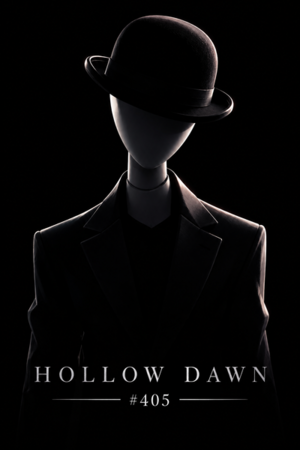
Hollow Dawn: #405
The girl hurried toward the unconscious men.
She glanced over her shoulder first. The black-clad figure had already disappeared around the corner, leaving only the fading sound of his footsteps beneath the rain. She could still see the top of his covered head whenever he passed beneath a streetlight, but the distance between them was growing.
She couldn't let him get too far ahead.
The girl crouched beside the nearest man and looked him over. He was lying on his side with one arm tucked beneath his chest, his mouth slightly open. Rainwater ran across his forehead and collected along the collar of his jacket.
She poked his shoulder.
He didn't move.
She poked him again, harder this time, then quickly pulled her hand back when he shifted slightly. Her eyes widened. She waited several seconds, watching for another movement, before deciding he wasn't getting up anytime soon.
Good.
She turned her attention to his belongings.
The black notebook was lying beside the sedan's front tire. She picked it up and wiped the cover against her sleeve, which accomplished very little. The pages had already begun to absorb water along their edges, and a few sheets had come loose from the binding.
She opened it.
There were numbers, handwritten notes, and several pages covered in cramped writing. Some of the words were difficult to read through the water. Others were written in a language she didn't recognize. She flipped through a few pages, hoping to find something useful, but nothing immediately made sense.
She closed the notebook.
It was still better than nothing.
A few feet away, the black bowler hat rested beneath the sedan. She reached under the vehicle and dragged it toward herself, scraping her knuckles against the pavement. The hat was damp but intact. She turned it over in her hands, examined the brim, then placed it on her head.
It immediately slid down over her eyes.
She pushed it back.
"Nope."
She took it off and tucked it beneath her arm.
The blazer was easier to retrieve. It had fallen across the hood of the sedan, one sleeve hanging over the side. She pulled it down and shook it once, sending a small shower of water onto the ground.
The material was heavy and smelled faintly of cigarettes.
She didn't care.
She had no idea whether the clothes would fit the strange figure, but she had seen him walking through the rain in nothing but dark, soaked clothing. Maybe he'd wear them. Maybe he wouldn't. She could at least try.
She looked toward the street.
The figure was gone.
"Oh, come on."
She clutched the notebook, hat, and blazer against her chest and ran.
Her shoes slapped against the wet pavement as she rounded the corner. She nearly collided with a man coming out of a restaurant's back entrance, but ducked around him without stopping. The man shouted something after her. She didn't turn around.
Ahead, the street opened into another busy intersection.
She searched the sidewalks, scanning the people passing beneath the illuminated signs. For a moment, she thought she'd lost him. There were too many umbrellas, too many coats, too many people moving in different directions.
Then she spotted the dark figure crossing beneath a pedestrian signal.
She ran faster.
"Hey!"
He didn't look back.
"Wait!"
The signal began flashing.
She pushed herself forward, splashing through a puddle as she crossed the remaining distance. A car rolled toward the intersection, its driver tapping the brakes when he saw her rushing across the road.
The horn startled her.
She flinched, stumbled, and nearly dropped everything she was carrying.
By the time she reached the opposite sidewalk, the figure was already moving past a row of storefronts.
She caught up to him, panting.
He continued walking.
The girl hurried alongside him and held out the blazer.
He didn't acknowledge it.
She lifted it higher, putting herself directly in front of him. That finally made him stop.
He looked down at her.
She looked up at him.
For a few seconds, neither moved.
Then she pushed the blazer toward his chest.
"Here."
He remained still.
"It's raining."
She glanced at his soaked clothing, then at the blazer in her hands.
"You need it."
He didn't take it.
The girl frowned, lowered the blazer, and looked at the bowler hat tucked beneath her arm.
"Do you want this, too?"
Nothing.
She held the hat up.
"It's yours if you want it."
He was still a silent figure with a wooden hand and a head she couldn't see properly beneath the covering. She had no way of knowing whether he understood her or whether she was wasting her breath.
She pushed the blazer against him again.
This time, she waited.
The figure's hand moved.
He took the blazer from her.
The girl brightened slightly.
"See? There."
She offered him the hat.
He accepted that, too.
The girl stepped back to give him room. He examined neither item. Instead, he held them in one hand while turning toward the street ahead.
She watched him, waiting to see what he'd do.
He began walking again.
The girl hurried after him.
...
The figure stopped beneath the awning of a closed electronics store.
It was a narrow strip of shelter between the building and the sidewalk, barely wide enough to keep the worst of the rain from reaching the wall. A metal shutter covered the store's entrance. Posters advertising the latest phones had been pasted across the windows, their corners peeling away from the damp glass.
The girl ducked beneath the awning beside him.
She was still clutching the notebook.
The figure turned toward her.
She looked down at the book, then held it out.
"I found this."
He took it.
For the first time, the girl noticed how carefully his fingers moved. They didn't fumble with the cover or struggle to grip the damp pages. His hands moved with a precision that seemed disconnected from the clumsy, hurried motions of the people around them.
He opened the notebook.
Water had seeped into several pages, but most of the writing remained legible. He flipped through the book, examining the notes without changing his posture.
The girl stood beside him, peering at the pages.
"What does it say?"
He didn't answer.
She waited.
"Is it important?"
He continued reading.
She leaned closer, trying to make sense of the marks on the page. They looked like words, but there were too many numbers mixed among them. Some sections had been crossed out. Others had been underlined so heavily that the pen had nearly torn through the paper.
The girl eventually lost interest.
She looked out at the street instead.
A delivery truck rumbled past, sending water against the curb. Across the road, a group of office workers crowded beneath the entrance of a glass tower, waiting for the rain to ease. A large digital display above them advertised a luxury apartment complex with a rooftop swimming pool and views of the Aurelia skyline.
The girl watched the advertisement change.
Then she looked back at the figure.
He had reached the end of the notebook.
He closed it and opened to a blank page near the back. A pen had been tucked into the binding. He removed it, tested the tip against the paper, and began writing.
The girl moved closer.
He wrote a short sentence.
I am going home.
He turned the notebook toward her.
She read the words slowly.
"Going home?"
He held the page steady.
"Where's home?"
The figure didn't answer.
She glanced toward the eastern end of the street, then back at the words.
"Is it far?"
He closed the notebook.
The girl waited for more information, but he put the pen away and stepped out from beneath the awning.
She followed him into the rain.
"Can I go with you?"
He kept walking.
"I don't know where I'm supposed to go."
He didn't look at her.
"There's nowhere for me to go."
Her voice became quieter as they moved down the sidewalk. She wasn't sure whether he could hear her. She wasn't sure whether he cared.
She kept talking anyway.
"I asked people, but nobody helped me. They just kept walking."
A couple passed them beneath a large umbrella. The man looked down at the girl, then at the dark figure beside her, before turning his attention back to the woman he was walking with.
The girl watched them disappear into the crowd.
"I don't know how to get out of here."
The figure continued walking.
She hurried to keep up.
"Can you help me?"
He stopped.
The girl almost walked into his back.
He turned toward her and opened the notebook again. The rain struck the pages, and he shifted it beneath the edge of a nearby awning to keep the paper dry.
He wrote another sentence.
Take a different path.
He showed her the page.
The girl stared at it.
"What?"
He pointed down the street behind them, then toward a side road branching away from the main avenue.
She looked in that direction.
The side road ran between two apartment buildings before joining a broader street farther north. She couldn't see where it led, and that made her uncomfortable. At least the current road was familiar now. She knew where the grocery store was. She knew where the traffic lights were. She knew which corner she'd sat on before following him.
She looked back at the notebook.
"You want me to leave?"
The figure held the page toward her.
She stared at the words for another moment before looking up at him.
"Why?"
He gave no indication that he had an answer.
The girl lowered her eyes.
For the first time since she'd started following him, she didn't immediately move to catch up when he turned away.
He began walking.
She stayed beneath the awning.
The distance between them grew.
One step.
Two.
Three.
The figure reached the next storefront and passed beneath its overhang. He didn't turn his head. He didn't raise a hand to signal that she should follow. He didn't look back to see whether she was still standing there.
He continued east.
The girl watched him disappear into the crowd.
Rainwater ran from her hair into her eyes. She wiped it away with the back of her hand and looked toward the side road he'd indicated.
She could go that way.
She could try asking someone else for help.
She could return to the grocery store and wait beneath its entrance, where at least she wouldn't have to stand in the rain.
She looked east again.
The figure was gone.
The girl took a step toward the side road.
Then she stopped.
She didn't know why she had followed him in the first place. He hadn't been kind to her. He hadn't offered to help. He hadn't even acknowledged her until she'd forced him to stop.
He was a wooden figure who could knock three grown men unconscious without saying a word.
She was afraid of him.
But when she had been sitting alone beneath the storefront sign, the city had felt even more frightening.
The girl turned toward the east.
She ran.
...
The figure had reached the next intersection when he heard the footsteps behind him again.
He didn't need to turn around to identify them.
They were uneven, quick, and noticeably lighter than the steps of the people moving around him. The girl was running to catch up.
He continued toward the crossing.
The pedestrian signal was red.
He stopped at the curb.
The footsteps approached, slowed, and came to a halt beside him.
The girl was breathing hard.
He looked down at her.
She stared up at him.
Neither moved.
The signal changed.
The figure stepped onto the crossing.
The girl followed.
They reached the opposite sidewalk and continued along the eastern avenue. A row of restaurants gave way to a bank, then a large office building with a revolving glass entrance. Farther ahead, an elevated railway curved between two towers, carrying a train toward the northern districts.
The girl stayed beside the figure for a few blocks.
She didn't ask him any more questions.
He didn't tell her to leave again.
The city continued around them. People hurried past, cars moved through the intersections, and the rain washed the streets clean of nothing in particular. They were just two more figures traveling through Bellgrave, one tall and silent, the other small enough that the crowd could easily swallow her.
Eventually, the figure turned into a recessed entrance between two buildings.
The girl followed him beneath the shelter.
He opened the notebook.
For a moment, he appeared to be considering something. His head tilted downward, and the fingers of his free hand moved slightly, flexing one after another.
Then he wrote.
What is your name?
He showed her the page.
The girl looked at the words.
She didn't answer.
The figure waited.
She shifted her weight from one foot to the other. Her eyes moved from the notebook to his covered face, then down to the hand holding the pen.
He continued waiting.
The girl pressed her lips together.
She didn't know why he wanted her name now, after spending so long ignoring her. She didn't know whether telling him was a good idea. He had already made it clear that he wanted to travel alone.
She looked away.
The figure lowered the notebook.
He closed it, tucked the pen into the binding, and returned it to his side.
Then he turned east and walked out of the entrance.
The girl remained beneath the shelter.
She watched him cross the sidewalk and continue toward the next intersection. He didn't slow down. He didn't glance over his shoulder. He didn't seem to care whether she followed him or went somewhere else.
She stared after him.
A bus passed, briefly blocking her view. When it moved on, the figure was farther away.
The girl took a breath.
"My name is N!"
Her voice came out louder than she expected.
A few pedestrians glanced in her direction.
The figure stopped.
For a moment, he remained in the middle of the sidewalk, his back turned toward her. The rain struck his shoulders and ran down the dark fabric of his clothing.
Then he looked down at his left hand.
The covering around his fingers had shifted during the earlier confrontation. Beneath the damp material, a series of numbers had become visible along the wooden surface.
405.
He stared at them.
He had seen the numbers before. They were part of his designation, marked into the body that carried him through the world. They had always been there, as much a part of him as the wood beneath his clothes.
He looked at the numbers for a while.
Behind him, the girl stood beneath the shelter, uncertain whether he had heard her.
The figure opened the notebook.
He flipped to the blank page where he had written that he was going home. Beneath the sentence, he began to copy the numbers from his hand.
4. 5. 6.
He looked at the page.
Then he turned around.
N was still standing beneath the shelter. She had one hand gripping the opposite sleeve of her soaked clothing, and she was watching him with an expression caught somewhere between hope and apprehension. He walked back toward her.
She straightened as he approached.
He stopped in front of her and held out the notebook.
The page contained three handwritten numbers.
405.
N stared at them.
Then she looked up at him.
"Is that your name?"
He remained still.
She looked at the page again.
"Four-oh-five?"
He didn't correct her.
N studied the numbers, sounding them out silently before trying again.
"405."
The figure lowered the notebook.
N looked at him for another moment.
"Okay, 405."
She said it more confidently the second time.
405 closed the notebook.
He could have turned away immediately. Instead, he remained where he was for a moment, facing the girl who had refused to leave him alone.
Then he turned toward the eastern road.
He began walking.
N hurried after him.
This time, when she caught up, she walked beside him rather than a few steps behind.
405 didn't tell her to move.
He didn't ask her to leave.
And when he reached the next intersection, he waited for her to catch up before crossing.
…
Bellgrave gradually changed as they moved east.
The enormous office towers became less frequent, giving way to apartment complexes, small commercial buildings, and long stretches of road bordered by parking lots. The sidewalks were still crowded, but the people here moved with less urgency. Some carried grocery bags toward nearby apartments. Others stood beneath awnings, smoking cigarettes or waiting for rides.
A convenience store occupied the corner of a broad intersection. Its windows were covered with advertisements for snacks, phone cards, and discounted drinks. A man stood outside beneath the awning, speaking into his phone while trying to light a cigarette in the wind.
405 passed him.
N followed.
She glanced through the store's windows, watching the bright aisles and shelves of food. Her stomach made a small, uncomfortable noise.
She pressed a hand against it.
405 continued walking.
She waited for him to notice.
He didn't.
She looked at the store again.
Then she hurried to keep up.
They passed a bus stop where about five people stood beneath a glass shelter. A digital sign displayed the estimated arrival times of the next buses, and a route map covered one of the panels. N slowed to look at it.
405 continued for several steps before stopping at the edge of the sidewalk.
N noticed he was no longer beside her.
She looked up.
He stood a short distance ahead, facing the street.
She hurried over.
He resumed walking.
It was such a small thing that N barely noticed it. She was too busy watching the streets, trying to understand where they were going and whether the road ahead would eventually lead out of the city.
405 had no reason to wait for her.
He could travel faster alone. He didn't need food, rest, or shelter from the rain. He didn't need to stop at crossings or avoid puddles deep enough to soak the girl's shoes.
But he had stopped.
He didn't examine the decision afterward. He didn't consider whether it had been necessary. Once N was beside him again, he simply continued toward his destination.
They reached another intersection.
The traffic signal changed, and a crowd began crossing the road. N stepped forward with them, but a cyclist came speeding around the corner, cutting across the crossing while looking over his shoulder at the traffic behind him.
N froze.
The cyclist was already too close.
405 moved.
His hand caught the back of N's clothing and pulled her toward the curb. The cyclist shot past the space where she'd been standing, his wheels throwing water across the pavement.
He shouted something over his shoulder without stopping.
N stumbled backward and landed against 405's leg.
She looked after the cyclist, her eyes wide.
Then she looked up at 405.
He released her clothing.
For a moment, she didn't move.
405 turned toward the crossing again.
The signal had changed. The crowd was already reaching the other side.
He began walking.
N hurried after him.
She stayed closer to his side after that.
405 didn't acknowledge the change.
...
The rain began to ease as the evening wore on.
It didn't stop entirely. The drops simply became smaller, settling into a steady drizzle that softened the sounds of the city. Water still ran along the gutters, and the roads remained slick beneath the streetlights, but people began lowering their umbrellas and stepping out from beneath the awnings.
405 and N reached a wide boulevard lined with apartment towers.
The buildings rose above the road in long rows of concrete and glass. Their balconies were stacked one above another, many illuminated by the warm light of televisions and kitchen windows. A grocery store occupied the ground floor of one complex, while a pharmacy and a small restaurant stood beneath another.
The city was still enormous, but the streets had begun to feel less crowded.
N walked with her hands tucked beneath her arms.
Her shoes squelched with every step.
405 glanced down at her once.
She looked up at him.
"What?"
He turned forward.
N frowned.
"Did you see something?"
He continued walking. She watched him for a few seconds before looking ahead again. They passed a large intersection where several roads converged beneath an elevated highway. Traffic moved through the lanes in a steady stream, and the sound of tires rolling over wet asphalt filled the air beneath the concrete structure.
Beyond the highway, the city stretched toward the eastern outskirts. 405 stopped at the curb. N came to a halt beside him. The traffic signal was red. Cars moved past in front of them, their headlights sweeping across the pavement. N looked at the road, then at the figure beside her.
"Where are we going?"
405 opened the notebook.
He turned to the page where he had written that he was going home. Beneath the sentence, he added another line.
East.
He showed her.
N read the word.
"East?"
405 closed the notebook.
She looked toward the road ahead. There was no clear sign of where the city ended. The buildings continued beyond the highway, their lights blending together in the distance. She could see a few illuminated signs above the traffic, but none told her how far she would have to travel or what waited beyond the outskirts.
She looked back at 405.
"Is your home east?"
He didn't answer.
N considered that.
Then she nodded to herself, as though the lack of an answer was something she had expected. "Okay." The pedestrian signal changed. 405 stepped onto the crossing. N followed. They crossed beneath the elevated highway, passing between concrete pillars marked with layers of graffiti. Water dripped from the edges of the structure, striking the pavement in uneven rhythms. A train rumbled somewhere above them, its movement shaking dust loose from the beams.
On the other side, the road widened. The buildings were farther apart here. Parking lots opened between commercial complexes, and the sidewalks grew quieter. The traffic still moved steadily, but the people around them were fewer. A few cars entered a gas station, their headlights reflecting off the pumps. A late-night restaurant glowed beneath a large sign, and a delivery driver carried a stack of paper bags toward a waiting vehicle. N watched the driver pass. Then she looked at 405. "Are you hungry?"
He kept walking.
She glanced toward the restaurant again.
"I'm hungry."
405 continued.
N's shoulders lowered slightly.She followed him for another block before stopping beside a bench outside a closed storefront. She sat down, rubbing her hands together to warm them. Her feet hurt, and her clothes were still wet. She watched 405 continue along the sidewalk. He reached the next corner.
Stopped.
N looked up.
405 stood near the traffic signal, his head turned slightly in her direction. She blinked. For a moment, neither moved. Then N slid off the bench and hurried toward him. 405 waited until she reached the corner. The signal changed. He crossed the road with her beside him. He didn't look back at the bench. He didn't write anything in the notebook.He continued east.
…
The road eventually carried them beyond the densest part of Bellgrave. The city didn't end at a gate or a wall. It thinned gradually, one district giving way to another. Apartment buildings stood farther apart, commercial centers spread across larger plots of land, and the spaces between streetlights grew longer. A highway sign pointed toward the outer districts of Aurelia. Another indicated the route toward Phoenixis, with a smaller sign directing traffic toward Rocspirit farther along the road.
405 followed the route that would take him east without passing through Phoenixis. It was the region where it would be hard to go on unrecognized
N walked beside him.
They had traveled long enough that the city lights behind them seemed less overwhelming. The rain had nearly stopped, leaving only occasional drops falling from the trees and overhanging signs. The air smelled of wet concrete, exhaust fumes, and the damp earth of a narrow strip of landscaping beside the road. N was quiet now. She had stopped asking questions every few minutes. Sometimes she looked at the buildings. Sometimes she watched the traffic. Occasionally, she glanced at 405's hands, as though she still couldn't quite believe that the figure beside her was made of wood. She had learned to recognize the numbers on his hand.
She repeated them silently once or twice as they walked, committing them to memory. Eventually, they reached a pedestrian bridge that crossed above a broad road leading toward the outskirts. The bridge was enclosed by metal railings and transparent panels, protecting people from the traffic below. Streetlights illuminated the wet surface beneath their feet. 405 stepped onto the bridge and N followed. The road stretched beneath them, a river of headlights moving through the dark. Beyond it, the city continued into the distance, but the buildings were shorter and the spaces between them wider. N stopped near the railing. She looked down at the cars passing beneath the bridge. For a moment, she forgot to follow. 405 walked a few steps ahead before stopping. He turned his head toward her. N was staring through the railing, watching the headlights disappear beneath the elevated highway. She didn't notice him waiting.
405 stood still.
The traffic continued below them. After several seconds, N turned away from the railing and hurried toward him. He resumed walking. Neither of them acknowledged the pause. At the far end of the bridge, a covered bus shelter stood beside the road. Its glass panels were fogged from the temperature difference between the damp evening air and the warmth of the shelter's interior. A route map was mounted beside the bench, and a small digital screen displayed the times of the next few buses.
N slowed to look at it.
She couldn't make sense of all the numbers, but she recognized the rows of letters and symbols. 405 continued toward the road.
Then he stopped.
N looked up.
He was standing near the edge of the sidewalk, his head angled toward the bus shelter.
She hurried over.
405 turned away from the shelter and continued walking. N followed him. This time, she didn't ask why he'd stopped. She didn't need to know.
…
The road narrowed beyond the bus shelter, becoming a quieter route that followed the eastern edge of Bellgrave's outer districts. Commercial buildings stood on one side, while the other opened toward a stretch of undeveloped land bordered by a chain-link fence. A few cars passed them, their headlights illuminating the sidewalk in brief flashes. Somewhere in the distance, a freight train sounded its horn. 405 walked beneath a streetlight. The illumination caught the side of his hand. The numbers were still there.
He looked at them briefly before returning his attention to the road.N walked beside him, her blazer and bowler hat tucked beneath one arm. The clothes she'd collected from the men were still too wet to wear comfortably, and she hadn't figured out what to do with them. The notebook remained in 405's possession. She glanced at his hand. Then she looked up at him.
"405?"
He turned his head toward her. N hesitated. She hadn't expected him to react. For a moment, she seemed uncertain what to say next. Then she lifted the bowler hat and held it toward him. "You forgot this." 405 looked at the hat. He took it from her. N smiled faintly, satisfied that she'd remembered something important. 405 held the hat in one hand while looking down at the road ahead. He could have continued without it. The hat had no connection to his journey, and carrying it served no practical purpose beyond preserving an item that belonged to an unconscious stranger. Yet he had accepted it when N offered it.
He had kept it.
Now he held it as they walked toward the eastern outskirts of Bellgrave. The rain had finally stopped. Water continued to drip from the buildings, and the pavement shone beneath the streetlights. Behind them, the city remained alive with traffic, illuminated windows, and the distant sounds of people moving through their ordinary lives. Ahead, the road stretched toward Rocspirit.
405 continued walking.
N followed.
And somewhere in the rain, a butterfly was struggling to flutter its wings in the droplets.
Then he turned around.
N was still standing beneath the shelter. She had one hand gripping the opposite sleeve of her soaked clothing, and she was watching him with an expression caught somewhere between hope and apprehension. He walked back toward her.
She straightened as he approached.
He stopped in front of her and held out the notebook.
The page contained three handwritten numbers.
405.
N stared at them.
Then she looked up at him.
"Is that your name?"
He remained still.
She looked at the page again.
"Four-oh-five?"
He didn't correct her.
N studied the numbers, sounding them out silently before trying again.
"405."
The figure lowered the notebook.
N looked at him for another moment.
"Okay, 405."
She said it more confidently the second time.
405 closed the notebook.
He could have turned away immediately. Instead, he remained where he was for a moment, facing the girl who had refused to leave him alone.
Then he turned toward the eastern road.
He began walking.
N hurried after him.
This time, when she caught up, she walked beside him rather than a few steps behind.
405 didn't tell her to move.
He didn't ask her to leave.
And when he reached the next intersection, he waited for her to catch up before crossing.
…
Bellgrave gradually changed as they moved east.
The enormous office towers became less frequent, giving way to apartment complexes, small commercial buildings, and long stretches of road bordered by parking lots. The sidewalks were still crowded, but the people here moved with less urgency. Some carried grocery bags toward nearby apartments. Others stood beneath awnings, smoking cigarettes or waiting for rides.
A convenience store occupied the corner of a broad intersection. Its windows were covered with advertisements for snacks, phone cards, and discounted drinks. A man stood outside beneath the awning, speaking into his phone while trying to light a cigarette in the wind.
405 passed him.
N followed.
She glanced through the store's windows, watching the bright aisles and shelves of food. Her stomach made a small, uncomfortable noise.
She pressed a hand against it.
405 continued walking.
N looked at his back.
She waited for him to notice.
He didn't.
She looked at the store again.
Then she hurried to keep up.
They passed a bus stop where about five people stood beneath a glass shelter. A digital sign displayed the estimated arrival times of the next buses, and a route map covered one of the panels. N slowed to look at it.
405 continued for several steps before stopping at the edge of the sidewalk.
N noticed he was no longer beside her.
She looked up.
He stood a short distance ahead, facing the street.
She hurried over.
He resumed walking.
It was such a small thing that N barely noticed it. She was too busy watching the streets, trying to understand where they were going and whether the road ahead would eventually lead out of the city.
405 had no reason to wait for her.
He could travel faster alone. He didn't need food, rest, or shelter from the rain. He didn't need to stop at crossings or avoid puddles deep enough to soak the girl's shoes.
But he had stopped.
He didn't examine the decision afterward. He didn't consider whether it had been necessary. Once N was beside him again, he simply continued toward his destination.
They reached another intersection.
The traffic signal changed, and a crowd began crossing the road. N stepped forward with them, but a cyclist came speeding around the corner, cutting across the crossing while looking over his shoulder at the traffic behind him.
N froze.
The cyclist was already too close.
405 moved.
His hand caught the back of N's clothing and pulled her toward the curb. The cyclist shot past the space where she'd been standing, his wheels throwing water across the pavement.
He shouted something over his shoulder without stopping.
N stumbled backward and landed against 405's leg.
She looked after the cyclist, her eyes wide.
Then she looked up at 405.
He released her clothing.
For a moment, she didn't move.
405 turned toward the crossing again.
The signal had changed. The crowd was already reaching the other side.
He began walking.
N hurried after him.
She stayed closer to his side after that.
405 didn't acknowledge the change.
...
The rain began to ease as the evening wore on.
It didn't stop entirely. The drops simply became smaller, settling into a steady drizzle that softened the sounds of the city. Water still ran along the gutters, and the roads remained slick beneath the streetlights, but people began lowering their umbrellas and stepping out from beneath the awnings.
405 and N reached a wide boulevard lined with apartment towers.
The buildings rose above the road in long rows of concrete and glass. Their balconies were stacked one above another, many illuminated by the warm light of televisions and kitchen windows. A grocery store occupied the ground floor of one complex, while a pharmacy and a small restaurant stood beneath another.
The city was still enormous, but the streets had begun to feel less crowded.
N walked with her hands tucked beneath her arms.
Her shoes squelched with every step.
405 glanced down at her once.
She looked up at him.
"What?"
He turned forward.
N frowned.
"Did you see something?"
He continued walking. She watched him for a few seconds before looking ahead again. They passed a large intersection where several roads converged beneath an elevated highway. Traffic moved through the lanes in a steady stream, and the sound of tires rolling over wet asphalt filled the air beneath the concrete structure.
Beyond the highway, the city stretched toward the eastern outskirts. 405 stopped at the curb. N came to a halt beside him. The traffic signal was red. Cars moved past in front of them, their headlights sweeping across the pavement. N looked at the road, then at the figure beside her.
"Where are we going?"
405 opened the notebook.
He turned to the page where he had written that he was going home. Beneath the sentence, he added another line.
East.
He showed her.
N read the word.
"East?"
405 closed the notebook.
She looked toward the road ahead. There was no clear sign of where the city ended. The buildings continued beyond the highway, their lights blending together in the distance. She could see a few illuminated signs above the traffic, but none told her how far she would have to travel or what waited beyond the outskirts.
She looked back at 405.
"Is your home east?"
He didn't answer.
N considered that.
Then she nodded to herself, as though the lack of an answer was something she had expected. "Okay." The pedestrian signal changed. 405 stepped onto the crossing. N followed. They crossed beneath the elevated highway, passing between concrete pillars marked with layers of graffiti. Water dripped from the edges of the structure, striking the pavement in uneven rhythms. A train rumbled somewhere above them, its movement shaking dust loose from the beams.
On the other side, the road widened. The buildings were farther apart here. Parking lots opened between commercial complexes, and the sidewalks grew quieter. The traffic still moved steadily, but the people around them were fewer. A few cars entered a gas station, their headlights reflecting off the pumps. A late-night restaurant glowed beneath a large sign, and a delivery driver carried a stack of paper bags toward a waiting vehicle. N watched the driver pass. Then she looked at 405. "Are you hungry?"
He kept walking.
She glanced toward the restaurant again.
"I'm hungry."
405 continued.
N's shoulders lowered slightly.She followed him for another block before stopping beside a bench outside a closed storefront. She sat down, rubbing her hands together to warm them. Her feet hurt, and her clothes were still wet. She watched 405 continue along the sidewalk. He reached the next corner.
Stopped.
N looked up.
405 stood near the traffic signal, his head turned slightly in her direction. She blinked. For a moment, neither moved. Then N slid off the bench and hurried toward him. 405 waited until she reached the corner. The signal changed. He crossed the road with her beside him. He didn't look back at the bench. He didn't write anything in the notebook.He continued east.
…
The road eventually carried them beyond the densest part of Bellgrave. The city didn't end at a gate or a wall. It thinned gradually, one district giving way to another. Apartment buildings stood farther apart, commercial centers spread across larger plots of land, and the spaces between streetlights grew longer. A highway sign pointed toward the outer districts of Aurelia. Another indicated the route toward Phoenixis, with a smaller sign directing traffic toward Rocspirit farther along the road.
405 followed the route that would take him east without passing through Phoenixis. It was the region where it would be hard to go on unrecognized
N walked beside him.
They had traveled long enough that the city lights behind them seemed less overwhelming. The rain had nearly stopped, leaving only occasional drops falling from the trees and overhanging signs. The air smelled of wet concrete, exhaust fumes, and the damp earth of a narrow strip of landscaping beside the road. N was quiet now. She had stopped asking questions every few minutes. Sometimes she looked at the buildings. Sometimes she watched the traffic. Occasionally, she glanced at 405's hands, as though she still couldn't quite believe that the figure beside her was made of wood. She had learned to recognize the numbers on his hand.
She repeated them silently once or twice as they walked, committing them to memory. Eventually, they reached a pedestrian bridge that crossed above a broad road leading toward the outskirts. The bridge was enclosed by metal railings and transparent panels, protecting people from the traffic below. Streetlights illuminated the wet surface beneath their feet. 405 stepped onto the bridge and N followed. The road stretched beneath them, a river of headlights moving through the dark. Beyond it, the city continued into the distance, but the buildings were shorter and the spaces between them wider. N stopped near the railing. She looked down at the cars passing beneath the bridge. For a moment, she forgot to follow. 405 walked a few steps ahead before stopping. He turned his head toward her. N was staring through the railing, watching the headlights disappear beneath the elevated highway. She didn't notice him waiting.
405 stood still.
The traffic continued below them. After several seconds, N turned away from the railing and hurried toward him. He resumed walking. Neither of them acknowledged the pause. At the far end of the bridge, a covered bus shelter stood beside the road. Its glass panels were fogged from the temperature difference between the damp evening air and the warmth of the shelter's interior. A route map was mounted beside the bench, and a small digital screen displayed the times of the next few buses.
N slowed to look at it.
She couldn't make sense of all the numbers, but she recognized the rows of letters and symbols. 405 continued toward the road.
Then he stopped.
N looked up.
He was standing near the edge of the sidewalk, his head angled toward the bus shelter.
She hurried over.
405 turned away from the shelter and continued walking. N followed him. This time, she didn't ask why he'd stopped. She didn't need to know.
…
The road narrowed beyond the bus shelter, becoming a quieter route that followed the eastern edge of Bellgrave's outer districts. Commercial buildings stood on one side, while the other opened toward a stretch of undeveloped land bordered by a chain-link fence. A few cars passed them, their headlights illuminating the sidewalk in brief flashes. Somewhere in the distance, a freight train sounded its horn. 405 walked beneath a streetlight. The illumination caught the side of his hand. The numbers were still there.
He looked at them briefly before returning his attention to the road.N walked beside him, her blazer and bowler hat tucked beneath one arm. The clothes she'd collected from the men were still too wet to wear comfortably, and she hadn't figured out what to do with them. The notebook remained in 405's possession. She glanced at his hand. Then she looked up at him.
"405?"
He turned his head toward her. N hesitated. She hadn't expected him to react. For a moment, she seemed uncertain what to say next. Then she lifted the bowler hat and held it toward him. "You forgot this." 405 looked at the hat. He took it from her. N smiled faintly, satisfied that she'd remembered something important. 405 held the hat in one hand while looking down at the road ahead. He could have continued without it. The hat had no connection to his journey, and carrying it served no practical purpose beyond preserving an item that belonged to an unconscious stranger. Yet he had accepted it when N offered it.
He had kept it.
Now he held it as they walked toward the eastern outskirts of Bellgrave. The rain had finally stopped. Water continued to drip from the buildings, and the pavement shone beneath the streetlights. Behind them, the city remained alive with traffic, illuminated windows, and the distant sounds of people moving through their ordinary lives. Ahead, the road stretched toward Rocspirit.
405 continued walking.
N followed.
And somewhere in the rain, a butterfly was struggling to flutter its wings in the droplets.
…
Far from Bellgrave, snow covered the streets of a small town. It lay beneath a dark sky, its buildings almost indistinguishable from one another beneath the thick layers of ice coating their roofs and windows. The road that passed through the center of town had disappeared beneath a frozen sheet of white, and the streetlights stood encased in frost. There were no cars moving along the road. No lights flashed from the windows. No voices carried through the streets.
The town was silent.
A delivery truck stood abandoned beside a convenience store. Its driver's door remained open, and a set of keys hung from the ignition. Snow had begun collecting on the driver's seat, while a thin layer of ice covered the steering wheel. A few yards away, a man stood frozen beside the entrance to the store. His hand was extended toward the door. His face was turned slightly to the side, as though he'd heard something behind him just before everything stopped. Across the street, two people stood beside a parked car. One had been reaching for the passenger door. The other had turned toward the road, one arm raised in front of their face.
Neither moved.
Their bodies were covered in a translucent layer of ice. Farther down the street, more figures stood among the frozen buildings. Some were caught in the middle of ordinary actions. Others appeared to have been trying to run.
None had escaped.
None had the chance.
And the snow continued falling. At the end of the street, a figure walked through the frozen town. His footsteps were quiet against the snow-covered pavement. A gray, strangely patterned kimono hung loosely from his shoulders, one side slipping down his arm while the other remained tucked into a white sash around his waist. The open front left his muscular chest exposed, while a loose flap of fabric rested beside his gray-blue hakama. A golden revolver and a saber hung in his hands, their metal surfaces catching the faint light as he passed the frozen people without looking at them.
He stopped beside a storefront.
A thin layer of ice covered the glass. Behind it, shelves of merchandise stood untouched, their contents visible through the frost. A television mounted above the counter had gone dark, its screen reflecting the figure standing outside.
He looked toward the end of the street.
The frozen town stretched into the distance. He turned away from the storefront and continued walking.
The snow fell harder.
The figure passed beneath a streetlight, revealing his face. Blonde hair framed a pair of cold blue eyes, his expression carrying no trace of concern for the town around him.
Brass Hymlinn.
He didn't look back at the town. He continued walking through the snow, leaving the frozen streets behind him.
“Damn, I'm on a roll.”








Please sign in to leave a comment.