Chapter 2:
In the Beginning Was the Doodle (2)
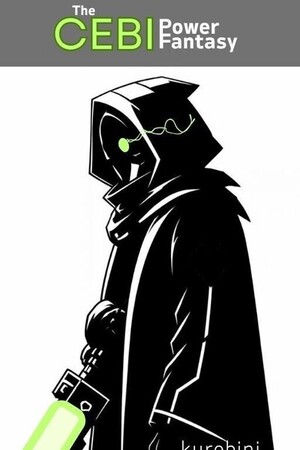
The Cebi Power Fantasy
Hours as Cebi showed me why edgy characters stay on paper or as pixels.
Escapism was not refuge from a place, but also from moral conundrums. Heroes would have these mythic battles, filling the spectators' minds with spectacle and a sense of wonder. But our vision was always tunneled. The spotlight was on heroes and villains, never on what was happening around them.
How many homes, businesses, even bird and squirrel nests were destroyed in the process of two legendary figures duking it out? I wonder, how do people still live in the same place where a monstruous criminal continues to cause mayhem and fights a terrifying vigilante? I for one would've considered other more peaceful locations. I actually wonder what happens to those families whose walls just got wrecked by a hero who got thrown across a hundred walls just to show how strong the villain was?
Not once did I see the hero stop by and apologize in the aftermath of the fight.
These power fantasies never confronted my actual personality and heart to the harsh reality of what could be. The fact was, I wasn't ready for all of this.
My hands were still trembling, though not from fear. Moments earlier, this body had moved on its own. It had turned laser darts aside and cut through steel as if it had done so a thousand times, and I'm not going to lie, it felt incredible. For the length of that fight, I had been exactly as powerful as I had always dreamed of being.
Then the last Synth stopped moving, and all that power had nowhere to go. A sword can end a fight. It can do nothing about what the fight leaves behind. I stood among the wounded with strength still humming in my arms, and I was powerless to help a single one of them.
The stories always cut away after the fight. I was beginning to understand why.
“Ori,” I said. “Should we do something with the bodies?”
“That is an unusual question, young master. Ordinarily we walk away from the fight and on to the next one.”
“It just feels wrong to leave them all hanging... at least let's do something out of respect.”
Ori stood silent for a moment, as if adapting to my request.
“Understood," he finally started, "To save time, I suggest you build a bonfire and burn the bodies.”
“What? No! I’m not burning anyone!”
“It is efficient though.”
“Ori, we don’t know these people. We don’t know their customs. For all we know, burning their dead is the worst insult there is. I’m not going to be the masked stranger who showed up and set fire to somebody’s family.”
“Then you may bury them. I will note that the task is daunting. There are twenty bodies here.”
“Nineteen, nineteen Ori. The girl is still alive.”
“Not for long. Her wounds cannot be treated. She received a direct blast on the shoulder, damaging important arteries... I'm surprised her anatomy is similar to ours, her species does show a denser epidermis, so that blast would have blasted a human shoulder clean.”
“Then tell me how to treat them. Give me something. Pressure, bandages, anything.”
ERROR: NO DATA
“I am the assistant of a warrior, young master, not a doctor," Ori excused, "My assessment is a tactical one, always looking for weaknesses, but I don't know how to treat wounds."
"Sweet mother of mercy..."
“You are behaving differently, young master. The Cebi I know would have moved on to the next challenge by now.”
“I’m not the Cebi you know!” I was yelling, and I didn’t care. “This body is new! I’ve had it for half a day!”
“That is not true. I have always been your faithful companion.”
“For how long, Ori?”
ERROR: RECORD NOT FOUND.
“I am unable to determine that.”
I had no time to win that argument. I had no time for anything. And then I remembered a line I had written myself, years ago, on a lore page: when Cebi’s wounds are grave, the mask wraps him in a healing cocoon.
“The cocoon. Ori, the healing cocoon. Use it on them.”
“That tool is reserved for my young master.”
“Then your young master is taking you off and putting you on them.”
“There is a problem. I am bound to you and customized to you alone, so that I cannot be hacked. I highly recommend you don't use this to save anyone else. Besides—”
“Ori. Not now.” I was already unlatching the mask. “You can tell me everything I did wrong later.”
I pulled it off. The air of this world touched my face for the first time, cool and salty and thick with smoke. I knelt beside the girl and laid the mask gently over hers.
“Cocoon protocol.”
For a moment, nothing happened, and I thought he was going to refuse me. Then a teal glow spread from the edges of the mask and hardened as it went. Facet by facet, a crystal grew around her, until she lay sealed inside it like a figure set in a gemstone, her chest still rising and falling beneath the glassy surface.
“Protocol active.” Ori’s voice came from within the crystal, smaller than before. “Healing will take three hours. I must also inform you that both the blade and the mask will require recharging afterward. And that you are now without sensors, without a visor, and without me.”
“I know.”
“I wanted it on record.”
“Noted.”
That left me, the road, and nineteen bodies.
I tore a panel off one of the trucks and started digging. It was simple work. This body did not tire, and the ground gave way easily. The first grave was finished before I had properly decided where the row should go.
The hard part was everything else.
Somewhere around the fourth grave, I scoffed at myself. Minutes earlier I had lectured Ori about respect. We can’t burn them, I had said; we don’t know their customs. And here I was burying them, knowing exactly as little. What if these people found burial disrespectful? What if putting their dead in the ground was the insult?
I turned it over while I dug, and I arrived at the truth. It had never really been about their customs. I simply could not bring myself to throw a body onto a fire.
Out of all the power fantasy heroes ever written, I had to be the most pathetic. I felt too much for other people, I guess.
Then came the dirt. Every one of them had a face, and no two were alike: deep lines around the eyes on one, a crooked nose on another, and one who couldn’t have been older than me. Each time, I had to throw dirt over a face I would never see again, and each time my hands stalled before the first handful.
Before that day, the only death I had ever been close to was my dog’s. I had been with him at the end, and it was the worst pain of my life. I remember believing that nothing would ever hurt like that again.
Kneeling by the ninth grave, I felt it again, the very same pain, for strangers whose names I would never learn. Without the mask there was nothing to hide behind. The tears came, and I let them.
By the time the last grave was filled, the light had changed. Nineteen low mounds lined the side of the road. I stood at the end of the row for a while, not knowing what to say over them, and in the end I said nothing.
There were still the Synths.
I had told myself I couldn’t throw a body onto a fire. But I couldn’t bury these things next to the people they had killed, either, and I couldn’t leave them lying in the road for whoever came next. So I dragged the wreckage of a cart into a pile, set it alight with the last of a truck’s fuel, and started hauling them to it.
I told myself it was different. They weren’t people; they were machines with red skin. Their arms had turned into guns. Still, they had faces too. I noticed that, and I tried very hard not to.
I had thrown four of them onto the fire and was dragging a fifth by the ankles when it moved.
Its head turned toward me with a series of small, wrong clicks. Half its torso was cut through, and something like bluish oil was leaking into the dirt beneath it. Its eyes found my face, my bare face, and it opened its mouth and said something low and flat that I didn’t understand.
I did not wait to find out what it was.
I yelped, a sound no hero in history has ever made, hauled it up with both arms, and flung it onto the fire. Then I backed away, swatting at my own sleeves, like a man who has just found a live spider crawling up his shirt.
The fire crackled. The Synth did not say anything else.
I stood there breathing hard for a good while. Then I looked at the remaining Synths. Most of them were in a lot fewer pieces than that one had been.
From then on, I approached each of them with extreme caution. I poked them with a long metal rod from a safe distance, waited, poked them again, and then threw them onto the fire from as far away as this body’s strength allowed. No more ankles. I was not giving any of them the chance to surprise me again.
I was on the last one when the wind changed.
Out over the sea, the horizon had gone dark. A wall of storm was rolling in toward the coast, gray on gray, and I could already see the rain hanging beneath it like a curtain.
The cocoon.
Everything else went out of my head. Ori was in that crystal, and so was the girl, and I had no idea what rain, wind, or lightning would do to either of them. I ran back to the trucks, shoved two of them together, tipped a third against them, and stretched their torn tarps across the gap. Then I lifted the crystal as carefully as I could, with the girl inside it and Ori humming somewhere in the light, and set it down in the driest corner of the shelter.
The storm hit while I was tying the last tarp down.
It should have knocked me flat. The wind came off the sea hard enough to rattle the trucks on their axles, and the rain came sideways, stinging. And it did almost nothing to me. I stood in the open and felt it shove at me the way a stiff breeze shoves at a lamppost. The cold barely registered. Back in the Gray World, a storm like this would have had me hiding under a blanket with the power out.
Which gave me an idea.
The hilt still had almost nothing in it, and I remembered Ori’s warning on the cliff: lightning would damage it. So I pried several metal planks off the wrecked trucks, tucked them under one arm, and walked back up the coast toward the cliff, through a storm I could barely feel.
I found the pocket by memory. I planted the hilt pommel-first, and the guard began to hum, catching what I couldn’t see. Then I built a crooked little shelter around it with the planks, wedging them into the rock and bending them by hand until they held. It was the ugliest thing I had ever made, and the teal whirlpool turned beneath it, slow and patient, sheltered from the rain.
With no visor and no gauge, I watched the thin teal lines along the hilt fill instead, one segment at a time.
And while I watched, I thought.
Today I had made a choice. A small one, maybe: to stop, to dig, and to not walk on to the next fight like the Cebi in Ori’s records. If I kept making that choice, it would be my whole life here. Every fight would leave something behind, and every time, I would be the one standing in it with a shovel.
Could I do that? Could I have the cool moments, the blade igniting, the laser darts deflected, the monster cut down, and still carry everything that came after? Or would I end up like the heroes in my old stories, who only looked good because the camera never stayed?
I didn’t know. I sat in the rain and turned it over and over, and I never reached the bottom of it.
The last segment of the hilt lit up. Full.
I pulled the hilt from the ground and walked back down the coast.
Inside the truck shelter, the crystal glowed softly in its corner, and nothing had changed. I gathered some splintered wood from the cart wreckage, ignited the blade, and touched it to the pile until the wood caught. Then I switched it off and sat down by the fire, between the flames and the cocoon.
And I waited.
It turns out that waiting out a storm is the same in every world. The rain drummed on the tarps. The fire popped. The crystal hummed. After the fight, the graves, and the long walk, there was simply nothing left to do, and boredom crept in where everything else had been.
My eyes grew heavy.
The last thing I remember was the teal glow of the crystal, the orange glow of the fire, and the sound of the sea.
“Young master, wake up.”
I jolted upright so fast I nearly put my hand in the fire. The storm had passed. Pale light was seeping through the gaps in the tarps, the fire had burned down to embers, and somewhere outside the sea was breathing slowly again, as if nothing had happened.
“Cocoon protocol complete,” Ori said.
In the corner, the crystal was coming apart. Hairline cracks ran across its facets, and then the whole thing crumbled, not into shards but into fine teal dust that drifted down and faded before it touched the ground.
The girl lay where I had left her, breathing slow and even, the mask still over her face.
I didn’t think about it. I knelt, lifted the mask from her face, and pressed it back onto my own. It sealed with a soft click, and the world came back in layers: the visor, the sensors, the mini-map, two gauges in the corner of my vision. BLADE: 100%. MASK: 95%.
It felt like putting on my glasses.
“Status report,” I said, and I was surprised at how naturally it came out.
“The girl has been fully healed. The arterial damage is repaired, and the wound on her shoulder has closed without scarring. Her vital signs are stable. She is sleeping. In addition, the blade is fully charged, and my own reserve is at ninety-five percent. You chose an efficient time to recharge, young master.”
“I chose a storm.”
“The result is the same.”
I looked down at her. For the first time since the road, she didn’t look like someone who was dying. She just looked like someone asleep.
She would wake up soon. And when she did, the first thing she would see was a stranger in a mask, sitting in a pile of wrecked trucks, next to a row of fresh graves that held everyone she had been traveling with.
Then again, she would also be hungry. Anyone would be.
“Okay,” I said. “Here’s the plan. I bring her some food from the trucks, leave it next to her, maybe some water, and then we go. Quietly. Before she wakes up.”
“I advise against that, young master.”
“Why? She’s healed. You just said so.”
“She is healed. She is also no longer what she was.”
I stopped with one hand on the tarp.
“What does that mean?”
“When you placed me on her, I mapped her body in order to heal it. Healing at that depth required integrating her into my framework. She now shares your Neo physiology.”
I stared at the girl. Then at nothing.
Neo physiology.
I knew those words. I had written them myself, at maybe fifteen, in the margin of a lore page next to a drawing of Cebi lifting a car. Cebi has Neo physiology, I had written, and underlined it twice, because I needed some reason why a guy in a coat could punch through walls. I had never once explained what it meant. I had thought it sounded cool. That was the entire explanation.
And now my AI was saying it to me like a medical diagnosis.
“Neo physiology,” I repeated. “Okay. Sure. Just so we’re on the same page, Ori, what exactly does that do?”
“For her? I will list the changes.” He did not pause, and he did not need to. “Her durability has increased considerably. Laser and kinetic fire will now strike her with roughly the force of a punch. It will not pierce her or burn her, unless it comes from a superweapon.”
I looked down at my own chest. I thought of the laser darts I had been batting away the day before as if they were tennis balls, and it occurred to me that I had never once wondered what would have happened if one of them had gotten through.
Apparently, it would have felt like a punch.
“Go on.”
“Her strength has increased to a level comparable to yours. I should clarify: you remain exponentially stronger, owing to your insurmountable combat experience. However, she has the potential to surpass her current limits through training and combat.”
“Insurmountable,” I muttered. I had about a day of combat experience, all of it borrowed from a body that apparently remembered things I didn’t.
“She is now resistant to extreme temperatures.”
The storm. The cold that had barely registered.
“Her regeneration is greatly accelerated.”
My aching back after nineteen graves, gone by the time the last one was filled.
“Her reflexes are enhanced, and she is now immune to all forms of mind control... That concludes the list.”
"All forms of mind control? As in ALL forms?"
"Well, you have resisted your share of mind attacks, young master... I would say it covers a vast, mostly definitive list of mental attacks."
I didn’t move. I didn’t say anything else. I just stood there, hand still resting on the tarp, looking at the sleeping girl at my feet as the truth settled over me one piece at a time.
I had wanted to save one person. I had pressed a mask to her face because it was the only thing I had.
And somehow, without meaning to, I had made another Cebi.
“There is more, young master.”
Of course there was.
“By bestowing your power upon another individual, you have invoked the Right of Dux.”
The word hit me like one of those laser darts. Not hard enough to pierce, but I felt it.
Dux.
I had found that word in a dictionary at sixteen and fallen in love with it on the spot. Latin for “leader,” the old root of “duke.” I had decided right then that Cebi needed it. So I had invented an order, a new order of warriors, and at its head I had placed a single title: the Dux, the warrior who held the highest honorific of all, Grand Duke of the Order.
I remembered the page. I had drawn the order’s emblem in the top corner, gone over it in pen three times, and written DUX underneath in letters so heavy they had dented the next five pages of the notebook.
“Congratulations, young master,” Ori said. “If I may say so, you have taken your time.”
“Taken my time,” I echoed.
“You have carried the title for as long as I have served you. You have never exercised its right. Until now.”
I sat down on an overturned crate, because my legs had decided that for me.
It was all here. Not just the mask, the sword, and the coat. Every scribble had come with me. Every margin note, every half-finished idea, every grand word I had picked out because it sounded important. Neo physiology. The cocoon. The Order. The Dux. Things I had written at fifteen and sixteen and never looked at twice were walking around this world as facts.
Part of me was appalled. I had written most of it in an afternoon.
And part of me, a part I wasn’t proud of, was quietly, ridiculously honored. Somewhere, something had taken my notebook seriously.
“Okay,” I said slowly. “And what does invoking the Right of Dux actually mean? For me. Right now.”
“It means you now bear the responsibility of training this new warrior.”
I looked at the girl. She was still asleep, one red hand resting on the shoulder that had been ruined a few hours ago.
“Training her,” I said. “How? In what way? Is there a program? A curriculum? A rite?”
ERROR: NO DATA.
“I am unable to elaborate, young master.”
“You’re unable to elaborate.”
“The Right of Dux contains no further guidance. It does not describe a method of training, a duration, or a standard of completion. As far as my records go, its sole purpose is to ensure that the Dux leaves a legacy.”
“That’s it?”
“That is it.”
I put my face in my hands, which is harder than it sounds when you’re wearing a mask.
Of course that was it. I remembered exactly how much thought I had put into it. Sixteen-year-old me had written the Dux shall pass on his power and train his successors, felt incredibly profound, and gone to draw a cool sword instead.
He had never written the manual. He had left that part to me. Shit, he was everything but consistent in his writing back then and I resented now, especially when this new reality was being extremely consistent with my inconsistency.
I let out a long breath.
“Fine,” I said. “I invoked it. I’ll answer for it.”
I meant it. I was also terrified. Somewhere ahead was a long road of teaching someone a fighting style I didn’t understand, with powers I had never explained, for an order I had never founded. I could feel the size of it the way you feel a cliff edge in the dark.
So naturally, my mind went straight to the least important part.
First impressions.
If I was going to have an apprentice, she was going to remember the first time she saw her master. I had read enough stories to know that moment mattered. The master is always standing somewhere dramatic. The master always looks the part.
And the apprentice, in every story worth reading, eventually looks the part too.
“Ori,” I said. “Could we give her something like this?” I gestured down at my coat. “Clothes. A matching set. Something that says she’s with me.”
“Not here, young master. Fabrication of that kind requires a workshop with specific tools. We have neither.”
“Okay. What about a mask? Will she get one like mine?”
“She will not.”
“Why not?”
“Because—”
Behind me, something rustled.
I turned. The girl was awake.
Whatever Ori had been about to say, I never heard it. I was too busy looking at her.
Her skin was a deep, vivid red, smooth and faintly luminous where the pale light from the tarps touched it, like polished garnet. Her eyes were the first thing I really noticed, though. They were almond-shaped and tilted gently upward at the outer corners, and they were a clear, startling emerald. Even half-awake, they gave her face a kind of quiet confidence, as if she were used to watching and measuring before she spoke.
She was about my age, with a full, curving figure and the strong shoulders and arms of someone used to hard work. Her hair fell past her waist in long, dark waves, brushed until it shone, the only thing about her that anyone had clearly taken care of. She wore a short wrapped top that left her midriff bare and a draped skirt slit at the side, both in faded cloth that had once been bright. Thin bands of copper circled her upper arms and wrists. Her feet were bare. Whoever had dressed her, combed her, and adorned her had been preparing her for display, not for travel, and I didn’t like what that suggested.
I also had absolutely no idea what to do in front of her, now that this beautiful vision of an alien was in front of me.
But I was wearing a mask, and a mask is a wonderful thing for someone who is panicking. It never shows. So I did the only thing I could think of: I stood very still, kept my shoulders back, and tried to look like someone who had been expecting this exact moment for a thousand years.
Her eyes went from my mask to the graves outside, to the wrecked trucks, and back to me. I watched the confusion in them turn to alarm.
“Don’t be afraid,” I said. The mask carried my words to her in her own language, low and steady.
It didn’t work. She scrambled back until she hit the side of a truck, breathing fast, eyes huge.
Okay. Calm and mysterious was not landing. New approach.
“Your caravan was attacked,” I said quickly. “Yesterday. On this road.” I paused, let the words settle, and then added, with as much weight as I could muster: “You were in the wrong place, at the wrong time.”
It was a line I had heard in a hundred movies. I had no idea what it meant in this context. It still sounded profound.
She stopped retreating. Her eyes searched my mask for a long moment. Then, slowly, she spoke.
“I am a slave,” she said. Ori translated, smooth and matter-of-fact. “I was being taken to my new home, with the others. A whole caravan of us. Then the others came.” Her hand went to her shoulder, to where the wound had been, and found nothing. Her eyes widened, but she kept going. “They looked like us. They were not like us. Their arms changed. They were Synths.”
She said the word the way someone says the name of a ghost.
“I thought they were only stories,” she whispered. “The old ones tell them to children. Creatures that wear our faces and hunt in certain places of the continent, where no one should travel. I never believed them.”
Her eyes filled. I could see it happen, the slow, terrible arithmetic of who was missing.
My chest ached. My first instinct was to sit down beside her and tell her the truth: that I was a nobody from another world who had cried over strangers’ graves all night.
But I had a job now, apparently. And she needed something bigger than the truth.
“Do not fear them,” I said. “Not anymore. I have seen in you a great purpose.”
Her head came up sharply. Surprise, then disbelief, then a question, all crossing her face one after another. She was very easy to read. It was one of the few things that was helping me.
She was waiting for an explanation. I did not have one. I was going to have to make one up.
I turned my head slightly away from her and muttered, low enough that the mask wouldn’t translate it, “Ori. Whatever I say next, don’t interrupt me.”
“Understood, young master. May I ask why?”
“No.”
I turned back to her.
“I sensed that my apprentice would be here,” I said. “On this road, at this time. But the Synths tried to take you before I could find you. So I intervened.” I let a beat pass. “Before my time.”
That last part was nonsense. I was fairly sure it was nonsense. She looked at me as if it might be scripture.
“I... do not understand,” she said.
That made two of us.
“You have been deemed worthy,” I went on, building the story one plank at a time and praying it would hold, “of becoming a warrior of the Order.”
“What order?”
I opened my mouth. Nothing was there. Sixteen-year-old me had left a blank, and I was standing in it.
I looked at her eyes. They were the greenest thing I had seen in this world.
“The Emerald Astros,” I said.
I had never said those words before in my life. I had invented them about half a second earlier.
Inside the mask, Ori was silent. True to his word.
And the girl stared at me in pure, unguarded awe.
I had to keep going before I lost my nerve. “What is your name?”
Something in her face closed. She lowered her eyes.
“I have none,” she said quietly. “Only what my master decides to call me.”
It broke me. Somewhere behind the mask, my whole composure cracked straight down the middle. She had just survived a massacre, woken up next to a stranger, and the saddest thing she had said so far was that she didn’t even have a name to give me.
I wanted to cry again. I didn’t. Instead, I did the only thing I could think of that might be worth something to her.
I stood up to my full height, which in this body was considerable. I squared my shoulders, let the coat fall the way it always did in my drawings, and looked down at her the way a master should.
“I am Dux Cebi, Grand Duke of the Emerald Astros,” I said, “and I have chosen you as my apprentice. Follow me, learn from me, and you shall achieve heights you never thought possible.”
She didn’t answer.
Instead, she rose slowly to her feet, one hand on the side of the truck, and walked past me.
I followed a step behind, with no idea what she was doing.
She stood at the edge of the shelter and looked out. At the wrecked caravan, the trucks still scored with laser burns. At the bonfire, burned down to a black heap, with pieces of Synth still visible in the ash. And at the nineteen low mounds lined up neatly beside the road.
She looked at those for a long time.
“You buried them,” she said at last.
“I... yes.”
“As our people do.” She turned to me, and something in her face had shifted. “You know our customs.”
Somewhere inside the mask, every muscle in my body let go at once. I let out a breath so long and so quiet that I was surprised the mask didn’t translate it as a sigh.
“Of course,” I said, as if the outcome had never been in doubt.
Ori, true to his word, said nothing.
She studied me for a while longer. She was still cautious; I could see it in how she held her shoulders, in how she kept a careful distance between us. But the fear had faded from her eyes, and something sharper had taken its place.
“Why?” she asked. “Why would you do this? Why choose me?” She hesitated. “And these Emerald Astros. What do you want?”
I said nothing. I couldn’t. I was searching.
Years of worldbuilding research flashed behind my eyes: mythology books checked out of the library and returned late, encyclopedia articles I had fallen into at two in the morning, old gods and old symbols I had copied into the backs of notebooks because one day I might need them.
One of them surfaced. I held on to it.
“Lamassu,” I said.
“Lamassu,” she repeated carefully, tasting the word.
“It’s a principle,” I said, and now I was building again, plank by plank. “A multifaceted one. A principle of protection. The Emerald Astros guard it. Wherever we go, we protect those who cannot protect themselves.”
In the Gray World, the lamassu had been a guardian spirit carved in stone at the gates of ancient cities, half bull and half man, with wings. I had always loved them. It felt right that one of them should stand at the gate of this, whatever this was.
She turned back toward the graves.
“Will I have that power?” she asked quietly. “To protect others?”
I looked at the mounds with her. Nineteen of them. Nineteen people I had not protected.
“Eventually,” I said.
The word sat badly in my mouth.
Hours earlier, I had stood on this road, completely powerless to save a single one of these people. I had dug their graves with my own hands. And now here I was, promising this girl the very thing I had failed to do. I was offering her a principle I had named thirty seconds earlier, from an order I had named a minute before that.
I was a hypocrite. A well-meaning one, maybe. But still a hypocrite.
She didn’t notice. She had gone quiet in a different way, turned inward. She looked down at her hands, turned them over, flexed her fingers. She pressed her palm to the shoulder where the wound had been. She took a slow breath of the sea air and let it out.
“I cannot feel the cold,” she said, almost to herself. “This coast is always cold in the morning. I can’t feel it.” She closed her hand into a fist and looked at it with something close to wonder. “And I feel... strong. I have never felt this strong.”
“That’s a portion of my power,” I said. “It lives in you now. It’s yours. How far it grows depends on your training, and on your determination.”
That part, at least, was true. Ori had said so.
Then she didn’t say anything at all.
The silence stretched out. The sea kept breathing behind us. A gull cried somewhere along the cliffs. She just stood there, looking at the graves, at her hands, and at me. I began to wonder whether she was about to refuse.
Part of me hoped she would. If she said no, I could leave her the food, walk away down the coast, and spend the rest of my life never admitting to anyone that I had no idea how to train an apprentice.
She turned to face me fully, crossed the space between us, and knelt.
She bowed her head, and the long waves of her hair fell forward around her face.
“I pledge myself to you, Dux Cebi, my Duke,” she said. Her voice was steady. “As your apprentice.”
I didn’t move. I didn’t say anything. I couldn’t.
Slowly, very slowly, I raised my hand and reached toward her head, the way I had seen a hundred kings and priests do in a hundred stories. And while my hand traveled those few inches, the slowest few inches of my life, I searched desperately for a name.
She had told me she had none. She couldn’t be “the girl” forever. She needed a name, and it had to be good, and it had to be now.
My palm came to rest gently on top of her head.
“Rhenii,” I said, as tenderly as I knew how. “Your name is Rhenii.”
She looked up at me. Her emerald eyes were shining.
“Rhenii,” she whispered. “What does it mean?”
I had absolutely no idea.
“New Hope,” I said.
Her eyes watered, and she closed them as she embraced the name.






Please sign in to leave a comment.