Chapter 12:
The Question She Almost Asked
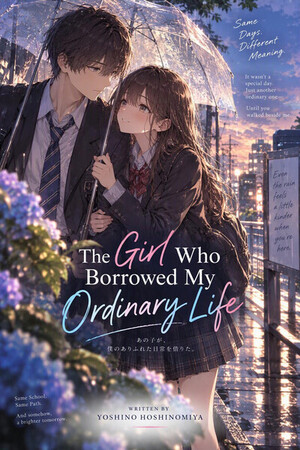
The Girl Who Borrowed My Ordinary Life
Mizuki read the page twice.
I knew because her eyes returned to the first line after reaching the bottom.
You weren’t there.
She had read nearly the same sentence in our messages the previous afternoon. On the page, however, the words belonged to Haru.
That should have created distance.
It didn’t.
Morning light stretched through the classroom windows, falling across the desks between us. The school remained mostly quiet. Somewhere in the corridor, a custodian pushed a cart past an open doorway. From outside came the faint, irregular calls of the baseball team beginning early practice.
Mizuki touched the edge of the notebook.
She did not turn the page.
“You wrote this yesterday?”
“Most of it on the train.”
“After visiting me?”
“Yes.”
Her eyes lowered again.
The page ended with Shiori asking if Haru had saved her seat.
He had.
She returned.
The resemblance was no longer subtle.
Perhaps it had never been.
“Did you know I would ask you to save my seat?” she asked.
“No.”
“But you wrote it before I sent that message?”
“After.”
“Oh.”
“You sound disappointed.”
“I’m not.”
“You do.”
Mizuki traced one finger along the paper without touching the words.
“I thought perhaps we had the same idea.”
“We did.”
“When?”
“You asked whether the stairwell was our usual place.”
“That was before.”
“Yes.”
She looked at me.
“So you were already thinking about it.”
“Possibly.”
“That means yes.”
“It continues to mean possibly.”
Her small smile appeared, but it didn’t last.
She closed the notebook and slid it toward me.
“You said I could ask something.”
“I remember.”
Something difficult.
That was how she had described it.
When Mizuki asked difficult questions, she usually gave me an escape before I answered. She would withdraw them, look away, or tell me I didn’t have to respond.
This time, she remained facing me.
“Why did you come to my apartment?”
I had expected a question about the story.
Some comparison between Haru and me. Perhaps another attempt to expose how much of our first meeting I had used.
Her actual question was worse.
“You were sick.”
“I know.”
“You said you wouldn’t mind.”
“That was the second time.”
I looked at her.
She held the strawberry milk carton in both hands. The straws remained unopened.
“I mean the first time,” she said. “Before I said anything.”
“You told me you liked custard pudding.”
“Ren.”
The use of my name removed the last reasonable answer.
She wasn’t asking why I bought pudding.
She was asking what had moved me two stations away from home.
I looked toward the classroom door.
Still empty.
No one would rescue me.
“I was worried,” I said.
The words sounded simpler than the thoughts behind them.
Mizuki’s fingers tightened around the carton.
“You said I wasn’t trouble.”
“You weren’t.”
“But you worried.”
“Those aren’t opposites.”
“A week earlier, you barely knew me.”
“A lot happened during that week.”
“That isn’t an answer.”
“You’ve become too good at saying that.”
“You keep avoiding questions.”
I rested my hands on the desk.
“Your seat was empty. You didn’t message in the morning. You weren’t at lunch. Then you said you had a fever and no pudding.”
Mizuki stared at me.
“The pudding was important?”
“It became part of the situation.”
“You could have messaged me.”
“I did.”
“You could have waited until I returned.”
“I know.”
“But you came.”
“Yes.”
“Why?”
I had already said I was worried.
Apparently, that wasn’t enough.
The real reason existed somewhere underneath it.
I had gone because the classroom felt wrong without her. Because I had brought extra chicken with no one to give it to. Because our stairwell had become only a staircase again.
Because she had become part of my ordinary life so gradually that I noticed only when she disappeared from it.
I looked at the notebook.
“You already read why.”
Mizuki followed my gaze.
“Haru isn’t you.”
“That’s what I’ve been saying.”
“But now you’re using him as your answer.”
“That seems unfair, doesn’t it?”
“A little.”
She was trying not to smile.
It helped.
I opened the notebook and turned it toward her again.
“This is the best answer I have.”
Mizuki read the final paragraph once more.
Absence was not empty. It was the shape someone left behind when they had already become part of a place.
Her expression softened.
“So I became part of a place?”
“Several.”
“The classroom?”
“Yes.”
“The stairwell?”
“Yes.”
“Your messages?”
“That isn’t a place.”
“It feels like one sometimes.”
I considered that.
“All right.”
“And your routine?”
I didn’t answer immediately.
This was what she had asked for in our messages.
A place that belonged to her.
She watched me carefully.
“You told me to save your part,” I said.
“And did you?”
“You’re sitting in it.”
Mizuki looked down at the chair.
The one in front of my desk.
The chair she had turned around and used so many times that even Daichi understood it wasn’t his anymore.
“This chair?”
“No.”
She looked back at me.
I could feel the answer arriving.
It was more direct than anything I had said to her before.
Perhaps directness became easier when there was no one else in the room.
Or perhaps I had simply run out of less honest answers.
“The routine,” I said. “Your part in it.”
Mizuki became still.
The strawberry milk carton bent slightly beneath her fingers.
“You saved it?”
“It wasn’t mine to give away.”
The words hung between us.
I might have said more.
I might even have said what both of us had spent several days approaching without touching.
Then the classroom door opened.
Daichi entered carrying a large cardboard tube over one shoulder.
He took two steps.
Saw us.
Stopped.
Mizuki sat in the chair directly in front of me. My notebook lay open between us. Her face was pink. Mine probably wasn’t much better.
Daichi slowly walked backward.
“No,” I said.
He froze in the doorway.
“You’re already here.”
“I can become not here.”
“You’ve been seen.”
“That has never stopped me before.”
Mizuki looked toward the windows, composing herself.
Daichi shifted the cardboard tube.
“I came early to deliver something.”
“At seven forty-five?” I asked.
“Our track captain made us attend morning practice.”
“You don’t have morning practice on Fridays.”
“We do now.”
“Because you skipped?”
“My choices have consequences.”
“That may be the most mature thing you’ve ever said.”
“I didn’t say the consequences were fair.”
He looked at Mizuki.
“You’re back.”
“I am.”
“You feel better?”
“Yes. Thank you.”
Daichi’s gaze moved to the strawberry milk.
Then to the chair.
Then to the open notebook.
He visibly fought against his curiosity.
For approximately two seconds.
“Did you ask the question?”
Mizuki looked at him.
“What question?”
Daichi realized he had misunderstood.
His entire body became tense.
“Any question,” he replied.
“That’s strangely vague,” she said.
“It’s early.”
“You asked whether I asked the question.”
“I meant whether you asked what he wrote.”
“I read one page.”
Daichi looked at me.
“You gave her another page?”
“It concerns her.”
His eyes widened.
Mizuki turned toward me.
“It concerns me?”
I had made another mistake.
“No.”
“You just said it did.”
“The story concerns the fictional girl.”
“Who is based on me.”
“Superficially.”
Daichi placed the cardboard tube beside the wall.
“This conversation appears unresolved.”
“You made it unresolved,” I said.
“I was leaving.”
“You entered.”
“Then I attempted to reverse the action.”
“That doesn’t remove the interruption.”
“I apologized through movement.”
Mizuki laughed.
The sound changed the room.
The tension remained, but it became lighter.
Daichi took his usual seat behind mine.
“I won’t listen.”
“You’re less than a meter away,” I said.
He covered both ears.
“That’s worse. Now you’re making it obvious.”
He uncovered them.
“Then I’ll listen without reacting.”
“No.”
“Would you prefer I react?”
“I’d prefer you disappear.”
“That option was rejected.”
Mizuki closed my notebook.
“It’s all right.”
It wasn’t.
But the moment had passed.
Perhaps it needed to.
She opened the strawberry milk and inserted both straws.
Before taking a drink, she looked at me.
“You answered my question.”
“Apparently.”
“I thought you’d avoid it.”
“I tried.”
“You did.”
“But?”
Her foot moved once beneath the desk.
“But you answered anyway.”
She drank from the carton.
Then she took a folded paper from her bag and placed it inside my notebook.
“What is that?”
“My return.”
“For what?”
“The page.”
“You don’t need to pay for reading.”
“It isn’t payment.”
Daichi leaned sideways.
I covered the paper with my hand.
He immediately faced forward.
“I wasn’t looking.”
“Your entire head moved.”
“I heard something near your desk.”
“Paper?”
“Potentially.”
Mizuki stood.
“You can read it later.”
“Why not now?”
“Because I need time to leave.”
“That sounds concerning.”
“It isn’t.”
“Then why leave?”
“I’m bad at waiting for reactions.”
“I noticed.”
She picked up her bag.
“I’m going to help Emi with the festival forms.”
“School hasn’t started.”
“She’s in the committee room.”
“How do you know?”
“We planned it.”
“Of course you did.”
Mizuki took two steps toward the door.
Then she stopped and turned.
“Ren?”
“Yes?”
“Thank you for saving it.”
Before I could respond, she left.
Daichi waited until her footsteps disappeared.
Then he grabbed the back of my chair.
“What did you save?”
I removed his hands.
“Nothing.”
“She thanked you.”
“I saved her chair.”
“That doesn’t require that expression.”
“What expression?”
“The one you have.”
“That’s only my face.”
Daichi leaned over the desk.
“What did she put in the notebook?”
“I don’t know.”
“You’re going to read it.”
“Obviously.”
“With me?”
“No.”
“I’ll stand at a respectful distance.”
“No.”
“Across the room?”
“No.”
“In the hallway?”
“No.”
“Above the ceiling?”
“You suggested that once already.”
“It remains architecturally possible.”
I took the folded paper from inside the notebook.
Mizuki had written one sentence on the outside.
Read this when you’re alone.
Daichi read it upside down.
“You need to be alone.”
I folded it again.
“You visually stole that.”
“The letters were facing me.”
“They were inverted.”
“I’m adaptable.”
He stood.
“I’ll leave.”
I looked at him.
There was no joke in his expression now.
“You don’t have to.”
“She specifically requested it.”
“You’re respecting privacy?”
“Mizuki used your first name twice before eight in the morning and gave you a secret note. Even I understand the seriousness.”
“That statement makes me trust you less.”
Daichi picked up his bag and the cardboard tube.
“I need to deliver this anyway.”
“What is it?”
“The first completed image of Roarmund.”
“No.”
“You haven’t seen him.”
“Take him far away.”
“He is going to the western building.”
“Further.”
Daichi opened the door.
Before leaving, he looked back.
“If the note says something important, don’t pretend it doesn’t.”
“That sounds like advice.”
“It’s a warning.”
“From you?”
“You’re slower than you think.”
He left.
The room became quiet again.
I looked at the folded paper.
This was not part of the story.
It did not belong to Haru or Shiori.
Whatever Mizuki had written belonged only to us.
I opened it.
Her handwriting filled half the page.
You said your notebook contains things you don’t want to forget.
I don’t have a notebook like yours, so I’m writing this for yours instead.
On Monday, I borrowed your lunch. On Tuesday, your attention. On Wednesday, your quiet place. On Friday, your shoulder. Then your umbrella, your time, your story, and two wrong train platforms.
I know some of those things weren’t really borrowed. Still, I wanted to return something.
When I’m with you, I don’t feel like Mizuki Hanamori, the person everyone expects to know what to do. I can be tired. I can be confused. I can ask bad questions and make worse schedules. I can drink strawberry milk with two straws.
You make ordinary things feel like they belong to me too.
I don’t know exactly what that means yet.
But I’m glad my part was still there.
There was one final line beneath the rest.
Please don’t make me ask what you think of this in person.
I read the note again.
Then a third time.
Daichi had said not to pretend it wasn’t important.
That seemed unnecessarily wise for someone who had written a dinosaur king into our festival.
I placed the note between Mizuki’s first sticky note and the story prompt.
It did not fit neatly.
I rearranged the pages.
Then changed them again.
There was no organizational method appropriate for something like this.
Eventually, I closed the notebook with the note inside.
I checked the time.
Eight minutes remained before the first bell.
Mizuki had asked me not to make her wait for a reaction in person.
She had said nothing about messages.
I took out my phone.
Typed:
[I read it.]
I deleted the sentence.
Too plain.
I wrote:
[You forgot the pudding.]
Deleted that too.
She had written something honest. Hiding behind a joke would be unfair.
I tried again.
[You don’t have to return any of it.]
My thumb hovered over the screen.
That was closer.
Still incomplete.
I added:
[Your part isn’t borrowed.]
I sent it.
The message was read immediately.
No response came.
Thirty seconds passed.
Then a minute.
Perhaps she was with Emi.
Perhaps she didn’t know what to say.
I understood that.
Finally, three dots appeared.
[I’m glad.]
A second message followed.
[I’m hiding in the committee room now.]
I smiled.
[That seems familiar.]
[This time I have an excuse.]
[You had one last time too.]
[I never told you what it was.]
My smile faded.
She was right.
I knew why Mizuki had felt overwhelmed. I knew she had been tired, pressured, and unwilling to disappoint anyone.
But she had never told me what specifically drove her to that abandoned classroom.
[Do you want to?]
The message remained unread for several seconds.
Then:
[Not today.]
[All right.]
[You won’t ask?]
[You said not today.]
A longer pause.
[Thank you.]
The first bell rang.
Students began entering the room.
I placed the phone away and opened my textbook.
Mizuki’s chair remained empty.
But this time, I knew she was coming back.
------------<>------------
By the second break, everyone had noticed that Mizuki had returned.
Teachers asked whether she felt better.
Classmates offered notes she didn’t need because Emi had already sent her photographs of every lesson.
Three people asked whether she needed help with the festival.
Mizuki thanked all of them.
Then accepted none of the offers.
I watched from my desk.
During the fourth conversation, she used the polished smile.
By the sixth, her hand moved toward the festival folder.
At the seventh, I stood.
Daichi looked up.
“Where are you going?”
“To prevent something.”
“Can I observe?”
“No.”
I crossed the room.
A boy from the decoration team stood beside Mizuki’s desk.
“We couldn’t decide how many candles to put on each table,” he was saying. “Could you check the layout after school?”
“Of course,” Mizuki replied.
I stopped beside them.
“No.”
The boy looked at me.
Mizuki looked at me.
I looked at the layout sheet.
“You already have a measurement guide,” I said. “One candle per table. Two near the reading station.”
“But the room might look dark.”
“It is called the Midnight Story Café.”
“That’s true.”
“If it remains too dark, add more during the test setup.”
The boy nodded.
“Okay. Thanks, Asakura.”
He left.
Mizuki folded her arms.
“I could have handled that.”
“You were about to check every table.”
“I was going to look at the layout.”
“After school.”
“Yes.”
“You have editorial work.”
“I can do both.”
“You were sick yesterday.”
“My fever is gone.”
“That doesn’t make you invincible.”
“I never said it did.”
“You didn’t need to.”
Mizuki looked mildly irritated.
That was better than the perfect smile.
“I appreciate your concern,” she said, “but you don’t have to solve everything for me.”
“I solved one candle question.”
“You interrupted.”
“Yes.”
“You answered for me.”
“Yes.”
“And you’re not sorry?”
I considered it.
“A little.”
Her expression did not improve.
This was different from reminding her to rest.
She had not asked me to intervene.
I had assumed noticing gave me permission.
It didn’t.
“You’re right,” I said.
Mizuki blinked.
“I am?”
“I shouldn’t have answered for you.”
Her arms loosened.
“Oh.”
“I thought you were taking on unnecessary work.”
“I was.”
“That doesn’t make the interruption correct.”
“No.”
“You could sound less pleased.”
“I didn’t expect you to admit it.”
“I admit things.”
“Eventually.”
I nodded toward the layout sheet.
“Do you still want to inspect the candles?”
Mizuki looked at it.
Then toward the boy who had asked for help.
He was already discussing the setup with two others.
“No,” she said. “They can decide.”
“Are you sure?”
“No.”
“That’s allowed.”
She smiled.
“I knew you would say that.”
I started back toward my desk.
“Ren.”
I turned.
Mizuki touched the edge of her notebook.
“Thank you for noticing. Just ask next time.”
“All right.”
“And if I say I can handle it?”
“I’ll believe you.”
She looked unconvinced.
“Mostly,” I added.
“That isn’t the same.”
“It’s the best I can offer.”
She laughed.
The polished smile vanished completely.
I returned to my desk.
Daichi leaned forward.
“What happened?”
“I made a mistake.”
“And?”
“I apologized.”
His eyes widened.
“You’re developing rapidly.”
“Be quiet.”
“Should I write this down?”
“You don’t have a notebook.”
He lifted the miniature dinosaur.
“Roarmund remembers.”
I turned to face the board.
Some things did not deserve preservation.
------------<>------------
At lunch, everything returned to its usual place.
Mizuki arrived first.
The strawberry cloth covered the bench.
Our lunch boxes rested side by side.
The cold carton of strawberry milk stood between them.
Daichi’s original carton had been thrown away.
Mizuki claimed to have held a small private ceremony for it.
I chose not to ask.
She had brought four meatballs.
Her father had made them.
This created an unexpectedly serious evaluation problem.
“He wants an honest opinion,” Mizuki said.
“What if they’re bad?”
“They aren’t.”
“Then you already evaluated them.”
“Your judgment is independent.”
“I met him yesterday. I can no longer be impartial.”
“You’ve never been impartial.”
“What does that mean?”
Mizuki placed one meatball into my lunch box.
“You gave every romance story a lower initial score.”
“Most were poorly constructed.”
“You gave the umbrella story four.”
“It had good pacing.”
“You discussed its practicality for fifteen minutes.”
“That was editorial analysis.”
“You walked to my platform the same day.”
“The trains were delayed.”
“They weren’t.”
“Mine was.”
“Because you missed it.”
“Those details are unrelated.”
Her left foot moved beneath the bench.
She wasn’t eating yet.
I decided I had been correct yesterday.
It moved when she was happy.
That was a much more dangerous observation than food preference.
I ate the meatball.
Mizuki watched.
“Well?”
I considered the flavor.
It was softer than hers, with more pepper and less sweetness.
“Good.”
“Compared to mine?”
“That’s an unfair question.”
“My father asked.”
“He’s competing with you?”
“He said Akari dominated household cooking for too long.”
“That sounds like a family issue.”
“You’re the evaluator.”
“I refuse.”
“Ren.”
“Mizuki.”
We looked at each other.
Then she smiled.
“Mine are better?”
“Different.”
“That means mine.”
“It means different.”
“You use formal language when you’re hiding disappointment.”
“I’m not disappointed.”
“Then whose are better?”
I ate another bite.
Mizuki waited.
“Yours.”
Her expression brightened.
Then she tried to hide it.
“That was too easy,” I said.
“I wanted an honest answer.”
“You wanted victory.”
“They can be the same.”
I transferred chicken into her lunch box.
“My mother made this.”
Mizuki picked it up.
“Is this part of the competition?”
“No.”
“Did you tell her my father cooked?”
“No.”
“Why not?”
“Because she’ll begin communicating through food.”
“That sounds nice.”
“It will become dangerous.”
“Why?”
“She already asked about allergies.”
Mizuki stopped.
“She did?”
“Yes.”
“What did you say?”
“That you have none.”
“You answered?”
“It was a medical question.”
“It was a cooking question.”
“Both.”
Mizuki looked down at the chicken.
Then ate it carefully.
Her foot moved twice.
“What?” I asked.
“Nothing.”
“You have an expression.”
“That’s only my face.”
“That excuse doesn’t work when you smile.”
“I’m not smiling.”
“You are.”
She looked toward the window.
Her reflection proved me right.
Neither of us spoke for a while.
The quiet was different today.
We had written parts of it down now.
It no longer felt accidental.
Mizuki opened the strawberry milk.
“Did you really put my note inside the notebook?”
“Yes.”
“Where?”
“Between the first note and the story prompt.”
“You kept the first one too?”
“Evidence.”
“You keep saying that.”
“Because it remains accurate.”
“What was the first note evidence of?”
“Your ability to resist reading private material.”
“And the second?”
I looked at her.
“That you wanted something remembered.”
Mizuki held the carton very still.
“I did.”
“Then it belongs there.”
Her posture relaxed.
We sat without speaking.
Below us, the cardboard castle had reappeared near the gym. It was now missing a tower but had successfully traveled outdoors.
Progress.
“Can I ask what you wrote after visiting me?” Mizuki said.
“You already read the scene.”
“In the story.”
“That’s what I wrote.”
“Nothing in the observation part?”
I opened my lunch box and rearranged food that did not need rearranging.
Mizuki noticed.
“You did.”
“One entry.”
“What did it say?”
“You know the rule.”
“I can ask.”
“You can.”
“And you may answer.”
“Possibly.”
She waited.
Her patience would eventually become a problem.
I sighed.
“I wrote that you looked different without your uniform.”
Mizuki’s cheeks turned pink.
“Different how?”
“I didn’t specify.”
“That’s convenient.”
“It was an observation, not an analysis.”
“What else?”
“That you wore slippers outside.”
Her embarrassment shifted into irritation.
“You remembered that?”
“It was cold.”
“I had a fever.”
“That made it worse.”
“What else?”
“Your father knew my name.”
She became quiet.
I continued before she could ask.
“And that you told him you hadn’t figured out whether you liked me.”
The words sounded more direct in the stairwell than they had at the apartment entrance.
Mizuki looked down at her lunch.
“I said that.”
“Yes.”
“Did that bother you?”
“No.”
“You wrote it.”
“That doesn’t mean it bothered me.”
“You kept thinking about it.”
“Yes.”
“Why?”
“Because I didn’t know what I would have said.”
“If someone asked whether you liked me?”
“Yes.”
The conversation had reached the edge of something.
We both knew it.
Mizuki turned the strawberry milk carton in her hands.
“What would you say now?”
My pulse changed.
Not dramatically.
Enough to notice.
The question she had promised earlier was difficult.
This one was harder.
I could answer with everything I knew.
I noticed when she wasn’t there.
I looked forward to her messages.
I practiced making egg flowers because she would see them.
I missed trains.
I carried pudding two stations in the wrong direction.
I had written nearly three thousand words about a girl entering a boy’s ordinary life.
But liking someone was supposed to arrive as certainty.
A clear moment.
A realization powerful enough to overcome doubt.
What I felt was quieter than that.
It had built itself into routines, one ordinary piece at a time.
“I’d say I haven’t figured it out yet,” I answered.
Mizuki nodded.
The response disappointed her.
I saw it, though she tried to hide it.
Then I continued.
“But I think I’m closer than I was yesterday.”
Her eyes lifted.
“How close?”
“That sounds like a measurement.”
“You like practical things.”
“Not enough to create another schedule.”
“I wasn’t going to.”
“You were thinking about categories.”
“Only briefly.”
I smiled.
Mizuki did too.
The disappointment softened.
“I’m closer too,” she said.
Neither of us specified the destination.
We didn’t need to.
Not yet.
------------<>------------
The first half of festival setup testing began after school.
Our classroom lights were dimmed. Battery candles illuminated the tables. The night-sky backdrop covered the rear wall, and silver stars hung from the ceiling.
Volunteers from another class acted as visitors.
They selected stories from the laminated menus while our class practiced serving drinks and snacks.
I stood at the reading station with Emi.
Mizuki managed the entrance.
Daichi wore a dark blue apron decorated with six silver stars.
I had approved one.
He had added the rest.
“Visitors need to identify the lead dramatic reader,” he said.
“You aren’t the lead.”
“I’m the only dramatic reader.”
“That part is true.”
One of the volunteer visitors approached.
A first-year girl.
She handed me her story menu.
Everyday life.
Quiet.
Medium length.
I looked through the prepared options.
There were three matches.
A story about a student staying after school to care for a classroom plant.
One about two neighbors communicating through notes left in a shared hallway.
And mine.
Haru and Shiori.
Now titled:
Borrowed Days
I had not approved the title.
Mizuki had added it to the printed draft.
I looked across the room.
She stood near the entrance, speaking to two visitors.
Then she noticed me holding the story.
Our eyes met.
She did not smile.
She simply waited.
The first-year girl looked at me.
“Is something wrong?”
“No.”
I picked up the other story.
The hallway notes.
“This one matches your selection.”
She accepted it and moved toward a table.
I placed Borrowed Days at the bottom of the stack.
Emi noticed.
“You didn’t choose yours.”
“It isn’t finished.”
“Neither is the plant story.”
“That one has an ending.”
“The plant dies.”
“That is an ending.”
“It upset three evaluators.”
“Emotional effect.”
She adjusted her glasses.
“Mizuki printed your story.”
“I noticed.”
“You gave her permission?”
“No.”
“Are you angry?”
I looked across the room.
Mizuki was helping a visitor choose a drink.
“No.”
“Then what?”
“I’m not ready for strangers to read it.”
Emi considered that.
“Because it’s unfinished?”
“Partly.”
“And the other part?”
I did not answer.
She followed my gaze toward Mizuki.
“I see.”
“You don’t.”
“I rarely do, according to everyone.”
“That sounded sarcastic.”
“It was.”
Another visitor approached.
We returned to work.
The test continued.
Several things went wrong.
The tea became cold.
A battery candle stopped working.
One of the paper stars fell onto a visitor’s head.
Daichi began reading Roarmund’s speech without permission.
Emi stopped him before the meteor appeared.
Or comet.
The revised celestial object remained disputed.
No one left.
We fixed each problem.
By the end of the test, the volunteers filled out feedback forms.
Most responses were positive.
One visitor wrote:
The room feels peaceful. I forgot I was at school.
Another wrote:
More cake.
Daichi circled that comment three times.
Mizuki gathered the forms.
“This went well.”
“The tea failed,” I said.
“We can use insulated containers.”
“A star attacked someone.”
“We’ll reinforce the threads.”
“Roarmund nearly escaped.”
Daichi placed a hand against his chest.
“Art cannot remain imprisoned.”
Emi pointed toward the door.
He lowered his hand.
Mizuki smiled at me.
“Something went wrong.”
“And?”
“We fixed it.”
I nodded.
The sentence belonged to both of us now.
She held the feedback sheets against her chest.
“This didn’t feel like failure.”
“No.”
“Even when the tea was cold?”
“That came close.”
She laughed.
Other students began cleaning.
I returned to the reading station and collected the unused stories.
Borrowed Days remained at the bottom.
When I lifted it, I found a note beneath it.
Mizuki’s handwriting.
I printed only one copy.
No one has read it.
I thought the café should have a place ready for it, in case you decide it belongs here.
I looked toward her.
She was folding tablecloths with Emi.
Not watching.
Not pressuring.
Only leaving a place for the story.
Like I had saved hers.
I put the note inside my notebook.
Then I placed Borrowed Days back on the reading table.
Not in the available stack.
Beside it.
Closer than before.
------------<>------------
After cleanup, Daichi left for track practice.
Emi had a class-representative meeting.
Mizuki and I remained to switch off the decorative candles.
We moved from table to table.
Each small light disappeared beneath our fingers.
The room gradually darkened.
At the final table, Mizuki paused.
“Are you going to finish it?”
“The story?”
“Yes.”
“Eventually.”
“Do you know the ending?”
“Not exactly.”
“But you’re closer than yesterday?”
I looked at her.
She was repeating my words from lunch.
“Yes.”
She switched off the last candle.
Only the evening light from the windows remained.
The night-sky backdrop appeared dim behind her. Paper stars moved overhead.
“What happens to Haru and Shiori?” she asked.
“They continue borrowing things.”
“Forever?”
“That seems unrealistic.”
“Stories don’t have to show forever.”
“No.”
“They only have to show enough for the reader to believe it continues.”
“That sounds like editorial advice.”
“I’ve been learning.”
Mizuki stepped toward the reading station.
She picked up the printed copy of Borrowed Days.
“Maybe the story doesn’t need to end with them understanding everything.”
“What should it end with?”
“One of them promises to return tomorrow.”
“That already happened.”
“Then the other one finally admits he was waiting.”
I looked at her.
The classroom was quiet again.
The same kind of quiet as our first meeting.
But we were no longer hiding behind desks.
“I told you I saved your part,” I said.
“That isn’t the same.”
“How?”
“I asked you to.”
“You think I wouldn’t have otherwise?”
Mizuki held the printed story against her chest.
“I don’t know.”
“I would have.”
Her fingers tightened slightly.
“Why?”
“You already asked that this morning.”
“Maybe I want to hear the answer again.”
I stepped closer.
Not close enough to touch.
Close enough that the paper star on her bag rested almost between us.
“Because I was waiting,” I said.
The words were quiet.
Still, they seemed to fill the room.
Mizuki looked at me.
Her expression had none of the polished confidence the school knew.
She looked uncertain.
Hopeful.
A little frightened by the same thing that frightened me.
“Ren…”
Footsteps passed outside the classroom.
We both turned.
The shadow moved beyond the glass panel in the door, then disappeared.
No one entered.
When I looked back, Mizuki was smiling.
Not because the interruption was funny.
Because, perhaps, neither of us had moved away.
She held out the printed story.
“Take this.”
“Why?”
“You should write the ending.”
“I have a copy.”
“This is the café copy.”
“You printed it.”
“It belongs to the café only when it’s finished.”
I accepted the pages.
Our fingers touched at the edge.
Neither of us released them immediately.
“When will it be finished?” she asked.
“I don’t know.”
“Before the festival?”
“Probably.”
“That’s next week.”
“I’m aware.”
“I’ll be waiting.”
“I know.”
This time, saying it did not frighten me.
Mizuki released the pages.
We left the classroom together.
------------<>------------
At the station, both trains were on time.
Again.
We stopped where our paths separated.
Mizuki looked at the departure board.
“Your train arrives in five minutes.”
“Yes.”
“Mine in seven.”
“Yes.”
“You should go.”
“Yes.”
Neither of us moved.
Mizuki smiled.
“This has become inefficient.”
“I noticed.”
“Are you walking me to my platform?”
“That depends.”
“On what?”
“Whether you ask.”
She considered the condition.
Then she held out one hand.
Not for a handshake.
Not exactly.
Her palm remained open between us.
“Walk with me?”
I looked at her hand.
Then at her.
The station moved around us, crowded and noisy and indifferent.
Taking her hand would mean something.
Perhaps not everything.
But something.
We had spent weeks allowing accidental closeness.
A sleeve held in an abandoned classroom.
A wrist caught before a puddle.
A shoulder borrowed during sleep.
Fingers brushing over lunch containers and notebook pages.
This would not be accidental.
That was the difference.
Mizuki seemed to realize it at the same moment.
Her hand began to lower.
“You don’t have to…”
I took it.
Her sentence stopped.
Her fingers were warm.
For one second, neither of us moved.
Then Mizuki looked down at our hands.
“So,” she said softly, “this is direct communication?”
“I’m trying something new.”
Her fingers closed around mine.
“Should I be worried?”
“Probably.”
She laughed.
We walked toward her platform.
My train arrived behind us.
I heard the doors open.
Then close.
I did not turn around.
At Mizuki’s platform, we stood near the stairs, still holding hands.
Neither of us mentioned it.
Her train would arrive in two minutes.
“I think I know what Shiori returns,” Mizuki said.
“What?”
“Courage.”
“That sounds too dramatic.”
“She borrows his routine. He borrows her courage.”
“She isn’t courageous.”
“She keeps asking difficult questions.”
“That might be recklessness.”
“She showed him what she wrote.”
“That could be poor judgment.”
“She held out her hand.”
I looked at our joined hands.
“Extremely poor judgment.”
Mizuki squeezed mine.
Lightly.
“You still took it.”
“I make mistakes.”
“Is this one?”
Her train’s headlights appeared in the distance.
I could have hidden behind a joke.
I didn’t.
“No.”
Mizuki’s expression softened.
“Good.”
The train stopped.
The doors opened.
This time, she did not let go immediately.
Passengers entered around us.
The warning tone began.
Mizuki stepped backward into the carriage, our hands separating only when the distance required it.
“Finish the story,” she said.
“I’ll try.”
“Don’t force the ending.”
“I remember.”
The doors began closing.
“Ren?”
“Yes?”
She smiled.
“I liked your answer.”
The doors closed.
The train carried her away.
I stood on the platform until it disappeared.
Then I looked at the hand she had held.
This was becoming ridiculous.
Still, I did not regret missing my train.
Some inefficient things were worth keeping.
------------<>------------
That night, I placed the café copy of Borrowed Days beside my keyboard.
Mizuki’s note remained inside the blue notebook.
You make ordinary things feel like they belong to me too.
I opened the document.
Haru and Shiori waited in the empty classroom where their story had begun.
For several minutes, I watched the blinking cursor.
Then I wrote:
On the final day, Shiori came to return everything she had borrowed.
She returned the seat by the window.
She returned the quiet classroom.
She returned the path they walked after school.
She returned every lunch, conversation, and afternoon he had once believed belonged only to him.
“There,” she said. “Now we’re even.”
Haru looked around the empty room.
Nothing had returned to the way it was.
Her place remained beside his.
Her laughter remained inside the silence.
The ordinary days she had borrowed no longer belonged to either of them alone.
“You forgot something,” he said.
Shiori looked worried. “What?”
Haru held out his hand.
“Tomorrow.”
She stared at him.
“I haven’t borrowed that yet.”
“I know.”
“Then why are you giving it to me?”
Haru did not have a clever answer.
This time, he didn’t need one.
“Because I was waiting,” he said.
Shiori took his hand.
“Then I’ll return it the day after.”
The next morning, they met in the same ordinary place.
I stopped.
The cursor blinked beneath the final sentence.
It was not a confession.
It did not explain everything.
Haru and Shiori still didn’t know exactly what they were becoming.
But they had tomorrow.
Then another day after that.
Perhaps an ending was not the point where everything became clear.
Perhaps it was only the point where both people chose to continue.
I typed two final words.
The End
Then I stared at them.
My phone vibrated.
A message from Mizuki.
[Did you get home?]
[Yes.]
[Did you start writing?]
I looked at the finished story.
[I finished.]
Her response arrived so quickly that she must have been holding the phone.
[The story?]
[Yes.]
Three dots appeared.
Disappeared.
Returned.
[Can I read it?]
I attached the document.
Before sending it, I added:
[The ending may be too obvious.]
Mizuki replied:
[Sometimes obvious is honest.]
I sent the file.
Then waited.
Five minutes.
Seven.
Ten.
At eleven minutes, the status changed to read.
My phone remained silent.
I did not panic.
Not immediately.
At thirteen minutes, a message arrived.
[I like what he gives her.]
I looked at the final scene.
Tomorrow.
[She has to return it.]
[She does.]
[Then he gives it again.]
Another pause.
[As many times as she wants?]
My answer came easily.
[Yes.]
Mizuki responded with a photograph.
Her paper-star charm rested on top of the printed first page she had taken home. Beside it lay the blue-bordered handkerchief and an unopened carton of strawberry milk.
Three pieces of our ordinary routine.
Beneath the photograph, she wrote:
[Then I want tomorrow.]
I read the message.
This time, I did not delete my first answer.
[It’s yours.]
Three dots appeared.
[And the day after?]
[Return tomorrow first.]
[That sounds like a condition.]
[Mutual accountability.]
[Now you sound like the student council.]
[Good night, Mizuki.]
She sent another message before I put the phone down.
[Good night, Ren.]
[I’ll see you tomorrow.]
I opened the notebook.
Beneath the newest entry, I wrote:
Mizuki returned to school today.
I saved her part.
She held out her hand.
I took it.
I paused.
Then added:
The story has an ending.
We don’t.
I closed the notebook.
Tomorrow was Saturday.
There were no classes.
Ordinarily, that would mean I wouldn’t see her.
My phone vibrated one final time.
[I forgot. There’s no school tomorrow.]
Then:
[Does tomorrow still belong to me?]
I smiled at the screen.
[Meet me at the bookstore. Eleven.]
Her response arrived immediately.
[Is this festival research?]
I considered several answers.
Deleted all of them.
Then wrote the most honest one.
[No.]
A minute passed.
[All right. Eleven.]
I put the phone beside the finished story.
For the first time, Mizuki and I would meet without school, lunch, rain, festival work, illness, or delayed trains providing an excuse.
Just the two of us.
On a Saturday.
At eleven.
It wasn’t a date.
Neither of us had called it one.
But as I turned off the light, I understood that some things did not become less obvious simply because no one gave them a name.




Please sign in to leave a comment.