Chapter 11:
FIELD TEST
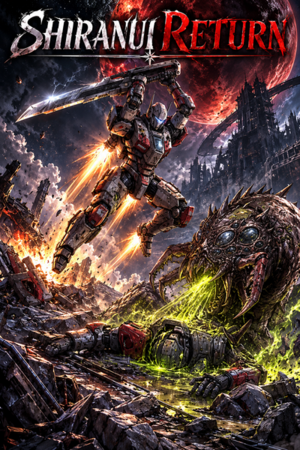
Shiranui Return
The aptitude board operated in a separate building, connected to the main academy block by an underground corridor. The evaluation room had an oval table, acoustic walls, and a holographic panel that projected exercise telemetry. At the head of the table sat Colonel Akane Fujimoto, who was in charge of the department. Beside her, a military physician and two interface technicians reviewed Renji’s records.
General Shunichi Kurosawa was not present, but his aide occupied a chair near the door. He was a man in a dark suit, with a narrow face and gray hair. He wore no uniform, but carried himself like someone whose authority came from the reports he could forward.
“Cadet Kurogane,” the colonel began. “Your simulator performance exceeds the expected statistical range. The board wants to confirm that there was no external alteration to your neural profile or the cockpit software.”
“There wasn’t, ma’am.”
“The command sequence used in the last exercise is not part of the standard training routine. How did you achieve that result?”
Renji looked at the panel. The record showed the trajectory of the ten targets, reaction time, and the virtual unit’s power consumption. There was nothing impossible about the sequence; what made it unusual was how few movements it required.
“I observed the targets’ behavior before accelerating,” he replied. “The simulator lets you anticipate the likely direction of the second attack. I didn’t have to react to each movement separately.”
“That’s tactical analysis. I’m asking about the interface,” one of the technicians said. “Did you change the sensitivity?”
“No. I adjusted the command force within the authorized parameters and reduced unnecessary corrections. When the stabilizer began compensating, I waited for the feedback before sending the next impulse.”
The technician enlarged the telemetry trace.
“Most candidates do the opposite. They correct before receiving the response and create an oscillation.”
“Because they try to force the machine to keep up with the speed of thought,” Renji said. “The cockpit has a delay. Ignoring it doesn’t make it disappear.”
The colonel watched him for a few seconds.
“Where did you learn to put it that way?”
The true answer was impossible. In his other life, Renji had spent months at a lunar facility training in cockpits that did not yet exist in that year. He had learned to pilot with a system that transmitted the pressure on the joints, the strain on the thrusters, and the difference between an accepted command and one only partially executed. It had been one of the most important experiences of the war—and one of the opportunities bureaucracy had wasted.
“I studied failure reports from earlier models,” he replied. “And I spent a lot of time observing the exercise telemetry.”
It was not a lie. It simply was not the whole story.
The general’s aide leaned forward.
“There was also an incident in the propulsion lab. You became involved in an argument with Cadet Kurosawa and, according to his account, tried to intimidate him.”
Renji turned toward the man.
“Daichi was holding Cadet Kisaragi by the wrist. I told him to let her go. The disciplinary board has already heard the witnesses.”
“That doesn’t answer the accusation of intimidation.”
“There was no physical threat. I warned him not to repeat the assault.”
The colonel raised a hand before the aide could continue.
“The incident has been recorded and will be handled by the disciplinary office. This hearing concerns technical performance. We will not mix issues that have separate procedures.”
She asked Renji to repeat the sequence on the isolated console. The cadet complied. The technicians changed the order of the targets, increased the stabilizer delay, and reduced visibility. The first attempt ended in a simulated collision. Renji did not try to hide the mistake; he asked for the recording, identified the moment when he had corrected too early, and repeated the exercise.
On the second attempt, he completed the sequence without losing the unit. He was not as fast as he had been during the record run, but he used less energy and finished with the actuators within the recommended thermal range.
“The result is consistent,” one of the technicians said.
The colonel closed the report.
“We found no evidence of external alteration. Your performance will stand, but you will remain under observation during the next training cycle. I want to know whether you can repeat this pattern in different machines, not just in a simulator.”
“Understood, ma’am.”
The aide seemed dissatisfied.
“The board is taking an unnecessary risk by advancing a cadet so early.”
Fujimoto looked at him.
“The board is not advancing anyone. It is evaluating data. If the general’s office has evidence of misconduct, submit it through the proper channel.”
The man stood, straightened his jacket, and left without saying goodbye.
Renji was dismissed a few minutes later. In the hallway, Daichi was leaning against a wall with his arms crossed. The look of superiority he usually wore seemed less certain.
“Enjoy the hearing?” he asked.
“It was enlightening.”
“My father won’t forget this.”
“He has an entire office to run. He shouldn’t need to spend time on an argument between cadets.”
Daichi stepped forward.
“You think you can keep humiliating people and get away with it?”
“I think you’re confusing consequences with impunity. If you act properly, you won’t have to worry about a board.”
“You talk as though you’ve already won.”
“No. I talk like someone who knows there’s still a lot to prove.”
Daichi narrowed his eyes. For a moment, he seemed to search for an answer that would hurt Renji. Then he walked away, leaving the threat hanging in the hallway.
◆
That afternoon, Major Hiroshi Hasegawa summoned Renji to the training hangar. Kestrel number four was suspended over a maintenance platform. It stood eight meters tall, with a lightweight frame, composite armor, and a low-power compact reactor. The cockpit still used a first-generation neural interface: muscle sensors, motor impulse readings, and limited balance assistance. It was safe for training, but it did not transmit much of what was happening in the joints to the pilot.
Hasegawa pointed to the machine.
“The colonel forwarded your results. She wants you to take part in a comparative evaluation. Before I agree, I need to know whether you understand the difference between a good pilot and someone who has simply learned to beat simulators.”
“A good pilot can repeat the performance under different conditions, sir.”
“And when the equipment fails?”
“He has to recognize the failure without making it worse. If the stabilizer is delayed, he shouldn’t compensate with increasingly large movements. If a joint overheats, he has to reduce the load before it stops responding. If communications fail, the unit must still be able to perform a simple safety sequence.”
Hasegawa crossed his arms.
“That sounds more specific than the basic curriculum.”
Renji looked into the open interior of the Kestrel. The neural cables, muscle sensors, and basic warnings seemed simple compared with the cockpit he remembered. In his other life, the Shiranui Mk-IV had taught him that a machine could convey far more to its operator than whether a command had been carried out or rejected.
“It’s a way of thinking about the machine,” he replied. “It doesn’t depend on any particular model.”
Hasegawa followed the cadet’s gaze to the open cockpit.
“This Kestrel’s interface was designed to be robust and simple,” the major explained. “It’s easy to maintain, but it provides little information about what’s happening in the joints. More sensitive systems would be useful, as long as they didn’t overload the pilot.”
Renji felt the weight of the memory. The Shiranui Mk-IV system had not merely been expensive. It had been extraordinary. In the Synaptic Piloting Program, operators learned to perceive the machine in an almost physical way. The cockpit translated pressure, vibration, heat, and torque data into understandable stimuli. The software anticipated the load trend on a joint but did not make the decision for the pilot. The machine provided information; the operator remained responsible for the maneuver.
Back then, the instructors said humanity had finally begun treating the mech as an extension of the pilot, not as a vehicle that had to be tamed. Renji had believed them. The first tests had reduced movement failures and improved team survival in low-gravity operations. If the program had received funding, if pilots had been chosen for ability rather than family name, perhaps the entire doctrine would have changed. Perhaps he would have been promoted and assigned to train other operators. Instead, the experience remained concentrated in a few units, the reports were archived, and his injury at Acheron ended his participation.
“What do you think of the system?” Hasegawa asked.
“It was promising. But installing better sensors wasn’t enough. Pilots needed training to interpret the feedback and accept that not every correction had to be immediate.”
“That’s an answer I’d like to hear from the instructors.”
“Then maybe they should teach it.”
Hasegawa gave a brief snort of laughter.
“That’s exactly why they haven’t given you a rank yet.”
Renji did not smile. The major noticed and changed his tone.
“We’re not going to reproduce an experimental cockpit at the academy. We don’t have the components, the budget, or the team. But we can test procedures. I want to know whether what you’re describing works in an ordinary Kestrel.”
“I can demonstrate it.”
“Not by yourself. A doctrine that works for only one pilot is no use to a military force.”
◆
The comparative evaluation brought together four cadets: Renji, Reika Kisaragi, Daichi Kurosawa, and Shun Amamiya. Masato Kanzaki was assigned to record the telemetry and monitor communications. Aoi Tachibana, who was participating in a technical exchange between the Novgorod Institute and the academy, would oversee the tactile feedback sensor readings. Her presence made Renji forget for a moment the task in front of him.
Aoi entered the hangar with a digital clipboard and her red hair tied in a low bun. She wore a gray work jacket over her academy uniform. There was a small grease stain on her left cuff, probably from a part she had examined before arriving. She did not carry herself like someone trying to impress the officers; she seemed more interested in figuring out why a cable had been placed at that angle.
“Cadet Kurogane?” she asked, checking the list.
Renji felt his throat tighten. In his first life, she had called him a useless soldier when they met; later, she had helped him rebuild his body and his mech. That morning, she was just an engineering student saying his name for the first time.
“Yes. It’s a pleasure to work with you, Tachibana.”
“Aoi is fine. Everyone here uses first names when they’re covered in grease.”
“Then I’ll try not to ruin the rule.”
She smiled faintly and turned back to the sensors.
Hasegawa explained the exercise. Each cadet would pilot the same Kestrel model through a virtual course, with the automatic assists adjusted to reproduce different delays. The objective was not to destroy targets, but to cross an obstacle area, maintain stability, and recover a damaged unit. The results would be assessed by time, power consumption, number of corrections, and structural integrity.
Daichi raised his hand.
“Why is Kurogane taking part? He already has the best entrance score and just received a special hearing.”
“Because the evaluation needs a point of comparison,” Hasegawa replied. “And because the other cadets deserve a chance to beat his result.”
“Convenient.”
“The course is the same for everyone. If you have a technical objection, state it.”
Daichi did not have one.
Reika examined the protocol.
“Will the cadets’ order be chosen at random?”
“Yes. And the configuration will be reset between tests,” Masato replied.
“I want the raw record for every run, not just the final score.”
“You’ll get a copy,” the major said.
Shun leaned over to look at the map.
“The exercise favors anyone who memorizes the course. Maybe we should change the obstacles between runs.”
“Good suggestion,” Hasegawa said. “The technical team will move two obstacles for each pilot.”
Renji watched the three of them. Daichi wanted to prove that his family name still gave him an advantage. Shun wanted to ensure that any result could be interpreted in his favor. Reika wanted a procedure no one could challenge. None of them was a simple enemy. That was one of the lessons his first life had taught him too late.
The draw put Daichi first. He entered the cockpit confidently, adjusted his helmet, and began synchronization. The Kestrel responded to his commands with a slight delay, but enough to make him correct the same movement twice. His left arm overshot the obstacle’s limit; the system reduced speed and recorded a minor collision.
“The cockpit is lagging,” Daichi complained as he climbed out.
“The cockpit is within tolerance,” the technician replied.
Shun went second. He chose smaller movements but lost time trying to keep the unit perfectly aligned. Reika was third. She made a clean run but left the damaged unit behind because she considered the rescue incompatible with the time available.
When his turn came, Renji paused for a moment in front of the hatch. The cockpit bore little resemblance to the Shiranui, but the principle was the same: the system could not be treated like a limb that obeyed instantly. It was a heavy machine, with mass, inertia, and thermal limits.
Synchronization ended. The display showed the basic indicators: joint load, reactor temperature, thruster vector, stability margin, and neural signal quality. There was no distributed tactile feedback, only small pulses in the armrests and a visual indicator.
Renji started slowly. He did not try to take the first turn at maximum speed. He let the stabilizer complete its correction and used short bursts from the dorsal thrusters. When the obstacle changed position, he adjusted the Kestrel’s hips before turning the torso, reducing torque on the ankle joint. The unit passed without touching the barrier.
In the second area, the simulator reduced the right arm’s response. Renji did not increase the command force. He shifted part of the weight to the rear leg, changed the shoulder angle, and used the assist system to keep the training weapon in position. The system recorded a minimal drop in accuracy, but no overload.
In the final section, he reached the damaged unit. Instead of trying to lift it head-on, he positioned the Kestrel sideways, attached the rescue cable, and used the auxiliary thruster to compensate for the difference in weight. The operation took a few seconds longer than Reika’s, but the unit reached the extraction zone without suffering additional damage.
When the cockpit opened, the silence in the hangar was different from the silence that had followed the perfect score. This time, the technicians were looking at the data.
“Lowest power consumption,” Masato said. “Fewer corrections, and no oscillation above the limit.”
Aoi enlarged the ankle graph.
“You noticed the loss of response before the visual warning.”
“The left support vibrated differently,” Renji explained. “The joint didn’t fail. The load transfer to it did.”
“The sensor records that, but the indicator doesn’t distinguish between the two.”
“Then maybe the indicator should.”
Aoi looked at the graph, then at him.
“That’s possible with the telemetry we already have. We don’t need an entirely new interface.”
Renji felt a small sense of hope. He had not brought the entire future with him. But perhaps he could help Aoi find a way forward using the resources available in that era.
◆
The next run used reconfigured obstacles. Hasegawa asked Renji to repeat the exercise without knowing which joint would be delayed. This time, the cadet had to identify the response while moving. The first test ended with a misreading in the left arm. On the second, he recognized the change in support and altered the weight distribution before the system issued a warning.
“You’ve trained with more detailed tactile feedback before,” Aoi said when he climbed out.
The question did not sound like an accusation. It was a technical observation.
“I’ve studied systems that gave the pilot more information.”
“Military systems?”
“Combat platform reports, mostly.”
Aoi studied him for a moment.
“You talk as if you’ve used one.”
Renji held her gaze but did not answer immediately.
“I learned to pay attention to what the machine is trying to tell me before it turns into an alarm.”
Aoi seemed to consider the remark. Then she turned back to the panel.
“Then we can test something. I won’t change the neural controls. I’ll just separate the load and vibration signals in the diagnostic display. The pilot will still see the values on the screen, but it should be easier to identify the source of a variation.”
“That would already help.”
“I don’t know whether it will help everyone. We need to test it with different operators.”
“That’s why we’re here.”
Daichi approached, irritated by the attention the exercise had brought Renji.
“A good result on a prepared course proves nothing about real combat.”
“I agree,” Renji replied.
The answer seemed to disarm him.
“Then why are you so pleased?”
“Because we found something we can measure. Now we need to see if it works on another course, with another pilot, and under greater pressure.”
Reika closed the report.
“Kurogane’s score should only be compared after we repeat the conditions for everyone. The first run for each participant had different obstacles, even if the overall configuration was the same.”
“Correct,” Hasegawa said. “We’ll conduct a second standardized evaluation.”
Shun smiled faintly.
“Looks like no one gets to celebrate today.”
“The objective isn’t to celebrate,” the major replied. “It’s to find out what works.”
Daichi left first. The defeat was not yet final, and that irritated him more than losing a clear contest. Shun stayed for a few minutes, talking with the technicians and asking who would authorize the next session and which names would be sent to the board. Reika requested a complete copy of the records. Masato began organizing the files on two separate drives, as instructed.
Renji stayed beside Kestrel number four. The maintenance plate had an old scratch near the serial number. He ran a finger over the mark and remembered how the Shiranui Mk-IV had trembled before a thruster failed. The machine’s tactile feedback had been designed to warn the operator in advance, but training taught that no sensor could replace attention. Technology amplified human perception; it could not take responsibility in its place.
Hasegawa approached.
“What did you see in there?”
“A system that provides less information than it could.”
“And what do you intend to do about it?”
“First, learn to use what we have. Then prove where information is being lost. If we can demonstrate that, engineering can decide whether it’s worth changing the display or the sensors.”
“You’re not asking for a new machine.”
“No. I’m asking us to understand the current one better.”
The major nodded.
“Tomorrow, at seven. You, Kisaragi, and Amamiya will repeat the exercise. Kanzaki will handle the telemetry. Tachibana can observe as a technical specialist, provided she doesn’t interfere with the cockpit.”
“Understood, sir.”
“And Kurogane? Don’t try to impress the team. I want you to teach the procedure so someone besides you can reproduce it.”
Renji understood the challenge. In his previous life, his training had been extraordinary, but it had remained concentrated among a few operators. What could change the war was not just the technology: it was making the capability teachable, verifiable, and accessible to more pilots.
“I’ll prepare an instructional sequence,” he replied.
That night, Renji opened the terminal and began writing a basic protocol. He did not include the Shiranui’s advanced systems, because they did not exist in that era. He recorded only what could be applied to the Kestrel: wait for the stabilizer’s response, avoid simultaneous corrections, watch the load trend, use short thruster bursts, reduce the demand on a joint when its temperature rose, and maintain a manual emergency control.
He titled the document “Principles of Pilot–Machine Synchronization.” It was a modest title for an idea that, in his previous life, had emerged from a classified program and been wasted before it could reach the entire fleet.
As he saved the file, he thought of the Shiranui Mk-IV. In the other timeline, that machine had been proof that humanity could make a leap forward in piloting. If he had been promoted, perhaps he could have turned the experience of a small group into a combat doctrine. Now he had the chance to begin earlier—not with an instant revolution, but with a lesson, a test, and a team willing to repeat the results.
The second evaluation began before dawn. The outdoor temperature had dropped overnight, and the hangar needed to keep its heaters running so the hydraulic actuators would not lose efficiency. The four Kestrels stood in front of a modular course made of synthetic concrete blocks, ramps, shallow trenches, and structures simulating urban wreckage.
The exercise would be more demanding than the previous one. Each team had to cross the course, recover a support unit, and reach the extraction point without relying on continuous communication with headquarters. The main network would be interrupted at set intervals, and the backup channel would allow only short command messages. There were no Chronian enemies, unknown materials, or extraordinary circumstances. It was a doctrine exercise, designed to find out whether the cadets could work when technology stopped providing every answer.
Hasegawa gathered the participants around the map.
“A combat unit cannot depend on a perfect connection. In the field, cables break, antennas are damaged, and electromagnetic noise can saturate the network. You’ll have to maintain formation and make decisions using the information available.”
Daichi crossed his arms.
“And what if the backup channel fails, too?”
“Then you’ll have to act according to local procedure,” the major replied. “That’s what we train for.”
Reika examined the routes. The scenario offered two options: a narrow passage between structures and a longer route across uneven terrain. The second allowed the support vehicle to pass with less risk, but increased its exposure time.
“The short route requires the lead Kestrel to maintain balance with very little room to maneuver,” she observed.
“And the long route delays the extraction,” Daichi replied.
Shun stepped closer to the map.
“We can split the team. One unit clears the route, and another escorts the support vehicle.”
“If communications fail halfway through the split, the two groups could lose their bearings,” Masato said.
Renji pointed to the rendezvous point.
“We can set a simple rule. The reconnaissance unit doesn’t pass the second marker without confirmation. If the main channel goes down, everyone proceeds to the same rendezvous point. The team doesn’t need to debate the decision during the outage; it needs to know in advance what to do.”
Hasegawa studied the map.
“That’s the proposal. Any objections?”
Daichi did not like accepting a suggestion from Renji, but he knew that challenging it without offering an alternative would be worse.
“I agree about the rendezvous point. But I want to lead the first unit.”
“You’ll be the second pilot,” the major decided. “Kurogane will lead the reconnaissance unit. Kisaragi will monitor the route, and Kanzaki will stay at the control station. Amamiya will command the support unit.”
Shun accepted without arguing. Renji realized he preferred a coordination position to a cockpit where every mistake would be recorded directly.
Aoi approached with a small module connected to a set of external sensors. It was not a new neural interface. It was a tactile feedback prototype built around data already available on the Kestrel: when a joint approached its load limit, a small actuator would vibrate in the corresponding seat support. The pilot would still see the indicators on the display but would receive an additional signal without having to take his eyes off the course.
“We made a simple version overnight,” she explained. “It doesn’t change the commands or connect directly to the nervous system. It just translates three telemetry ranges into different vibrations. It may still produce false warnings, so I want it tested first without anyone depending on it.”
Hasegawa examined the module.
“Approved for observation, not control. If it behaves irregularly, it will be shut down.”
“Understood,” Aoi replied.
Renji studied the assembly. It was crude compared with the Shiranui Mk-IV’s distributed tactile feedback, but that was precisely what made it valuable. Aoi had used ordinary components and a logic that could be verified. She was not trying to reproduce the entire future; she was solving a present need.
“The warning distribution is correct,” he said. “But it would be good to distinguish a continuous vibration from a short pulse. A persistent fault needs to feel different from a momentary change in load.”
Aoi looked up.
“You think a lot about how the pilot will interpret the warning.”
“Because a warning the pilot doesn’t understand is useless.”
She smiled.
“That’s where we agree.”
◆
The cadets took their places in the cockpits. Renji connected the neural interface, adjusted the lumbar support, and checked the sensor contact points. Kestrel synchronization was slow and required the pilot to remain still during the initial scan. In his other life, the Shiranui completed this process in a few seconds. The current cockpit still required a manual calibration sequence.
Renji did not try to speed up the procedure. He checked each limb’s response, tested the thruster delay, and confirmed the joints’ load limits. The display showed green indicators.
“Reconnaissance unit ready,” he reported.
“Support unit ready,” Shun replied.
“Central communications ready,” Masato said.
The timer started.
The first section was simple. Renji advanced at a moderate speed, keeping the torso aligned with the course axis. The second obstacle required the Kestrel to pass through a narrow opening while carrying a support component. Instead of rotating the entire body, he shifted the center of mass and used the lateral thrusters to correct the trajectory.
“You’re losing time,” Daichi commented over the team channel.
“I’m preserving the right joint’s safety margin.”
“The obstacle isn’t going to attack you.”
“No. But the report will show whether I damaged it.”
Masato gave a short laugh at the control station. Reika remained silent, focused on the map.
When Renji reached the second marker, the main channel was shut down. The display switched to local mode. He received only the backup signal, with short messages and no video. The team continued advancing according to plan.
“Support unit, maintain the marked distance,” Renji transmitted.
“Confirmed,” Shun replied.
The course changed. One of the side platforms lowered, simulating the collapse of a section of terrain. Daichi’s Kestrel lost its left-foot support and tilted toward the trench. The pilot applied too strong a correction; the machine oscillated, and the system automatically reduced thruster power.
“I’m stuck,” Daichi reported.
“Don’t force the leg,” Renji replied. “Shift your weight back and release the joint for one second.”
“The stabilizer isn’t responding.”
“It is responding. You’re sending another correction before receiving the first one.”
Daichi hesitated. The machine was still tilted, but the oscillation had decreased.
“Now?”
“Now use the lateral thruster in two short bursts. Don’t hold the acceleration.”
Daichi obeyed. The Kestrel recovered some of its balance, but the left ankle temperature warning came on.
At the control station, Masato monitored the data.
“The load is still high. If he moves forward, the joint could lock.”
Reika assessed the alternate route.
“The support unit can reach Daichi, but we’ll have to abandon the short route.”
Shun replied over the backup channel.
“I can tow the Kestrel with the winch. That will delay the extraction.”
Renji studied the map. The procedure allowed them to recover the unit without compromising the rest of the team, provided the reconnaissance unit held the passage. His first life had taught him not to confuse speed with efficiency. A damaged mech could be recovered; a lost pilot could not.
“Shun, approach from the side. Reika, mark the solid ground. Daichi, keep your weight back and don’t try to walk.”
“Understood,” Reika replied.
“I’m holding position,” Daichi said, his voice tense.
Renji positioned the Kestrel in front of the structure simulating the wreckage. The evacuation route was partially blocked. He used his left arm to move a panel aside and his right to secure the support cable. The vibration in the seat changed for a moment, indicating that the ankle was approaching its limit. Renji stopped the movement and repositioned the leg before continuing.
Aoi’s prototype warning had been subtle but clear. It had not replaced the visual indicator; it had simply drawn attention to information he might have missed.
“The vibration worked,” Renji said over the local channel.
Aoi heard the transmission in the observation room and noted the time.
“Logged. Don’t use it as your only reference. The sensor still has a margin of error.”
“I didn’t. I just confirmed what the panel was already showing.”
The winch secured Daichi’s unit. Shun pulled the Kestrel slowly, avoiding any twist in the leg. In less than a minute, the pilot was free and the team could continue toward the extraction point.
The second half of the exercise was harder. A burst of noise interfered with the backup channel and reduced message quality. Renji activated the agreed procedure: three short pulses meant stop; two long pulses meant advance to the next marker. It was not new technology. It was a simple convention, tested before departure.
Reika recognized the pattern and confirmed the route. Masato repeated the sequence at the control station to make sure everyone had received it. Shun kept the winch retracted and advanced without trying to make up for the lost time.
The team reached the extraction point late, but every mech was still fit to return. The exercise ended without a top speed score. Even so, the telemetry showed lower power consumption, fewer abrupt corrections, and no structural failures.
◆
When the cockpits opened, Daichi climbed out with a face red from irritation. He took off his helmet and looked at Renji.
“You could have ordered the team to keep going. The simulation would have been faster.”
“And you would have been stuck in the trench.”
“It was an evaluation.”
“Exactly. The objective was to test whether we could recover a damaged unit.”
Daichi clutched his helmet against his chest.
“You didn’t have to talk to me like I was an incompetent recruit.”
“Then don’t make the same mistake twice.”
Reika stepped closer before the argument could escalate.
“The record shows that the initial correction was excessive. But Renji’s guidance also needs to be included in the report. The team shouldn’t depend on one person to identify the right procedure.”
“Agreed,” said Hasegawa, who had just entered the hangar. “Kurogane led the team, but the recovery rule needs to be taught to everyone. The next exercise will have a different leader.”
Shun handed the telemetry to the major.
“The short-and-long pulse convention worked even with the channel degraded. We can formalize it for support units.”
“We can test it with two more teams,” Hasegawa replied. “Then we’ll decide.”
Aoi presented the tactile module report. The device had registered three correct warnings and one false vibration caused by an irregularity in the course. The reading was promising, but not sufficient for operational use.
“The next version needs to separate the vibrations by joint and reduce false warnings when the machine crosses uneven ground,” she explained.
“Don’t change the safety limits just to avoid the nuisance,” Renji said. “If the pilot learns to ignore a warning because it vibrates too often, the system loses its purpose.”
Aoi agreed.
“I’ll adjust the interpretation, not the limit.”
Hasegawa looked at the reports and then at the cadets.
“The result wasn’t perfect. There was a delay, one unit had to be towed, and the tactile module still needs work. But the team maintained coordination and avoided a bigger failure. That’s what I wanted to see.”
He turned to Renji.
“Kurogane, I want you to submit a formal version of your synchronization protocol. Not as a list of commands, but as training material. Include the mistakes you made and the method’s limitations.”
“Yes, sir.”
“Kisaragi, you’ll revise the evaluation criteria. Amamiya, prepare a proposal for backup communications. Kanzaki, keep the complete records. Tachibana, continue with the prototype only under supervision. Kurosawa, you’ll take part in the next round as the leader of another team.”
Daichi looked ready to object but held back.
“Understood, sir.”
Hasegawa ended the meeting.
◆
The work continued for several weeks. Renji began dividing his time among classes, piloting exercises, and writing the protocol. He discovered that translating his experience into language other cadets could understand was harder than performing the maneuvers. What his body had learned over thousands of hours in the cockpit had to be broken down into steps, explained, and repeated.
He wrote about the difference between impulse and correction, the need to wait for the stabilizer’s response, and how to recognize a load transfer before a joint reached its limit. He included examples of movement in reduced gravity and on uneven terrain. He avoided presenting the Shiranui Mk-IV as a ready-made solution. That model still belonged to the future; the Kestrel had to be treated according to the components it actually had.
Aoi helped turn the vibration data into clearer warnings. Instead of using a single pattern for every problem, she separated joint overload, hydraulic pressure loss, and assembly overheating. The module remained attached to the seat and did not interfere with the neural connection. It was simple, but it allowed the pilot to keep his eyes on the course during a high-load situation.
Masato created a backup communications protocol based on short messages and fixed priorities. Reika developed an evaluation sheet that recorded not only the exercise time but also power consumption, corrections, repeated orders, and the team’s ability to recover a damaged unit. Shun revised the leadership system to allow command to pass to the second pilot when the primary unit lost communications.
Daichi continued to compete. He did not become Renji’s friend, nor did he abandon the belief that his father’s surname guaranteed him a superior position. But he began training more carefully after realizing that his own impatience could compromise the machine. When his results began to improve, he credited his discipline, not Renji’s advice. Renji did not correct him. What mattered was that the mistake would not be repeated.
Shun followed the project with calculated interest. He realized the protocol could bring Renji visibility and tried to get closer to the group. He offered to present the results to a student committee and suggested that the work be given a more ambitious name. Renji rejected the name and accepted the technical presentation.
“You don’t want to turn this into a brand?” Shun asked.
“I want pilots to use the procedure.”
“One thing usually helps the other.”
“Only when the brand doesn’t become more important than the result.”
Shun smiled but did not press the matter.
◆
The evaluation board met at the end of the cycle. Colonel Fujimoto reviewed the records from three different teams. Renji’s protocol reduced the number of simultaneous corrections, but the gains varied with operator experience. Aoi’s module showed an advantage in high-load exercises, although it still generated false warnings on uneven terrain. Masato’s network maintained basic coordination during brief outages, but did not replace the main communications system. Shun’s leadership plan was useful, provided the criteria for transferring command were objective.
Daichi presented his results without crediting the group’s work for the improvements.
“The second evaluation went better because I trained the procedure,” he said.
“That’s true,” Fujimoto replied. “And that is precisely why the procedure needs to be evaluated. If it only works when Kurogane is in the cockpit, it has no value to the academy.”
The colonel turned to Renji.
“Do you acknowledge that the results are still preliminary?”
“Yes, ma’am. We need more operators, more Kestrel models, and exercises under different conditions.”
“And do you believe the training should be expanded?”
“I believe it’s worth keeping an evaluation group for another semester. Not to replace the curriculum, but to identify which techniques can be incorporated without increasing risk.”
Hasegawa supported the proposal. The colonel consulted the other members and authorized an experimental adaptive piloting class, limited to twelve cadets and supervised by the training department. Aoi’s tactile feedback module would remain in testing, with no operational use. Masato’s backup communications would be incorporated into the exercises. Reika would be responsible for auditing the results.
Renji received a place in the experimental class. It was not a promotion or a rank, but it was a step he had not reached until much later in his first life. For the first time, he would have time to teach before the war demanded that everyone know what he did.
◆
After the meeting, Aoi found Renji in the hallway leading to the hangar. The noise of the ventilation fans drowned out some of the conversations, and the maintenance lights reflected off the metal floor.
“You seem disappointed,” she said.
“Were you expecting less bureaucracy?”
“No. I was expecting you to be happy.”
Renji looked at the provisional authorization in his hand.
“I am. I’m just thinking about what still needs to be done.”
“There’s always something left to do.”
“In the other...” He stopped before finishing the sentence. “In some reports I read, there were pilots who could do much more with advanced interfaces. But the training was restricted and never reached everyone.”
Aoi leaned her clipboard against the wall.
“Maybe that’s because engineers thought about the machine first and the pilot second.”
“Or because command didn’t trust the person in the cockpit.”
“You talk as if you’ve already seen what happens.”
Renji looked away toward the hangar. The training Kestrel remained motionless on its platform. It seemed too simple compared with the machine he remembered, but it was the only tool available in that era. He could not bring the future into that hangar; he could only teach pilots to understand the equipment they actually had.
“I’ve seen good pilots treated as replaceable parts,” he replied.
Aoi did not try to fill the silence.
“Then let’s make the reports show what happens to them,” she finally said. “Not just how many machines return in working order. Also how many pilots can climb out of the cockpit and come back the next day.”
Renji felt the memory of the lunar workshop pass through him. In his first life, Aoi had given him back his arm and the chance to fight. In this one, she was beginning to work with him before knowing the tragedy that would bring them together.
“That’s a good goal,” he replied.
“It’s not a goal. It’s an engineering requirement.”
He smiled.
“You’re still demanding.”
“And you still talk as if you’ve known me for years.”
Renji could not find a safe answer. Aoi noticed his hesitation but did not press him.
◆
That night, the dormitory was almost silent. Masato was asleep in the bunk beside his, with a terminal open on his chest. Renji sat at the common table and reviewed the authorization for the experimental class. The document contained no grand promises. It gave him access to more cockpit hours, specialized instructors, and the opportunity to present results to a technical committee.
In the first timeline, the Synaptic Piloting Program had emerged after the war had already begun. The Shiranui Mk-IV was an extraordinary machine, and its interface system made ordinary pilots seem capable of keeping up with movements that had once required superhuman reflexes. But the technology had arrived too late, been distributed to only a few units, and never become a broad doctrine. Renji had learned to operate it, survived battles others would not have endured, and still failed to turn that knowledge into a career. After Acheron, High Command had reduced his experience to a medical liability.
Now, in 2184, he could begin along a different path. He did not need to convince the academy that he knew everything about the future war. He needed to prove that a pilot trained to understand the machine made fewer mistakes, preserved the equipment, and could bring the team home.
The difference might seem small to a general. To someone who had seen a lunar crater covered with mech wreckage, it was enormous.
Renji opened a new document. At the top of the page, he wrote: “Adaptive Piloting Program — Synchronization and Safety Principles.” Below it, he recorded the objective: make cockpit knowledge teachable, repeatable, and accessible to more operators.
The terminal remained quiet after Renji saved the protocol. Outside, the wind pushed snow against the window panels, while in the hangar the technicians finished inspecting the Kestrels. The war was still years away. That night, what mattered was the document open in front of him and the opportunity to teach other pilots to recognize a failure before it became fatal.
That was exactly why Renji had to begin there.
He closed the terminal and looked out the window. Snow covered the rooftops of Vostok. In the hangar, the lights remained on over the rows of Kestrels. One day, those machines would be replaced by more advanced platforms. One day, the pilots would have to face creatures no manual described.
But that day had not yet come.
For now, Renji Kurogane had a place in an experimental program, a team that was beginning to trust his methods, and a second chance to build the career that had been denied him. It was not enough to win the war. It was enough to start changing it.



Please sign in to leave a comment.