Chapter 1:
The Letter from Blackridge
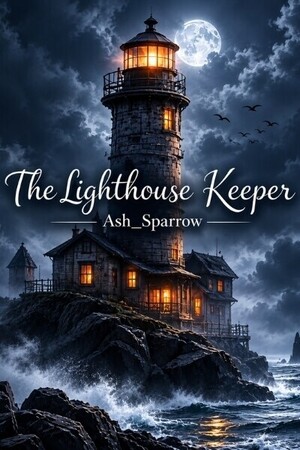
The Lighthouse Keeper
I never expected to inherit anything—let alone a lighthouse.
When the letter arrived three weeks ago, I figured it was some kind of scam. Walter Hargrove? Never heard of him. But the lawyer insisted he was my great-uncle, apparently the black sheep of the family that nobody talked about.
When I was twelve, I'd asked Mom about him once. She'd gone quiet for a long moment, then changed the subject so fast it made my head spin.
Now he'd died, leaving me his "estate"—which turned out to be one very old, very isolated lighthouse.
Great. Just what every struggling freelance journalist needs. A fixer-upper in the middle of nowhere.
So here I was, white-knuckling my rental car through fog so thick I could barely see the hood, following GPS directions to a place called Blackridge that sounded ominous and unwelcoming.
The closer I got, the more the air tasted like salt and something stale—like seaweed that had been sitting in the sun too long.
When I finally crawled into town—and I do mean crawled, because the fog was so thick I had to lean forward and squint just to see the road lines—I got my first good look at Blackridge.
The whole place looked oddly deserted for the middle of the day. Maybe a dozen stone houses clustered around a tiny harbor, half of them looking abandoned.
The population sign said "127," but somebody had crossed it out and written "Enough" underneath in what looked suspiciously like nail polish.
Real welcoming place.
I parked in front of the Sea Rest Inn, which looked like my only option unless I wanted to sleep in my car. The sign hanging over the door was so weathered I could barely read it, and it swayed back and forth in the wind.
The woman behind the front desk looked up when I walked in, and I swear she was already reaching for a room key before I said a word.
"You're here about Walter."
Not a question.
"Wow, news travels fast around here." I tried for friendly, but she just stared at me with these pale blue eyes that made me want to check if I had something stuck in my teeth. "I'm Ellie Carter. I called yesterday?"
"Mrs. Chen."
She slid a key across the counter without breaking eye contact. The metal was so cold it almost stuck to my fingers.
"Room three. Breakfast at eight if you want it."
I waited for her to elaborate—maybe ask how I knew Walter, or offer condolences, or literally anything normal people say when someone dies.
Instead, she started shuffling papers around like I wasn't there.
"So," I tried again, "you knew my uncle pretty well?"
Her hands went still.
"Walter kept to himself."
"Right, but in a small town like this, people must have—"
"Especially toward the end."
She looked up at me then, and something in her expression made my smart-ass comment die in my throat.
"Started talking to people who weren't there. Spent hours having whole conversations with empty rooms."
Okay, that was definitely not in the lawyer's cheerful summary of my inheritance.
"What kind of conversations?"
Mrs. Chen glanced toward the window, where I could just make out the lighthouse through the fog.
"The kind that keep you awake at night, listening to every sound."
She leaned forward slightly.
"You planning to stay up there long?"
"Just long enough to figure out what to do with the place. Probably sell it." I shrugged. "I mean, what am I going to do with a lighthouse? Turn it into a vacation rental for people who like being really, really alone?"
She didn't laugh.
"Some places don't like being sold."
"What's that supposed to mean?"
But she'd already disappeared into the back room, leaving me standing there with more questions than I'd started with.
After dumping my stuff in a room that smelled like my grandmother's attic—complete with floral wallpaper that probably hadn't been updated since the early seventies—I figured I should grab some supplies before tackling the lighthouse.
The diner across the street looked like my only option unless I wanted to survive on vending machine snacks.
The place was called "Sal's," and it looked exactly like every small-town diner ever: red vinyl booths, checkerboard floor, and a waitress who'd probably been working there since the Paleozoic era.
She looked up when I walked in, and I swear every conversation in the place just stopped.
"You're Walter's niece."
Again, not a question.
"Great-niece, actually. And I haven't eaten since this morning, so..." I slid into a booth and grabbed the sticky menu. "What's good here?"
"Fish and chips. Coffee's fresh."
She poured me a cup without asking.
"You staying long?"
"Just a day or two."
I glanced around the diner. Three other customers, all staring at me like I'd grown a second head.
"Friendly place."
The waitress—her name tag said "Dolores"—followed my gaze.
"People here don't like change much. Your uncle understood that."
I wanted to ask what she meant, but she'd already walked away to place my order.
The fish and chips were actually pretty good, even if eating them felt like performing for an audience. Every time I looked up, someone quickly looked away.
After paying for my meal and grabbing some basics from what passed for a general store—crackers, bottled water, flashlight batteries, and a bag of those little powdered donuts that are basically sugar delivery systems—I headed back to the inn.
My room was about what you'd expect from a place that charged forty bucks a night. Single bed with a quilt that had seen better decades, a dresser with one wobbly leg, and a bathroom the size of a closet.
But it was clean, and the radiator actually worked, which put it ahead of some places I'd stayed for stories.
I sat on the bed and pulled out my laptop, thinking I'd do some research on Walter and the lighthouse.
No Wi-Fi, of course.
My phone had one bar if I held it just right near the window, but forget about loading anything useful.
"Welcome to the twenty-first century, Blackridge," I muttered, snapping the laptop shut.
I sprawled across the bed and tore open the donuts, trying to decide what to do next.
The smart thing would be to wait until morning to check out the lighthouse. Better light, safer footing on those crumbling steps, less chance of falling off a cliff in the dark.
But I'd been a journalist for eight years, and if there's one thing you learn in this job, it's that the most interesting stuff always happens when you're not supposed to be there.
Plus, I was curious about what Mrs. Chen had meant when she said some places don't like being sold.
And Walter's journal entries that the lawyer had mentioned in passing—what kind of things had my great-uncle been writing about?
I checked my watch.
Seven-thirty. Still plenty of daylight left, even with the fog.
"Besides," I said to the empty room while demolishing another donut, "what's the worst that could happen? It's just an old lighthouse."
After changing into jeans and boots that could actually handle the rocky path, I grabbed my flashlight and headed out.
The fog had gotten thicker while I was inside, rolling off the ocean in waves that made the whole town look surreal and disconnected from reality.
The path was basically a goat trail at this point, all overgrown weeds and crumbling stone steps that probably violated about seventeen safety codes.
Halfway up, I stopped to catch my breath and look back at the town.
From up here, Blackridge looked even smaller. Like a handful of Monopoly houses someone had dropped on the coast and forgotten about.
The kind of place where everybody knows everybody's business, and if you don't fit in, you'd better learn fast.
The lighthouse was... well, let's just say the photos in the legal documents had been very generous.
The white paint was peeling off in sheets, showing gray wood underneath that looked about as sturdy as wet cardboard. Half the windows were cracked, the other half were so salt-stained they looked frosted.
And the door.
It had been painted red once, but now it was the color of dried rust.
Or blood, if you wanted to be dramatic about it.
The key turned so easily I almost fell backward.
Huh. For a place that had been empty for three weeks, the lock sure wasn't stiff.
Inside, dust particles danced in the weak light filtering through grimy windows. The air was thick and stale, with a metallic tang that made me think of old pennies.
Most of the furniture was covered in sheets, but there was an armchair by the window that wasn't. The fabric was worn smooth on the armrests, like someone had spent a lot of time sitting there.
Next to it sat a coffee mug, still half full.
I touched the ceramic.
Still warm.
"Okay, that's not creepy at all," I muttered, pulling my hand back.
I made my way to the desk in the corner, where Walter's journal lay open.
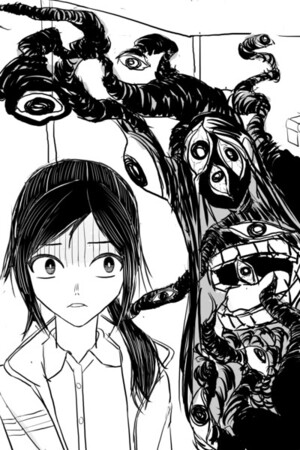
The pages were covered in handwriting that started neat and got progressively more frantic. Sketches of faces filled the margins—townspeople, I thought—but their eyes had been scratched out so violently that some pages were torn through.
The last entry made my stomach clench:
Day 847 - Mrs. Chen brought groceries today but something's wrong with her eyes. Empty. Like looking at a doll. They're all like that now. I think they're waiting for something. The lighthouse keeper isn't just a job here—it's a trap. God help whoever comes after me.
— W.H.
Mrs. Chen.
The same woman who'd just handed me keys and warned me about places that don't like being sold.
I flipped through more pages, finding notes about townspeople acting strange, voices in the walls, Walter forgetting things he'd just done.
In one entry, he'd written "My name is Walter Hargrove" over and over, like he was afraid he'd forget.
That's when I heard it.
A soft scraping sound from upstairs, like someone dragging furniture across the floor.
I froze, my heart doing a little tap dance in my chest.
According to everything I'd been told, Walter had lived alone. The lighthouse had been empty since he died.
So what the hell was moving around up there?
The scraping stopped.
In the sudden quiet, I could hear my own breathing, way too fast and shallow.
Then, from somewhere above me, came a voice.
"Ellie?"
The journal slipped from my suddenly trembling hands and hit the floor with a dull thud.
Someone was up there.
Someone who knew my name.
I needed to run. Now.
But my feet wouldn't move, and all I could manage was to stand there, frozen, staring at the ceiling and praying I wouldn't hear that voice again.





Please sign in to leave a comment.