Chapter 36:
Chapter 36: The Human Network
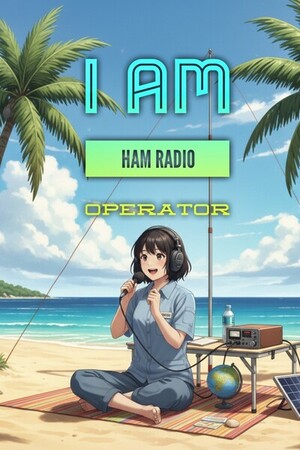
I am Ham Radio Operator
The success of my article and presentation fundamentally changes the nature of my on-air interactions. My logbook, once a sterile collection of data, begins to transform into a directory of potential friends and colleagues. The ten thousand contacts I made in my year of obsessive FT8 operating are no longer just points on a map; they are seeds, and now, they are beginning to sprout.
The emails start to arrive in a steady trickle, then a flow. They are from people I have worked on FT8, operators who have read my article or seen my talk and feel compelled to reach out. They are turning our brief, automated exchange into the beginning of a real conversation.
A ham from New Zealand, a sheep farmer, emails me a photo of his antenna with a snow-capped mountain in the background. "Thanks for the contact, Haruka! I read your article. It reminded me that even though we are on opposite sides of the world, we share the same sky. If you ever find yourself down here, the door is open."
An engineer from Germany who works for a competing aerospace company connects with me on a professional networking site. "I saw your callsign in my log and then saw your presentation. Your work on SDR is very impressive. We are facing a similar signal processing challenge on our new satellite project. Perhaps we could exchange ideas sometime?" Our hobby becomes a bridge between professional worlds.
These interactions are a revelation. I was wrong to think of FT8 contacts as hollow. They are simply the first handshake. They are the opening line. The potential for a deeper connection is always there; it just requires one of the two operators to take the next step, to send that follow-up email, to bridge the gap between the digital and the personal.
I make it my new operating practice. Every time I make an FT8 contact with a particularly interesting station, I will look them up on their QRZ.com page. If they have an email address listed, I send them a short, personal note. "Thanks for the contact! I see you are also interested in satellite operating. I would love to hear about your station." More often than not, they write back, and a real friendship begins.
The most profound of these new connections comes from a place I least expect it. I am working FT4, a newer, faster version of FT8 designed for contesting, when I make contact with a station in a very rare grid square in northern Japan. The operator's callsign is unfamiliar to me. After the contact, I send my standard follow-up email.
The reply I receive an hour later makes me gasp. The English is a little broken, but the message is clear.
"Dear Haruka-san," it begins. "Thank you for your message. It is a great honor to make contact with you. My late husband was also an amateur radio operator. He spoke of you often. He was one of the first operators you ever contacted, during the big winter storm many years ago when you were helping with the emergency net. He was so impressed by your skill and your calm voice. He followed your career and was very proud of your success."
The email is signed by the widow of a Japanese ham I have never even heard of. But he had heard me. My voice, in a moment of crisis, had traveled across the ocean and made an impression on a complete stranger, an impression so strong that he told his wife about the young woman on the radio who was helping to save her community.
I sit back in my chair, stunned. The tears that well up in my eyes are not of sadness, but of a deep, overwhelming sense of connection. This is the power of our hobby. Our signals, our voices, our simple acts of communication travel out into the world in ways we can never predict. They are heard by people we will never meet. They make an impact we will never know. We are all part of a vast, invisible, human network.
This experience solidifies my new mission. I am not just an evangelist for a new mode; I am an evangelist for a new kind of operating. An operating style that blends technical skill with genuine human curiosity. An operating style that sees every contact, no matter how brief or automated, as an opportunity, as the beginning of a potential story.
I create a new section on my personal ham radio blog. I call it "The Story Behind the Call." Each week, I feature one of the new friends I have made, starting from a simple FT8 contact. I feature the sheep farmer from New Zealand, the engineer from Germany, and now, the story of the Japanese ham whose life my own had briefly, unknowingly, touched.
The blog becomes incredibly popular. It puts a human face on the endless list of callsigns. It reminds people that behind every signal, no matter how faint or digital, there is a person with a story. My ten thousand points of light are no longer just a measure of my own achievement. They are a library of ten thousand potential stories, waiting to be told.





Please sign in to leave a comment.