Chapter 35:
Chapter 35: The Evangelist
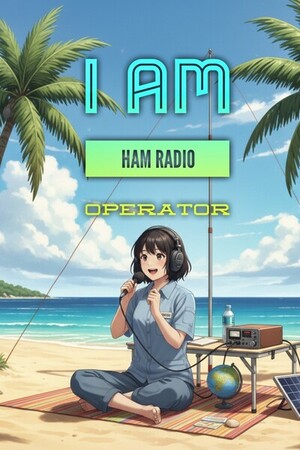
I am Ham Radio Operator
Armed with this new philosophy, I feel a renewed sense of purpose. It is not enough to simply find my own balance; I feel a compelling need to share my perspective, to help bridge the divide that threatens to fracture the hobby. I decide to step out from behind the radio and become an advocate. I become an evangelist for a modern, inclusive vision of amateur radio.
My first step is to write an article. I pour all my thoughts and experiences onto the page. I title it, "FT8: Gateway, Not Gatekeeper." I do not write it as a technical paper or a chest-thumping contest report. I write it as a personal story. I write about my initial skepticism, my descent into obsession, my hollow feeling at ten thousand contacts, and my eventual discovery of balance. I frame FT8 not as a "dumbed-down" mode for the lazy, but as a powerful, accessible entry point for the tech-savvy, socially anxious, and time-constrained generation.
I argue that a single FT8 contact, if used as a jumping-off point, can be just as meaningful as a long voice conversation. I encourage readers to follow up on their digital contacts with an email, to look up their new contacts on their QRZ.com profile pages, to turn the data point into a human connection. I end the article by describing my new operating practice: I spend part of my time on FT8, hunting for new countries and grids. But I dedicate an equal amount of time to CW and SSB, where I focus on having real conversations, especially with the new hams I have mentored.
I submit the article to the biggest amateur radio magazine in the country. I am nervous, half-expecting a polite rejection. Instead, the editor emails me back within a day. "Haruka, this is one of the most honest and important articles I have read in years," he writes. "This is exactly the conversation our community needs to be having. We are putting it on the cover of the next issue."
When the magazine comes out, the reaction is explosive. It is like I have thrown a rock into a beehive. The magazine's letters section and the online forums are flooded with responses. The sad-hams and the traditionalists are, predictably, furious. They accuse me of promoting "soulless, robotic radio" and "celebrating the death of real operating." One particularly vitriolic letter writer says my ideas will "turn our grand hobby into a glorified video game."
But for every negative response, there are five positive ones. I receive emails from hundreds of hams around the world. Young operators thank me for putting their own feelings into words. Older operators write to say that my article has opened their eyes, that they had dismissed FT8 but are now willing to give it a try. I even get a short, cryptic email from Bob, my old tormentor. It just says, "An interesting perspective." It is not an apology, but it is not a threat. It is a truce.
My article puts me on the map in a new way. I am no longer just W1Z, the contest operator. I am Haruka, the thought leader. I am invited to give a presentation at a major virtual ham radio convention. The title of my talk is "From QSO to Friendship: Building a Modern Ham Radio Community."
I pour all my energy into the presentation. Doretha helps me design a beautiful, engaging slide deck. I practice my speech until I know it by heart. Standing in front of the webcam in my apartment, addressing an unseen audience of thousands, I am not nervous. I am energized. I tell my story with a raw, unflinching honesty. I talk about the joy, the obsession, the harassment, the depression, and the recovery. I lay it all bare.
I end my talk by issuing a challenge to the community. "Let us stop seeing each other as 'real hams' and 'appliance operators'," I say, my voice ringing with passion. "Let us stop being gatekeepers and start being gateways. Let us use every tool we have, from a 100-year-old Morse code key to a brand new piece of software, to do the one thing our hobby has always been about: making human connections. Let us be the generation that tunes out the static and amplifies the signal of welcome."
The chat window next to the live stream explodes with a waterfall of positive comments. The message has resonated. That night, I get an email from the president of the ARRL. He has seen my talk. He wants me to lead a new national task force on youth engagement.
It is a stunning, terrifying, and exhilarating opportunity. My little hobby, the strange and wonderful world that saved me from my silence, has given me a new, powerful voice. I am no longer just a participant. I am a leader. And I am ready to help guide our community into the future.








Please sign in to leave a comment.