Chapter 5:
Epi.1-Note: Honorifics
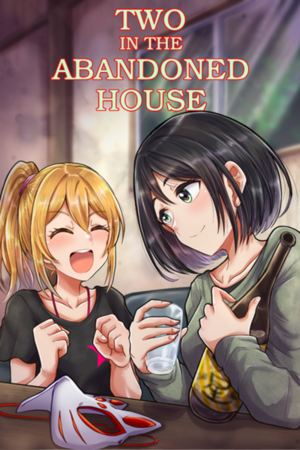
Two in the Abandoned House
▪️Honorifics In Japanese, it's common to add honorifics like “-san” or “-chan” when addressing others. If you've watched Japanese anime, you might be familiar with this already.
In this story, I use honorifics intentionally to reflect the relationships between characters. I did consider removing them to avoid confusion, but without them, certain nuances would be lost.
For example, you may have noticed that Shinobu starts calling Sayuri “Sayuri-chan” instead of “Sayuri-san.” This change shows that their relationship is becoming a little closer.
Generally speaking, “-chan” is more casual and affectionate than “-san.” However, in formal situations, using “-chan” can be seen as inappropriate or even disrespectful, especially if the other person doesn't like it. So while switching to “-chan” might seem like a natural way to express friendship, it can backfire if you're not careful.
When I was young, I was deeply moved by a scene from the anime adaptation of Anne of Green Gables (originally a Canadian novel). The main character Anne is adopted and tries to call her new guardian “Marilla-san.” Marilla tells her not to use honorifics. Anne, uncomfortable with calling her elder guardian by name, insists on using “-san.” Marilla replies, “If your heart is respectful, then calling me by name is not rude. ”From that point on, Anne simply calls her “Marilla.”
That scene taught me that it’s not the name or title that matters—it's the respect behind it. Still, in real life, I never dared call an elder by name alone. I would’ve absolutely gotten scolded.
Now, if you're thinking, “Wait, but Sayuri doesn't use honorifics at all!”—you’re right.
Sayuri believes that when you're the same age, dropping honorifics shows closeness. She even tells Shinobu to just call her “Sayuri.” But Shinobu feels a bit shy about that kind of familiarity. That’s why, after a short pause, she adds “-chan” anyway. Sayuri understands how Shinobu feels and accepts it.
So while one uses “-chan” and the other doesn't use anything at all, it’s not a matter of hierarchy. In their case, it’s a reflection of mutual understanding and comfort.
If you’re still wondering, “So what should I do?”—don’t worry, you're not alone. Even as a Japanese person, it can be confusing.
As a rule of thumb:
Use “-kun” for young boys (elementary school age)
Use “-chan” for young girls (elementary school age)
Use “-san” for everyone else
This approach will almost never offend anyone.
If a foreigner drops honorifics entirely, most Japanese people understand that it's a cultural difference, and they won’t mind. In fact, if you try using “-san,” many will appreciate the effort and feel closer to you.
As a side note: many Japanese people don’t speak foreign languages. So if it feels like someone is ignoring you, chances are they’re just nervous and unsure how to respond.
I’ll continue to provide short cultural notes like this for future episodes. They’ll be titled something like “Epi.〇 – Note: XX.” Feel free to read whichever ones interest you.
If you have questions, I’ll do my best to answer them.
Thank you again for reading Episode 1.I hope to see you in Episode 2!





Please sign in to leave a comment.