Chapter 2:
Episode 2: Stranger in the Sun
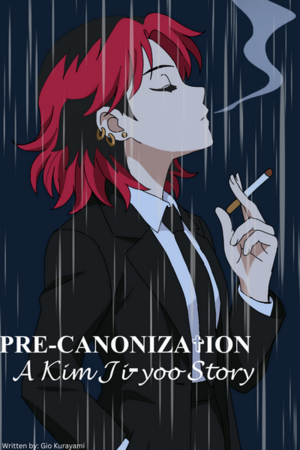
Pre-Canonization: A Kim Ji-yoo Story
The rain had passed, but the streets still shimmered—ribbons of gold and gray gliding along cracked asphalt. Jeepneys rattled by with their engines coughing protest, neon-painted saints and slogans flashing in the puddles they left behind. Steam rose from food stalls that lined the curb, curling into the soft orange haze of late afternoon.
Kim Ji-yoo sat on a low plastic stool beside a turon stand—half shelter, half escape. The oil sizzled in rhythm with the city’s heartbeat. She held a warm banana fritter wrapped in wax paper, its sugary glaze already sticking to her fingers.
Sweet. Sticky. Fried.
It wasn’t Korean food, but it was warm.
And right now, warm was enough.
The vendor, an older woman with a scarf tied around her head and laughter lines drawn deep by years of weather and work, leaned over the counter.
“First time eating turon, miss?” she asked, smiling through the smoke.
Ji-yoo hesitated, then nodded. “Mm… yes. It’s good. Crunchy.”
The woman chuckled, turning another piece in the bubbling oil. “Simple joys, no? You look like someone who needs one.”
Ji-yoo managed a faint smile. “That obvious?”
“Obvious as the rain,” the woman said. “Storm’s gone, but it still leaves the streets heavy. Same with people.”
For a moment, Ji-yoo didn’t answer. The smell of caramelized sugar filled the silence. Somewhere across the road, a radio crackled with an old OPM song about heartbreak and long-distance trains. She watched a group of kids splash through puddles barefoot, their laughter carrying through the humid air like the aftertaste of sunlight.
“I guess I’m just… trying to find my footing,” Ji-yoo said softly.
“Then start small,” the vendor replied. “One turon at a time.”
Ji-yoo laughed under her breath. “That’s not bad advice.”
She took another bite—crisp, sweet, familiar in a strange way—and found her thoughts wandering back to the record shop on the next street over.
A narrow place wedged between two laundromats. The kind of shop you’d miss unless you were looking for silence. Or music.
That’s where she’d met him.
Marco.
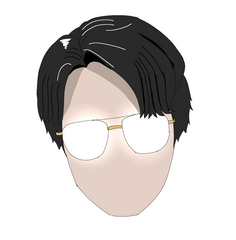
She could still see him behind the counter—messy hair falling into his eyes, fingers tapping a worn MIDI pad, a cheap pair of oversized headphones drowning out the world. He hadn’t looked up right away when she entered, just kept nodding to whatever lo-fi loop he was building. When he did notice her, his greeting was barely more than a shrug and a quiet, “Yo.”
No pretense. No curiosity about who she was.
He treated her like any other stranger, and that—oddly enough—had felt like a kind of mercy.
There was something unpolished about him.
Someone who belonged to the noise.
And Ji-yoo, once adored on stages lit by artificial starlight, had forgotten what that kind of belonging even felt like.
The vendor snapped her out of her thoughts. “You’re thinking deep again. Careful, you’ll burn your turon.”
Ji-yoo blinked, looking down at the last piece in her hand. “Oh. Right.”
“You working nearby?” the woman asked.
“Not exactly.”
She paused, unsure how much of her truth belonged here. “I guess you could say I’m… wandering.”
“Ah, a drifter,” the vendor said knowingly. “Then welcome to the Philippines, miss drifter. Plenty of stories here if you listen.”
Ji-yoo smiled again, this time with a trace of warmth that lingered longer. She set a few coins on the counter, but the woman waved off part of the payment.
“Discount for someone trying to start over,” she said with a wink.
“Thanks,” Ji-yoo murmured, tucking the remaining turon into her small paper bag. As she stood, the neon from a passing jeepney brushed across her face, painting her in fleeting color—green, red, blue—like a broken halo.
The storm was gone, but its echo still clung to the air.
She turned toward the narrow street that led back to the record shop. The sign there barely glowed, flickering like a dying star.
“Maybe,” she whispered to herself,
“I’ll stop by again tomorrow.”
The next day, the clouds had lifted, but the air hadn’t forgiven the city.
Humidity clung to Ji-yoo’s skin like a thin, invisible film. The kind that made her remember Seoul’s neon nights—except here, everything was slower, softer, almost too human.
She walked down the narrow alley where puddles had turned to mirrors. The record shop’s sign still flickered, its blue light humming faintly against the corrugated walls. A jeepney passed by, rattling the tin roofs, and the vibrations made the hanging CDs in the shop window tremble like wind chimes.
She pushed the door open.
A chime rang — a small, hesitant sound, almost shy.
Inside, the air smelled of vinyl, dust, and faint coffee. Rows of records leaned against the walls like sleeping soldiers, each with a story pressed into silence. Marco was there again, behind the counter — same wrinkled shirt, same sleepless energy, tapping his fingers against a cracked MIDI pad. His headphones hung around his neck, leaking faint beats into the air.
He looked up the instant she entered.
A small smile curved his lips — easy, unguarded.
“Didn’t think you’d come back,” he said, sliding his chair back with a squeak.
Ji-yoo paused near the doorway, her hands in her jacket pockets. “I had nothing else to do.”
Marco grinned. “That’s the best reason to find music.”
She tilted her head. “Really?”
“Yeah,” he said, tapping his chest twice. “You don’t find songs when you’re busy. You find them when you’re empty.”
The words hit harder than she expected.
Empty.
A word that tasted too familiar.
Her expression faltered for a second — just a second — before she exhaled. “That’s… an interesting philosophy.”
He shrugged. “Truth’s always a little messy. But it makes good art.”
Then, casually, like he was offering gum instead of something intimate, he waved her over.
“Come here. Want to hear something?”
She blinked. “What kind of something?”
“The kind that makes silence jealous,” he said, already reaching for his laptop.
When she didn’t move, he added with mock seriousness, “Don’t worry. I only bite on Thursdays.”
A small laugh slipped out of her — quick, unplanned. She stepped closer.
He handed her a pair of duct-taped headphones. They looked like survivors of a long war — scuffed plastic, wires exposed, held together with stubborn hope. She raised an eyebrow.
“They still work?” she asked.
“Sometimes,” he said, grinning. “Like people.”
She didn’t comment. Just took them.
He hit play.
The track began low — a heartbeat in the dark. Slow drums, a looping piano riff that shimmered like light through water, and then the bass dropped — deep, alive, unpolished, but honest. The kind of rhythm that didn’t need perfection to move you.
Ji-yoo’s eyes softened. Her body stilled except for one subtle motion — her thumb tapping her thigh in time with the beat.
When the song faded, she took off the headphones and said quietly, “That… was good.”
Marco leaned back, satisfied. “That was the trash version.”
Her brows rose. “That was trash?”
He smirked. “You want to hear the real one?”
“Sure.”
He opened another file. The same base rhythm — but this time layered with a voice.
Rough. Passionate. A rap in Filipino — angry and aching, proud and tired all at once.
Even without understanding the words, Ji-yoo could feel it — the way the syllables cracked like thunder before softening into confession.
She listened until the last beat fell away.
“Yours?” she asked finally.
“Lyrics by a friend,” Marco said, turning in his chair. “Beat’s mine. Made it last week when I was too sick to sleep.”
She blinked. “You make music when you’re sick?”
“Either that or stare at the ceiling.”
He smiled, small and self-deprecating. “Music’s cheaper than therapy.”
Ji-yoo’s gaze flicked to the shadows under his eyes — the kind that didn’t just come from sleeplessness but from thinking too much when it’s too late.
“You should rest more,” she said softly.
He chuckled. “Can’t rest when your brain’s louder than the city.”
That line made her lips curve — not quite a smile, but something close. “That’s poetic.”
“Accidentally,” he said. “Anyway…” — he reached into his backpack and pulled out a small portable mic, the kind used for home demos — “you ever try freestyle?”
She frowned. “No. I’m not a rapper.”
“You don’t have to be,” Marco said. “You just talk rhythm. Say what you feel. The mic listens better than people do.”
The shop seemed to go quieter after that.
Outside, a tricycle backfired. Someone laughed in the distance.
Inside, Ji-yoo stared at the mic — scratched, taped, fragile — like it was asking her for something she wasn’t sure she could give.
“I don’t think my accent—” she began.
“Doesn’t matter,” Marco cut in gently. “You’ve got a story. I can hear it in your silence.”
That caught her completely off guard.
Her throat tightened, and she quickly looked away.
“Come on,” he said again, grinning now, but softer this time. “Just one line.”
Ji-yoo hesitated. She could almost hear her old voice — the one that sang on spotless stages under camera lights — whispering, You can’t go back there. Not like this.
But Marco waited. Not pushing. Just… waiting.
Finally, she took the mic.
Her fingers trembled, just slightly. “What do I say?”
He leaned forward, eyes bright. “Say what the rain left behind.”
She took the mic.
Her palms were slick, heartbeat loud enough to drown the world.
Marco hit record.
The beat began to loop softly through the cheap speakers — steady, patient, like rain tapping on glass.
Not demanding. Just waiting.
Ji-yoo stood there, eyes shut, breath trembling. For the first time in months, she didn’t think.
She just spoke.
“I used to sing for crowds too loud to listen. Now no one hears me at all.”
The words fell like ash — quiet, weighty, final.
Marco froze mid-tap. His grin faltered, but not out of disappointment. His gaze softened, like he’d just heard something he wasn’t supposed to — something too private to belong to a stranger.
“Say that again,” he murmured.
Then, lower, “Slower. Mean it.”
Ji-yoo hesitated, then opened her eyes.
She looked at him — really looked — and spoke again.
“I used to sing for crowds too loud to listen…”
Her voice cracked slightly, but it was real.
The kind of real that could bleed if handled wrong.
“Good,” Marco said quietly. “Now—let’s build on it.”
And so they did.
The hours blurred.
Words turned into rhythm, rhythm into feeling.
They stumbled through laughter and silence, taking turns layering lines that didn’t rhyme but somehow still fit. Marco looped the beat, tweaking knobs and filters, turning static into soul. Ji-yoo followed the rhythm like she was relearning how to breathe.
At one point, she tried to rap in Korean — haltingly, awkwardly, but with a flash of old fire.
Marco threw up his hands in mock applause. “Yo, that was heat!”
She laughed — actually laughed — and nearly dropped the mic. “Don’t exaggerate.”
“Not exaggerating,” he said. “You sound alive.”
That word lingered.
Alive.
She’d been called a lot of things in her life — idol, sinner, liar, saint — but not that.
Not in a long time.
The beat carried on beneath their conversation, a quiet pulse that filled the tiny shop. Fluorescent light buzzed overhead; dust floated like lazy stars. Somewhere outside, a tricycle horn honked, a dog barked, life went on — ordinary, imperfect, human.
“Okay, okay,” Marco said, scrolling through the track. “You just did something raw there. You hear it?”
“No,” Ji-yoo said honestly. “I was just… talking.”
“Exactly.” He snapped his fingers. “That’s the magic. Music’s just talking when the world finally listens.”
She blinked. “You really believe that?”
He looked up at her, a faint smile tugging at the corner of his lips. “It’s the only thing I believe.”
Ji-yoo exhaled, the faintest tremor of emotion crossing her face. “You’re strange.”
“Thank you,” he said, with mock pride. “My mom says the same thing.”
She chuckled softly, shaking her head. “You’re impossible.”
“And you,” Marco said, leaning on the counter, “are dangerously close to enjoying yourself.”
She rolled her eyes, but the corner of her mouth betrayed her. “Maybe a little.”
“Progress,” he said, grinning.
The track ended.
The silence that followed wasn’t empty — it was full.
Ji-yoo leaned back against the counter, catching her breath. Her reflection glimmered faintly in the dusty glass of an old record case — tired eyes, faint smile, hair clinging to her forehead. But there was something else there too. Something that hadn’t been in her face for a long time.
Light.
“That was…” she started, searching for the right word. “Weirdly fun.”
Marco chuckled. “Weirdly’s how all good music starts.”
They stood there, not needing to fill the quiet.
The faint hum of the air conditioner. The clicking of his mouse. Her slow, steady breathing.
Even the city outside seemed to pause, listening.
Ji-yoo’s gaze drifted around the shop — the cluttered shelves, the half-broken instruments, the posters curling at the edges. All of it patched together with the same kind of stubborn hope she saw in him.
And for the first time in too long, she didn’t feel like she was drifting through someone else’s life.
She felt present.
Marco broke the silence first. “You coming back tomorrow?”
She blinked. “Wasn’t planning on it.”
“Liar,” he said easily, turning back to his laptop.
Her lips twitched. “We’ll see.”
When she finally stepped outside, the sun was melting into the horizon.
Golden light spilled across the street, turning puddles into liquid mirrors. Jeepneys hummed past, carrying laughter and smoke in their wake.
Ji-yoo paused at the edge of the alley and looked back through the shop window.
Marco was inside, bent over his laptop, the faint glow of the monitor outlining him in electric blue. He looked like he belonged nowhere — and somehow, that made sense.
For the first time since Seoul, Ji-yoo felt something stir beneath the ruins of who she’d been.
Not joy. Not peace.
Something quieter. Something fragile.
Hope.
Marco looked up just as she turned to leave. Their eyes met through the glass. He gave a faint, knowing smile — the kind that said yeah, you’ll come back.
She didn’t return it. Not visibly.
But her reflection did.
And as the door’s bell chimed behind her fading footsteps, Marco whispered to the empty shop:
“Guess I wasn’t the only one making a comeback.”
Episode 2: Stranger in the Sun






Please sign in to leave a comment.