Chapter 3:
Episode 3: First Track
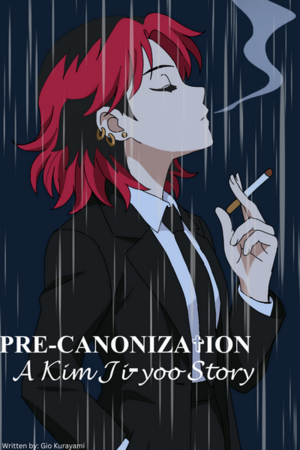
Pre-Canonization: A Kim Ji-yoo Story
The days in Manila blurred together—sunlight and sweat, laughter in alleyways, tricycle engines growling like beats in motion. The city breathed in rhythm, its pulse constant even when hers faltered.
For the first time in months, Ji-yoo found herself waking up wanting to do something.
Not escape.Not forget.
Just go back—to the record shop.
She didn’t know why exactly. Maybe it was the music. Maybe it was Marco—the strange, scruffy producer who spoke like sound was a religion. He had a way of pulling songs from the places she’d buried them. Not by force, but by making her want to dig.
The shop was half-lit that morning. Dust motes floated like lazy stars in a beam of gold from the single cracked window. A fan whirred overhead, squeaking every few seconds. The air smelled like warm plastic, espresso, and the faint metallic tang of old guitar strings.
Marco sat hunched over his soundboard, hoodie up despite the heat. His fingers danced over knobs and keys like he was translating whispers only he could hear.
Ji-yoo leaned on the doorframe.“You look like you haven’t slept.”
He didn’t turn around. “Sleep’s for people who don’t hear melodies in their dreams.”
She chuckled softly. “You should write that on a T-shirt.”
That got his attention. He looked up, grinning—eyelids heavy, eyes bloodshot, but alive. “And sell it to whom? You’re the only one who’d get it.”
She stepped inside, closing the door behind her. The faint chime above it jingled like a memory. “You’ve been working all night again?”
“More like… letting something chase me.” He rubbed at his face, then nodded toward the monitors. “Here, come listen.”
Her instinct flared immediately. “I’m not ready.”
“You’re not performing,” he said, voice calm but anchored. “You’re remembering.”
That line hit harder than he probably meant it to.Remembering.
For months, Ji-yoo had trained herself not to do that—to not think of stages and spotlights, of screaming fans and scripted smiles. Remembering meant bleeding all over again.
“I didn’t bring my notebook,” she murmured, half an excuse.
“Good,” Marco said. “Then you’ll have to speak from the part of you that doesn’t need one.”
She gave him a look. “You sound like a therapist with bad sleep hygiene.”
He laughed under his breath. “I’ll take that as a compliment.”
The track started—slow, earthy, with a grainy bassline that vibrated through the old wooden floor. The beat pulsed, patient and open, like a heartbeat waiting for a soul to inhabit it.
Ji-yoo’s breath caught. Something about the sound—raw, unpolished—felt real. No glamour, no perfection. Just space for honesty.
Marco tilted his head toward the mic. “Try humming. Nothing fancy. Just… let it breathe.”
“I don’t hum.”
“Everyone hums,” he said softly. “Even people who forget how.”
She stared at the microphone—dusty, old, the foam slightly torn at the edge. It looked like it had heard too many confessions already.
“What if I ruin it?” she asked quietly.
He met her eyes. “Then we keep the ruin. Sometimes that’s the best part.”
Something in his tone—steady, unflinching—made it impossible to argue.
So she sat down beside him. The chair creaked under her weight, like it, too, remembered a rhythm it had forgotten. The city’s noise leaked faintly through the window: honking, vendors shouting, someone laughing far down the street.
And under it all, the music waited.
Ji-yoo closed her eyes.The beat swelled, soft but relentless.
She didn’t think.Didn’t prepare.Didn’t edit herself into something palatable.
She just breathed—and sang.
“I used to sing for crowds too loud to listen.Now no one hears me at all.”
The air changed.Marco froze mid-motion. The grin slipped—not from disappointment, but from something like recognition.
“Say that again,” he said quietly.
Ji-yoo blinked. “What?”
“That line. Say it again.”
“I used to sing for crowds too loud to listen…”
He leaned forward, replaying the loop. The beat caught her voice and folded it back into itself—fragile, echoing, beautiful in its imperfection.
Marco looked at her then—not like a fan, not like a producer—but like someone who’d just stumbled on a lost language.
“Yeah,” he murmured. “That’s it. That’s the sound I’ve been chasing.”
Ji-yoo stared at the waveform dancing across the screen. For the first time in a long while, she felt something shift. Not joy, not closure—but possibility.
Something that sounded almost like healing.
Marco clicked open a new project.A soft guitar loop played—muffled, distant, like it was recorded underwater. A lo-fi rhythm crept beneath it, low and warm, wrapped in the hum of an old vinyl crackle.
He leaned forward, headphones half-on, eyes fixed on the screen.“I built this last night,” he said, fingers tapping in time. “I think it’s waiting for your words.”
Ji-yoo’s throat tightened. On the screen, the vocal track blinked like an empty page, daring her to fill it.“I haven’t written lyrics since Korea,” she murmured. “Since… everything.”
Marco didn’t look at her right away. He adjusted a slider instead, letting the bassline breathe. “Okay,” he said finally. “Then don’t write lyrics. Don’t even sing. Just talk. Say something true.”
The simplicity of it scared her.
Ji-yoo sat stiffly, staring at the mic. Her reflection wavered on the metal casing—tired eyes, hair pulled into a careless knot, no makeup to hide behind. For a second, she saw the ghost of who she’d been: Ji-yoo, the Idol, standing beneath blinding LEDs, her every movement rehearsed to precision.
But that version of her was dead.The new one was still figuring out how to breathe.
Her fingers fidgeted in her lap, thumb rubbing the edge of her ring finger where a stage ring used to sit. She could feel the old tremor building—the one that always came before the music started, before the mask slipped on.
“Marco…” she whispered. “What if I can’t do this?”
He didn’t answer right away. The guitar loop cycled, slow and patient. Finally, he said, “Then I’ll be here when you can.”
That disarmed her. It wasn’t pressure—it was permission.
Ji-yoo closed her eyes.A beat.
Then, in a trembling voice, she whispered:
“I woke up once, and the mirror didn’t recognize me.I smiled, and it cracked.I sang, and no one clapped.”
The air in the room seemed to stop moving.
Marco froze mid-gesture, fingers hovering over the keyboard. His eyes widened, not in surprise but in reverence—like he’d just witnessed something sacred.
He spoke softly, as though a loud voice might shatter it.“That’s your first line.”
Her eyes opened, wary. “But it’s not a song.”
He smiled faintly. “It will be.”
They built from there—slowly, cautiously.Marco layered her whispered lines with chords that shimmered like broken light through glass. Ji-yoo’s voice, fragile at first, wove between English and Korean like a diary written in two languages of pain.
“Maybe the crowd forgot my name…Maybe I forgot it first.”
Her words came haltingly at first, then faster, like a dam breaking. Each verse spilled something she’d never planned to say aloud.
Marco caught it all—looping, trimming, replaying—never interrupting, only listening. His hands moved with precision, sculpting her confession into rhythm. Every breath, every sigh became part of the texture.
At one point, he muted the beat, letting her last line fade into silence. “You hear that?” he asked.
“Hear what?”
“The way you paused.” He smiled faintly. “That’s honesty. That’s the sound people forget exists.”
She blinked, unsure how to respond. “You talk like pain is a genre.”
He shrugged. “Isn’t it?”
That made her laugh—a real one this time. The sound startled her, like hearing an old song she thought she’d lost.
Outside, Manila thundered on—jeepneys honking, vendors shouting, kids laughing in the street. Inside the shop, the world shrank to two people and a handful of sounds stitched together by memory.
Hours slipped by. The light shifted from gold to dusk, painting the room in slow-moving amber. Sweat glistened on Marco’s temples; Ji-yoo’s voice grew raspier with each take. But neither noticed.
Somewhere between takes, Marco looked at her through the dim light.“You know,” he murmured, “you don’t have to sound perfect.”
She glanced at him, skeptical. “I don’t?”
“No one believes in perfect people anymore.”
She laughed again, softer this time. “That’s easy for you to say. You’re not the one who had to be perfect for cameras.”
Marco leaned back, chair creaking. “Maybe. But perfection’s overrated. I’d rather hear someone break and mean it.”
She studied him for a moment. He wasn’t trying to be kind—he was being honest. That was rarer.
Ji-yoo turned back to the mic. Her fingers brushed the metal stand, steady now. “Alright,” she said quietly. “Let’s make something imperfect.”
Marco smiled. “Finally. Now you’re speaking my language.”
He hit a record. The loop started again.
This time, when she sang, there was no tremor. No mask.Only truth—and the faint sound of healing hiding inside every note.
By dusk, the track was done.Not polished. Not finished. But alive.
The speakers hummed softly as the final mix looped. Ji-yoo’s voice filled the tiny record shop—delicate, defiant, flawed in all the right ways. It wasn’t the pristine clarity of a studio recording. It was raw. Breathing. Human.
She leaned back in her chair, head tilted toward the ceiling. “I didn’t think I could do that again,” she said softly.
Marco didn’t look up from the screen. His fingers tapped the mouse absently, trimming the fadeout.“You didn’t do it again,” he said. “You did something new.”
The light outside had turned amber, pouring through the dusty window like honey over old wood and record sleeves. Dust drifted lazily through it. The air was thick with the warmth of old speakers and something unspoken.
Ji-yoo turned her head toward him. “I don’t get you,” she said, a faint smile tugging at her lips.
Marco finally looked at her. “What’s there to get?”
“You’re always here. You never ask for anything. You make music for people who don’t even listen.”
He gave a small shrug. “Maybe I’m making it for someone who does.”
Her heart stuttered at that. The words hung there, suspended in the hum of the monitors.
For a long moment, neither spoke. The world outside dimmed; traffic faded into a faraway hum.
Ji-yoo’s gaze softened. “You really think people still listen?”
Marco leaned back in his chair, running a hand through his messy hair. “Not always. But sometimes… one person does. That’s enough.”
She tilted her head. “You sound like you’re talking about me.”
“Am I?” he asked, teasing but quiet.
Her cheeks warmed. “You’re bad at pretending to be mysterious, you know that?”
He grinned. “That’s why I stick to beats, not riddles.”
The door creaked open just then, breaking the stillness. A group of local teens poked their heads in, all smiles and restless energy.
“Kuya Marco!” one of them called. “Jam session later?”
Marco swiveled in his chair. “You guys start without me again?”
“Nah, we’re waiting! You too, Ate—” another said, pointing at Ji-yoo. “You sing, right?”
She froze instantly, shoulders tightening. “I—no, I—”
But Marco was already smiling that easy, infuriating smile. “Yeah,” he said. “She sings.”
The kids whooped and disappeared as quickly as they’d arrived, their laughter spilling down the narrow alleyway like a melody all its own.
Ji-yoo turned on him, eyes wide. “You’re impossible.”
He leaned back, lacing his fingers behind his head. “Maybe. But I make a mean mango shake after rehearsals.”
Her lips curved despite herself. “That a bribe?”
He shook his head. “A promise.”
She rolled her eyes. “You’re too good at that.”
“At what?”
“Making people believe they’re still capable of something.”
Marco’s tone softened. “That’s not me. That’s you remembering you were never broken.”
The line hit her harder than she expected.For a moment, she couldn’t speak. The evening light caught her face—the faint shimmer of sweat, the exhaustion beneath her eyes, but also something new. A small, stubborn spark.
She stood, stretching her arms above her head, muscles aching from hours of stillness. “Fine,” she said finally, voice lighter. “One song.”
He blinked. “You serious?”
She nodded. “Before I change my mind.”
Marco grinned like a kid seeing the sun after weeks of rain. “Alright then. But no pressure.”
“I’ll hold you to that,” she said, pulling her jacket tighter as they stepped outside.
The Manila dusk met them with open arms—orange bleeding into violet, the city humming like an endless chorus. Down the street, the group of teens had gathered around a single guitar, a box drum, and a cracked portable speaker. Someone was already tapping out a beat with a bottle cap.
Ji-yoo hesitated at the edge of the crowd. Her breath caught—not from fear, but from the strange ache of familiarity. This wasn’t a stage. No lights, no cameras. Just people and sound.
“Go on,” Marco said softly beside her. “The city’s listening.”
She exhaled, almost laughing. “That’s the cheesiest thing you’ve ever said.”
“Give me time,” he replied. “I can do worse.”
She laughed—really laughed—and the sound seemed to ripple through the humid air.
The kids cheered when they saw her step closer. Someone handed her a mic—cheap, slightly rusted, but still working. She held it gingerly, like it might bite.
And then, she sang.
Not perfectly.Not even smoothly.
But with truth.
The sound was small, but it carried. Through the twilight streets, through the noise of tricycles and passing laughter, it found its place.
When the song ended, the kids clapped and hollered, and Marco just stood there smiling—not proud, not triumphant, but content.
Ji-yoo met his gaze. For a heartbeat, everything else fell away.
The girl who once stood on a balcony edge, ready to vanish, now stood at the edge of something else entirely.
Not fame.Not redemption.
Something older. Deeper.
A pulse that finally, quietly, belonged to her.
A beginning.
End of Episode 3 – “First Track”








Please sign in to leave a comment.