Chapter 8:
Chapter 7 — The Coward’s Lesson
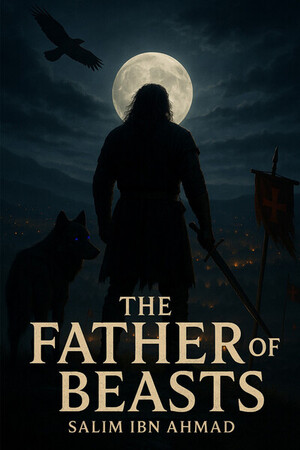
The Father of Beasts
The road bent south into country that should have sent men to Ma’arra but had not. Ahmad knew the name of the place before he saw it. Every refugee on the road spat it when asked who had failed them. An amir there had sworn in the mosque to send horsemen—and then kept them in his yard like tethered cattle.
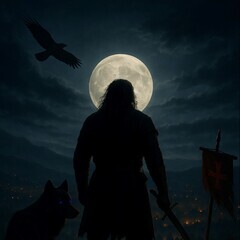
Ahmad rode slow into the valley. Adham’s hooves drummed on the hard track, Nahhas trotted ahead with his head low, and Reeh wheeled above. The people in the fields saw him coming. They stopped cutting barley, stopped their chores, and simply stood. A hunter with beasts at his side did not come into a valley unless he meant something.
The village sat close around a low fort—mud brick walls patched and thin, a gate with planks old enough to splinter at a knock. The fort looked proud enough to its own people but small to anyone who had stood on Ma’arra’s stones. Smoke curled from cook pots. Chickens scratched the dust. Nothing about the place said war.
Men at the gate reached for spears, then froze when they saw who it was. They knew the wolf, they knew the hawk, and they knew the name that walked ahead of both.
“Father of Beasts,” one whispered, too loud not to carry.
Ahmad swung down from Adham and let the reins fall. The stallion stood without tether. He walked forward and the guards stepped back, not from respect but because fear moved their feet before thought. Nahhas padded behind him, shoulders rolling like a waiting blow.
“I want the amir,” Ahmad said.
The guards didn’t answer, but one ran. The rest held their spears upright, knuckles white. Ahmad stood in the gate’s shadow until the runner returned.
The amir appeared at the head of the court steps. He was a heavy man in a fine robe and a poor face, the kind that folds itself into excuses before the mouth even opens. A cluster of his men stood behind him, swords sheathed. Villagers filled the square, called by rumour faster than by voice.
Ahmad spoke so all could hear. “Ma’arra called. You swore. You promised horsemen. None came.”
The man spread his hands. “Lion of the mountains—Ma’arra fell in days. Even had I sent men, what would a few dozen do against a host that eats towns in a week? Better to keep them here, to guard our own. Had I thrown them away, you would call me fool instead of coward.”
“You are wrong,” Ahmad said. “Better a fool who stood than a coward who sat.”
His men shifted uneasily. The villagers said nothing.
Ahmad stepped forward. “Your excuses are meat for dogs. You hid behind your walls while others starved. You let our women burn so your bread would not be light.”
The amir’s mouth tightened. “I did what any ruler would. My duty is to my own people first.”
“No,” Ahmad said, voice carrying sharp. “Your duty is to Allah, to justice, to those who died while you ate. You sat in comfort while they boiled flesh in Ma’arra.”
The man flushed. “You speak like a madman. I owe you no account.”
“You owe the blood of Ma’arra an account,” Ahmad answered.
He moved. Fast. His fist cracked across the man’s jaw, sending him stumbling down two steps. The crowd gasped. Nahhas growled once, deep and low, but every sword stayed sheathed, the truth was apparent.
Ahmad followed, seized the collar, and dragged him into the square. “Stand.”
The amir tried to bluster. “You will regret—”
The back of Ahmad’s hand shut his mouth. Blood touched his lip.
“Take it,” Ahmad said. He struck again, open-handed. “This is for Ma’arra.”
The crowd stirred. Some flinched. Others leaned forward.
“Take it!” Ahmad’s voice grew harder. He kneed the man in the belly and let him fold. “This is for the children burned.”
The man gasped, tried to curl. Ahmad hauled him up by the beard.
“Take it!” He punched once, twice, until blood ran down over the fine robe. “This is for the men who died waiting for you.”
The amir sagged. Ahmad let him fall in the dust. His men shifted, but froze as Nahhas stalked a pace forward, hackles high. Reeh stooped low once, a black cut across the sun, and all eyes followed her instead of their master.
Ahmad looked at the crowd. “This man swore in the mosque to send riders. He did not. He let oaths rot. He kept his sons safe while your relatives were killed. Is this an amir—or a hyena?”
The villagers murmured. A few spat.
Ahmad kicked him lightly to rouse him. “Stand.”
The man groaned, smeared his own blood on the stones as he pushed himself up.
“Look at them,” Ahmad shouted. “Look at your people.”
The man raised his head, swollen-eyed.
“Their families died while you hid! Tell me—why?”
The words came out broken. “Because I feared.”
“Louder!”
“Because I feared!”
The admission carried. Ahmad dropped him back in the dust.
“There. Your amir admits it. Fear of men ruled him. If fear is his master, let him sit with the women and children. Hire a wet nurse to suckle him, since he fears standing.”
Laughter cracked the silence—bitter, but laughter all the same. Men who had lost brothers let it out. Women nodded tight-lipped.
Ahmad spat beside him. “That is your lesson. When the Muslims call, answer. When their blood is spilt, then rise. Or be disgraced in this life and the next.”
He turned to the villagers. “Teach your sons to sling stones. Hide your bread. Do not trust oaths from men who fear the creation. Do not hide while others cry for help.”
He whistled. Reeh swept to his glove. Nahhas returned to his heel with a growl still under his breath. Adham stamped once at the gate.
Ahmad mounted. He looked once more at the square. The man lay on his side, robe torn, too shamed to rise. His men had not moved to help him.
Ahmad’s voice cut across them. “Remember: for Ma’arra, for the dead. Fear is a coward’s excuse. You live only by what you stand for.”
He turned Adham and rode out. Whispers followed him up the road. Some called him lion. All knew what they had seen: a man who did what their amir had not, who spoke what none else dared.
Behind him, the amir’s name would taste of shame for years. And those who had excused their silence now felt it burning in their own throats.




Please sign in to leave a comment.