Chapter 7:
Chapter 6 — The Traitor’s Price
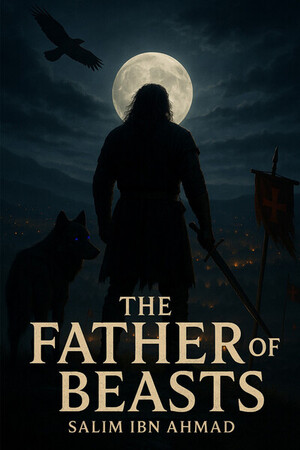
The Father of Beasts
Epigraphs
“Among the greatest of calamities were not the Franks, but those among us who betrayed their brothers, opening the way for slaughter and fire.”— Ibn al-Athīr, al-Kāmil fī al-Tārīkh (c. 1200) “We trusted in men who promised guidance through that land, yet they turned against their own, selling us bread, water, and the keys to the villages. Such allies are more dangerous than the enemy before us.”
— Albert of Aachen, Historia Ierosolimitana (early 12th century)
Chapter 6 — The Traitor’s Price
Ahmad did not have to search far.
He took the shepherds’ path at dawn, keeping off the road. The air was cold and thin. Adham climbed steady, hooves sure on the terraces. Nahhas ranged ahead, slipping in and out of sight, and Reeh flickered above the slope, sharp against the pale sky.
The men in the goat-hair tent had given him more than bread. They had given him whispers. Not names—never names—but enough. A man from the weigh-house. A man with lime scars on his wrist. A man who showed the Franks the hidden springs. A man who led them past the guards for bread and coin.
By mid morning he saw the village. Mud walls, a small square, palm trees rising like spears. Every yard carried ruin—broken jars, broken tools, the weary look of people who slept with shoes on. He circled first, reading the land like a hunter.
He tied Adham in the shade and touched the stallion’s neck. “Guard.”
Nahhas crouched low, ears flat, eyes fixed. Reeh came to his glove, then lifted away at his whisper.
Ahmad walked in slow. He wanted the village to see him.
Children spotted him first. A boy pointed at the wolf until his mother grabbed his wrist. Men on a bench stopped talking. A woman pulled bread from her oven and didn’t put the next in. Even the donkey brayed once, then went quiet.
Ahmad stopped where all could see him. His voice carried:
“I’m looking for a man. Scar on his wrist. He showed the Franks the hidden water. He led them by night.”
The square went silent.
An old man wet his lips. “Why do you ask?”
“Because Ma’arra burned,” Ahmad said. “Because women and children were slaughtered. Because some ran—and others sold the place piece by piece.”
A door opened. A man stepped out, a girl clutching his cloak. He had a neat beard and his left wrist wrapped in cloth.
“Hunter,” he said, smooth. “Come inside. Speak like men. Don’t frighten the children.”
“No,” Ahmad said. “We speak here. All will hear.”
Faces appeared at shutters and doorways. Ahmad pointed to the wrapped wrist. “Show it.”
The man hesitated, then peeled it back. The skin was pitted, eaten by lime.
“You led them,” Ahmad said.
The man forced a laugh. “I showed a spring. Water is mercy. Would you refuse mercy?”
Voices stirred.
“You marked stones,” Ahmad said. “You cut trees. You took their bread.”
A farmer shouted: “He came home with meat when we had none!”
Another: “He walked with them at night!”
A woman: “He told them which wall had no men!”
The man spat dry. “Lies. You only want someone to blame.”
“Don’t make me count,” Ahmad said, voice sharp.
The man’s excuses came faster. “The Franks would’ve found it anyway. They are many, we are few. I have children—would you starve them? Wouldn’t you do the same?”
“No,” Ahmad said.
The word cracked through the square. Nahhas padded forward, silent.
Ahmad reached for his quiver. He lifted one arrow high so all could see the iron tip.
“For every arrow I give the Franks,” he said, “nine will be kept for the traitors.”
He said it once. Then louder. The square repeated it: first a farmer, then another, then a chant building—“Nine for the traitors! One for the enemy!”
The man with the scar tried to drag the girl back inside. “Who are you to judge me?” he shouted. “Aleppo, Damascus—did they come to help? Why not roar at their gates?”
Ahmad stepped closer, forcing him into the open. “Because you were here. Because your chalk was on our stones, your hands on our bread, your feet on our paths while our dead lay unburied. You were ours. That makes you worse.”
Two men stood from the bench. They didn’t look eager, but they grabbed him by the arms. He fought once, then sagged. They dragged him to the flat stone where meat was cut on good days. The girl sobbed, pulled back by a woman.
Ahmad stood over him. “If any here would say I am wrong, speak now.”
Silence.
The man’s lips moved in broken prayer. Then he tried rage. “You are nothing! A hunter with beasts! A savage! The lords will crush you!”
Ahmad hauled him to his knees. “You should have feared Allah.”
He drove the arrow into his chest. Once. Twice. Again. The shaft cracked but he hammered it down, iron biting flesh. The square counted—five, six, seven. The old man croaked eight. At nine, silence.
The traitor slumped. His chest was black with blood, eyes glassed.
Ahmad wiped his hand on the dead man’s cloak. He turned to the square. “This is the price of betrayal. Remember it. Feed them, guide them, excuse them—you’ll pay it.”
Faces were pale. Some nodded. Some turned away. Fathers made sons watch.
Ahmad faced them all. “Hide your jars in the old channels. Bake two breads—one to carry. Don’t light fires on the ridge. Move at dawn. And if they ask the way, send them wrong—or send them to me.”
Reeh dropped to his glove, beak clicking. Men flinched. Nahhas prowled back to his knee.
Ahmad crouched before the boy who had pointed earlier. “Do you have a sling?”
The boy nodded. Ahmad showed him how to seat the stone. “Stone to the knee. Then run. If you can’t kill, make a man limp. Limping men do less harm.”
The boy’s face lit with pride.
Ahmad straightened. He looked once at the woman holding the girl, then turned away. “His sin is not yours.”
No thanks came. None was needed.
Ahmad mounted Adham. Wolf and hawk fell in. As he rode out, a chant rose behind him:
From the ridge he glanced back. The villagers dragged the body to the earth. A stone would mark the spot. But it was the lesson that mattered. Words would travel farther than bones.
Let the people know.
He turned south. There were others on his list.




Please sign in to leave a comment.