Chapter 10:
Note: Sakura & Nekomata
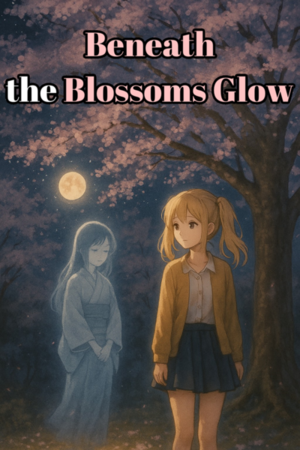
Beneath the Blossoms Glow
▪️Sakura
In Japan, sakura (cherry blossoms) hold a special place.
As seen in the story, hanami is an event where people enjoy eating and drinking while viewing the cherry blossoms.
Some may wonder, “If it’s called hanami (flower viewing), wouldn’t any flower do?
”Linguistically, that’s correct—but in practice, it refers exclusively to cherry blossoms.
Personally, I’m not particularly interested in hanami, but even so, when the cherry blossoms bloom, I can’t help but be captivated by them.
Sakura has also been used in Japanese names since long ago and remains a popular name even today.
In fiction, notable examples include Haruno Sakura from Naruto and Kasugano Sakura from the Street Fighter series.
Japan has seasonal wagashi (traditional Japanese sweets), and in spring, sakura mochi goes on sale.
Japan is often divided into west and east, and both regions have their own style of sakura mochi, with differing shapes.
Opinions are often divided over which type is better, but my personal rule is to eat both when possible.
Apologies—I went off track because I love sakura mochi so much.
Many people may know that anko (sweet bean paste) is frequently used in wagashi.
There are several types of anko, and one of them is sakura an.
This isn’t just because of its cherry blossom color—well-made wagashi shops often use actual cherry blossoms or leaves to add flavor.
Not only wagashi, but even cafes offer sakura-themed drinks and foods during the season.
Also, during the season, the weather forecast includes sakura blooming reports.
And once the blossoms begin to open, famous hanami spots are even featured in news broadcasts.
Sakura appears in many literary works as well, but one especially famous piece is the short story Under the Cherry Trees by Motojiro Kajii (1901–1932).
The line “Under the cherry trees, corpses are buried” is so well-known in Japan that even people who haven’t read the story often know the quote.
Many works have drawn inspiration from this idea.
Its broader meaning is something like “They’re so beautiful, it can only be explained this way.”
Don’t worry—there aren’t actually any bodies buried there.
Sakura is not only loved for how it blooms but also for how it falls.
The sight of cherry blossom petals fluttering in the wind is called sakura fubuki (cherry blossom blizzard).
One fictional character famously associated with a sakura fubuki tattoo is Kan-san from the historical drama Tōyama no Kin-san.
Based on the real-life magistrate Tōyama Kagemoto (1793–1855) of the late Edo period, this is one of the most well-known jidaigeki (period dramas) in Japan.
Though he often appears to be goofing off, he punishes evildoers when needed.
A famous line during a sword-fighting scene is “If you think you can scatter these cherry blossoms, go ahead and try! ”But the real highlight is Kan-san in his role as a magistrate.
The story usually follows a template: the wrongdoers, punished by Kan-san, are arrested and brought before a magistrate.
There, they smugly say, “Bring out this Kin-san guy already.”
And then—the magistrate reveals his cherry blossom tattoo.
That’s right.
The magistrate himself is Kin-san.
This scene is so memorable that many boys of my generation used to imitate it.
By the way, this isn’t a spoiler—it’s part of the traditional aesthetic style of Japanese period dramas.
It doesn’t have to be in Japan, but if you ever have the chance, please take time to enjoy the cherry blossoms.
▪️Nekomata
Nekomata is a type of bakeneko (supernatural cat) in Japanese folklore.
It is said that when an ordinary cat lives for twenty years, its tail splits into two, and it becomes a nekomata.
By the way, neko means "cat" in English.
These days, with improved nutrition and veterinary care, some cats live beyond twenty years.
However, I’ve never heard of any of them turning into nekomata.
Perhaps it requires surviving harsh natural conditions.
So what do nekomata do? They typically speak human language, walk on two legs, and may also cast curses, attack humans, or even breathe fire.
They do whatever they want, really.
The earliest written records of nekomata date back to the Kamakura period (1185–1333), but illustrations like ukiyo-e prints begin appearing from the Edo period (1603–1867).
One such print by Sawaki Suushi (1707–1772) shows a nekomata wearing a wig and kimono, playing a shamisen.
Since shamisen strings were once made with cat skin, the image carries a very ironic twist.
By searching for “nekomata,” you can find many different images of this creature.
Even in modern Japan, nekomata is a popular motif.
To narrow your search to historical artwork, I recommend adding keywords like “Edo period” or “ukiyoe” (traditional Japanese woodblock prints).
Please take a look—and maybe find your own favorite nekomata.



Please sign in to leave a comment.