Chapter 14:
Epi.3-Note: Psychics
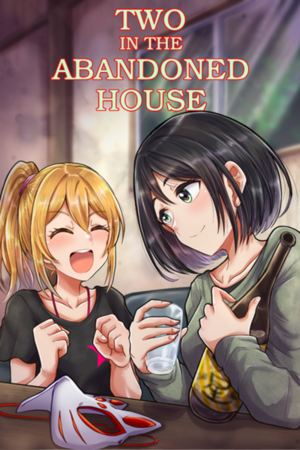
Two in the Abandoned House
・Psychics
First of all, the main story was originally written in Japanese, and the term “psychic” referred not to someone with spiritual powers, but rather to a person with abilities like telekinesis or telepathy.
At the time (which was only about two months ago), I didn’t understand that the word “psychic” typically refers to a psychic or medium in English-speaking contexts—I thought it meant something entirely different.
Because of this, some readers who have already read the story may have felt a sense of inconsistency or confusion.
So instead of writing “psychic,” I deliberately wrote “saikikku” in romaji.
I’m not sure if that nuance came across clearly, but I hope it conveyed that Hirai has no real abilities and is just making things up with confidence and flair.
In this note, I will use the term "psychic" in its original English meaning: someone with spiritual abilities.
Now then, let’s get into the main topic.
When I was a child, there were many TV programs related to the supernatural that aired during the summer.
There were also several well-known psychics, but nowadays, such programs have all but disappeared.
I believe this is due to the fact that even amateurs can now create convincing ghost photos and videos, and that Japanese society has become overly sensitive to complaints.
Looking back at the history of psychics in Japan, it goes all the way back to Himiko of the Yamatai Kingdom (3rd century).
She ruled the country through her spiritual powers.
It’s said she received revelations from the gods, though the concept of "gods" at that time differs somewhat from the modern interpretation.
People likely viewed their ancestors and other supernatural entities vaguely as "gods."
Academically, she is regarded as a shaman queen, so I think it’s appropriate to classify her as a psychic.
Time passed, and in the Heian period (794–1185), the onmyoji (yin-yang masters) became active.
They were official government officials who conducted various divinations and exorcisms to maintain peace.
Onmyoji often appear in modern Japanese fiction, with Abe no Seimei (921–1005) being one of the most famous.
He was revered in his time as someone close to the gods, and after his death, the Seimei Shrine was built in his honor.
Today, he is worshipped as a deity.
From the Kamakura (1185–1333) to Muromachi (1336–1573) periods, the authority of the onmyoji declined, and shamans (miko), Shinto priests, and yamabushi (mountain ascetics) began conducting spiritual rituals and prayers.
Then came the Edo period (1603–1868), which saw the emergence of itako—female shamans believed to be able to channel the spirits of the dead and speak on their behalf.
Even today, itako can be found at Mt. Osore, but they’re largely considered to be for tourists, and probably not genuine.
I once saw a funny scene on a TV show.
An itako summoned the spirit of a foreign actor, but the spirit started speaking fluent Japanese for some reason.
One of the believers seriously said, "There are no language barriers in the afterlife."
I still remember thinking as a child, “That’s ridiculous.”
In some works of fiction, the itako is portrayed as allowing a spirit to possess them and then using that spirit’s abilities or techniques at will.
Returning to more recent times—in the late Showa era (the 1980s), there was a spiritual boom, and famous psychics began to emerge.
That’s what I mentioned at the beginning.
At the time, there were many TV shows that featured ghost photos and videos—it was one of the fun things people looked forward to in summer.
However, bad actors began to take advantage of the popularity, engaging in spiritual scams by selling overpriced “lucky” items to believers.
They would sell so-called “good luck items” at outrageous prices, and this is still an issue today.
The problem is that it’s often the believers themselves who buy them, and they don’t feel cheated because they view it as an offering.
It’s the families of those believers who become the true victims.
The believers genuinely think they’re doing it for their family, but in the worst cases, it leads to the collapse of those families.
Because of this, many Japanese people have a negative impression of religion—especially new religious movements.
However, this does not usually apply to traditional religions such as Buddhism and Shinto.
By the way, have you heard of "FBI psychic detectives"?
They supposedly solve cold cases using psychic abilities and prophetic dreams.
If you're from a country where the FBI is well known, you probably know that such things don’t actually exist.
But at the time (probably the 1990s), I had an image of the FBI as something incredibly powerful, so I believed it without question.
But I digress.
Today, many people outright dismiss all psychics as fakes.
However, Japan also has expressions similar to “Faith can move mountains” or “Belief is powerful.”
It’s true that belief can empower people to move forward.
Perhaps long ago, psychics existed to help people live with hope and strength.








Please sign in to leave a comment.