Chapter 20:
Epi.4-Note: Seiza - Traditional Japanese Sitting Etiquette
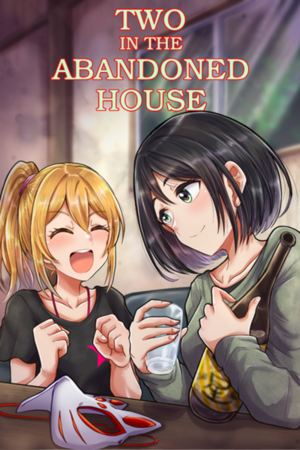
Two in the Abandoned House
In this episode, the sitting posture known as seiza appears.
This is a uniquely Japanese way of sitting.
In the past, chairs were not commonly used in Japan, so people would typically sit on zabuton (thin floor cushions).
As a result, a culture of sitting directly on the floor developed.
Naturally, there were many different sitting styles, but the one considered most polite and formal was seiza.
The word is made up of two characters: 「正」 meaning “correct,” and 「座」 meaning “to sit.”
Today, seiza is rarely used in everyday life.
However, it remains a fundamental posture in traditional disciplines that emphasize etiquette, such as martial arts, flower arranging, and tea ceremony.
In Episode 4, seiza appears twice—once when Sayuri and Shinobu are making a request to Misaki, and again when Sayuri is being scolded by her.
Both scenes carry a somewhat serious tone, which is emphasized by the posture.
You might be wondering, “Doesn’t it hurt to sit like that?”
Of course it does. And if you stay in the position too long, your legs will go numb.
That’s where the zabuton—introduced earlier—comes in.
However, a standard zabuton isn’t very thick, so even with one, your legs will still fall asleep if you stay in seiza for too long.
Actually, there are thicker zabuton made specifically for this purpose.
They’re called butsuzen zabuton and are placed in front of household Buddhist altars.
My grandparents had one at their house, and as a child, I used to love sitting on it in seiza.
But of course, it wasn’t meant to be played with—so it probably wasn’t the best behavior.
Seiza is not just about sitting down—it requires proper posture, with a straight back and the chin slightly tucked in.
Try it for yourself and you’ll see: it’s surprisingly hard to maintain for long periods of time.
Also, when one lowers their head deeply from a seiza position, it becomes what's known as dogeza.
While this can be used as an extremely formal greeting, it’s more often a gesture of profound apology, desperate pleading, or deep gratitude.
It is considered one of the most extreme and respectful gestures in Japanese culture.
However, forcing someone else to perform dogeza is seen as a serious social issue.
There was a case where someone demanded a store clerk do dogeza, filmed it, and posted the video online—and that person was arrested.
Frankly, neither part of that scenario makes any sense.
Japan has manga in just about every genre imaginable—and yes, that includes dogeza manga.
One such title is Dogesen, which had both a writer and an artist.
However, the writer and the artist had different ideas about the direction of dogeza—so in the end, they each went on to create their own separate works.
This left many readers scratching their heads, wondering, “Wait… what do you mean by different directions of dogeza!?”
If you’re thinking, “It can’t be that hard,” I encourage you to try it out for yourself.
Do a little endurance contest with a friend, and it might be more fun than you expect.




Please sign in to leave a comment.