Chapter 5:
Episode 5: Lowkey Lives
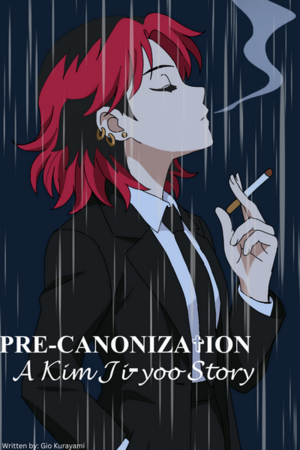
Pre-Canonization: A Kim Ji-yoo Story
The days melted together like old cassette tapes—grainy, imperfect, but full of life. Ji-yoo had found something close to rhythm again: mornings spent helping at the bakery downstairs, afternoons inside the record shop’s humming silence, and nights writing fragments of lyrics in the margins of a notebook Marco had given her.
No fans. No pressure. Just breath and beat.
Sometimes she caught herself humming—absently, softly—and when she looked up, Marco was already layering sounds around her melody. It was as if he’d been waiting for it, tuning into the frequencies between her heartbeats.
He didn’t treat her like an idol.He didn’t treat her like a tragedy.He just treated her like Ji-yoo.
One humid afternoon, the shop was a lazy mess of tangled cables, half-eaten pandesal, and the slow drone of a fan that barely fought the Philippine summer. The air smelled of dust and mango soda.
Marco sat cross-legged on the floor, adjusting a mic stand that refused to stay upright. Sweat clung to his neck, and his glasses kept slipping down his nose. “You ever think about going back?” he asked, passing her a cold bottle of Pop Cola.
Ji-yoo blinked, halfway between a lyric and a daydream. “Back where?”
He smirked. “You know where.”
She took the bottle, its surface slick with condensation. “To Seoul?”
“Yeah.” He didn’t meet her eyes, busy fiddling with the gain knob on the mixer.
Ji-yoo leaned against the counter, staring at the slow spin of the ceiling fan. “Going back to where I lost everything?” she said finally. “Not really.”
The answer landed softly but stayed heavy in the air.
Marco only nodded, pretending to be absorbed in the tangle of wires. “Makes sense,” he said after a moment.
“You say that like you get it,” she murmured.
“I think I do,” he replied, and for once, his voice didn’t sound like an echo from across a room.
Ji-yoo frowned slightly. “You don’t even know what it was like there.”
“I don’t need to,” Marco said. “You talk about it without saying anything. That’s enough.”
She looked at him—really looked at him. He wasn’t the kind of person who pried; he never did. But there was something in his tone today—something that made her feel like the one standing under a spotlight again.
She opened her mouth, then closed it. “It wasn’t the place I lost,” she said quietly. “It was… me.”
Marco didn’t answer. He just exhaled, long and slow, the kind of sigh that meant he’d heard every word.
When he reached for a cable, she noticed his hand tremble slightly.
“Are you okay?” she asked, her voice barely above a whisper.
He didn’t look up. “Yeah. Just tired.”
“You’re always tired,” she said, a small frown tugging at her lips.
He gave a faint grin. “That’s just my aesthetic.”
She laughed under her breath, but her smile faltered when she saw the dark circles under his eyes. They weren’t just from sleepless nights. There was something hollow behind them, like a song he’d been trying to finish but couldn’t.
“Marco,” she said, softly this time. “You can tell me if something’s wrong.”
He adjusted a knob on the mixer again—pointlessly. “It’s nothing.”
“Nothing always sounds like something,” she said.
He paused, and for a second, she thought he might actually say it—whatever truth was hiding behind the exhaustion. But then the fan squeaked, the shop bell rang faintly as someone passed outside, and the moment was gone.
Instead, he gave her a tired smile. “Let’s just finish the setup, yeah? The mic stand’s giving me attitude.”
Ji-yoo sighed, crouching beside him to help. “You talk to equipment more than people, you know that?”
“Equipment listens better,” he muttered.
“Maybe,” she said, adjusting the base until it finally stood firm. “But it doesn’t talk back.”
“Exactly.”
She rolled her eyes, but her chest ached anyway. There was something fragile about him today—like the static between tracks before a song starts.
Outside, the late afternoon light painted the window in gold and dust. Inside, two broken people sat surrounded by wires, waiting for the music to begin again.
And somewhere between the quiet hum of the fan and the unspoken words, Ji-yoo realized:maybe the both of them were still learning how to start over.
A few days later, they found themselves lost in the riot of Divisoria—a storm of color, sound, and chaos that refused to stay still. Vendors shouted over one another, fabrics spilled from stalls like waterfalls of light, and the air was thick with the smell of grilled meat and exhaust.
Marco led the way, weaving through the crowd with the focus of a man chasing a melody. “This place,” he said, eyes gleaming, “is pure inspiration. Every stall’s a different instrument—listen to that rhythm!”
“What rhythm?” Ji-yoo shouted over the noise, clutching her sling bag as a jeepney honked past.
He grinned back at her. “That one! The tricycle engines, the vendors yelling prices—it’s chaos, but it’s alive. Raw sound. Texture.”
She raised an eyebrow, amused. “You’re romanticizing street noise now?”
“Noise is where music starts,” he said, pausing by a food cart. “C’mon. You can’t write songs if you don’t taste life first.”
Ji-yoo trailed after him, sunglasses half-slipped, hair tied in a messy knot. Marco handed her skewers and paper cups like offerings from another world.
First came fishballs—she bit one and made a face. “It’s… chewy.”
“Good chewy or bad chewy?”
She shrugged. “Confusing chewy.”
He laughed. “That’s the proper way to describe fishballs.”
Then came kwek-kwek—orange, hot, coated in batter. “I like this one,” she said, mouth full. “Feels illegal.”
Marco grinned. “That’s how you know it’s good.”
But when the vendor handed her a cup of taho, warm and syrupy, she took one spoonful and gagged. “What is this?”
Marco doubled over laughing. “It’s breakfast, that’s what it is!”
“It’s mushy dessert soup!” she protested, still chewing with exaggerated misery. “Is it supposed to taste like… sweet tofu sadness?”
He laughed so hard he nearly dropped his drink. “You’re too soft for street food.”
“I’m not soft,” she said defensively, her cheeks puffing. “I’m… delicate.”
“Delicate?” he repeated, raising an eyebrow. “This from the same girl who freestyled about heartbreak and buried fame in front of a bar crowd last week?”
She groaned, covering her face with her hands. “Don’t make me sound cool.”
“Too late,” he said, grin softening as his voice dropped. “You were cool.”
Ji-yoo glanced up at him. For a moment, neither of them laughed. The crowd blurred, and all that existed was the faint sound of traffic and the warmth between their words.
“Maybe I just stopped pretending,” she said.
Marco looked at her then—really looked—and smiled, though it didn’t quite reach his eyes. “Then that’s the best kind of cool.”
They walked until sunset painted the market gold. The noise mellowed, vendors began packing up, and the air smelled faintly of smoke and sugar. Ji-yoo’s arms were full of plastic bags: cheap accessories, fake sunglasses, a second-hand tambourine she’d insisted on buying.
“Tell me again why we bought a tambourine?” Marco asked, amused.
“Because every good band needs one,” she said, shaking it with mock pride. “Also because it was fifty pesos.”
He chuckled, rubbing the back of his neck. “Remind me to never let you near pawnshops.”
“I’ll take that as a compliment.”
When they finally reached the jeepney terminal, the sun had slipped low, painting everything in that dusty orange glow that made Manila look like a dream half-remembered.
Marco leaned against the railing, eyes distant. The smile from earlier had faded.
“Hey—” Ji-yoo touched his shoulder. “You okay?”
“Yeah,” he muttered, blinking as if shaking off a fog. “Just… dizzy. Skipped lunch, I think.”
She frowned. “We just ate like four different animals and dessert soup.”
“Right,” he said weakly, attempting a grin. “Then maybe I skipped breakfast.”
But his skin had gone pale, and his hand lingered against his chest for a heartbeat too long.
“Marco—”
He waved her off. “It’s nothing. Probably just the heat.”
Without another word, she helped him into the waiting jeepney. The driver shouted destinations, coins clinked, and the city’s pulse roared around them. Ji-yoo sat close enough that their knees brushed with every turn.
The ride was loud, dusty, alive—and yet, all she could hear was the sound of his shallow breathing beside her.
“Hey,” she said softly, “if you’re not feeling well, we can stop by—”
“I’m fine,” he interrupted, eyes closed, voice faint. “Just tired.”
“You always say that,” she murmured.
He smiled without opening his eyes. “Because it’s always true.”
She studied him quietly. The unshaven jaw. The small tremor in his hand. The man who helped her find her voice again looked like he was losing his own in silence.
The jeepney rattled past the city lights. Ji-yoo’s fingers hovered near his hand—close enough to touch, but she couldn’t bring herself to close the distance.
When he exhaled, it sounded like a note fading out.
She turned her gaze to the window, the neon blur of Manila reflected in her eyes, and thought—the world keeps playing, even when one of us forgets the rhythm.
That night, the rain returned—thick, steady, almost comforting.It drummed against the old glass windows, turned the neon signs outside into watercolor smears, and filled every silence that words couldn’t.
The record shop smelled of dust, coffee, and ozone. The hum of the equipment mixed with the sound of rain, like two heartbeats syncing out of rhythm. Their unfinished track played on loop—soft, raw, incomplete.
Marco had fallen asleep on the couch, head resting against a pile of vinyl sleeves. One arm hung over the side, fingers twitching slightly as if still conducting a beat in his dreams.
Ji-yoo moved quietly, collecting empty bottles, crumpled wrappers, and scribbled lyric sheets. The mess felt familiar now—like the aftermath of creation.
She reached for his backpack, intending to set it aside—and then froze.
Inside, beneath a tangle of cables and a half-eaten pack of SkyFlakes, was a small strip of white pills. No label. Just a torn hospital tag clinging to the edge like a secret trying to stay hidden.
Her breath hitched.
She picked it up slowly, the faint rattle sounding impossibly loud against the rain. The pills were small, round, clinical. Not painkillers. Not vitamins. Something else. Something heavier.
Her first thought was to ask him—to shake him awake, demand an explanation. But when she looked at him, sleeping there under the flicker of the desk lamp, the words died in her throat.
He looked peaceful for once. Younger. The tension he always carried in his jaw had eased. The tired lines around his eyes had softened.
She sat down beside him, the pills cold in her palm.
The track looped again. Static filled the air, followed by her voice—clear, trembling, alive:
“I used to run from the dark, now I write inside it.”
The sound washed over the room like a confession.
Marco stirred. His eyes opened, unfocused at first, then settling on her. “That line’s fire,” he murmured, voice thick with sleep.
Ji-yoo turned toward him, trying to keep her heartbeat steady. “Then let’s keep writing.”
He blinked, smiling faintly. “Yeah. Let’s.”
She nodded, slipping the pills back into his bag in one careful motion. “You drooled on your vinyl, by the way.”
He groaned softly. “That’s… artistic expression.”
She laughed under her breath, though her chest ached. “You’re impossible.”
“Mm,” he mumbled, eyes already drifting shut again. “Don’t change the track yet. I wanna dream with it.”
So she didn’t.
Instead, Ji-yoo leaned back against the wall and listened—to the rain outside, the low hum of the machines, and her own voice looping endlessly through the speakers.
The melody sounded different now. Sadder, maybe. Or truer.
Her gaze shifted to Marco again. His breathing had evened out, though his hand still twitched occasionally—as if fighting something she couldn’t see.
She thought of all the nights he’d stayed awake helping her record, the way he deflected every question about himself, the half-smiles that never reached his eyes. She’d mistaken them for mystery. But now, she saw them for what they were—walls.
And for reasons she couldn’t explain, she didn’t feel angry. Just… afraid.
Afraid of what silence meant. Afraid of what the pills meant. Afraid of losing the one person who had shown her that broken things could still make music.
Thunder rolled in the distance.
She closed her notebook, set it aside, and whispered—not to him, not to herself, but to the quiet that held them both.
“I won’t run this time.”
Outside, lightning tore across the sky, briefly painting the room in white and shadow. For a second, their faces glowed—the fallen idol and the fading producer—caught in the same fragile light.
Then the thunder faded. The rain softened.
Inside that little shop in the heart of the city, two broken things were beginning to fuse—not perfectly, not permanently—but honestly.
And for now, that was enough.
End of Episode 5: Lowkey Lives





Please sign in to leave a comment.