Chapter 4:
Episode 4: No Spotlight
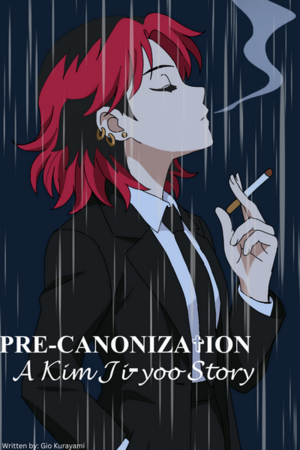
Pre-Canonization: A Kim Ji-yoo Story
The rooftop was barely a venue—half terrace, half junkyard. Rusted railings lined the edges, where plastic chairs leaned precariously against chipped concrete. Old speakers hummed against the evening breeze, their cables tangled like vines around crates and beer bottles. Hanging bulbs swayed above, casting halos of yellow across graffiti-scarred walls.
Below, Manila breathed—alive and imperfect. Jeepneys crawled through the arteries of the city, horns and laughter rising in rhythm with the hum of the night. Smog blurred the horizon where neon signs blinked and died, one by one.
Ji-yoo sat cross-legged on a woven banig mat, a sweating soda bottle beside her. She had traded heels for sneakers, glitter for sweat, choreography for chaos. Around her, a dozen strangers traded verses and rhythm—freestyles in broken English, Tagalog, and whatever language fit the beat. Someone beatboxed off-tempo, another strummed an out-of-tune guitar.
It didn’t matter that she couldn’t follow the words. She understood something deeper—the pulse beneath it. The release.
Here, no one needed polish. Only presence.
“Yo, pass the mic!” someone shouted.The crowd whooped as a boy in a thrifted jacket jumped in, his flow sharp, syllables snapping through the air. A girl clapped along, offbeat but fearless. It wasn’t perfect. It wasn’t supposed to be.
Marco dropped down beside her, his hoodie hooded and his grin lazy. He handed her a cold bottle of soda.“Looks like you’re liking this life,” he said.
Ji-yoo cracked it open with a hiss and took a sip. “No stylists. No cameras. No choreographers yelling at me for breathing wrong.”She looked out over the city lights. “Yeah… I think I’m okay.”
Marco leaned back on his hands, eyes reflecting the hanging bulbs. “You could take the mic.”
She snorted. “Not happening.”
“Why not?”
She paused. The sound of the city pressed in—the hum of traffic, the echo of laughter, the scratchy reverb of cheap speakers.“Because if I get up there…” she said slowly, “I won’t be able to hide.”
Marco tilted his head. “And you don’t like being seen?”
“Not like that.” Her fingers traced circles on the bottle’s condensation. “Up there, people look at you like they know you. Like you’re something to believe in. I’m done pretending to be someone worth believing in.”
He didn’t reply. He just let her words hang in the air, soft and heavy.
A girl, maybe eighteen, took the mic next. Her guitar was secondhand, stickers peeling from the wood. The first chord buzzed wrong. She laughed awkwardly, adjusted her grip, and tried again. Her voice was thin, fragile—but alive.
“She’s terrible,” Ji-yoo whispered, a small grin tugging at her lips.
“Yeah,” Marco said, not looking away. “And she’s braver than anyone I know.”
The grin faded. Ji-yoo felt something catch in her chest—small, quiet, familiar. The way he said it wasn’t a challenge. It was a mirror.
The girl missed another chord. The crowd cheered anyway.
Ji-yoo took another sip, her throat dry. The soda had gone flat, but she didn’t notice.“I used to think bravery was getting on stage,” she murmured. “Turns out it’s staying there after you fall apart.”
Marco turned to her, his expression unreadable. “Then maybe you’re braver than you think.”
She laughed under her breath. “You don’t know me.”
“Maybe not.” He smiled faintly. “But I know that you’re here. And no one forced you this time.”
Ji-yoo looked down at her hands—calloused from strings, not microphones. She had come to this rooftop to disappear. Yet somehow, surrounded by strangers, she had never felt more seen.
The girl on stage hit her final chord—a wrong one—and everyone clapped anyway.
Ji-yoo found herself clapping too.
They left when the jam ended, winding through narrow streets where laughter and tricycle engines echoed against cracked walls. Sari-sari stores glowed beneath single bulbs, selling everything and nothing—soda in plastic bags, instant noodles, cigarettes, cheap joy. Kids chased each other barefoot under the haze of dust, their laughter rising like sparks into the heavy night.
Ji-yoo tugged her jacket closer. The city’s warmth didn’t come from the air—it came from its noise, its persistence. Manila never really slept; it just changed songs.
Marco walked beside her, hands buried in his hoodie pocket, the faint rhythm of their steps blending with the faraway strum of a karaoke machine.“You ever miss it?” he asked.
Ji-yoo blinked. “Miss what?”
“The spotlight,” he said. “The lights. The stage. The rush that comes after the first scream from the crowd.”
She didn’t answer right away. Her steps slowed as they passed a mural of old graffiti—painted names and faded faces lost to the rain. The streetlight above flickered, washing her face in uneven amber.
“Not the lights,” she said finally. “Not the pressure. Or the cameras. I don’t miss the pretending.”
She paused beneath the lamp post, staring into the halo of its flicker. “But I miss the moment right before it starts. That heartbeat before the music. The hush before you open your mouth and the world listens.”
Her lips curved faintly. “That silence. That’s what I miss.”
Marco studied her profile—the way her eyes softened when she talked about something she pretended she’d left behind. “We can find that again,” he said quietly. “You don’t need a stage for it.”
Ji-yoo raised an eyebrow, half skeptical. “You really think so?”
“I do,” he said, kicking at a pebble that clattered down the gutter. “Silence isn’t about the world stopping. It’s about you being okay with the noise.”
Ji-yoo snorted softly. “You talk like someone who’s been broken before.”
“Maybe I just listen better now.”
They walked on in silence for a few steps. The city seemed to breathe with them—vendors packing up, jeepneys growling past, a baby crying somewhere above. Life went on in all its messy rhythm.
Then Ji-yoo spoke, voice low but steady. “When I fell apart… everyone disappeared. Fans, staff, even friends. One day, I was trending. The next, I was a cautionary tale.”
Marco didn’t interrupt. He just listened—the way he always did.
Ji-yoo’s voice wavered, but she forced a smile that didn’t reach her eyes. “And the worst part? I thought I deserved it. Every headline. Every cruel comment. I replayed every mistake until I convinced myself they were right.”
They stopped by a small footbridge overlooking the dark river below—still water carrying the faint reflection of neon. A man slept on the corner wrapped in a tarp; a cat prowled the edge, hunting scraps.
Marco leaned on the railing, his reflection fractured by ripples. “You didn’t deserve that,” he said finally.
Ji-yoo laughed weakly. “Tell that to the internet.”
“I’m not talking about them.” He turned to her. “I’m talking about you.”
She looked at him, then away. “You don’t even know me.”
“I don’t have to,” he said. “I’ve seen enough people burn out trying to be what everyone wanted. You just happened to burn brighter.”
The wind picked up, carrying the faint echo of a love song from a distant karaoke bar. The singer’s voice cracked on the high notes. Ji-yoo found herself smiling.
“You’re weird, Marco.”
“Occupational hazard.”
“What’s your occupation again?”
“Professional nobody,” he said with a grin. “Pays nothing, but the hours are great.”
She chuckled, softly this time—real laughter, not rehearsed.
Marco looked at her for a moment longer, then said, “You’re here now. That means something.”
Ji-yoo stared ahead at the dim street, the asphalt gleaming wet under streetlight halos. Her chest ached, but something inside her loosened—like the slow exhale after a long-held breath.
“Yeah,” she murmured. “Maybe it does.”
They started walking again, side by side. The city wrapped around them like a living thing—flawed, noisy, forgiving. Ji-yoo glanced at the sky, where a few stars fought to shine through the haze.
“Hey,” Marco said after a while. “Next week, there’s another jam. Same rooftop. Fewer rats.”
She raised an eyebrow. “That supposed to convince me?”
“No,” he said, smiling. “But maybe the silence will.”
Ji-yoo didn’t answer, but the corner of her mouth lifted.
For the first time in a long time, she didn’t feel like running.
Back at the shop, the lights were low, the fan humming like soft static. The smell of instant coffee and soldered circuits hung in the air. A lone bulb flickered above the mixing table, painting everything in amber and shadow.
Marco sat at the desk, clicking through files. “You ready for playback?”
Ji-yoo leaned against the counter, arms folded. “As ready as I’ll ever be.”
He queued up the track they’d worked on the night before. The rough demo filled the room—her voice echoing through battered speakers, raw and fragile, yet alive. It wasn’t perfect. That was the point.
Her own voice made her uneasy, like hearing a ghost she wasn’t sure she forgave.
Marco watched her expression, half-expecting her to flinch. “It’s good,” he said. “Not clean, but honest.”
Ji-yoo looked down, tracing her fingers along the wooden desk. “I don’t sound like I used to.”
“Good,” he said simply. “You sound like you now.”
She almost laughed, a small puff of disbelief. “You really think anyone would listen to that?”
He shrugged. “People listen to truth more than they admit.”He leaned back in his chair. “I want to record a full version. We’ll clean up the vocals. Add a hook. Maybe post it online?”
Ji-yoo hesitated. The rain outside had started to fall harder, tapping against the window like soft applause.“I don’t want anyone to know,” she said.
Marco turned in his chair. “Know what?”
“Who I was.” Her voice was steady but quiet. “I don’t want people listening because they feel sorry for me, or because they remember that girl who fell apart on stage. I want them to listen because it means something. Because it’s real.”
He nodded, slowly. “Then we don’t tell them.”
She blinked. “What do you mean?”
“No stage name. No backstory. No big reveal. Just the song. Just your voice.”
Her lips curved faintly. “Just... Ji-yoo?”
Marco smiled. “Just Ji-yoo.”
She repeated it under her breath—soft, testing the weight of it. “Just Ji-yoo.”
It sounded strange at first. Stripped. Bare. But the longer she said it, the more it stopped feeling small. It felt true.
Marco slid the mic closer. “Ready?”
She sat down, pulling the headphones over her ears. The foam smelled faintly of dust and late nights. “You’re really doing this?”
“I’m really doing this,” he said. “And so are you.”
He hit record.
The beat began—soft and deliberate, like rain finding rhythm on the tin roof.
Ji-yoo closed her eyes. The air thickened with the hum of electricity, the warmth of the fan, the soft rattle of wind outside.
For a heartbeat, she froze. Her old instincts whispered—the ones trained to measure tone, posture, angles. But she pushed them aside.
This time, she didn’t chase perfection or applause.She sang because she needed to feel the sound in her bones again.Because silence had lived in her too long.
Her voice slipped into the mix—low, imperfect, trembling at first, then steadying.Each note carried something she’d never put in her music before: truth.
Marco adjusted the levels, barely breathing. He didn’t interrupt, didn’t guide. He just listened—really listened—as if afraid to break the moment.
Outside, the city pulsed.Motorcycles roared. Someone shouted. A child laughed. The rain thickened, drumming against the tin roof like percussion.
And still, Ji-yoo sang.
When she finished, there was no applause. Just the hum of the fan and the faint hiss of static in the headphones.
She took them off slowly, exhaling. “That’s it?”
Marco smiled faintly. “That’s everything.”
For a moment, she said nothing. Then—almost shyly—“It felt… different.”
“Because it was,” he said. “You weren’t performing. You were being.”
She leaned back in her chair, eyes on the ceiling. “I didn’t think I could do that again.”
“You didn’t,” he said, turning back to the screen. “You did something new.”
Outside, the rain softened. Manila glowed under its own reflection—alive, imperfect, beautiful.
Ji-yoo looked toward the window, her face caught between shadow and light. For the first time, the quiet didn’t scare her.
No spotlight.No pressure.Just her.Just him.
And in that breath between songs, Ji-yoo realized—this was the moment she’d been missing all along.
End of Episode 4 – “No Spotlight”






Please sign in to leave a comment.