Chapter 42:
Chapter 42: The Rhythm of War
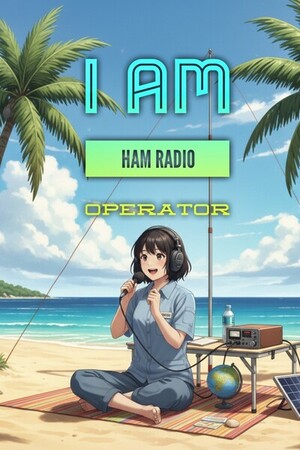
I am Ham Radio Operator
The air in Gregory’s garage is stale, recycling the scent of old coffee, soldering flux, and nervous sweat. It is Thursday night, twenty-four hours before the contest begins. We call this "The War Room," and tonight, it lives up to the name.
Samuel is pacing back and forth in front of the main operating desk, a clipboard in his hand. He looks like a general reviewing his troops before a major offensive.
"Okay, listen up," he barks, stopping to point at the large whiteboard he has set up. It is covered in a complex grid of times, bands, and operator shifts. "This is not a casual weekend ragchew. This is CQ WW. This is the Super Bowl, the World Cup, and the Olympics rolled into one. There are going to be thirty thousand stations on the air. The QRM is going to be brutal. The noise floor is going to rise by ten decibels just from the sheer volume of RF energy being pumped into the ionosphere."
He looks at me. "Haruka, you are on the run station for the first four hours. 20 meters. It is going to be prime time for Europe. You are going to have a wall of callers. Do not get polite. Do not say 'please' or 'thank you' or 'good evening.' You give them the signal report, you give them the zone, and you move on. Speed is life. Rate is everything."
"I know, Samuel," I say, trying to sound more confident than I feel. "599 05. Next. I got it."
"Do you?" He leans in, his eyes intense behind his glasses. "Have you ever tried to pick a single callsign out of a pileup of fifty stations all transmitting at the exact same frequency at 40 words per minute? It is not listening, Haruka. It is combat. You have to separate the layers of sound in your brain. You have to find the rhythm in the noise."
"She can do it, Sam," Doretha says from the corner where she is configuring the network logging server. "She is the best ears we have. Stop stressing her out."
"I am not stressing her out," Samuel insists, resuming his pacing. "I am preparing her. This is mental endurance. If you hesitate, you lose the frequency. If you lose the frequency, our rate drops. If our rate drops, we do not win."
Gregory is sitting in his favorite armchair, polishing his glasses. He looks calm, the eye of the hurricane. "Samuel is right about the intensity," he says softly. "But he is wrong about the mindset. It is not combat, Haruka. It is a river. The signals are the water. You cannot fight the river. You have to flow with it. If you try to fight every signal, you will be exhausted in an hour. You have to let the noise wash over you and just pluck the nuggets of gold out of the stream."
I nod, taking his advice to heart. Flow. Do not fight.
"We have the hardware," Azhar says, walking in from the backyard. He wipes grease from his hands with a rag. "I just checked the SWR on all the antennas. The tri-bander is flat. The 40-meter vertical is tuned to the CW portion of the band. The beverage receiving antennas are deployed in the field for the low bands. We have ears."
"And we have the software," Doretha adds, typing a final command into her laptop. "The network is robust. N1MM logger is configured. We have redundancy. If a computer crashes, we do not lose the log."
"Then it all comes down to the operators," Samuel says, looking at us. "Forty-eight hours. No breaks. We sleep in shifts. We eat at the console. We keep the needles moving."
I look at my team. We have come so far from the days of sitting on the floor with a study guide. We are engineers, developers, experts. But beneath the technical competence, I can feel the tension. This contest matters. It is a test of everything we have built, everything we have learned.
"I have loaded a high-speed CW practice file," Samuel says to me. "Fifty words per minute. Mixed callsigns and serial numbers. I want you to listen to it for an hour."
"Fifty?" I protest. "The contest usually runs at thirty-five."
"If you can copy fifty," he says, "thirty-five will sound like slow motion. Put the headphones on."
I sit down and put on the heavy headset. The world disappears. I close my eyes. Samuel hits play.
Dit-dit-dah-dit-dah-dah-dit...
It is a machine-gun blur of sound. At first, it is just noise. My brain panics, trying to catch individual letters. Too fast. Too fast.
Flow, Gregory's voice whispers in my memory. Do not fight the river.
I stop trying to visualize the letters. I stop trying to translate. I just let the sound hit my brain directly. I let the rhythm bypass my conscious thought.
W... 1... A... W...
I hear it. Not the letters, but the word. The sound-shape of the callsign.
D... L... 5... X... Y...
It is working. My brain is adjusting, speeding up its internal clock to match the data stream. It is a trance state. The room, Samuel, the anxiety—it all fades away. There is only the code. Pure, distilled information.
I listen for the full hour. When I finally take the headphones off, the silence of the garage is deafening. My head feels light, buzzing.
"How was it?" Samuel asks.
"Fast," I say. "But I copied it."
He smiles, a rare, genuine smile of approval. "Good. You are ready."
I walk over to the window and look out at the backyard. The moon is rising behind the silhouette of Gregory's massive tower. The antennas look like skeletal fingers reaching up to catch the stars. Tomorrow night, those aluminum tubes will be vibrating with the energy of thousands of voices, all speaking the language of dits and dahs.
It is strange. I got into this hobby to escape the silence of death. Now, I am voluntarily entering a world where the only sound is the rapid-fire pulse of a machine language. But in a way, it is the ultimate affirmation of life. It is thousands of people, all awake, all striving, all shouting "I am here!" across the void.
It feels like an emergency. Samuel is right about that. The urgency, the speed, the focus—it is exactly like the night of the blizzard when I was passing traffic for the shelter. But this time, no one is dying. This time, we are doing it for the sheer, unadulterated joy of the challenge.
"Get some sleep," Gregory says, standing up and stretching. "You are going to need it. The war starts at zero-zero-zero-zero Zulu."
I grab my jacket. "See you on the battlefield," I say.






Please sign in to leave a comment.