Chapter 18:
“The Place You End Up When You Pretend”
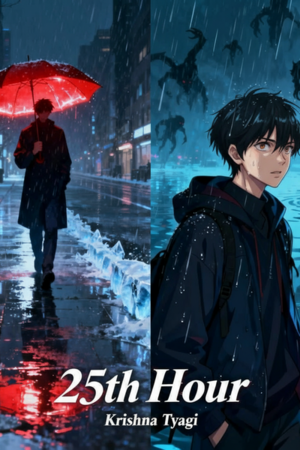
25th Hour
No one moved after the man disappeared. Not immediately. The space where he had been felt… wrong. Not empty — occupied. Like something invisible was still kneeling there—still breathing shallowly. Still waiting to finish a sentence. Like the air itself hadn’t caught up yet. The blood was gone. That was the first thing that broke someone.
A woman — Kazu didn’t know her name — stared at the tile, eyes fixed on the clean floor where dark red had been pooling moments ago. She knelt slowly, as if afraid the ground might give way beneath her.
“It was here,” she said quietly. Not to anyone in particular. “There was blood here.”
Her fingers hovered an inch above the tile, trembling. She pressed her palm down anyway. Nothing. Just cold. “He was bleeding,” she whispered. “He was right here.” No one answered. A man near the refrigerators let out a sharp laugh that didn’t sound amused at all. He dragged a hand down his face, fingers digging into his skin like he was trying to wake himself up.
“Great,” he muttered. “So that’s it? You talk, you vanish?”
“That’s not what happened,” someone snapped.
“Then explain it,” he shot back, eyes wild. “Because all I heard were his last words. And now he’s gone. And I’m stuck remembering them.” His voice cracked on the last part.
Someone else swore under their breath. Another person — younger, shaking — kept glancing toward the store entrance, toward the glass doors and the lanterns hovering beyond them. “He said it doesn’t care if you’re sorry,” the girl from earlier murmured. She hugged herself tighter, rocking slightly. “He said it only cares if you’re honest.” Her lips trembled.
“I don’t want to be honest,” she whispered. That landed heavier than any scream. Kazu stood near the counter, still holding the edge of it like he needed the support. His wrist felt wrong without the man’s grip. Too light. Too free. He couldn’t stop hearing the words. It only cares if you’re honest. Reina was quiet.
She stood where she had been kneeling moments ago, eyes fixed on the empty space, jaw tight. She hadn’t said anything since closing the man’s eyes — an action that now felt meaningless, almost absurd, considering there had been no eyes left to close. After a while, she straightened.
“Sit,” she said to no one and everyone. “All of you.”
A few people hesitated. Then, slowly, they obeyed. They gathered where they could — against shelves, on overturned crates, on the floor. The convenience store felt smaller now, like it had shrunk around them. The hum of the refrigerator was suddenly unbearable, too loud in the silence it filled. No one felt saved. No one looked relieved. It felt like they’d survived something only to be handed something worse.
“What did he mean?” the young man from earlier asked suddenly. The one who’d said he didn’t remember his regret. His voice shook, but he didn’t look away this time.
“When he said regret brings you here,” he continued. “What if you don’t remember yours?” No one answered right away. The question sat there, heavy, demanding. Finally, the man who’d laughed earlier snorted again.
“Everyone remembers,” he said. “You don’t forget something like that.”
“Do you?” the young man challenged. “Do you really?”
The man hesitated. “…Yeah,” he said, less sure now. “I do.” Others nodded. “Yeah.”
“I know mine.”
“I remember.” Each answer came faster than the last, like they were afraid hesitation itself might be dangerous. Kazu felt the weight of their words closing in. Then someone looked at him. He didn’t notice who at first. Just felt it — that shift in attention, that quiet expectation. Another gaze followed. Then another. His chest tightened.
“What about you?” the young man asked.
Kazu opened his mouth. Nothing came out. He tried again..Still nothing. The store seemed to tilt. Of course you remember, he told himself. Everyone does. You just— He searched. Images flickered past his mind — college hallways, late nights, unfinished assignments, arguments that didn’t feel important enough to count. Regret was supposed to hurt, wasn’t it? Supposed to sit heavy in your chest like a stone?
There was nothing. Just fog. His heart started to pound.
“Heyy?” someone prompted gently.
“I— yeah,” he said quickly. Too quickly. “Yeah. I remember.”
The lie tasted strange. Not bitter. Just… hollow. No one reacted. No lightning. No lantern flare. No punishment. People nodded and moved on, already consumed by their own thoughts. The relief should have been immediate..It wasn’t. Kazu stared at the floor, pulse racing, palms damp. His body felt wrong—disconnected.
Like his limbs belonged to someone else. I don’t remember, he realized. I really don’t remember. The thought sent a spike of panic through him. What if that’s worse? Conversation continued around him, fragmented and anxious. “So what,” someone said, “we’re just stuck coming here every night?”
“Always around four,” another replied. “I checked my phone. Same time.”
“Mine too.” young man. “And if we don’t survive?” the girl. Silence.
“We die,” the laughing man said flatly. “Didn’t that seem obvious?” The girl flinched. “There has to be a way out,” she said. “There has to be.”
Reina spoke then.
“There is,” she said calmly. “Just not a clean one.” All eyes turned to her. “This place doesn’t trap you physically,” she continued. “It traps what you refuse to face. That’s why some of you survive longer than others.”
“And the lanterns?” someone asked. “What are they?” Reina glanced briefly toward the door. “Tools,” she said. “Anchors. Sometimes weapons.” Kazu looked at his own lantern, hovering quietly nearby. It pulsed faintly, like a heartbeat. “They respond to you,” Reina added. “Not the other way around.” That didn’t make him feel better.
They talked more after that — about survival, about sticking together, about patterns they’d noticed. Someone suggested barricading. Someone else argued movement was safer. Voices rose, then fell again, exhaustion pulling the edge off every argument. At some point, someone found snacks behind the counter.
Energy bars. Chips. Bottled drinks. No one was hungry. They ate anyway. Kazu forced himself to swallow a few bites, the food sitting heavy and unreal in his stomach. He helped pass bandages, watched Reina rewrap her side with practiced efficiency. When she caught him looking, she didn’t comment. Later, while the others packed supplies or argued quietly, Reina approached him.
“You lied,” she said. He stiffened. “…Was it that obvious?” She shook her head slightly. “No,” she said. “But you paused.” That made his chest tighten again. “I don’t remember,” he admitted quietly. “I don’t know why I’m here.” Reina studied him for a long moment. “That doesn’t mean you don’t have one,” she said. “It means you’re not ready to see it.” That was somehow worse.
They stood in silence for a bit longer.
I’m Reina Kisaragi, she said eventually. “Kazu, Kazutoro Hayashi.” It felt strange — exchanging names after bloodshed. Normal. Almost. The conversation thinned after that. Not because anything had been resolved — but because there was nothing left to say without repeating fear in different words.
People drifted into smaller pockets of silence. Some leaned against shelves, staring at nothing. Others sat on the floor, backs to the refrigerators, as if the steady hum might anchor them. No one suggested moving. No one suggested staying. The store felt like a pause the world hadn’t earned.
Kazu noticed it first — not because Reina moved, but because she kept not moving. Her eyes kept drifting toward the glass doors. Not restless. Not alert in the way fighters got. Just… checking. Like someone glancing at a clock they didn’t trust. He followed her gaze.
The lanterns outside floated lazily, their light dimmer than before but steady. Patient. Like they knew no one stayed anywhere for long.
“You’re going out,” he said. It wasn’t a question. Reina didn’t turn. “Yeah.”
“When?” Kazu. She exhaled through her nose, almost a laugh. “Before standing here starts feeling like a decision.” That made sense. Unfortunately. Kazu shifted his weight, the strap of his bag digging into his shoulder. He hesitated, then lifted it slightly, an awkward little gesture.
“I— uh. I can carry stuff. If you want.”
She looked at him then. Just a quick glance. Assessing. Not suspicious — curious, maybe, in a tired way. “Bandages,” she said after a beat. “Water. Nothing you’d miss if you had to drop it.”
“Kazu, Right.” They didn’t say anything else about it. Kazu moved behind the counter, careful not to draw attention. He felt strangely guilty, like he was stealing from people who needed the same things. Gauze. Bottled water. A small flashlight that flickered before deciding to work. He slid them into his college bag, the zipper sounding way too loud in the quiet store.
Reina didn’t help. She didn’t stop him either.
She found a short knife taped beneath the counter, tested its weight once, then tucked it away like she’d always known it would be there. “You don’t have to come,” Kazu said suddenly, the words tumbling out before he could overthink them. “I mean— I don’t really have a plan or anything.” She adjusted her jacket, winced slightly when the fabric caught at her side.
“Good,” she said. “Plans get people killed.” That wasn’t reassurance. It somehow helped anyway. They stood near the door after that. Close enough to speak quietly. Far enough that it didn’t feel intentional.
“Hey,” Kazu said, after a moment. “What you said earlier.” Reina glanced sideways. “Which part?” He huffed softly. “Figures.”
“The lying to yourself thing,” he clarified. “You said that’s what keeps people here.”
“Yeah.” Reina. He stared at the floor, then asked, almost reluctantly, “Did it… work for him?” Reina didn’t answer right away. “No,” she said eventually. “But it stopped pretending.” Kazu swallowed. “That sounds worse.” She tilted her head slightly. “It is. But it’s quieter.”
He nodded, even though he wasn’t sure he understood. Or maybe because he did. For a second, neither of them spoke. Not because there was nothing to say — but because whatever came next would make it feel heavier.
Reina reached for the door.
“Once we leave,” she said, not looking at him, “we don’t circle back here.”
“And the others?” Kazu asked.
She paused.
“They’ll do what they always do,” she said. “Convince themselves they’re safer staying still.” Not cruel. Not kind. Just… observed. The bell chimed when she pushed the door open. Cold air spilled in, sharp and lifeless. The city beyond remained frozen mid-breath, streetlights glowing over streets that wouldn’t forgive mistakes. Kazu stepped out beside her.
The lanterns shifted instantly — one drifting closer to his shoulder, another settling near hers. Different glow. Different rhythm. Behind them, the convenience store stayed lit. People still inside. Still talking. Still alive. Neither of them looked back.
They walked outside of the store together, footsteps echoing too loudly against empty streets — and for the first time since arriving, Kazu realized something that unsettled him more than the monsters ever had.
He wasn’t afraid of what waited out there. He was afraid of what still refused to surface.












Please sign in to leave a comment.