Chapter 7:
The Long Way Through Suzuka
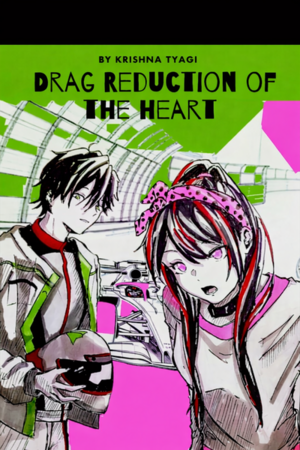
Drag Reduction of the Heart
The cars sat motionless on the grid, heat shimmering above carbon fiber and asphalt alike. Suzuka held its breath. Grandstands were packed to the edge, a low rumble rolling through them like distant thunder, not noise yet — anticipation. Engines snarled at idle, every vibration transmitted straight through the ground and into the chest.
The broadcast camera panned slowly across the front row. Two Maclorenx cars. Red and white liveries gleaming under the sun. “Front-row lockout for Maclorenx,” the lead commentator said, voice steady but charged. “Moretti on pole, Cole alongside him. They have been untouchable all weekend.” The shot widened. Ferrano in third. Rod Bull in fourth and fifth.
“And look at that,” the co-commentator added. “Elias Hartmann and Jonas Kingston starting nose to tail. Same machinery, very different weekends so far.”
Jonas sat still in the cockpit, visor down, hands loose on the wheel. The steering wheel display glowed softly, numbers flickering as systems ran their final checks. He breathed in through his nose, slow, deliberate. He did not look left. He did not look right. Ahead of him, the red lights waited. Elias, one row up, rolled his shoulders once. His car felt nervous beneath him, like it wanted to jump before being told.
He tightened his grip, jaw set. Up on the pit wall, Clara Neumann leaned forward, elbows resting on the barrier. Her headset pressed tight against her ears. Every screen in front of her was alive — tire models, lap delta predictions, sector comparisons, wind direction.
“Clutch temps stable,” an engineer said beside her. Clara nodded, eyes never leaving the main timing screen. “Watch Turn One. They will all try to win it there.”
The red lights illuminated. One. Two. Three. Four. Five. They went out. The sound hit first, twenty engines screaming as one.
“Lights out and away we go!”
Jonas launched cleanly. Not perfect, but sharp. The Rod Bull hooked up better than expected, torque biting hard. Elias, ahead, hesitated a fraction — just enough. Jonas pulled to the inside as they surged toward Turn One, the field fanning out like a deck of cards thrown into the wind. Ferrano squeezed down from third, Maclorenx already defending aggressively at the front.
“Great getaway from Kingston!” the commentator shouted. “He’s got overlap!”
Jonas saw the gap closing. He could force it. He could risk it. He didn’t. He lifted, just slightly, letting Elias slot ahead, avoiding the accordion effect forming at the apex. Cars bunched. Tires brushed. Someone locked up behind them. Ferrano ran wide. Out of Turn Two, the order reshuffled violently.
“Chaos through the opening corners!” came the call. “Hartmann has lost ground — Kingston’s held position — and Ferrano’s Ríos has dropped back!”
By the time they exited the Esses, Jonas was P4. Elias had fallen to P6, swallowed by a Mercedyx and a Ferrano that had recovered aggressively. Clara exhaled once. “Clean,” she said. “That’s clean.”
Suzuka began to stretch the field. The Esses punished impatience, rewarded rhythm. Cars danced through them, front wings millimeters from disaster. Maclorenx controlled the front, Moretti leading Cole with metronomic precision. “Maclorenx already settling into formation,” the commentator noted. “They’re not racing each other yet. They’re racing the clock.”
Behind them, the fight was rawer.
Jonas sat in Ferrano’s wake, Mateo Ríos ahead of him, rear wing vibrating in dirty air. The Rod Bull felt heavy through Degner, rear sliding just enough to demand respect.
“Car’s stable,” Jonas said on the radio. “Just tight mid-corner.”
“Copy,” his engineer replied. “Tire management priority.” Elias, meanwhile, was fighting the car more than the field. Rear instability plagued him through Spoon, forcing small corrections that bled speed. Mercedyx’s Theo Wagner hovered in his mirrors, relentless.
“Hartmann looks uncomfortable,” the co-commentator observed. “That Rod Bull does not look happy underneath him.”
Lap six.
Ríos braked late into the Hairpin. Too late.
The Ferrano twitched, front tires locking for half a heartbeat. Jonas didn’t hesitate.He cut underneath, powered through the exit, traction perfect. “That’s a beautiful move!” the commentator roared. “Kingston through! No contact, no drama — just precision.” Jonas was P3 now, briefly, before Maclorenx pace pulled away again. Elias slipped another place back two laps later, Wagner forcing him wide at Spoon. P8. Clara watched the split times roll in. Rod Bull degradation curves dipped earlier than forecast. “Interesting,” she murmured. “They’re hurting already.”
By lap nine, the race had stopped being about instinct and started becoming arithmetic. Suzuka still demanded precision through the Esses, still punished overconfidence at Degner, but the initial violence of the opening laps had settled into something quieter and more dangerous. Tire temperatures stabilized. Fuel loads lightened. Lap times stopped falling and began to plateau.
That was when strategy crept in.
Ferrano were the first to show their hand. Mateo Ríos’ lap time dipped by nearly half a second through Sector Two, the rear tires no longer biting the way they had early on. The car looked restless on corner exit, traction control lights flickering more often than before.
The broadcast noticed immediately. “Ferrano starting to lose the rear a bit,” the lead commentator said. “You can see Ríos fighting the car through Spoon. That’s usually the first sign.”
Two laps later, the Ferrano peeled into the pit lane. Mercedyx didn’t wait long after that. Theo Wagner’s engineer had been watching the same graphs, the same wear curves flattening sooner than planned. When his car slid wide at the Hairpin, just enough to scrub momentum, the decision was made without drama. “Mercedyx responding early,” came the commentary. “They don’t want to get caught out here.” Rod Bull watched both stops with measured calm. Jonas felt it before the radio confirmed it. The front tires had begun to protest through the high-speed lefts, the steering losing its initial sharpness. Not dangerous. Not yet. But no longer forgiving.
“Balance is drifting,” Jonas said evenly. “Nothing sudden.”
“Copy,” his engineer replied. “Plan still live.”
Ahead, Elias had already started to pay the price. His car, set up aggressively for early track position, had begun to overheat its rears. Each correction through the Esses cost him just a little more than it should have. On lap fourteen, Rod Bull made the call. Elias boxed first. There was no frustration in his voice when he acknowledged, but there was a tightness beneath it. He entered the pit lane cleanly, hit his marks, and left with fresh tires — but into traffic. The timing screens confirmed it instantly.
Rejoined outside the top ten. He said nothing. Two laps later, Jonas’ radio crackled.
“Kingston box, box.”
Jonas guided the car through the final chicane and into the pit lane, speed limiter biting sharply as the world compressed into narrow concrete and flashing signals. The stop itself was textbook. Not a record. Not a mistake. Four tires, clean release. He merged back onto the circuit in P7, tires cold, the steering suddenly heavier than before. The grip would come — but not immediately. He treated the out-lap with care, building temperature through gentle inputs, resisting the urge to attack before the car was ready. Around him, the field was scrambled, cars on different strategies, different tire lives, different intentions.
Up front, nothing moved. Maclorenx stayed out. Lap after lap, Moretti and Cole circulated with unbroken rhythm, lap times hovering just above their peak pace. They were losing time, everyone could see that — but not enough to matter. On the pit wall, Clara stood motionless, headset angled slightly as she tracked the numbers. The lap delta graphs told a quiet story. Yes, the tires were fading. Yes, the pace was coming down. But the margin was still there. The track position still belonged to them.
“Extend,” Clara said calmly. “We own this phase.”
No one argued. No one needed to.
The broadcast began to catch the pattern. “Maclorenx refusing to blink here,” the lead commentator said. “They’ve watched Ferrano go. They’ve watched Mercedyx go. Rod Bull has reacted — but Maclorenx are staying put.”
“And they can afford to,” the co-commentator added. “Their degradation looks minimal, and with clean air at Suzuka, that’s a powerful thing.”
Jonas felt it from behind — the way the Maclorenx cars never seemed to slide, never seemed to hesitate. They were not racing the cars around them. They were racing the race itself. By lap sixteen, the grid had split into phases. Early stoppers managing traffic. Midfield cars gambling on timing. And two leaders, unbothered, unpressured, still dictating terms from the front. Strategy was no longer a possibility. It was the race now.
Lap nineteen began like the ones before it.
The pace had settled. The gaps were known. Drivers were no longer searching for grip — they were managing its absence. Suzuka had slipped into that deceptive rhythm where nothing appeared urgent, where danger felt theoretical rather than immediate. Then Degner Two reminded everyone what kind of circuit this really was. Petrov’s Mercedyx entered a fraction too fast, the rear stepping out just as he clipped the inside kerb. It wasn’t violent at first — just a twitch, a correction that came half a beat too late. The car snapped sideways, momentum carrying it across the narrow strip of asphalt and into the gravel with a heavy, unmistakable thud.
The broadcast caught it instantly.
“Petrov’s lost it!” the lead commentator shouted, the calm gone in an instant. “Petrov is around at Degner Two — he’s in the gravel!”
The yellow flags were out before the words finished echoing. Then the inevitable followed. “Safety Car deployed. Safety Car deployed.” The tone of the race changed in a heartbeat. Intervals vanished. Gaps that had taken eighteen laps to build dissolved into nothing. The field slowed, bunched, reorganized itself behind the silver nose of the Safety Car like a held breath waiting to be released.
On the pit wall, Clara straightened, the stillness in her posture giving way to sharp focus. Her eyes flicked across the timing screens, recalculating without hesitation.
“This is it,” she said evenly. “Now.” The call went out instantly.
Both Maclorenx cars peeled into the pit lane together, one after the other, movements precise enough to look rehearsed. There was no scrambling, no shouted corrections. Four tires off. Four tires on. A synchronized release that left nothing to chance. They rejoined still in command — P1 and P2, positions preserved by timing as much as pace.
Behind them, the reshuffle rippled outward. Jonas felt it in the numbers first, then on track. As cars ahead of him pitted or slowed, he cycled forward, slotting into P6, his fresh tires still waiting to be fully unleashed. The opportunity wasn’t loud yet, but it was there, coiled, patient. Elias, less fortunate in the shuffle, climbed only to P11, boxed in by cars on different strategies, his earlier stop now costing him track position at the worst possible moment. The Safety Car crawled around Suzuka, its pace deliberate, almost cruel. Each corner passed slowly, tension rebuilding with every meter of asphalt. Tire temperatures dropped. Drivers weaved, braked, accelerated, anything to keep life in the rubber.
The commentators leaned into it.
“This has changed everything,” the co-commentator said. “The field is stacked up, strategies reset, and suddenly the race has a second beginning.”
“And look at Jonas Kingston,” the lead voice added. “Fresh tires, P6, cars ahead on older rubber. This restart could define his afternoon.”
Behind the Safety Car, engines idled impatiently. The calm from earlier laps was gone. Suzuka was awake again.
Green flag.
Moretti timed it perfectly. Cole stayed glued to him. Behind, chaos returned. Jonas attacked immediately, slipping past a Ferrano into Turn One, then carrying momentum through Turn Two. “That is aggressive but controlled from Kingston!” the commentary surged. “He’s on a charge!”
By lap twenty-four, Jonas was P4 again.
Elias tried to follow, lunging into the Hairpin, but ran wide. Two cars slipped through. P13. His radio crackled. “Rear’s gone. I can’t rotate.”
“Understood. Manage it.”
Jonas kept moving forward, dispatching Theo Wagner with a move around the outside of Spoon that drew a collective gasp from the crowd. “That is not an easy place to pass!” the commentator shouted. “That is bravery!” P3.
Maclorenx were untouchable now. Clara monitored tire temps, fuel loads, wind shifts.
“No fighting,” she instructed calmly. “Bring it home.”
At Rod Bull, the tone differed. Jonas’ engineer fed gaps and warnings. Jonas answered with single words. He was driving on instinct now, conserving where he could, attacking where he must. Ferrano closed late. Mercedyx tried. Jonas defended without theatrics, placing the car where it needed to be, nothing more. Elias clawed his way back to P9, overtaking where opportunities appeared, but the car never fully came to him. Each lap cost effort.
“Not the day he wanted,” the co-commentator said softly. “But he’s limiting the damage.”
Suzuka asked for everything at the end.
By lap thirty-seven, the cars were no longer being driven so much as managed through instinct and muscle memory. Tires had passed their best. Grip arrived late and left early. Arms ached from constant corrections through the Esses, necks burned under sustained lateral load, and focus narrowed until there was nothing left but braking points and exit lines. Mistakes didn’t announce themselves here. They just happened.
The broadcast felt it.
“Lap thirty-seven complete,” the lead commentator said, his voice tightening with the moment. “And this is where Suzuka always starts asking uncomfortable questions.”
Up front, the Maclorenx pair remained untroubled. Their pace was measured, disciplined — not fast enough to invite risk, not slow enough to invite pressure. Clara stood now, no longer leaning, no longer pretending she didn’t care. Her eyes stayed locked on the timing tower, watching margins instead of cars.
“This is management,” the co-commentator observed. “They’re not racing anyone anymore. They’re racing the clock.”
Behind them, the fight was alive.
Jonas held P3, but the Ferrano behind him had found rhythm at exactly the wrong moment. The gap shrank, tenth by tenth, the rear wing filling Jonas’ mirrors on every straight. “Pressure building on Kingston,” came the call. “Ferrano well within DRS range now.” Jonas didn’t respond with speed. He responded with placement. Through the Esses, he threaded the car with surgical care, not chasing apexes but controlling exits. At Spoon, he defended the inside early, forcing the Ferrano wide, not enough to be aggressive, just enough to compromise the run. The tow broke.
“Beautiful defense,” the co-commentator said. “That’s experience. That’s knowing where to spend the car.” Lap forty-two. Two more to go.
The Ferrano tried again. Jonas closed the door again. Not dramatically. Not visibly. Just enough. Up front, Clara allowed herself a single exhale. “Maclorenx are cruising,” the lead commentator said now, reverent. “This is dominance built over distance. No drama. No cracks.”
The final lap board came out.
Jonas’ hands were tight on the wheel now, forearms burning, sweat collecting beneath the gloves. The car felt heavier than it had all race, as if Suzuka itself were leaning against him. One more lap. Through Degner. Through Spoon. Through 130R. No mistakes.
The checkered flag waved.
Moretti crossed the line first, clean and composed. Cole followed, a car length behind. Jonas crossed third, breath finally leaving his chest, fists tightening once before he relaxed them again. Behind him, Elias brought the car home in P9, voice steady over the radio, fatigue edging every word. “Car’s home,” he said. “Well done,” his engineer replied. “That’s points.” Jonas rolled into the cooldown lap, heart still racing, sweat dripping from his chin onto the steering wheel. He didn’t shout. He didn’t celebrate. He simply drove, letting the moment settle into his body slowly.
The commentary wrapped the afternoon as the cars slowed. “A race of control and consequence,” the lead voice said. “Maclorenx flawless. Kingston relentless. Hartmann surviving. Suzuka delivers again.”
And for the first time all day, the circuit exhaled.











Please sign in to leave a comment.