Chapter 30:
Today
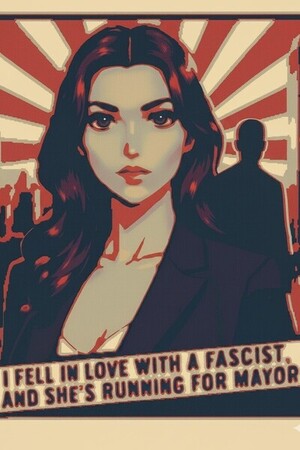
I Fell in Love With a Fascist, and She’s Running for Mayor
The thing about elections in America is they start a lot earlier than most voters notice. It’s said about November elections that the average person doesn’t start paying attention until after Labor Day, just about two months. Meanwhile, the last two candidates standing have usually been running for nearly two years at that point.
Kendra's mayoral election is this November, in about nine months. She formally announced her campaign nine months ago, at that quarterly deadline to keep all the funds that had come in after attending the presidential inauguration.
Telling me she wanted me to run and wouldn’t if I didn’t had made all the difference. A lot of my anxieties about the run faded. Maybe it was narcissistic. Maybe I needed to know that I mattered, and so once my objection was taken seriously, it faded. I don’t know what that says about me. The return of the former president to office paradoxically made things easier. He gave people a lot to be upset about across the political spectrum, even Kendra. So we could commiserate. At the same time, it made the stakes of Kendra’s mayoral run that much smaller. In his second term the now-again president seems to be doing a speedrun into fascism. Meanwhile, Kendra’s campaign is focused on what she’s called small solutions. I like to think our relationship and our long political discussions and debates and duets made a difference. She’s made the focus of her campaign bringing power back to the people, and it’s resonating.
The primary is in just a couple of months. The last time around, the ruling party changed the primaries, from having separate primaries for the two major parties, and any other party with at least one member on the city council, to one so-called jungle primary, where the top two candidates advance.
In a city heavily skewed in registration toward the majority party, this seemed like a bright move. The opposition party mayoral candidates often failed to break double digits in percentages on election night. The jungle primary was supposed to turn the heat down in the majority party’s primary. Where previously it was a winner-take-all proposition, with one candidate making it to November to face symbolic opposition, now two candidates from the ruling party could make it through.
The idea was to foster more collegiality in the primary, that candidates wouldn’t take quite as many kill shots if they needed some of the candidates they beat in the jungle primary to endorse them so they could beat the one candidate in November that made it with them through the jungle primary.
Kendra’s resuscitation of the moribund minority party happened right after this change, but at first its significance wasn’t appreciated. Even when she first announced last March, a lot of the city’s political operators weren’t very concerned. Now she’s consistently polling in first or second. The jungle primary has largely become about which of the ruling party’s candidates will face Kendra in November, and their arguments have largely centered about which of them is best equipped to beat her. It’s an unenviable position. Once you’re running against someone, and not for something, you’ve already lost.
We kept our relationship clandestine last year. After the initial frenzy the media attention never really returned to me, I was such an unlikely romantic partner for her. We were both comfortable with each other, with the things we agreed and disagreed about, and with how important each of us had become in the other’s life. It wasn’t anyone’s business. While the political incompatibility had become something we got used to, and even thrived on, we were still uncomfortable sharing that more widely. I think our concerns about press coverage were just an excuse.
That actually changed thanks to the former and now-again president, and a different mayoral election in America’s biggest cities. This last November, the city elected a candidate who had been regularly called a Marxist by the now-again president’s party. He ended up winning comfortably despite all the scare tactics. A lot of my former comrades were convinced he was a sell out, because he won, but I was hopeful. He had a message for working people and he wanted to reach out to everyone. Even Kendra was impressed with his campaign, although she disagreed with a lot of his actual policies. She actually seemed sympathetic to his aggressive stance about slumlords, and started to adopt it on the campaign trail, even threatening to use eminent domain to seize property from particularly egregious landlords. It’s a more radical position than the big city mayor’s taken so far.
After his election, the Marxist candidate visited the White House to meet with the now-again president, who the Marxist had called a fascist on the campaign trail repeatedly. Kendra and I watched their appearance at the Oval Office together with great interest. At some point, a reporter asked the mayor-elect about his previous comments calling the president a fascist. He started to equivocate, to dissemble, when the president turned and patted him on his arm, telling the mayor-elect to say whatever he needs to say about him to make his base happy. Kendra and I looked at each other. Any political differences we had that were keeping us from fully embracing our relationship seemed so silly then. Here was the most powerful politician in the country, with one of its brightest rising stars from the polar opposite end of the political spectrum, and they were having a bromance on live national television. Why Kendra and I hiding our relationship?
We didn’t make a big deal out of it, we just started living our life together the way we wanted. It took several weeks for anyone in the local press to get wind of it. The media have the memory capacity of hamsters, or even toddlers who haven’t grasped object permanence yet. Kendra’s romantic life wasn’t on the radar, so even though we had started being very open, it was the local bloggers who picked up on it first. They were mostly interested in the opposites attract angle. It was soft, sympathetic coverage.
Eventually one of the local political reporters from the newspaper, photographer in tow, caught up with Kendra and I as we left Hawk Tavern, where we had dinner and drinks.
-Is this your boyfriend?, he asked bluntly.
-Yes, Kendra said with a wide grin. And he’s a Marxist. Can you believe it?
-How do you respond to people who say this kind of pairing is worrying for someone trying to run for mayor?
-Who says that, she asked pointedly. You?
-Some people, he stammered, but sure, me, he finally conceded. I mean, you’re ultra-conservative. This guy is on the far-left. What’s that mean for your consistency?
-It means I follow my heart, not what reporters might think or might want some people to think. We should follow our hearts more.
She smiled.
-Now watch this kiss, she said as she turned and caught my lips in hers for the camera.
I love Kendra Badger, and she’s going to be our next mayor.
And you’ll love her too.









Please sign in to leave a comment.