Chapter 9:
Solnus 9. Euclid the Light, Heir to the Three Stones; A Logo Inspired by That Institution?
The Bladderites, The Jarhands, and The Sound of Light
5741 days, or 15 years, 8 months, and 2-3 weeks before The Circumadversum Omatsuri, one night.
A child wearing sporty clothes was walking in a corridor of a building. The child was a boy around thirteen years old. The corridor he was currently walking in was in the same building where Eiru and Marika Inman Anno lived.
At that moment, the boy wasn't walking alone in the corridor. An adult man was walking beside him. The adult man, who is also wearing sporty clothes, had well-defined muscles, indicating that he was indeed suited to his job as a gym trainer.
"Yes, yes, ma'am. I'm on my way back," the boy said into his cell phone. He answered the voice calling him on the wireless device, "The view here is beautiful, Mom, overlooking the ocean. So I'll be hitting the gym here often. Okay?"
Finally, the boy hung up after a brief conversation with his mother. He then asked the adult man beside him, "Kochi-sensei, the next game is in the pool area, right? Mitsuishi the Light is ready to continue his 100% achievement streak."
The man, addressed as "kochi-san," meaning "Mr. Trainer," expressed his praise, "Very good, Yuukurito-sama."
Mr. Trainer addressed the boy with the honorific "-sama," indicating respect. Mr. Trainer, on the other hand, addressed the boy by his given name, indicating a close relationship between them. Mr. Trainer was the boy's personal trainer, with whom he had been working as a personal fitness instructor for the past two years.
A thirteen-year-old boy who could already afford to hire a personal trainer. This certainly indicates that the boy had a lot of pocket money, or in other words, is a rich kid. Indeed, he is a moneyed youngster, as he is one of three heirs to the Mitsuishi family business.
His family name, Mitsuishi, is written with the kanji characters 三石. The kanji 三, read as "mitsu," means "three." Meanwhile, the kanji character 石, read as "ishi," means "stone."
However, like many other Japanese words, Mitsuishi can be written with different kanji. Mitsuishi can be written with the kanji 光石. The difference from the previous kanji is the use of the kanji 光, as the kanji reads as "mitsu." The kanji 光 means "light."
That's how the little boy coined the nickname "Mitsuishi the Light" for himself. He thought it was a cool name. He often uses the phrase "the Light" for the names of his social media and gaming accounts.
Speaking of games, Mitsuishi the Light can be said to play relatively little, if by games he means video games or online games. He, with his thirteen-year-old mind, is actually not much different from other children his age who enjoy playing games. The difference is, Mitsuishi the Light considers his life a real game, a 3D game with the most realistic graphics.
It could be said that because of this mindset, Mitsuishi the Light is highly competitive. Sports, academics, and the arts in the real world, for Mitsuishi the Light, are games that he must complete with a high achievement score. All quests in various fields are things he must try.
Mitsuishi the Light's parents are pleased with their second child's behavior, especially his mother, who is a "kyoiku mama," or "education mother," a mother who pays great attention to her children's education. They felt the given name seemed fitting for their son. According to the child's given name, Yuukyurido, the child is expected to do many extraordinary things like the famous mathematician Euclid.
The Greek mathematician Euclid was indeed the inspiration for Mitsuishi the Light's given name. "Euclid" in Japanese is written with katakana characters (ユークリッド). This katakana sequence is pronounced "Yuukuriddo."
Mitsuishi the Light's parents used the "ateji" technique to name their child. The ateji technique involves naming by finding kanji characters with similar sounds to the pronunciation of something. Euclid, pronounced "Yuukuriddo," is similar to the pronunciation of Mitsuishi the Light's given name, "Yuukyuritoo."
Yuukurito is written with the kanji characters 優九利灯. The kanji 優, pronounced "yuu," means "excellent or superior." The kanji 九, read "kyuu" or "ku," means "nine," where nine represents the day and month of Yuukyuritoo's birth. The kanji 利, read as "ri," means "profit, benefit, or advantage." The kanji 灯, read as "to," means "light or lamp."
Yuukyuritoo Mitsuishi was seated in his luxury car. His driver had driven the car to Yuukurito's house. Now, inside the vehicle, plying the lights of Tokyo, Yuukurito opened a device emitting light. It was his cell phone, a gift from his mother, with a special case engraved on the back with his full name, "三石 優九利灯."
On his phone screen, Yuukyuritoo discovered something new. He saw several photos recently updated on one of the social media accounts he followed. He wrote about what he saw: "Today, Marika Anno took a short break with her little sister Eiru at a quiet beach."
Seeing Marika's social media post, Yuukyuritoo had an inspiration and immediately shared it with his personal trainer, "Kochi-sensei, we've never practiced running on a deserted beach, have we? How about we practice somewhere like that sometime?"
Mr. Trainer replied, "Ah, yes. We've never practiced together in a location like that. That's a great idea, Yuukyuritoo-sama."
Yuukyuritoo offered another idea, "Maybe I'll invite my friend Nike Kotegawa too. I bet she'll be as happy as she was watching the fireworks—and I'll take Misumi-sensei there too if we do practice. Then after practice, I can listen to her music lessons there."
Mr. Trainer repeated his last sentence, "That's a great idea, Yuukyuritoo-sama."
Yuukyuritoo was talking about the music teacher he had hired a few months ago to improve his musical skills. He asked, “Speaking of which, Kochi-sensei. If I’m not mistaken, Misumi-sensei comes from an area like that, right? Have you ever heard Misumi-sensei talk about her experiences growing up in an area like that?”
Mr. Trainer replied, “Yes, I’ve heard a bit about her. She said there were definitely things she liked and disliked about her childhood. Some things she liked were hearing the Goji Chime bell or the Bosai Musen. She also liked playing hide-and-seek with her friends, saying that places with more natural areas offered more hiding places.”
(000)
5741 days, or 15 years, 8 months, and 2-3 weeks before The Circumadversum Omatsuri, one night.
“What was the idea behind all this? A facility in a remote location that seems to have been deliberately hidden?” John Anatole Holland’s mind was still buzzing with questions about this place he had just visited for the first time.
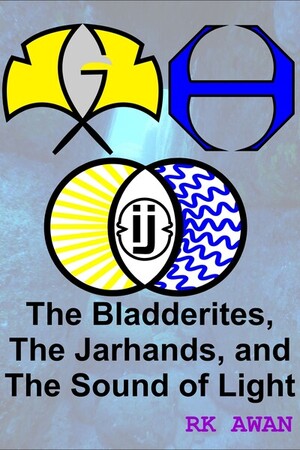
Meanwhile, Holland’s head turned back to find the gate that also served as the driveway had closed back up. Then his head returned straight ahead, observing the logo, “the letter G in the middle of two ginkgo leaves,” again.
Professor Kimura remarked, “Joho-san, it seems you’re observing the symbol on the wall; am I right?”
Holland admitted, “Yes, Professor Starwood.”
Professor Kimura asked, “What goes through your mind when you see something like that?”
Holland shrugged and revealed what was on his mind: “I see that there seems to be a G in the symbol. The G appears to be formed from the combination and intersection of two ginkgo leaves. The ginkgo leaves… Maybe it’s related to or inspired by the institution where we first met?”






Please sign in to leave a comment.