Chapter 9:
EPISODE - 9 - Mahitaro's Humanity
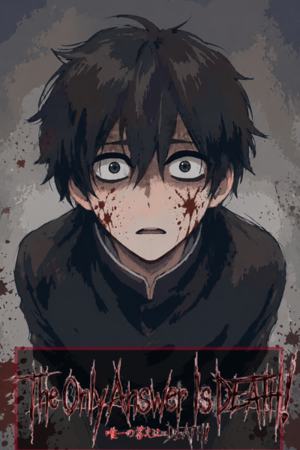
The Only Answer Is DEATH! (唯一の答えは...DEATH!)
[MA 18+ - Contains extreme graphic violence, gore, suicide, death, psychological horror, and disturbing imagery]
The days dissolved into each other like watercolors bleeding in rain.
Three days. Two days. One day. The calendar pages turned with mechanical inevitability, each sunrise bringing Mahitaro closer to a moment he couldn't remember but knew would destroy everything. His eight-year-old body moved through routines—school, meals, sleep—while his thirty-seven-year-old consciousness screamed beneath the surface, trapped in flesh too small to contain its accumulated trauma.
He watched Yasuke. Catalogued every tension in his brother's frame, every forced smile, every moment when his eyes went distant with thoughts he wouldn't share. The pressure was building, visible even to Mahitaro's limited perspective. Teachers' comments about grades. Parents' subtle comparisons to other students' achievements. The weight of expectations pressing down on shoulders that had started to bow under the burden.
He's breaking. I can see it happening and I don't know how to stop it because I still can't remember what pushes him over the edge.
Gekidō remained perfectly in character—the concerned friend, the cheerful companion, playing his role with such flawless execution that Mahitaro found himself questioning reality multiple times per day. Was this an act? Or was this genuinely who Gekidō had been before time and suffering warped him into something cruel?
The uncertainty was its own torture. And then, inevitably, unstoppably—February 22, 2007 arrived. Morning came with the texture of nightmares rendered physical.
Mahitaro woke to sunlight that felt accusatory, as if the day itself was judging him for failures not yet committed. His small body lay rigid in sheets. The calendar on his wall no longer showed a date circled in red. Today was that date. The countdown had reached zero.
His stomach contracted, but he forced himself upright through sheer will. His hands trembled—child hands that seemed impossibly inadequate for whatever task lay ahead. His reflection in the mirror showed a face too pale, eyes too old, the expression of someone carrying knowledge that didn't belong in an eight-year-old body.
Today. Whatever happens, it happens today. And I still don't know what I'm trying to prevent.
Breakfast was a performance Mahitaro barely participated in. His mother's cheerful questions about homework. His father's distracted comments about work. Yasuke's silence—heavier than usual, weighted with something Mahitaro could feel but couldn't name.
Gekidō arrived with his characteristic smile, red hair catching morning light, and the three of them walked to school together for what Mahitaro's instincts screamed might be the last time.
The school day unfolded with the inexorable momentum of Greek tragedy.
Morning classes. Lunch. Afternoon sessions where teachers droned about subjects that felt absurdly trivial compared to the dread accumulating in Mahitaro's heart. He kept Yasuke in his peripheral vision constantly, watching for signs, for triggers, for anything that might indicate when and how the breaking would occur.
And then—fourth period. The classroom where futures ended.
Mahitaro sat at his small desk, his adult consciousness crammed into child perspective, when he noticed the tension shift. The teacher—middle-aged, earnest, well-meaning in the way people were before they learned cruelty—was discussing upcoming exams. Standard material. Routine educational pressure.
But then the teacher's attention focused, narrowed, landed on Yasuke with the precision of a spotlight isolating its subject.
"Yasuke, I need to speak with you after class. Your recent test scores have been... concerning. And I've scheduled a parent-teacher conference for this evening to discuss your academic trajectory."
The words were mild. Professional. Delivered with tone that suggested concern rather than condemnation. But Mahitaro watched his brother's face, saw something flicker behind his eyes—not anger yet, not despair, but the beginning of structural collapse. The first crack in a dam that had been holding back too much pressure for too long.
No. Not yet. It's too early. I thought I had more time to—but time had run out. The tragedy was beginning, and Mahitaro could only watch as dominoes he couldn't see started to fall.
After class, Yasuke remained behind. Mahitaro hesitated at the door, torn between staying to witness and leaving to avoid suspicion. Gekidō tugged at his sleeve, whispering "Come on, we'll wait outside," and Mahitaro allowed himself to be pulled into the hallway.
Through the classroom's window—small, set high in the door—Mahitaro could see fragments. The teacher gesturing. Yasuke's posture rigid. Then—raised voices. Not shouting, not yet, but volume increasing with emotional intensity.
Other students gathered, curious about the drama. Mahitaro stood frozen, his child body rooted in place while his adult mind catalogued every detail with the desperate precision of someone trying to remember a dream before it dissolved.
The door burst open.
Yasuke emerged, his face flushed, fists clenched, breathing hard through his nose. Behind him, the teacher followed, voice raised now: "This isn't negotiable, Yasuke! Your parents need to understand that your current performance—"
"My current performance?" Yasuke spun, and the movement was sharp enough to make nearby students flinch. "You mean my failure? My inadequacy? Is that what you're going to tell them? That I'm not good enough? Not trying hard enough?"
"That's not what I—" the teacher started, but Yasuke wasn't finished.
"I'm tired!" The word came out strangled, carrying weight far beyond its syllables. "I'm tired of being measured! Tired of being compared! Tired of being told what I need to become instead of being allowed to just—to just—"
His voice broke. The flush in his cheeks spread, redness creeping up to his hairline, down his neck. His hands shook. And in his eyes—Mahitaro could see it clearly now—something was breaking in real-time. Some essential piece of structural integrity giving way under pressure it was never designed to hold.
This is it. This is the moment. I have to do something—have to stop this—
But his eight-year-old body was paralyzed by the adult understanding of how fragile the moment was. Any wrong word, any wrong action, might accelerate rather than prevent the collapse.
The teacher reached out—a gesture meant to be calming, steadying. His hand landed on Yasuke's shoulder.
Yasuke jumped away like the touch burned. "Don't—don't touch me! Don't pretend you care about anything except your statistics! Your success rates! Using my failure to make yourself look better!"
"Yasuke, you need to calm down—" "I DON'T NEED TO DO ANYTHING!"
The shout echoed through the hallway, bounced off lockers, made younger students scatter. The teacher's expression shifted from concern to alarm, hand reaching out again in what was probably meant as restraint but read as aggression to someone already spiraling.
And then everything accelerated.
Yasuke's hand shot out—not striking, but grabbing. His fingers closed around a pencil holder on a nearby desk, the kind filled with writing implements meant for innocent purposes. Students used them daily. Teachers kept them stocked. Simple tools for simple tasks.
Until they weren't.
The motion was fluid, practiced by muscle memory Yasuke didn't know he possessed. His hand selected a pencil—wood and graphite and metal tip designed to leave marks on paper—and in one smooth arc, drove it forward.
Into the teacher's throat.
The sound was worse than Mahitaro expected. Not the clean puncture of movie violence but something wet and complicated—tissue parting, cartilage cracking, the pencil tip finding its way between bone with accidental precision. The teacher's eyes went wide, mouth opening in surprise that would have been comical if it weren't accompanied by blood beginning to well around the wooden shaft protruding from his neck.
Time fragmented. Mahitaro's perception shattered into disconnected images that his mind would spend lifetimes trying to reassemble:
The teacher's hand rising to touch the pencil, fingers wrapping around it with the gentle confusion of someone discovering a foreign object embedded in their flesh.
Yasuke's face—horror dawning as he realized what he'd done, what his hands had accomplished without conscious permission.
Blood beginning to flow. Not spray, not yet, but steady seepage that stained the teacher's collar, darkened his shirt, created spreading patterns that looked almost artistic in their abstract horror.
The teacher trying to speak. His mouth working, throat convulsing around the obstruction, producing sounds that weren't quite words—wet gurgles, aspirated gasps, the audio texture of someone drowning in their own blood while standing upright.
And then the teacher's other hand—trembling, desperate—reached up to join the first. Together, they grasped the pencil. Together, they pulled.
The removal was worse than the insertion. The pencil emerged with a sound like wet fabric tearing, bringing with it tissue that should have remained internal.
The blood came then.
Not the steady seepage of before but pressurized spray—arterial blood still oxygenated, still bright red, still carrying life even as it painted abstract patterns across the hallway walls. The teacher's hands flew to his throat, trying to stem the flow, but arterial pressure was too strong for compression. Blood pulsed between his fingers in rhythm with his failing heartbeat, each spurt slightly weaker than the last as his lung system recognized it was fighting a losing battle.
The teacher's knees buckled. He dropped, first to kneeling, then collapsed forward onto hands already slick with his own blood. The impact drove more blood from his throat—a wet expulsion that created spreading puddles on the floor. His mouth worked silently, forming shapes that might have been words or prayers or simply the autonomic response of a dying brain trying to process its own termination.
Students screamed. The sound was piercing, primal, the collective shriek of people confronting mortality for the first time. Some ran. Some froze. Some pulled out phones with the instinct of a generation raised on documentation, recording horror for posterity before conscious thought could intervene.
But Mahitaro couldn't move. His child body stood rooted, his adult consciousness forcing him to witness—to catalogue every detail of the teacher's death with clinical precision created from loops and suffering. He watched the light fade from the teacher's eyes—not dramatic, not sudden, but gradual dimming like a bulb losing power. He watched the blood pool expand, watched it reach the grooves between floor tiles and begin spreading along those channels like rivers finding their predetermined paths. He had seen this from memories, but was to shocked to stop it though It's path.
And through it all, Yasuke stood frozen. His hand still extended, fingers curled around the ghost of the pencil he'd released. Blood spattered his uniform, his face, caught in his hair like grotesque highlights. His expression cycled through reactions too quickly to track—horror, denial, comprehension, horror again, each emotion fighting for dominance over features too young to properly express such adult devastation.
But Yasuke didn't run. He stared at his blood-stained hands with the fixed attention of someone trying to solve an impossible equation. His mouth moved, forming words Mahitaro couldn't hear over the screaming, over the wet sounds of the teacher's final breaths, over the rising wail of approaching sirens.
Faculty arrived in a rush—adults drawn by student screams, stopping dead when they saw the scene. Someone grabbed Yasuke, restraining him with force that seemed unnecessary given how unresisting he'd become. Someone else dropped beside the teacher, hands pressing uselessly against a throat too damaged to save, blood coating their palms within seconds.
And someone—a younger teacher, barely out of university—looked at Mahitaro standing in the midst of chaos and said: "Get back! All students back!"
But Mahitaro couldn't move. His eyes locked on Yasuke's face, watching his brother's psyche collapse in real-time as comprehension fully settled. Yasuke had killed someone. Had driven a pencil into human flesh and ended a life. The knowledge was rewriting him from the inside, erasing whoever he'd been and replacing it with someone defined entirely by this moment.
I was supposed to stop this, Mahitaro thought numbly. This was what I was sent back to prevent. And I failed. I stood here and watched it happen and I failed—
The rest of the day dissolved into bureaucratic nightmare rendered through child perspective.
Police arrived. Paramedics confirmed what everyone already knew—the teacher was dead, had been dead since the moment arterial spray began, his brain starved of oxygen too quickly for intervention to matter. Students were separated, questioned, statements taken with the careful gentleness used when people witness trauma.
Mahitaro answered questions he barely heard. Yes, he saw what happened. Yes, his brother did it. No, he didn't know why. The lies came easily because the truth—I'm from the future, trapped in a child's body, trying to prevent a tragedy I couldn't remember until it was shown to me through lost memories—would only complicate things further. Because time itself was not on his side. And would stop him at all costs.
Yasuke was taken away in handcuffs that had to be tightened to fit his own wrists. As they led him past, his eyes found Mahitaro's. And in that moment—brief, eternal—Mahitaro saw his brother's silent plea: I'm sorry. I didn't mean to. I don't know what happened.
Mahitaro wanted to scream that he understood. Wanted to run after him, to somehow fix this, to reset again and try differently. But his child body remained frozen, trapped in the role of witness, forced to watch his brother disappear into a system designed to break him further.
The school was evacuated. Parents called. Mahitaro found himself in the principal's office, sitting on a chair too large for his frame, waiting for parents who would arrive with expressions he'd already learned to dread.
Gekidō sat beside him. The red-haired child had gone silent, his characteristic cheer extinguished like a candle in wind. He stared at his hands—also blood-spattered from being nearby when the spray began—and said nothing.
Say something, Mahitaro's mind screamed at him. Drop the act. Reveal yourself. Tell me this was your plan all along, that you orchestrated this, that—
But Gekidō just sat in silence. And that was somehow worse than any revelation could have been. Because this was fate at hand.
When Mahitaro's parents arrived, his mother's face was pale, his father's expression grim. They gathered him up with the desperate protectiveness. In the car ride home, nobody spoke. The silence was absolute, suffocating, broken only by the sound of his mother's quiet crying.
At home, Mahitaro went to his room without being told. He closed the door, sat on his bed, and stared at the wall where the calendar no longer mattered because the circled date had passed and the tragedy had occurred exactly as his blocked memories had known it would.
His small hands curled into fists. His throat closed. And for the first time since waking in this child body, he felt tears begin to burn behind his eyes—not the autonomic crying of physical distress, but actual grief, actual anguish at having failed to save someone he'd only just learned existed.
I had a brother. For less than a week, I had a brother. And now he's gone. Not dead, but gone to somewhere I can't follow. Lost to a system that will break him, define him by this moment, ensure he never becomes who he could have been.
The tears fell. Silent. Steady. The kind of crying that came from somewhere too deep for sound. A soft knock on his door. Gentle. Hesitant. "Mahitaro?" His mother's voice, thick with her own tears. "Can I come in?"
He couldn't answer. His voice had abandoned him, fled to wherever voices went when grief made them impossible.
The door opened anyway. His mother entered, crossed to his bed, sat beside him with the careful movements of someone approaching something broken. Her arms wrapped around him, pulling him close, and that simple gesture—comfort, warmth, protection—shattered the last of his restraint.
He sobbed into her shoulders. Great, heaving sobs that shook his small frame, that emptied him of everything except the pure anguish of loss. Adult grief compressed into child expression, thirty-seven years of accumulated suffering finding release through eight-year-old tears.
His mother held him. Didn't ask questions. Didn't try to explain or rationalize or make sense of senseless horror. Just held him while he broke, while he emptied himself of tears that felt endless, while he grieved for a brother he'd barely known and already lost.
"It's okay," she whispered, though they both knew it wasn't. "Let it out. I'm here."
You won't be, Mahitaro's fractured mind supplied. In the future I remember, you hate me. You're hollowed out—drunk, bitter, contemptuous. This day breaks you too. It breaks all of us. This is where everything ends.
And soon, it will be my turn.
The understanding lands like a delayed impact. I think I finally know why I forgot. This trauma didn't just scar me—it shattered me so completely that my memories of Yasuke, and of that red-haired devil of a kid, were erased entirely. Oblivion wasn't mercy. It was survival.
And now it makes sense why the devil inside him took shape the way it did—why it became something made of pure hatred. It wasn't born evil. It was forged here, in this moment, by everything that was failed to stop.
That's why he sent me back. Not to punish me, but to make me understand. To force me to remember that I failed. And to show me that the only chance to change anything—to save this world I love, and the people in it—is to become stronger.
Not stronger in body alone, but in will. In resolve. Strong enough to defy the fate time is trying to lock us into. Strong enough to break fate before it finishes breaking us.
But he didn't say it. Couldn't say it. Just clung to her and cried until exhaustion pulled him toward something that might have been sleep but felt more like unconsciousness—his body's mercy, shutting down systems overwhelmed by trauma too great to process while awake.
His last conscious thought before darkness claimed him: The incident happened. Yasuke is gone. And now comes the part I couldn't remember. The part my mind erased because surviving it required forgetting it completely.
Now comes my turn to break. But this time I won't. Because I'm a much older Mahitaro from the future. A version who already has experience with this kind of depression.
TO BE CONTINUED...





Please sign in to leave a comment.