Chapter 8:
EPISODE - 8 - The Shattered Beginning
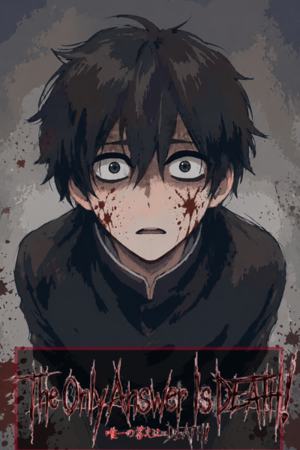
The Only Answer Is DEATH! (唯一の答えは...DEATH!)
[MA 18+ - Contains extreme graphic violence, gore, suicide, psychological horror, and disturbing imagery]
Morning arrived with the weight of prophecy.
Mahitaro woke not to bile or blood but to sunlight—pale gold streaming through curtains that hung in his room but existed in no memory he could access. His eight-year-old body lay in a bed that felt simultaneously foreign and familiar, sheets tangled around legs too small.
He didn't move. Not immediately. His eyes tracked across the ceiling, cataloguing cracks that formed different patterns than the ones he'd memorized in his adult bedroom. These fissures branched like neural pathways, like the spreading damage in his fragmenting psyche, like arterial systems mapped in plaster instead of flesh.
Yasuke exists. A brother I never had. Never knew. Never remembered.
The thought circled his consciousness like a bad internet ping, every time he'd lived through loops, every reset, every death—there had never been a brother. He'd been alone. Isolated. That loneliness had defined him, shaped him, carved out the hollow space where connection should have existed.
But the memories bleeding through his child brain insisted otherwise. Flashes of a taller figure teaching him to tie shoes. Hands—larger than his, smaller than adult—steadying a bicycle. A voice reading stories until sleep came. Warmth. Protection. Family.
False. Has to be false. The loop implanted these. Manufactured a past I never lived to—to what? Torture me? Show me what I lost? What I never had?
His stomach churned, but he forced himself upright. The movement made his head swim—adult consciousness still adjusting to his child body. Feet on floor. Cold wood against small soles. He stood, swaying slightly, and approached the mirror mounted on his wall.
The reflection showed a stranger. Eight years old, dark hair messy from sleep, eyes that carried weight no child should hold. Behind him, visible in the mirror's frame, his room told stories his memory rejected: posters of soccer players he didn't remember liking, drawings pinned to walls that showed three figures—small, medium, tall—holding hands under a sun that smiled.
Three. Always three. Himself, Yasuke, and—red hair rendered in crayon. Bright as arterial spray. Bright as emergency lights. Bright as the flames that would consume everything.
Gekidō.
The name tasted like copper in his mouth. His best friend, according to the false memories. The child he'd played with since age seven, shared lunches with, laughed with, trusted with the easy confidence of someone who'd never learned that trust was a weapon people could use to hurt you.
But Mahitaro's adult consciousness knew different. Knew Gekidō as the architect of suffering, orchestrator of deaths, the smiling face that watched him break across countless iterations. The contradiction made his head throb, made reality feel thin and unstable, like walking on ice that might crack at any moment and plunge him into deeper cold.
A knock on his door—gentle, accompanied by a voice he was still learning to recognize: "Mahitaro? You awake? Breakfast is ready."
Mother. But not his mother. This version smiled. Cooked breakfast. Knocked instead of yelling through doors. The cognitive dissonance was worse than any physical pain the loops had inflicted.
"Coming," he managed, his child voice sounding strange to ears that expected darker tones.
He got ready mechanically, pulling on a school uniform that fit his eight-year-old frame. Each piece of clothing felt wrong—too small, too clean, smelling of detergent instead of the stale neglect he remembered from his actual childhood. Or what he thought was his actual childhood. The loop was making him doubt even that now, making him question which memories were real and which were lies his mind had constructed to survive trauma itself.
The calendar on his wall caught his eye as he reached for the door. A simple thing, pages marked with nothing but dates rendered in neat black numbers. But one date was circled in red ink—not by him, by someone else, at some point he couldn't remember.
February 22, 2007.
His hand froze on the doorknob. His breath stopped. His vision tunneled until only those numbers existed, burning in his perception like brands seared into flesh.
The incident. The day everything ends. The day Yasuke—
His stomach dropped into a void that opened beneath his feet. Because suddenly, with the clarity of lightning illuminating darkness, he understood. The loops hadn't sent him back to his high school days. Not to his twenties. Not even to his teens.
They had sent him back to this. To the original tragedy.
The one he had forgotten—the one his mind had erased so completely that even across countless resets, even after dying again and again, it never resurfaced. It was as if the loops themselves had been warning him, slipping fragments of truth through fractured memories, signaling the reason he was never meant to succeed in the first place. And now he understood.
This is where it starts. February 22. This is the day I lose Yasuke for the first time. The day everything breaks. The day I—days until the circled date: five. Breakfast was a surreal experience that felt like method acting in a play Mahitaro hadn't rehearsed for.
The kitchen smelled of rice and miso soup, familiar scents twisted into unfamiliar context. His mother—younger, unhaunted by alcoholism—moved through the space with easy competence. His father—not yet hollowed by disappointment—read a newspaper while eating. And Yasuke sat across from Mahitaro, his presence impossible and undeniable in equal measure.
"You look better," Yasuke observed, his voice carrying genuine concern that made Mahitaro's heart ache. "Less like you were going to pass out again. Fever break?"
I never had a fever. I had a complete existential collapse because my tormentor from the future is pretending to be my childhood friend and I have a brother I never knew existed and I'm trapped in a child's body with an adult's memories of dying repeatedly.
"Yeah," Mahitaro said instead. "Better." The lie tasted familiar at least. Lying was one skill that translated across age groups.
Gekidō arrived as they were finishing breakfast—walking through the door without knocking, greeted by Mahitaro's parents with warmth that suggested this was routine. He wore his school uniform, red hair bright even in the kitchen's soft light, and when he smiled at Mahitaro it carried no trace of cruelty.
Just friendship. Uncomplicated and pure and so perfectly performed that detecting the seams was impossible.
"Ready for school?" Gekidō asked, his voice bright with the enthusiasm of someone who didn't know that school would eventually become the site of brutal murder. "I finished the homework—you can copy mine on the way."
Homework. The mundanity of it was almost funny. Mahitaro had died multiple times, lived decades, endured suffering that should have broken him permanently, and now he was supposed to care about homework.
"Sure," he heard himself say. The walk to school unfolded like a fever dream rendered in hyperrealistic detail.
Mahitaro walked between Yasuke and Gekidō, the three of them forming a unit other students made way for. Not from fear—from recognition. Whispers followed them, fragments of conversation that painted a picture Mahitaro couldn't reconcile with memory:
"—three of them again—" "—inseparable since elementary—" "—lucky, having friends like that—"
Lucky. The word was a knife. Because Mahitaro had never been lucky. Had never had friends. Had never experienced the easy camaraderie being performed around him.
Except the memories insisted otherwise. Showed him younger versions of these three figures playing, laughing, building bonds that should have been real. And every time Mahitaro tried to reject them as false, they felt more substantial than the isolation he remembered.
Which memories are lies? The warmth or the cold? Did I forget this because trauma erased it, or did the loop implant it to make the loss more painful? His adult mind couldn't answer. His child brain didn't have the capacity to process the question.
At school, the whispers intensified. Teachers greeted them as a unit. Classmates treated their friendship as established fact, commenting on it with the casualness of people describing weather. The trio—Mahitaro, Yasuke, Gekidō—apparently well-known enough that their bond needed no explanation.
And through it all, Gekidō played his role perfectly. Every smile, every laugh, every gesture of friendship so flawlessly executed that Mahitaro found himself forgetting, for heartbeats at a time, that this was the same person who'd tortured him across loops. The performance was that good. Or—worse possibility—it wasn't performance at all, and this genuinely was who Gekidō had been before something broke him.
The school day crawled forward with the inexorable momentum of a funeral procession.
Mahitaro sat in classes meant for eight-year-olds, surrounded by children whose biggest concerns were playground politics and quiz scores. His adult consciousness made the lessons feel like torture—simple arithmetic he'd mastered decades ago, reading exercises pitched for minds still developing. He went through motions, answered questions when called on, maintained the facade of normalcy while his psyche fragmented further.
Between classes, in stolen moments, Mahitaro's mind kept circling back to one thought: Five days. Five days until February 22. Until Yasuke—does what? What happens? Why can't I remember?
The mental block was absolute. Every time he approached the memory, pain spiked through his skull—not metaphorical anguish but actual physical agony that made his vision white out and his child body nearly collapse. Some part of his psyche had locked that knowledge away so thoroughly that even forcing himself to remember triggered defensive responses. And that would cause trouble for him in the long run if it kept happening. It was like time itself was rejecting him from changing fate entirely.
I need to know. Need to understand what happens so I can prevent it. Because if I don't—
If he didn't, the loops would continue. This moment would repeat. His brother would be lost again, and Mahitaro would forget again, and the cycle would continue until reality itself ground down to nothing.
The final bell rang with the weight of an execution.
Students poured from the building in waves of relief, their voices high and excited with temporary freedom. Mahitaro stood at his cubby, mechanically sorting through items he barely recognized as his own, when Yasuke appeared beside him.
"You've been quiet today," his brother observed, concern threading through his voice. "Even more than usual. You sure you're feeling okay?"
No. I'm not okay. I'm trapped in a child's body with memories of dying repeatedly and I have a brother I never knew existed and in five days something terrible happens and I can't remember what but I know it destroys everything again.
"Just tired," Mahitaro said. The lie was easier than truth. Truth would require explanations impossible to give.
Yasuke's hand landed on his shoulder—warm, solid, real in a way that made Mahitaro's throat close. "Well, try to get some rest tonight. Can't have you getting sick right before—" He stopped. His expression flickered, something passing across it too quick to identify. "Just get some rest, okay?"
Before what? Mahitaro wanted to ask. Before February 22? Before whatever happens that I can't remember? But the question stuck in his throat, sealed behind the same mental block that prevented him from accessing the memory itself.
They walked home together—Mahitaro, Yasuke, and Gekidō forming their familiar triangle. The late afternoon sun painted everything in gold that felt like a taunt, beauty completely disconnected from the dread accumulating in Mahitaro's heart.
At their house—their house, because apparently Mahitaro and Yasuke shared this space, had always shared it—they parted ways with Gekidō, who waved cheerfully before heading to his own home. Whatever that was. Wherever that was. Mahitaro realized he knew nothing about Gekidō's actual life, only the performance he presented.
Inside, the house felt suffocating despite its warmth. Mahitaro retreated to his room, closed the door, and sat on his bed staring at the calendar on the wall. February 22, 2007.
Four days now. The number had decreased. Time moving forward whether he wanted it to or not, carrying him toward a moment he couldn't remember much now and only a bit, but knew he had to prevent it all quick.
I need to understand. Need to know what happens. Because how can I stop something if I don't even know what I'm trying to prevent?
His small hands clenched into fists. His adult mind raced through possibilities, trying to construct understanding from fragments and gaps and the shape of the trauma-void in his memory.
A teacher dies. Stabbed with pencils. Yasuke does it. Loses control because—because—
The memory wouldn't surface. Pain spiked every time he tried to force it, white-hot agony that made his eight-year-old body convulse and his vision dissolve into static.
Can't force it. Have to let it come naturally. Or find another way to understand.
He stood, pacing his small room, adult consciousness trying to work through child limitations. Watch. Observe. Look for signs. Yasuke's behavior. Changes in routine. Stress markers. Anything that might indicate—
A soft knock on his door interrupted his spiraling thoughts. "Mahitaro?" Yasuke's voice, muffled by wood. "Can I come in?" "Yeah."
The door opened. Yasuke entered, and even Mahitaro's untrained eye could see the tension in his frame—shoulders tight, jaw clenched, hands restless. His older brother sat on the edge of the bed, and for several heartbeats neither spoke.
Finally: "Do you ever feel like..." Yasuke started, stopped, started again. "Like everyone's watching you? Expecting things? And no matter how hard you try, you can't—" He cut himself off, shook his head. "Sorry. That's stupid."
Mahitaro's heart constricted. Because he recognized this—the beginning of a spiral, the first visible cracks in someone breaking under pressure they couldn't articulate.
This is it. This is how it starts. He's already fracturing and I don't know how to stop it because I can't remember what pushes him over the edge.
"It's not stupid," Mahitaro said quietly, his child voice carrying weight it shouldn't. "I feel like that too. Like... like I'm supposed to be something I'm not. And everyone's disappointed when I fail to meet expectations I never asked for."
Yasuke's eyes widened slightly, surprise crossing his features. Then—something that might have been relief. "Yeah. Exactly that." He laughed, but it sounded hollow. "Guess we're both messed up, huh?"
You have no idea. I've died multiple times. You're going to die too unless I can figure out how to stop it. And I can't even remember why you break. "Yeah," Mahitaro said instead. "Guess so."
They sat in silence that felt both comfortable and suffocating. Mahitaro wanted to ask more, wanted to probe deeper, wanted to understand what specific pressure would eventually make Yasuke snap. But he was eight years old, and pressing too hard would seem strange, would raise questions about knowledge he shouldn't possess.
Eventually Yasuke stood, ruffled Mahitaro's hair with forced lightness. "Get some sleep, little brother. Tomorrow's another day of trying not to disappoint everyone, right?"
The attempt at humor fell flat, landed wrong, created dissonance that made Mahitaro's skin crawl. "Right," he echoed.
Alone again, Mahitaro returned to staring at the calendar. The circled date seemed to pulse, seemed to generate its own gravity, pulling time toward it with inevitable force.
Four days. Four days to understand what I can't remember. Four days to save a brother I never knew I had. Four days until—
His mind shied away from completing the thought. Because even without clear memory, some deep instinct understood: February 22, 2007 wasn't just the day Yasuke broke.
It was the day Mahitaro's entire understanding of himself shattered, was rewritten, became something his psyche couldn't integrate without erasing it completely.
It was the beginning of everything. And he had four days to prevent it.
TO BE CONTINUED...






Please sign in to leave a comment.