Chapter 11:
Note: Kyara – The Supreme Incense of Japan
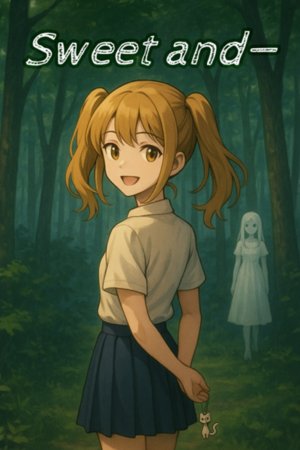
Sweet and—
A substance called Kyara appears in the story.
This refers to the highest grade of Jinkō (沈香, aloeswood or agarwood).
It is not a species of tree or a place of origin, but a rank—similar to how Japanese beef is graded “A5.”
Because it occurs only by chance, it is extremely rare and very expensive, and each piece has its own unique fragrance.
Among these, particularly exceptional specimens are sometimes given individual names.
Famous examples include “Ranjatai” and “Hatsune,” both of which are preserved in the Shōsōin repository at Tōdai-ji in Nara.
There are three main ways to enjoy incense wood: appreciating it “as it is,” “warming” it, or “burning” it.
Left as it is, the fragrance is faint; burning it produces smoke that alters the experience.
Warming it, however, draws out the purest fragrance, making it the best method for appreciation.
When I first learned about Kyara, I thought I might like to try it myself.
But since Kyara is a consumable that is extraordinarily expensive, and the tools and procedures are complicated, I quickly gave up.
In Japan there are traditional arts that emphasize refined gestures, such as Kadō (the way of flowers, or flower arrangement) and Chadō (the way of tea).
There is also an art for enjoying fragrance—Kōdō (the way of incense)—though I believe it is not very well known, even among Japanese people.
Like many cultural practices, Kōdō was introduced from China and later developed uniquely in Japan.
Today, the more common way to enjoy fragrance is through okō (incense sticks) or senkō (joss sticks).
These are inexpensive and simple to use—just light them.
Ordinarily one would say “to smell” a fragrance, but in Kōdō the expression used is “to listen to” the fragrance (monkō).
I first became interested in incense after watching an episode of the anime Mononoke titled “Nue.”
In that story, an extremely rare piece of incense wood—said to bring supreme power to its owner—becomes the prize in a game based on Kumikō (a traditional incense game).
Of course, the rules were simplified for the anime.
You may be wondering, “How can you play a game with fragrance?”
The rules are simple: the host prepares five kinds of incense and burns them in sequence.
The participants must then identify which fragrance was used and how many times.
Honestly, I could never do it!
On another note, the gambling manga Usogui features a character named Kyara, who possesses some of the greatest combat strength in the series.
What makes Usogui unique is that even elements like violence and cheating are defined by the rules of the game.
Personally, I think Usogui is the best manga in Japan. (A little recommendation from me.)
Back to the topic—there are only a handful of manga that deal with incense.
This is likely because it is so difficult to depict fragrance visually, and for readers who have never experienced it, imagining it can be quite challenging.
Opportunities to experience Kōdō are rare.
But if you ever have the chance, I highly encourage you to participate.
It will surely be a memorable and enriching experience.






Please sign in to leave a comment.