Chapter 1:
Prologue 2
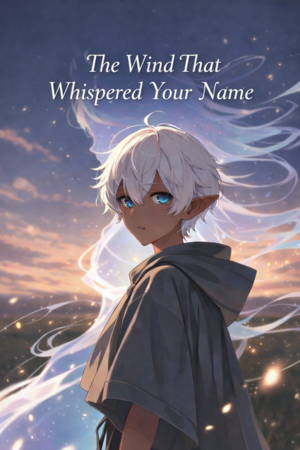
The Wind That Whispered Your Name
Under the fluorescent lights of the storage area, which gave our skin a sickly, waxlike tone, I felt the cold metal of the manual pallet jack handle crush into the palm of my hand.
The air smelled of damp cardboard and oxidized iron, a heavy scent that blended with the constant hum of the industrial refrigerators at the far end of the warehouse.
It was a morning like so many others, gray and purposeless, and my body was already soaked with sweat beneath the uniform.
“Man up, damn it.” Leo’s deep, slightly hoarse voice cut through the sound of a diesel forklift maneuvering in the neighboring aisle.
I was bent over, counting boxes of canned goods. The pallets were lined up like gravestones in a cemetery of products, and I had to separate the oldest batch for shipment.
Leo, my friend and coworker, leaned against the pallet jack, his uniform shirt wrinkled, dark eyes half closed in reproach.
I did not answer. I forced a brief smile that never reached my eyes.
Heat crept up my neck, the heat of shame mixed with irritation.
Screw you, Leo. You do not know my life.
But the thought was weak. A fragile lie. Deep down, in the hollow place where pride should live, I knew he was right.
He was only trying to help in his own rough way, using the tone of someone scraping meat off a bone for a starving dog.
“You stay home all day doing absolutely nothing. Go study, go out, do something.” He gave my arm a light but firm slap. It was not anger, it was a friend’s frustration.
I stared at the barcode on the box, wishing it would vanish, wishing the pallet jack, the factory, and the irritating hum would disappear like smoke.
Every time I felt the dead weight of the load while lifting a pallet, it was as if the weight of my own inertia was there too, reminding me how heavy it was to move forward.
Leo ignored my silence and continued his lecture, his voice now almost a conspiratorial whisper, still thick with stress.
“Seriously, man, what are you wasting your time on? Put effort into something. You are more than this. At least I know you are. I am your friend. I am trying to give you some perspective.”
Perspective. The word felt too big to be spoken between shelves of canned food.
“What do you even do when you get home?” he asked, and I felt my cheeks burn.
I could not look him in the eyes. The embarrassment was not because of him, but because of the realization itself.
What did I do?
I remembered the routine with painful clarity, a vicious loop that felt like corrupted code running my life, getting off the bus, feeling the damp asphalt under my shoes, walking down the narrow street, opening the door, the smell of home, a hot shower to wash off the factory’s oil and cardboard scent, strong coffee, and then…
The room. The couch. The screen.
Entire days dissolved into hours of inactivity. Time slipped away through random videos and repetitive games. I was a ghost of my own will.
“You just vegetate in your room?” Leo asked, his tone softer now but still direct. He did not need my answer. He already had it.
I sighed, the cold warehouse air stinging my lungs. I glanced at the clock on the brick wall. Almost noon.
“Yeah. I know,” I said, my voice rough. “I will figure something out. I promise.”
Leo smirked, but there was relief in his eyes.
“That’s how you talk. Now move that pallet jack, we need to finish the count before the bell rings.”
We returned to work, the rhythm heavy and repetitive, but the tension had eased.
Fifteen minutes later, the thunderous lunch whistle echoed through the factory, a sound that shattered the industrial silence like the cry of a mechanical bird.
I stored the data collector, the final count number still flashing red on the screen.
Leo waited for me, kicking the pallet jack aside.
“Come on, Arven. I am starving, and if we do not go in the last slot, there will be a line at the door. I was not born to eat standing up like a beggar.”
Leo’s teasing was his default language. Anything I said would earn a jab, forced rudeness that was usually unbearable, but today, strangely, it felt less sharp.
We left the canned goods storage and passed through the production lines. The machine noise faded into a muffled chorus.
“What’s up, you bastard,” a coworker nodded.
“Hi, Marcia. How are you?” I said, greeting an older operator who smiled kindly.
These brief, mundane interactions were my only social contact. For a fleeting moment, I felt like I belonged there, like I was a cog in that machine.
At the locker room, Leo rushed me while I grabbed my phone and wallet.
“Going to the bathroom? Touching up your makeup, princess? What is taking so long?”
I ignored him and stepped into a stall. The door creaked, the sink dripped. Cold water on the back of my neck woke me up a little.
When I came out, Leo was leaning against the wall, impatient.
“For fuck’s sake. What were you doing in there? I took a dump and came back, and you were still inside.”
“Go screw yourself, Leo,” I muttered, pocketing my phone.
He laughed, short and dry.
“That’s it. You are learning. Becoming a man.”
We headed to the cafeteria, an annex of the factory. Thanks to our timing, the line was short.
I grabbed a tray, the metal slightly warm, and slid it along the rail. Cutlery, plate, napkin. Rice, beans, and roasted chicken that looked like it had been dried under a desert sun, with a suspicious mayonnaise salad on the side.
We sat at a half occupied table near the window. The glass was fogged, and outside, the sky was already closing into a pale gray, heavy with rain.
“Did you guys see the news today?” Pedro asked.
“What?” Leo shoveled beans into his mouth.
“The cyclone. They say it is coming here.”
Hearing about the cyclone felt like a delayed notification. I had seen something about it, but it felt distant, like tragedies that only happen on TV.
“It was down south, already killed five people and injured over six hundred,” Lucas said beside me.
His low voice carried weight, and the clatter of cutlery around us softened for a moment.
“That’s awful,” Pedro sighed. “Power is definitely going out.”
“Yeah, probably,” Lucas replied, apathetic.
“But damn it,” Leo complained. “My day off is going to have no power. I wanted to play on my PC.”
Leo did not miss the chance.
“You’re screwed, idiot,” he laughed.
We all laughed, our dry, nervous laughter mixing with the very real threat of the storm.
The cyclone, with its destructive violence and trail of chaos, felt like the only thing capable of breaking the factory’s monotonous routine.
After lunch, while Leo and the others went to smoke, I stepped away. I needed the isolation.
I found a concrete bench in the inner courtyard, far from the noise.
I put on my headphones. The loud world of the factory faded into a distant murmur.
The wind began to blow, carrying the first promise of rain.
I opened my video app.
On the small screen, a documentary about the origins of coffee began to play.
I watched the harvest, the careful hands waiting for the ripe red fruit. The slow, manual drying process, the separation.
The way water and fire were used to transform a bitter seed into the drink that sustained civilization.
Then another video, this one about sugar.
Sugarcane cut by hand, crushed in ancient mills, long boiling, the sticky sweet smell in the air, liquid crystallizing grain by grain.
As I watched inventions and processes from centuries ago, my chest filled with strange admiration and sharp pain.
People from the past. They were architects.
If it depended on me to come up with those ideas, civilization would still be behind. In ruins.
The thought hit me like a punch.
I was a mere consumer. A useless product of the civilization they built.
I checked the digital clock on my phone. Blue light blinked. Lunch break over.
Time to return to the heavy reality of the warehouse.
The rest of the afternoon dragged on.
Counting, sorting, the sound of heavy rain hammering the metal roof. The cyclone felt closer than expected.
When the final bell rang at five, it felt like the end of a sentence.
I waved to Leo, grabbed my backpack, and headed to the bus stop.
My headphones were already on, music shielding me from exhaustion and noise.
I got off at the isolated stop on the avenue.
The damp asphalt gleamed under weak streetlights struggling against the early darkness of the storm.
Before crossing, I checked the road.
It should have been packed, end of day traffic flowing like a furious river. I had nearly been run over there more than once.
But now, it was completely empty.
No cars. No people.
The absence of engine noise was more unsettling than chaos.
I crossed.
As I adjusted my backpack, my phone chimed, cutting the music.
A government alert: “Imminent Danger: Extreme Winds and Heavy Rain. Seek Shelter.”
The message was formal and cold, clashing with the ominous sky.
I read it, sighed, and kept walking.
I entered the narrow street, the sound of traffic fading behind me.
I will figure something out.
The promise echoed in my thoughts.
But what would I do?
Changing my life felt heavier than lifting a pallet.
The calm on that isolated street felt exaggerated.
As I reached the final stretch, a strong gust made me stagger.
It was not the constant storm wind, but a burst that felt like it came from a mountain.
Trees swayed violently, leaves spiraling around me.
On impulse, I ran up the dirt embankment, seeking a shortcut and a wider view.
It was a habit.
From the top, I usually glimpsed the city center, small buildings and one towering skyscraper.
But today was different.
On the horizon, where the city lay forty five minutes away at a brisk walk, there was a colossal gray mass.
The cyclone.
It was massive, powerful enough that its distant winds struck me with force.
I was not looking at a storm.
I was looking at annihilation.
Panicked, I removed my headphones.
The roar of the real world hit me hard.
I need to run home. I need to warn everyone.
Then the rain came. Much stronger.
The sky collapsed into darkness at impossible speed.
In an instant, gray became night.
Damn it. I forgot my umbrella in the locker room.
I started running, wind now pushing against me, holding me back.
Then, amid the violent gusts, I felt a lighter, warmer wind.
A comforting heat settled on my skin.
And when that gentle wind passed, it brought a sound.
“Arven.”
It was a whisper, as if someone stood right beside me.
I stopped instantly, turning in one sharp motion.
I looked around, heart pounding with distant thunder.
No one was there.
The heavy rain and cold wind surged again, snapping me out of it.
A strange, unbearable sensation crawled up my neck.
I looked back.
The trees and embankment vanished into darkness.
A solid, absolute blackness advanced toward me, silent, swallowing the asphalt.
Terrified, I ran.
Wind and rain formed invisible barriers, but I ran.
Ahead, the landscape was also dissolving into darkness.
The void closed in from all directions.
The sensation of falling came before the darkness reached me.
The ground vanished beneath my feet.
I was floating.
A void.
No light. No sound. Only my body suspended in infinite darkness.
The gentle, comforting wind returned.
And the whisper, sweet and fleeting.
“Arven.”
For a moment, I felt I could reach something. A certainty.
I stretched out my hand, trying to grasp it.
Before my fingers touched anything, I fell.
The impact was sharp, like falling out of bed during a nightmare.
Pain came first.
I stood, forcing myself to understand what had happened.
The darkness had dissolved.
I looked around.
I was in a vast hall, stone walls adorned with tapestries.
And then the shock.
A group of people watched me.
Their heavy fabrics and noble colors looked ripped from a historical drama.
At the center, seated on imposing thrones, a King and a Queen, unmistakable by crown and bearing.
My eyes saw everything, but my mind stalled.
The weight of their gazes crushed me.
It was a look I knew well from my own self judgment, now multiplied, disappointment, anger, a destructive mix.
I turned my head left.
Six other figures stood there.
Six young people, just like me, staring with fear and confusion.
What was happening? Where was I?
The air smelled of damp cardboard and oxidized iron, a heavy scent that blended with the constant hum of the industrial refrigerators at the far end of the warehouse.
It was a morning like so many others, gray and purposeless, and my body was already soaked with sweat beneath the uniform.
“Man up, damn it.” Leo’s deep, slightly hoarse voice cut through the sound of a diesel forklift maneuvering in the neighboring aisle.
I was bent over, counting boxes of canned goods. The pallets were lined up like gravestones in a cemetery of products, and I had to separate the oldest batch for shipment.
Leo, my friend and coworker, leaned against the pallet jack, his uniform shirt wrinkled, dark eyes half closed in reproach.
I did not answer. I forced a brief smile that never reached my eyes.
Heat crept up my neck, the heat of shame mixed with irritation.
Screw you, Leo. You do not know my life.
But the thought was weak. A fragile lie. Deep down, in the hollow place where pride should live, I knew he was right.
He was only trying to help in his own rough way, using the tone of someone scraping meat off a bone for a starving dog.
“You stay home all day doing absolutely nothing. Go study, go out, do something.” He gave my arm a light but firm slap. It was not anger, it was a friend’s frustration.
I stared at the barcode on the box, wishing it would vanish, wishing the pallet jack, the factory, and the irritating hum would disappear like smoke.
Every time I felt the dead weight of the load while lifting a pallet, it was as if the weight of my own inertia was there too, reminding me how heavy it was to move forward.
Leo ignored my silence and continued his lecture, his voice now almost a conspiratorial whisper, still thick with stress.
“Seriously, man, what are you wasting your time on? Put effort into something. You are more than this. At least I know you are. I am your friend. I am trying to give you some perspective.”
Perspective. The word felt too big to be spoken between shelves of canned food.
“What do you even do when you get home?” he asked, and I felt my cheeks burn.
I could not look him in the eyes. The embarrassment was not because of him, but because of the realization itself.
What did I do?
I remembered the routine with painful clarity, a vicious loop that felt like corrupted code running my life, getting off the bus, feeling the damp asphalt under my shoes, walking down the narrow street, opening the door, the smell of home, a hot shower to wash off the factory’s oil and cardboard scent, strong coffee, and then…
The room. The couch. The screen.
Entire days dissolved into hours of inactivity. Time slipped away through random videos and repetitive games. I was a ghost of my own will.
“You just vegetate in your room?” Leo asked, his tone softer now but still direct. He did not need my answer. He already had it.
I sighed, the cold warehouse air stinging my lungs. I glanced at the clock on the brick wall. Almost noon.
“Yeah. I know,” I said, my voice rough. “I will figure something out. I promise.”
Leo smirked, but there was relief in his eyes.
“That’s how you talk. Now move that pallet jack, we need to finish the count before the bell rings.”
We returned to work, the rhythm heavy and repetitive, but the tension had eased.
Fifteen minutes later, the thunderous lunch whistle echoed through the factory, a sound that shattered the industrial silence like the cry of a mechanical bird.
I stored the data collector, the final count number still flashing red on the screen.
Leo waited for me, kicking the pallet jack aside.
“Come on, Arven. I am starving, and if we do not go in the last slot, there will be a line at the door. I was not born to eat standing up like a beggar.”
Leo’s teasing was his default language. Anything I said would earn a jab, forced rudeness that was usually unbearable, but today, strangely, it felt less sharp.
We left the canned goods storage and passed through the production lines. The machine noise faded into a muffled chorus.
“What’s up, you bastard,” a coworker nodded.
“Hi, Marcia. How are you?” I said, greeting an older operator who smiled kindly.
These brief, mundane interactions were my only social contact. For a fleeting moment, I felt like I belonged there, like I was a cog in that machine.
At the locker room, Leo rushed me while I grabbed my phone and wallet.
“Going to the bathroom? Touching up your makeup, princess? What is taking so long?”
I ignored him and stepped into a stall. The door creaked, the sink dripped. Cold water on the back of my neck woke me up a little.
When I came out, Leo was leaning against the wall, impatient.
“For fuck’s sake. What were you doing in there? I took a dump and came back, and you were still inside.”
“Go screw yourself, Leo,” I muttered, pocketing my phone.
He laughed, short and dry.
“That’s it. You are learning. Becoming a man.”
We headed to the cafeteria, an annex of the factory. Thanks to our timing, the line was short.
I grabbed a tray, the metal slightly warm, and slid it along the rail. Cutlery, plate, napkin. Rice, beans, and roasted chicken that looked like it had been dried under a desert sun, with a suspicious mayonnaise salad on the side.
We sat at a half occupied table near the window. The glass was fogged, and outside, the sky was already closing into a pale gray, heavy with rain.
“Did you guys see the news today?” Pedro asked.
“What?” Leo shoveled beans into his mouth.
“The cyclone. They say it is coming here.”
Hearing about the cyclone felt like a delayed notification. I had seen something about it, but it felt distant, like tragedies that only happen on TV.
“It was down south, already killed five people and injured over six hundred,” Lucas said beside me.
His low voice carried weight, and the clatter of cutlery around us softened for a moment.
“That’s awful,” Pedro sighed. “Power is definitely going out.”
“Yeah, probably,” Lucas replied, apathetic.
“But damn it,” Leo complained. “My day off is going to have no power. I wanted to play on my PC.”
Leo did not miss the chance.
“You’re screwed, idiot,” he laughed.
We all laughed, our dry, nervous laughter mixing with the very real threat of the storm.
The cyclone, with its destructive violence and trail of chaos, felt like the only thing capable of breaking the factory’s monotonous routine.
After lunch, while Leo and the others went to smoke, I stepped away. I needed the isolation.
I found a concrete bench in the inner courtyard, far from the noise.
I put on my headphones. The loud world of the factory faded into a distant murmur.
The wind began to blow, carrying the first promise of rain.
I opened my video app.
On the small screen, a documentary about the origins of coffee began to play.
I watched the harvest, the careful hands waiting for the ripe red fruit. The slow, manual drying process, the separation.
The way water and fire were used to transform a bitter seed into the drink that sustained civilization.
Then another video, this one about sugar.
Sugarcane cut by hand, crushed in ancient mills, long boiling, the sticky sweet smell in the air, liquid crystallizing grain by grain.
As I watched inventions and processes from centuries ago, my chest filled with strange admiration and sharp pain.
People from the past. They were architects.
If it depended on me to come up with those ideas, civilization would still be behind. In ruins.
The thought hit me like a punch.
I was a mere consumer. A useless product of the civilization they built.
I checked the digital clock on my phone. Blue light blinked. Lunch break over.
Time to return to the heavy reality of the warehouse.
The rest of the afternoon dragged on.
Counting, sorting, the sound of heavy rain hammering the metal roof. The cyclone felt closer than expected.
When the final bell rang at five, it felt like the end of a sentence.
I waved to Leo, grabbed my backpack, and headed to the bus stop.
My headphones were already on, music shielding me from exhaustion and noise.
I got off at the isolated stop on the avenue.
The damp asphalt gleamed under weak streetlights struggling against the early darkness of the storm.
Before crossing, I checked the road.
It should have been packed, end of day traffic flowing like a furious river. I had nearly been run over there more than once.
But now, it was completely empty.
No cars. No people.
The absence of engine noise was more unsettling than chaos.
I crossed.
As I adjusted my backpack, my phone chimed, cutting the music.
A government alert: “Imminent Danger: Extreme Winds and Heavy Rain. Seek Shelter.”
The message was formal and cold, clashing with the ominous sky.
I read it, sighed, and kept walking.
I entered the narrow street, the sound of traffic fading behind me.
I will figure something out.
The promise echoed in my thoughts.
But what would I do?
Changing my life felt heavier than lifting a pallet.
The calm on that isolated street felt exaggerated.
As I reached the final stretch, a strong gust made me stagger.
It was not the constant storm wind, but a burst that felt like it came from a mountain.
Trees swayed violently, leaves spiraling around me.
On impulse, I ran up the dirt embankment, seeking a shortcut and a wider view.
It was a habit.
From the top, I usually glimpsed the city center, small buildings and one towering skyscraper.
But today was different.
On the horizon, where the city lay forty five minutes away at a brisk walk, there was a colossal gray mass.
The cyclone.
It was massive, powerful enough that its distant winds struck me with force.
I was not looking at a storm.
I was looking at annihilation.
Panicked, I removed my headphones.
The roar of the real world hit me hard.
I need to run home. I need to warn everyone.
Then the rain came. Much stronger.
The sky collapsed into darkness at impossible speed.
In an instant, gray became night.
Damn it. I forgot my umbrella in the locker room.
I started running, wind now pushing against me, holding me back.
Then, amid the violent gusts, I felt a lighter, warmer wind.
A comforting heat settled on my skin.
And when that gentle wind passed, it brought a sound.
“Arven.”
It was a whisper, as if someone stood right beside me.
I stopped instantly, turning in one sharp motion.
I looked around, heart pounding with distant thunder.
No one was there.
The heavy rain and cold wind surged again, snapping me out of it.
A strange, unbearable sensation crawled up my neck.
I looked back.
The trees and embankment vanished into darkness.
A solid, absolute blackness advanced toward me, silent, swallowing the asphalt.
Terrified, I ran.
Wind and rain formed invisible barriers, but I ran.
Ahead, the landscape was also dissolving into darkness.
The void closed in from all directions.
The sensation of falling came before the darkness reached me.
The ground vanished beneath my feet.
I was floating.
A void.
No light. No sound. Only my body suspended in infinite darkness.
The gentle, comforting wind returned.
And the whisper, sweet and fleeting.
“Arven.”
For a moment, I felt I could reach something. A certainty.
I stretched out my hand, trying to grasp it.
Before my fingers touched anything, I fell.
The impact was sharp, like falling out of bed during a nightmare.
Pain came first.
I stood, forcing myself to understand what had happened.
The darkness had dissolved.
I looked around.
I was in a vast hall, stone walls adorned with tapestries.
And then the shock.
A group of people watched me.
Their heavy fabrics and noble colors looked ripped from a historical drama.
At the center, seated on imposing thrones, a King and a Queen, unmistakable by crown and bearing.
My eyes saw everything, but my mind stalled.
The weight of their gazes crushed me.
It was a look I knew well from my own self judgment, now multiplied, disappointment, anger, a destructive mix.
I turned my head left.
Six other figures stood there.
Six young people, just like me, staring with fear and confusion.
What was happening? Where was I?



Please sign in to leave a comment.