Chapter 17:
Chapter 17: Innocence gone.
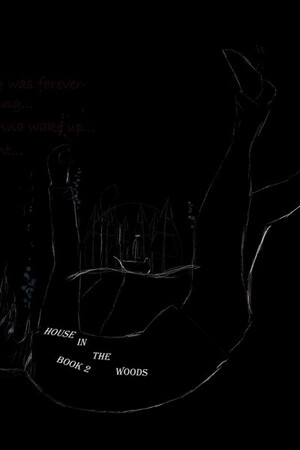
The House in the Woods. Book 2. Two sides of the Crown
He held the photo in his hands—warm, despite the bitter frost still clinging to his body. Its frame was simple, unassuming, but the image it contained was a truth too large for the cold to hold back.
The puzzle had become clear.
Move the photo,
Bring the light,
Angle the shards,
Piece by piece…
The instructions were almost rhythmic now—echoing in the piano notes, in the soft breath between thoughts. Yet the most important question remained: Where to move the photo?
Ahead, the third statue awaited him. He could already see it—his daughter, older than before. Not grown, not yet. But taller, hair longer, posture different. One hand pressed against the windowsill, her gaze not outwards, but back. Back toward someone behind her.
A quiet conversation… caught in time.
Her face was not serene like the others. It was cracked by sorrow, eyes wide as if she were pleading with someone unseen. There was heartbreak in the slope of her shoulders. He could almost hear her whispering—no, asking. Something important. Something final.
As he stepped forward, the photo’s aura pulsed.
A soft hum—the same tune. But now it sounded strained, tired.
The moment he let the edge of the photo's gray field touch the base of the statue, her voice burst through the air like ice under pressure.
A crystalline scream tore across the cabin.
It wasn’t just a cry. It was a memory, being torn in half.
She was screaming—his daughter—screaming at her mother. Begging. Desperate. Her words were lost to time, but the pain remained. And worse still, as the light kissed the frozen sculpture, the statue itself began to fracture. A splinter across her arm. A hairline crack in her cheek.
No.
Panic surged.
He yanked the photo back, clutching it against his chest. The aura receded like breath into lungs, but it was too late. The statue did not heal. Did not revert. Her silent scream was forever carved into the blue crystal.
He fell to his knees, cradling the photo like a wounded bird. Shame washed over him, thick and cold.
What had he almost done?
He had only wanted to see—only wanted to bring light. But that scream…
The weight settled on him hard.
What kind of monster would use this photo carelessly? As a tool. As a shortcut.
Not him.
Never him.
He had already left his sunrise once. He would not leave it shattered.
The panic in his chest stutters—then falters—then loosens its grip.
It does not leave.
It simply backs away, like an animal that has already wounded its prey and knows it has time.
He sets the photograph down with shaking hands, placing it far from the statues, far from the light, far from the fragile geometry of memory and consequence. It rests on a dresser at the edge of the room, its gray aura dimmed, contained—for now.
“I’m sorry,” he mumbles as he turns back.
“I’m sorry, I’m sorry, I’m sorry…”
Each word scrapes his throat raw.
He shambles back to the wounded statue—the third one.
His sunrise.
Cracked now. Scarred. Frozen mid‑plea.
He reaches out, careful, reverent, and places his frostbitten fingers against her cheek.
The memory comes at once.
But it is broken.
Sound collapses into television static, a harsh hiss threading through the air, rising and falling like waves hitting a shore that no longer exists. The image stutters. Tears in reality. The past is no longer whole.
Her voice cuts through in fragments—
coming and going, coming and going—
“Where… has father… gone?”
The words arrive thin, brittle, like they might snap if spoken too loudly.
His breath leaves him in a rush.
This was it.
This was that moment.
She is smaller here. Younger. Standing in the cabin that was once warm. Her hands clutching at her dress. Her voice shaking, not yet angry—just afraid.
“He’ll be late for the festival…” she says, desperately hopeful.
“He promised to take me.”
The static surges.
Behind her, a shape forms.
A woman.
Short. Still.
Her face is gone—erased by fog and noise—but he knows her posture. Knows the way her hands clutch at her chest, as if trying to hold her heart together.
His wife.
Her voice barely makes it through the interference.
“…I’m sorry…”
“…he’s not coming back.”
The words land like a hammer.
“No,” he sobs aloud. His knees give out.
“I’m here. I’m here now. Please—please look at me—”
The piano creeps back in, low and merciless, its notes threading through the cold like veins of ice.
Why should it matter, your dreams of a child?
Innocence is gone. Only fear to play with.
Faces are changing, but nothing is changing the pain.
Too late.
His daughter screams, her voice cracking through the cold like a blade.
She turns away from the misty silhouette of her mother, eyes wide with disbelief, fury, betrayal.
“No! You’re a liar!”
Her voice rises.
“He promised me! He doesn’t hate me!”
And in that moment—more than grief—he sees fear.
The fear of a child trying to hold together a world already crumbling. A desperate attempt to make sense of abandonment. To believe in something.
He cries out, aching, soul-torn, crawling toward them with open arms.
“No—no, please listen! We can still go, I can take you now—I’m here now! I didn’t mean to leave you! I didn’t—”
But the memory does not hear him.
The fog does not shift.
There are only cold statues.
And silence.
And pain already long lived.
He kneels between them—his wife a silhouette of sorrow, his daughter a crystal of fractured light—and reaches toward them both. His hands do not pass through, but they cannot touch. Not really.
He pleads through clenched teeth, shaking with the weight of it all.
“I had to go,” he whispers.
“There was a war. I had no choice… I had no choice…”
The silence that answers him is unbearable.
His daughter never turns around again.
The mist of his wife never moves.
They are ghosts made of glass, and he—
He is too late.
The sapphire dust settles like frost on forgotten floors.
The statue—his daughter—trembled before dissolving completely. She was never meant to move, never meant to interact.
And yet—
Her anger made it happen.
She pulled on the wooden board, disrupting the frozen window’s illusion. She moved the props. She screamed at the gods who had left her behind.
Her voice, cold and full of life, echoing off the walls:
“I did everything right! I was patient! I was kind! I waited!
Why does it still feel like I’m being punished!?”
And then—
She fell.
Her glass knees struck the wood. Her hands covered her face.
A child again, sobbing for her father, fetal and folded. Her back to the window.
“Please… Daddy… come back…”
But no arms reach her.
No warm coat. No boots by the door.
Just silence. And snow. And grief that freezes the bones.
She collapses into powder—
Sapphire dust swirling through the air like a funeral in reverse.
And then—
(♪ Over and over it calls to your soul
Say it isn't so. Emptiness surrounds you...
No one can help if the angels refuse to come near...
Who’s there? ♪)
That final line is whispered. Not sung.
The lights shift.
The wind, unnatural, begins to stir.
And behind him, at the far wall near the ancient, forgotten music box—
The fourth statue is already turning her head.
She is no child.
She is no wife.
She is someone else.
And she is watching him.
The final memory has begun.
It had already started before the others ended.
The fourth piece waits.
The mirror is nearly whole.




Please sign in to leave a comment.