Chapter 18:
Chapter 18: When the Music Froze
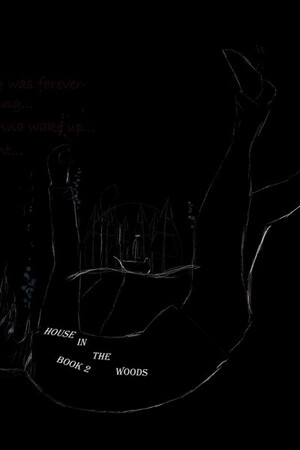
The House in the Woods. Book 2. Two sides of the Crown
There she sat.
The fourth and final statue, on her knees beside the small wooden music box.
She was older now. No longer the bright-eyed child from the first memory, nor the crying girl pressed against the window.
No—this one was glass. Clear, fragile, and beautiful in that haunting way only sorrow can polish a soul.
And she moved.
She turned her head toward him slowly, the glass of her neck flexing with impossible elegance.
Her hands, delicate and steady, reached for the brass key of the music box—turning it with gentle care.
The soft chime began to play, distorted just slightly… as if the box had been crying, too.
And she spoke.
Her voice was low, nearly monotone. Not from coldness—but from the weight of too many winters buried in her chest.
“This was her favorite tune.”
No blame. No question.
Just a soft statement, exhaled like breath into the fog.
She didn't rise.
She didn’t shout or weep.
She simply sat there, on her knees, like someone who had waited too long to stand ever again.
And the music played.
Broken. Familiar.
A lullaby for those left behind.
He stumbles back a step.
The floor beneath him groans—a long, aching sigh of wood long buried beneath snow and sorrow.
She had spoken. No, sung—and not like the frozen echoes before. Not like a memory cracked open.
This was different. Present. Real.
And it cuts him.
"Over and over it calls to your soul
Say it isn't so
Emptiness surrounds you"
That voice—her voice—was the one that had whispered through the walls, hummed through the pipes, and sang to him through the static of the television snow.
He had thought it a ghost. Thought it madness.
But it was her.
His daughter.
His child, long grown, preserved in pain and melody.
He never heard her like this. Never saw her as a woman. Never stayed long enough for her voice to change from laughter to requiem.
His hand trembles at his side. The other clutches at his chest, clawing at the shredded cloth there as if to reach for something underneath—something warm, something real.
But there’s only bone beneath his fingers.
And cold.
Always cold.
He gasps. His throat burns like fire in winter air.
He wants to speak. To say her name. To beg, to scream, to weep—
But all that comes out is a rasp. A failed sound.
She doesn’t even look at him.
Just keeps winding the music box with slow, deliberate turns.
And the snow begins to fall from the ceiling beams above, drifting softly, unnaturally.
Like it's snowing inside the heart.
Like hell, perhaps, is colder than he'd ever imagined
He falls to his knees.
The boards rattle. Dust leaps from the floor like frightened insects.
His hands clutch the edge of the rug like a dying man clutches soil—like it could somehow ground him in a world no longer his.
That taste, iron and copper, floods his mouth again—something implanted deep in his throat, coiled like wire, buried like guilt.
Every word he tries to say scrapes against it. It’s punishment, penance.
He should not be able to speak. He should not be able to say her name.
But her voice—
“No one can help if the angels refuse to come near
Who’s there?”
—it breaks something inside.
And through the agony, through the gag of thorns and glass, he croaks—
A sound so small it could barely be called language.
But it is her name.
“Flora... my sweet. Flower... I’m—here.”
And the musicbox slows.
Just slightly.
The key in her porcelain hand trembles.
Flora does not look up right away.
Her long, trailing hair pools around her like spilled moonlight—woven with glass-petaled flowers, hundreds of them, each blooming in frozen time.
Her arms remain wound tight to the music box, her spine curled in sadness, her knees tucked beneath her.
But her ears twitch.
Long and elegant, like his.
A small inheritance.
And then—her face.
Her pupils are gone, but the shape of emotion is there.
Her mouth softens. Her breath stutters. A shiver runs through the crystalline curve of her arms.
She does not say his name.
She says only—
“You... are late.”
And those words strike him harder than any blade ever could.
He falls forward, sobbing in silence, unable to answer.
Because yes.
He is.
So terribly late.
The room seems to bow inward as he stays on his knees, shoulders shaking, head lowered like a man praying to a god that has already answered no.
“It’s okay…” he whispers, forcing the words past the wire in his throat. Each syllable tears at him.
“I’m here now. We can still go to the party. We can still dress up. We can—”
His voice breaks.
“—still be a family.”
For the first time, she truly looks at him.
A single crystal tear forms beneath her eye and trails down her cheek, catching the cold light like a blade.
“No—” she breathes.
Her voice is thin, but it cuts deeper than any scream.
“…Mother is gone.”
The music box key stills beneath her fingers.
“She died waiting for you.”
Her words tremble, then harden.
“She begged me. Where is he… where is my love…”
Her jaw tightens.
“She wilted because her sunrise left her.”
She finally turns fully toward him now, venom rising where grief once sat.
“You,” she spits.
“You left us.”
The room vibrates as she sings again—not softly, not gently—but with spite sharpened by years of unspoken pain. The melody slices the air, aimed straight at his chest.
Deep in the night you think everything’s right
Tell it to yourself
Say it’s just a nightmare…
“I had to go to war!” he cries, voice small, useless, stripped of authority. “I didn’t have a choice—”
Something is telling you
Nothing can change where you are
Again…
“I didn’t want to leave you,” he sobs. “Or your mother. I swear—I—”
She sings again, but this time her voice falters mid‑phrase, as if the words have turned inward and struck something raw.
Why should it matter
Your dreams of a child
Innocence is gone
Only fear to play with—
She recoils slightly, hand tightening against the music box. Her shoulders curl inward. For just a heartbeat, she sounds small again. Afraid.
He sees it.
Her sorrow.
Her fear.
“I’m sorry,” he whispers. There is nothing else left in him.
She finishes the verse, quieter now, hollowed out, the words no longer a weapon—just a truth spoken too late.
Faces are changing
But nothing is changing the pain—
Too late.
The final words fall into the snow.
And the music keeps playing.
----
She keeps winding the key.
Slow.
Steady.
The motion is practiced—muscle memory carried across lifetimes.
The music never swells, never resolves. It simply endures.
“This is a ghost song, father,” she says at last.
Her voice is calm now. Flat. Exhausted.
“These aren’t your memories of me.”
He looks up, confusion dull and slow, like frost creeping across glass.
“These are mine,” she continues, matter‑of‑fact.
“Made after we passed out of your world.”
The words land with terrible clarity.
Even she waited.
Even she died.
“No…” he whispers. The sound barely survives his throat.
“Please.”
She does not raise her voice. She never does again.
“I had a child,” she says.
“She’s grown now.”
A pause. Not for effect—just breath.
“She never knew you. But she heard the sorrow in our voices.”
Her fingers slip once on the key, then find it again.
“I died giving birth to her,” Flora continues, eyes unfocused, fixed somewhere far behind the music.
“I gave her everything I had.”
A faint, almost-smile ghosts across her mouth.
“And she is blossoming in the wind.”
She finally looks at him again.
“She is not trapped,” she says quietly.
“Not in ice.”
The truth settles like ash.
It was his fault.
All of it.
Not by cruelty—by absence.
By choosing something else and never coming back in time.
He was supposed to be there.
For his wife.
For his daughter.
For the woman kneeling in front of him now, frozen in a song that would never end.
And now she is gone.
All of them are gone.
There is no performance left.
No hope dressed up as patience.
No pretending.
At last, he exhales.
A long, broken sigh.
The kind that carries surrender in it.
He does not argue.
He does not beg.
Silent tears trace pale paths down his frozen face, falling soundlessly into the snow.
He lets them fall.
She looks away from him, down at the music box, as if that small turning thing is the only anchor left to her existence.
He chokes on the memories—
on laughter, on dresses, on gardens, on promises spoken too easily.
These…
these are the last moments.
And he knows it.




Please sign in to leave a comment.