Chapter 12:
Chapter 12: Delegations
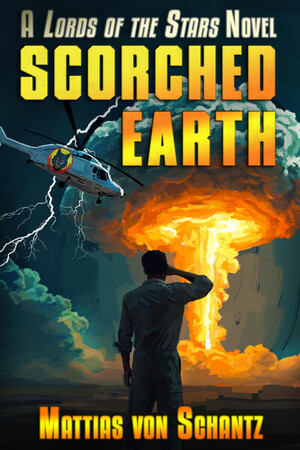
Scorched Earth
February 27, 2033 AD, Esrange Space Center, Kiruna, Sweden, Earth
“Thank you for coming, ladies and gentlemen.”
Dr. Angermeyer swept her gaze over the delegates filling the room, satisfied with the results of the previous year of negotiations.
“During the past months I have met with the representatives of the individual countries and subgroups that have expressed an interest in signing the Solar Charter. Many of you have already begun planning and constructing the infrastructure your individual blocs will need for the evacuation, but we have now reached the point where our efforts must be coordinated. Today, all of us are meeting for the first time in the same room. With me, I also have Dr. Yaryna Kravchenko, the Chief Designer for the European Union’s evacuation project, who will begin initial technical discussions with you once our formal negotiations are complete.
“Other than myself and the Chief Designer, representing the European Union, we are joined by Dr. Sokoro Mlima of the African Union, Mrs. Kahoru Yoshinaga, representing the East Asian Concord, Mrs. Sayali Bhandarkar of the Republic of India, Senhor Filipe Alves from the South American Evacuation Organization, and Mr. Gregory Radford, representing the United States of America. These six nations and subgroups have declared their interest in signing the Solar Charter and have submitted their draft twenty-year plans to the European Union’s Office of Evacuation. The preliminary finding of the Office of Evacuation is that these plans are realistic and compliant with the goals of the Charter. Also, in light of recent events, I must say that I especially appreciate Mr. Radford’s presence here today.”
“Excuse me for interrupting, ma’am,” Mrs. Bhandarkar said. “I do not know what the formal procedure for this meeting is, but I would like to ask a question, if I may?”
“Of course,” Dr. Angermeyer replied. “Neither Dr. Kravchenko nor I are politicians or diplomats. We’re scientists and engineers. I believe you will find the meetings of this group to be more blunt than you might be used to. Frankly, I don’t think we have time for niceties or formality. I want an open discussion, where everyone can speak their minds.”
“Thank you. Then I’d like to know why Russia isn’t represented here. I know for a fact that they, too, have submitted a twenty-year plan.”
Behind her, Dr. Angermeyer could feel Dr. Kravchenko stir, but the Ukrainian woman said nothing.
“There are multiple reasons for that, but the most important is that the Russian Federation does not fulfill the democracy and human rights requirements of Section 2 of the Solar Charter. Frankly, I find it embarrassing that they even attempted to apply. Just because they still hold elections there doesn’t mean they’re a democracy, Mrs. Bhandarkar. Somehow, Mr. Putin has been ruling Russia, one way or another, for thirty-three years now. Meanwhile, all his opponents have either ended up in work camps in Siberia or—by pure chance, of course—been involved in fatal accidents.
“On a related topic, I want to extend my thanks to the delegates from the African Union and the East Asian Concord for your sincere efforts to include the democratization processes needed for some of your member countries in your twenty-year plans. We understand this will not happen overnight, and we will assist you in any way we can. Let me assure you that we are not actively looking for reasons to expel you, as long as you sincerely work toward democratization.
“But on the topic of Russia, the second reason they’re not with us here today is, to put it bluntly, that they don’t have the trust of the European Union. The number of times they’ve invaded or threatened to invade European countries is staggering, and history has proven time and time again that treaties with Russia aren’t worth the paper they’re written on. Just to give you a few examples, I’ll note the Budapest Memorandum of 1994 and the Russian-Ukrainian Friendship Treaty of 1997, both of which Mr. Putin blatantly violated with his illegal and unprovoked invasions of Ukraine in 2014 and 2022. And as a consequence of the sanctions imposed on Russia after those wars, their economy is now severely strained and their space program is in shambles. Even if we had allowed them to sign the Solar Charter, they would have had nothing to contribute with.”
“I find that stance somewhat hypocritical,” the SAEO representative chimed in. “The Russian Federation is hardly the only country to back out of international treaties. I’ll remind you that the United States left the Paris Accords not just once, but twice, and yet they are allowed to sign the Solar Charter. Let’s be clear on this, Dr. Angermeyer. They’re the single most important reason why we’re in this situation in the first place.”
Dr. Angermeyer sighed as she leaned forward. Chances were that in the coming years she’d have to play the role of peacekeeper more than that of scientist or administrator, or the project would collapse before it even got off the ground. Still, if that was what it would take to save the human race, then so be it.
“If you lived next door to Russia, Senhor Alves, I strongly doubt you’d be that blasé about Russian treaty violations. And as for the United States, while the European Union deeply regrets their decisions regarding the Paris Accords, we also note that they followed established procedure when they withdrew from them. Furthermore, unlike Russia, the United States is a democracy—”
“Barely,” the Brazilian interrupted.
Dr. Angermeyer glared at the South American representative, but said nothing. She understood what he meant, though she disapproved of his attempt to sow discord. After a moment’s pause, she continued. “For now, let’s stipulate that the United States of America does comply with the minimum requirement in Section 2 of the Solar Charter that signatories must be democracies that respect human rights and the rule of law.”
Senhor Alves’ distaste for the United States should come as no surprise, she thought. Up until a few years ago, his country had been a member of the Yucatán Interest Organization, before breaking away to form the South American Evacuation Organization together with Peru, Chile, Argentina, Paraguay, and Uruguay. His animosity toward their former adversary was understandable, though not conducive to the success of the project.
She turned toward the American representative.
“That brings me to a question of my own, Mr. Radford. Why are you here? Please don’t misunderstand me. I’m very grateful for your presence, and I believe the United States can bring a great deal of its unique resources and competence to the evacuation effort. We need all hands on deck now. But your President has made it abundantly clear that he doesn’t believe in the greenhouse effect, which makes me wonder why he’s declared his intention to sign the Solar Charter?”
“Thank you for allowing me the opportunity to explain our position, Dr. Angermeyer,” the diplomat replied, as he adjusted his glasses. “I fully understand why there might be some confusion about our intentions. To put it simply, the United States of America is here to ensure that the first man to set foot on Mars is an American.”
For a moment, Dr. Angermeyer considered addressing the implied sexism of that statement, but eventually she decided to let it go. The truth was, she didn’t care if the Americans saw this as yet another attempt to make their country great again. After working at it for more than fifteen years, they apparently still felt they hadn’t succeeded yet. If granting them the boon of being first to Mars was what it would take to gain their support for the evacuation effort, she’d give them that. It was, after all, irrelevant.
But before she could move on to more important matters, the SAEO representative almost managed to derail the discussion.
“You’re sure you’re not just hedging your bets?” Senhor Alves asked the American representative. “You’re going to restructure your entire society just to get a footprint into the history books? I don’t believe that.”
The American diplomat looked at his Brazilian colleague with professional detachment.
“The esteemed representative of the South American Evacuation Organization is, of course, correct in his assessment that there is more at stake here than just solidifying the achievements of the greatest nation on Earth. While we don’t acknowledge that the so-called greenhouse effect is real, we do concede that we are currently seeing weather patterns that threaten American farmers and livelihoods. As Senhor Alves so succinctly put it, yes, for that reason, we do want to hedge our bets.”
“So it’s all about saving face, then?” the Brazilian asked, his outburst now filled with measured vitriol. “So you can tell the clowns who voted you into office that you’re doing this for some great destiny, while you still reap the benefits of the evacuation without having to admit to your culpability?”
Dr. Angermeyer began to feel that things were starting to get out of hand. Of course she was fully aware that people all over the world still told Trump jokes, a full four years after the man had left the White House, but clowns could be scary indeed—especially clowns with nukes. It was time to rein in the discussion.
“Thank you, Senhor Alves,” she said. “I think we’ll simply have to learn to work together, despite our differences. The cost of failing to cooperate is simply too high.”
She paused for a moment to signal that this part of the discussion was now at an end.
“There is one thing about the twenty-year plans I want to bring up before we proceed to the signing of the Charter. I’ve already discussed this with the individual signatories, but as it affects us all, I want to address it in this group as well, especially in light of the recent crisis in the Americas.
“The purpose of the twenty-year plans is to ensure relative stability within the nations of the Solar Charter. We may be lucky and find that it’s our most optimistic models that turn out to align best with reality, and if that’s the case, we’ll of course continue the evacuation beyond the plans. But even so, I don’t think we’ll gain more than a few years. After that, we must expect our societies on Earth to collapse completely, no matter what we do.
“Thus, the purpose of the plans is to structure the liquidation of all our resources. Everything we have saved for the future, all our natural resources, all our investments, will vanish the day we lose Earth. That means if we don’t use them now, during the coming twenty years, we’ll never get to spend them at all. To quote a famous author, if someone needs a hundred tons of gold for the project, that’s now a matter of logistics, not one of budgeting. You’ve all supplied plans for how to do this.
“But beyond how we spend our resources, there is one other crucial factor that will determine the stability of the Charter nations in the coming years: how we handle the refugee crisis we all know is coming. The European Union and the African Union have entered into a refugee-sharing agreement, under which South Africa will receive refugees from the southern part of the continent, while the European Union—including Canada—will receive those coming from the central and northern parts.
“We’re aware that in the long term, this influx of refugees will completely overwhelm our nations, leading to their collapse. We’re also aware that it doesn’t matter. In the long term, everything will collapse anyway, so it’s better to share the burden in a structured way now and buy ourselves a little stability during the coming decades. Essentially, we’re akin to a terminally ill patient borrowing money, knowing she can spend it without ever having to pay it back. If there’s one silver lining to this cataclysm, it’s that. Let’s make the best of it.
“The states of the East Asian Concord have come to a similar agreement among themselves, in which their northern members, like Japan and South Korea, will receive refugees from southern countries like Thailand, the Philippines, and Indonesia. Likewise, Brazil will send refugees to the southern partners of the SAEO.
“That leaves India as our largest concern. Mrs. Bhandarkar, what is your plan to handle this?”
The Indian woman fidgeted slightly before replying. “Truth be told, Dr. Angermeyer, that is our biggest worry as well. Unlike Europe and Africa, we don’t have a neighboring signatory that can help us, and unlike the EAC, we don’t have any areas outside the equatorial zone to which our population can escape. When the time comes, our plan is to negotiate access to Central Asia with countries like Afghanistan and Uzbekistan, but that means migrating through Pakistan. It’s not going to be easy. I don’t know if it’s even going to be possible.”
“Understood. We’ll do what we can to help, of course.”
Dr. Angermeyer turned to look at the American representative. She had a feeling this part of the conversation was not going to be easy.
“As for the United States, you are currently embroiled in a war with the Yucatán Alliance. At the time you submitted your application to sign the Solar Charter, you were still at peace. We need to talk about how the current situation affects your participation in the Charter.”
“Of course, ma’am,” Mr. Radford replied as he smoothed his black tie. “We expect hostilities to end very soon. The President has asked the North Atlantic Council to convene on the matter of invoking Article 5 of the North Atlantic Treaty. Once we have the support of the NAC, the war will essentially be over. The Yucatán Alliance will be no more.”
“I’m afraid I was unclear, Mr. Radford. My apologies. The situation I referred to was the refugee crisis, not the actual hostilities. The European Union does recognize that you have, under international law, the right to defend the sovereignty of your territory. Beyond that, the war itself is a matter for NATO, not for the Solar Charter.
“However, your response to the refugee situation, which is intrinsically linked to the war, has a direct bearing on your ability to follow through on your twenty-year plan. We have some concerns in that regard, and if possible we would prefer that you sit down and negotiate with the Yucatán Alliance instead of retaliating.”
“The United States of America always seeks peace first, ma’am.”
“I’m glad to hear that. Since your conflict is with a non-Charter bloc, it doesn’t fall under the purview of the Solar Charter. Thus, we can’t force you into negotiations, even though we firmly believe that would be in the best interest of the project. An amicable agreement with the Yucatán Alliance to accept refugees in a controlled fashion would buy you stability. Please convey to your President the European Union’s strong desire to see such an outcome.”
“Of course, Dr. Angermeyer. I guarantee this is a time for peace on the American continent.”
Author's Note
The story you're reading is one of many set in the Lords of the Stars universe I've been creating over the past 30 years, where familiar characters and places reappear, and new favorites await discovery. Check out my profile to explore more stories from this universe.
While Scorched Earth is entirely standalone and can be read without any prior knowledge, I think you'll also enjoy Wonders From Beyond the Sky, Time for Memories and Choices of Steel, all of which are standalone sequels to this story.
Visit the official Lords of the Stars blog for more information about this hard sci-fi universe: https://lordsofthestars.wordpress.com
If you enjoyed this chapter, please consider giving it a like.





Please sign in to leave a comment.