Chapter 3:
Chapter Three - The First Cut
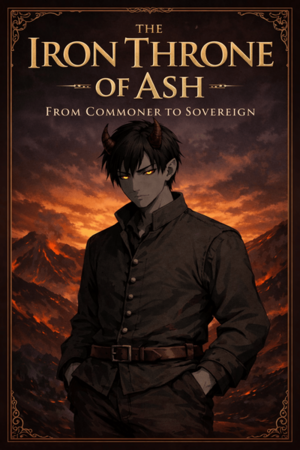
The Iron Throne of Ash - From Commoner to Sovereign
CHAPTER THREE
─────────────────────────
The First Cut
Three days.
That was how long he ran the observation cycles — three full days of watching the supply train move its route through the valley, logging the timing down to the individual minute, mapping the escort pattern through its variations, noting the one consistent anomaly that made the whole operation viable: the third day always ran light. Two wagons instead of four, four escorts instead of six, and a pace that was faster than the heavy-load days because lighter wagons on the same terrain meant the horses were not working at their limit.
He did not know why the third day ran light. He had three theories — rotating wagon maintenance, a secondary supply depot receiving deliveries on an alternating schedule, or simple logistical habit that had calcified into routine over weeks of the same operation. It did not matter which. What mattered was that it was consistent. Three cycles, same pattern, same timing, same reduced escort on the same day. Consistency was the thing that made a system predictable, and predictability was the thing that made a system pressable.
The group had grown in the three days. Not dramatically — this was not the kind of story where an army materialised from the landscape because a single person decided to be compelling. But Gorrath had gone north twice, following the trails that scattered survivors used when they were trying to reach the staging area the Dominion maintained two ridges back from the border, and he had come back with people each time. Seven the first trip. Four the second. Three of the new arrivals were in condition to do anything useful immediately. The rest needed a day to eat, sleep, and process the fact that they were being asked to think before they fought, which for some of them was a genuinely new experience.
Twenty-two, in total, by the morning of the fourth day. Caedron had spent the three observation days doing two things simultaneously: watching the supply train, and watching his group.
He did not announce that he was watching them. He did not need to. What he was looking for did not reveal itself under scrutiny — it revealed itself in the unguarded moments. Who ate last voluntarily. Who checked on Desh without being asked. Who listened when someone else was speaking rather than waiting for their turn to speak. Who, when he outlined a plan, asked questions about the plan rather than about their own role within it. The last category was the smallest and the most important, and it currently contained Gorrath, Vreth, and a newly arrived demon named Casrek — compact, quiet, with the particular quality of stillness that suggested someone who had learned to exist without taking up space, which in demon culture was either a survival adaptation or a profound personal discipline. Caedron had not yet determined which.
On the morning of the fourth day, with the group assembled in the northern depression that had become their informal base, he spread a map on the volcanic rock.
It was not a particularly good map. He had drawn it himself, from memory and observation, on the inside of a piece of leather that Vreth had produced from somewhere without explanation. The proportions were approximate. The scale was inconsistent. But it showed the valley floor, the supply route, the positions of the Valdenmoor camp, the terrain features he had catalogued, and three marked positions along the route's western approach that were relevant to what he was about to propose.
"The third day runs light," he said, without preamble. "Today is the third day. This is what we are going to do."
✦ ✦ ✦
He did not present it as a plan. He presented it as a logic.
This was a distinction that mattered. A plan told people what to do and asked them to trust the teller. A logic told people how to think and asked them to reach the same conclusion. The second approach was slower in the initial telling and considerably faster in the execution, because people who understood why they were doing something did not freeze when the something changed partway through.
"The supply route has three sections," he said, pointing to the map. "The northern section, from the camp to the first waypoint — open ground, full visibility, maximum escort response time if contact is made. The middle section, through the secondary channel between these two ridges — partial cover, reduced visibility, escort response time approximately doubled because the file has to extend to navigate the channel width. The southern section, the approach to the depot — open again, but the escorts are already thinking about the destination rather than the route."
He let them look at the map. Vreth was already tracking ahead of his explanation — he could see it in the way her eyes moved, not following his pointer but moving independently, working the problem. Gorrath was processing linearly, which was fine; linear processing was reliable. Brath was looking at the middle section with the focused attention of someone who had done enough fighting to immediately understand why a narrow channel was a different kind of terrain than open ground.
"We hit the middle section," Brath said. Not a question.
"We do not hit anything," Caedron said. Brath looked at him. "We create a situation in the middle section that the escort has to respond to. The response is the operation, not the engagement."
He explained it in full. The middle section of the supply route passed between two ridges close enough that the escort file would have to extend — riders would be forced into single file rather than the paired flanking formation they maintained on open ground. Single file meant each rider's observation angle was reduced to a forward arc. It also meant that a signal from the rear of the file took longer to reach the front, and a signal from the front took longer to reach the rear. Communication lag, in a situation that required fast communication, was the variable he intended to exploit.
"Group one," he said. "Seven people. Gorrath leads. You move south along the western ridge and come down to the road approximately three hundred meters ahead of the middle section's southern exit. You do not engage. You make noise. Enough noise to sound like more than seven people — spread out, hit rock, move in a pattern that suggests a force preparing an ambush position at the southern exit."
"We're the bait," Gorrath said.
"You're the attention. The escort front will see or hear you and stop. They will signal the rear. The rear will stop. The file will compress into the channel while the escort leader decides whether to push through or hold. During that decision window — which will be between thirty and sixty seconds based on what I have observed of their patrol leader's decision-making speed — " He moved his finger to the marked position on the map's middle section. "Group two removes the rear wagon."
"Removes," Vreth said. "Not destroys."
"Removes. We need what is in it more than we need to deny it to them. Powder and shot, most likely. Possibly food. Either is useful. The wagon itself is not the point — if we can move it, we move it. If we cannot, we take what can be carried and we go."
"And if the escort pushes through instead of holding?" Casrek asked. It was the first time he had spoken in a group setting. His voice was even, unhurried. He had asked the right question — not the most obvious one, but the one that targeted the plan's primary vulnerability.
Caedron looked at him with the specific quality of attention he gave to people who asked the right question. "Then group one withdraws north along the western ridge, which is terrain the escort's horses cannot follow at speed, and group two breaks contact south through the secondary channel exit. The escort cannot pursue both directions simultaneously with four riders. They will choose the larger apparent threat, which is group one, because group one is in the open and group two's position will not be confirmed until the escort reaches the end of the channel."
Casrek absorbed this. "You've already planned for the plan failing."
"I plan for the plan failing before I finish planning the plan," Caedron said. "The contingency is not secondary. It is part of the structure."
He looked around the group. Twenty-two faces, in varying states of comprehension and readiness. He did not ask if there were questions. He waited. Questions that came unprompted were real questions. Questions solicited by asking for them were often performances.
After a moment, Desh — arm re-wrapped, color somewhat better, three days of rest having done more for him than Caedron had honestly expected — raised his hand partway and then seemed to think better of the gesture and lowered it. Then raised it again.
"What do we do with what we take?" Desh asked. "The powder. The shot. We don't have weapons that use them."
"Not yet," Caedron said. "But I know where to get them."
He did not elaborate on this. It was a thread that would need pulling later, and pulling it now would introduce a complexity that this briefing did not need. One operation at a time. One proof at a time.
✦ ✦ ✦
They moved into position two hours before the supply train's expected arrival, because two hours was the margin between being prepared and being rushed, and being rushed was how you made the kind of mistake that negated preparation.
Gorrath took his seven south along the western ridge — Vreth among them, which Caedron had assigned deliberately. Vreth's instinct for reading developing situations was better than most of the group's, and if the operation went sideways in the southern position, he needed someone there who would make the right call without waiting for instructions that could not reach her in time.
Caedron led group two himself. Seven people, including Brath, Casrek, and four of the newer arrivals who had demonstrated, across three days of observation duty, that they could hold still and hold quiet for extended periods without their nerves converting to action. This was a rarer quality than it had any right to be, and he had sorted for it deliberately.
They came down off the western ridge through a narrow cleft in the volcanic rock that put them on the channel floor, in the shadow of the eastern ridge wall, where the light fell at an angle that created deep shadow along the base of the rock for most of the morning. He positioned the group in that shadow, staggered their spacing so that no two people were within arm's reach of each other — because clustered people moved together when they startled, and moving together in this channel at the wrong moment would put them in the escort's sightline simultaneously.
Then he waited.
The waiting was, in his experience, the part that destroyed the most operations that should have worked. Not the enemy. Not bad terrain or bad weather or bad luck. The waiting. The human — demon — incapacity to remain still and quiet and ready for longer than approximately twenty minutes before the body began generating noise and the mind began generating doubt. He had watched it happen in every campaign he had ever run on a screen, the slow degradation of a well-positioned unit as the time ticked past and nothing happened and someone shifted their weight or cleared their throat or muttered something to the person next to them, and suddenly the position that had been invisible was visible, and the opportunity that had been available was gone.
He told his group this before they descended into the channel. Not the game reference — he was careful, always, about the game references, filing them away and translating them before they reached his mouth. But the substance of it. That the waiting was the operation. That if they could hold the waiting, the rest was mechanics.
Brath, to his left, was motionless. He had been motionless for thirty-seven minutes by Caedron's count, which suggested a discipline that the large demon had been hiding behind the aggressive surface he presented to most situations. Casrek, two meters further along the shadow, looked as though he had been part of the rock face since the lava cooled. The four newer arrivals were holding, with varying degrees of visible effort, in the controlled stillness he had asked of them.
The supply train arrived eight minutes ahead of schedule.
He noticed this — noted it, filed it, added it to his model of the supply operation's timing variance — without letting it change anything about his position or his breathing. Eight minutes early was within the margin he had built. He had positioned the group early enough that early arrival was accounted for. But it meant the escort was moving faster than the average pace he had observed, which meant either they were behind schedule from the day's start and compensating, or the route had been cleared faster than usual, or the escort leader was pushing pace for a reason Caedron did not have information on.
He watched the front of the train enter the channel's northern mouth.
Two wagons. Four escorts — two front, two rear, the light configuration he had predicted. The front pair moved into the channel first, their horses picking their way carefully on the uneven channel floor. The wagons followed. The rear pair entered last.
The file extended as the channel narrowed, exactly as he had calculated. The front escorts were forty meters ahead of the rear pair within ninety seconds of entering the channel. Communication lag: real and growing.
He waited for Gorrath's signal.
✦ ✦ ✦
The signal came from the south — not the noise he had specified, but something louder than he had intended. He registered this in the first half-second and ran the implications: louder meant more visible, which meant faster escort response, which meant his window was shorter than thirty seconds. Probably twenty. Maybe less.
He did not waste any of it.
"Move," he said, and was already moving himself.
Group two came out of the shadow at the eastern wall and closed on the rear wagon in the particular way he had drilled into them across two days of dry runs in the northern depression: not running, because running created sound and visible panic, but moving fast with the compressed, deliberate pace of people who knew exactly where they were going and had committed to getting there. Brath reached the rear wagon first — his size and his stride covering the distance faster than anyone else — and immediately took the rear axle the way Caedron had shown him, lifting rather than pushing, which distributed the wagon's weight across the frame rather than concentrating it at a single stress point.
The rear escorts heard them. Of course they did — two people at a wagon you are supposed to be protecting, appearing from a shadow you did not know contained anyone. The first escort wheeled his horse, hand going to his carbine. The second followed, the animals' hooves scraping on the channel stone.
Caedron had positioned himself between the group and the escorts before either rider had completed their turn.
He did not attack them. He stood in the channel with his hands visible at his sides and looked at the two escorts with the specific kind of calm that communicated, to anyone experienced enough to read it, that the person displaying it had already calculated the situation and was not alarmed by what they had calculated. It was not a bluff. He was not alarmed. He had accounted for this moment.
The first escort leveled his carbine.
"Don't," Caedron said, in Valdenmoor common, which came to him from whatever linguistic gift this world had provided along with the body. "Your front riders are occupied. Your formation is extended and your rear is compromised. You can fire that and kill one of us and then you will spend the next forty seconds reloading while the rest of us finish what we are doing. Or you can hold, and we will be gone in thirty, and you will have lost a wagon but kept your life."
The escort stared at him. His carbine did not waver. But he did not fire.
In Caedron's peripheral vision, behind him, Brath and Casrek and the four others were working. He could hear it — the controlled sounds of people moving a wagon off the track, not with speed but with the economy of motion he had insisted on, the sounds of cargo being transferred to carrying positions.
"You're a demon," the escort said. He said it the way someone states a thing they know but cannot fully reconcile with what they are currently observing.
"Yes," Caedron said.
"Demons don't — " The escort stopped. Restarted. "You speak common."
"Among other things."
From the south end of the channel, the noise had changed — Gorrath's group withdrawing north along the western ridge, which meant the front escorts were dealing with a disappearing contact rather than a fixed position. They would return to the channel. He had sixty seconds, possibly fewer.
"Twenty seconds," he said, to the escort. "That's how long you have to decide whether this is worth dying over."
The escort's partner had his carbine up as well now. Two weapons, both trained on him. He ran the numbers with the same cold clarity he had applied to every problem since waking on this ridge four days ago. Two carbines. One firing would give him a wound if the shot was accurate and a graze if it was not, because the escort was on a nervous horse on uneven ground and accurate shooting from a nervous horse on uneven ground was a degraded capability even for trained cavalry. The second shot would follow in approximately fifteen seconds — reload time for a cavalry carbine under stress, longer than the drill manual claimed because the drill manual was written for the parade ground. In fifteen seconds, his group would be done.
He was gambling with his own life. He was aware of this. He was aware of it the way he was aware of all the relevant variables in any operation — clearly, without flinching from the number, because flinching from numbers was how you made plans based on what you wished were true rather than what was.
"Twelve seconds," he said.
The first escort lowered his carbine two inches. Not a surrender — a hesitation. A man running his own numbers and arriving at the same conclusion from the opposite direction.
Behind Caedron, Brath said: "Done."
He stepped back. Smoothly, without turning his back on the escorts until he had enough lateral distance that turning would not present a clean shot. Old habit, from a thousand retreats conducted on a screen. It applied here as well as it had applied there.
"Ride north," he said to the escorts. "Tell your commander a demon unit hit your rear in the channel. Tell him they were organized. Tell him it was planned." He held the first escort's eyes for a moment. "Make sure he understands that last part."
He turned and walked south through the channel.
Behind him, after a silence of perhaps five seconds, he heard the sound of hooves moving north at a controlled pace. Not fleeing. Moving. There was a difference, and the escort knew it, and the fact that he had chosen the controlled pace over the flight said something about the quality of the soldiers Valdenmoor was putting on this route. He filed it. Good soldiers who lost a wagon under organized pressure were a different kind of problem than rattled conscripts who fled.
He kept walking.
✦ ✦ ✦
The mistake became apparent forty minutes later, when they had made the western ridge and were moving north through the broken terrain with the recovered cargo distributed across the group.
Casrek came up beside him. "We have a problem."
"Tell me."
"The powder we took. It's not black powder."
Caedron stopped walking. Turned to look at the cargo they had taken — three heavy crates and two lighter ones, distributed across the group by weight rather than by what they contained, because speed of loading had not allowed for a full inventory. He looked at the nearest crate. It was the right size, the right weight — slightly lighter than he would have expected for powder in that volume, which he had attributed to variance in packing density.
"What is it?" he asked.
"I don't know," Casrek said. "But I've moved powder before. This isn't it. Wrong smell. Wrong weight distribution inside the crate when you tilt it. And these — " He indicated the lighter crates. "These are the shot. I recognise those. But the heavy crates aren't powder. They're something else."
He took the nearest heavy crate from the demon carrying it — the demon gave it up without complaint, visibly relieved — and tilted it. Casrek was right. The weight moved wrong. Powder shifted in a crate like sand. This shifted like objects. Solid objects, packed in something soft.
He set the crate down, opened the lid with the blade Brath offered him, and looked inside.
Documents.
Specifically: folded papers, sealed with wax in several places, packed in wool batting to prevent moisture damage. The kind of packing you used for things that needed to arrive intact. The seals were Valdenmoor administrative — not military insignia, but the secondary mark of the regimental supply corps. Logistics paperwork. Requisition orders, possibly. Route schedules. Inventory records.
He stood very still for a moment.
Then he picked up the topmost document, broke the seal carefully, and unfolded it.
It was a supply schedule. Detailed, precise, covering the next thirty days of resupply movements to all three forward positions in this district — quantities, dates, routes, the positions of secondary depots. The kind of document that existed to ensure the left hand knew what the right hand was doing, and that was therefore carried on the same wagons as the supplies themselves because the supply corps had not yet developed the doctrine that separated administrative documents from their physical referents.
He read it twice. Then he folded it, put it back in the crate, and closed the lid.
"We took the wrong thing," Brath said. He had been watching. His tone was flat — not accusatory, but the flatness of someone waiting to see how a leader handled being wrong.
"We took a different thing than we intended," Caedron said. "Whether it's the wrong thing depends on what we do with it."
He looked at the crate. Then at the supply schedule he had just read. Then at the terrain around them — the broken volcanic field, the western ridge, the distance to the northern staging area where the main Dominion forces were presumably reassembling after last week's disaster.
"What is the thing we actually need most right now?" he said. Not to the group. To himself, working the problem aloud the way he had learned to do when the most important variable in a situation had changed. "Not powder. Powder is a tactic. What is the strategy?"
Nobody answered, because the question was not for them. But Vreth, who had come up from the south with Gorrath's group and was listening, said quietly: "You want to know where they're going. Not what they're carrying."
"I want to know their schedule," he said. "Their routes, their quantities, their timing, for the next thirty days. And I have it." He put his hand on the lid of the crate. "We did not fail to take powder. We took something that we did not know we needed and that they did not know they were giving us. The question is whether we are positioned to use it."
"Are we?" Gorrath asked.
He thought about the supply schedule. The secondary depot locations. The route variations across the next four weeks. The specific dates when the northern route ran without cavalry escort because the terrain assessment had concluded it was low-risk.
The specific dates when three full supply wagons moved through a northern pass that connected to the Dominion's staging area, two ridges back, on a route that would take an escort two hours to reinforce if contact was made.
"Yes," he said. "But not today. We need a day to read these fully and a day to plan. Then we go back, and this time we take the powder."
✦ ✦ ✦
The northern route ran on the fourteenth day from the operation, according to the schedule.
Caedron hit it on the twelfth.
Not because he had misread the schedule — he had read it three times and had Casrek read it independently and compared their interpretations, which matched. He hit it on the twelfth because a commander who read a schedule and was hit on the scheduled date was a commander who started wondering whether their schedule had been compromised, and a commander who was hit two days early was a commander who had no useful framework for the timing and would default to random variation as the explanation, which was a far less alarming conclusion than the correct one.
Misdirection did not require deception. It only required that the truth looked, from the outside, like something less threatening than it was.
The group had grown again. Two more observation cycles, two more trips north by Gorrath, two more returns with survivors who had heard — from other survivors, in the particular way that information moves through people who are trying to survive the same situation — that there was a demon in the southern highlands who did not charge, did not shout, and kept his people alive. Thirty-one total, by the morning of the operation. Not an army. But enough.
He assigned positions four hours before the window.
This time there were four groups, not two. Group one — Gorrath, ten people — took the northern blocking position, which served the same diversion function as before but with genuine mass behind it. Not a feint, this time, but a real position capable of holding for three minutes against a cavalry response. Group two — Vreth, six people — took the southern blocking position, the mirror function. Group three — Brath, eight people — was the primary extraction force, positioned at the target point with the specific task of moving cargo fast and clean. And group four — Caedron, Casrek, four others — held the center, between the target point and the route's eastern approach, where any cavalry reinforcement from the valley would have to pass.
He had not told the group that group four's function was to slow a cavalry response if it came. He had told them they were the reserve, which was true. He had not volunteered the part where being the reserve in this instance meant putting themselves between a reinforcing cavalry element and the operation until extraction was complete.
Casrek had figured it out. He had said nothing. Caedron had appreciated this.
The supply train arrived on time, from the north, moving with the lighter escort the schedule had specified — four riders, three wagons, a pace that was slightly more relaxed than the southern route because the northern route had not yet had an incident.
It had one now.
Gorrath's group made contact at the northern blocking position first — not with weapons but with presence, stepping into the route's sightline at two hundred meters and holding. The escort front stopped. Standard response. Signal to the rear. The rear stopped. The train compressed.
In the compression window, Brath's group moved on the wagons.
The difference from the channel operation was immediately apparent. Three days of planning, full group briefing, specific role assignments, and two dry runs in the northern depression had produced something that did not look like a group of demons improvising. It looked — and he watched it from his center position with the particular satisfaction of seeing a plan execute the way a plan should execute — like a unit doing a practiced task. Brath's people hit all three wagons simultaneously. The crates they needed were tagged from the schedule — powder was heavy, moved wrong, marked with the supply corps stamp on the upper left corner. They took three crates from the first wagon, two from the second, and from the third, which carried food, they took enough to matter without taking enough to leave the escort with a grievance that would motivate pursuit beyond normal doctrine.
The escort leader was good. Caedron had already assessed this — the same officer who had run the southern route, reassigned north after the channel incident, which meant Valdenmoor had concluded their best escort leader should be on what the schedule analysis had identified as the higher-value route. Correct conclusion. And it meant this escort leader, unlike the southern pair, was not going to hold his ground and negotiate.
He signaled his riders, split two north toward Gorrath's position and two east toward the ridge trail that connected back to the valley camp, and rode east himself.
The two riders going east were going for reinforcement. The two going north were going to push Gorrath's group off the blocking position.
Caedron stepped out of the center position and into the eastern trail.
What followed was not a fight in any meaningful sense. It was a delay. He and Casrek and the four others held the eastern trail with the particular combination of terrain exploitation and unpredictability that had, across two weeks, become the signature of how his group operated — not by blocking the trail with bodies, which cavalry could ride through, but by using the trail's edges, its narrows, its switchbacks, to ensure that a mounted force moving at speed could not move at speed, and that every time the escort leader looked for the clear path forward, there was something in it that required a decision rather than an assumption.
Four minutes. That was all they needed. Four minutes for Brath to finish extraction, signal completion, and get the cargo moving north. Four minutes for Gorrath to disengage the northern pair and withdraw. Four minutes for Vreth to close the southern position and move.
He gave them five, because five was the margin, and then he pulled group four north after the rest.
The escort leader reached the target site two minutes after they cleared it. Caedron knew this because he was watching from the western ridge — not from safety, but from a position that kept the trail in view long enough to confirm the timeline.
Three wagons, partially emptied. No casualties on either side. A Valdenmoor escort leader standing in the middle of a northern highland route, looking at the evidence of an operation that had hit his schedule, known his load, and been gone before reinforcement was possible.
He watched the escort leader for a moment. The officer was not panicking. He was looking at the tire tracks, the boot marks, the pattern of crates taken and crates left. He was reading the scene the way a professional read a scene. Caedron could see the moment the officer's assessment shifted — the slight change in posture that meant the initial explanation had been revised and the new explanation was more alarming than the first.
He turned away from the ridge and walked north.
✦ ✦ ✦
They made the staging area by nightfall.
Not the Dominion's staging area — he had not gone there, and would not go there yet, because the Dominion's staging area meant the Dominion's command structure, and the command structure meant Warlord Drexath's officers, and Warlord Drexath's officers were not yet a resource. They were a constraint. He would deal with that constraint when he was ready to, and he was not yet ready.
Instead they made the secondary camp he had established four days earlier — a position in a deep volcanic fold two ridges north of the border, with water from a thermal seep that ran cold enough to drink, enough cover to conceal thirty-one demons from aerial observation, and enough exit routes that a single blocking force could not seal all of them simultaneously.
The cargo was laid out. He let everyone see it. This was deliberate — he could have had Brath and Casrek manage the inventory privately and reported the results to the group, which would have been more efficient. But efficiency was not the point of this particular moment. The point was that thirty-one people who had operated on faith for two weeks needed to see what the faith had produced.
Three crates of black powder, correctly identified this time. Two crates of shot. Enough to supply a small unit's skirmishing operations for three weeks, possibly four if consumption was managed. Not a decisive quantity. Not the kind of supply that changed the balance of a war. But real, and present, and in their hands rather than moving toward the Valdenmoor camp.
And the documents. He had given those to Casrek to manage — inventory, translation where needed, cross-referencing with the first set they had taken. The picture that was emerging was detailed and specific, and he would work through its implications over the next several days, extracting from it everything that was useful and discarding what was not.
Brath sat down across from him when the cargo inventory was complete. He sat with the deliberate weight of a man who had been carrying something heavier than the crates and was putting it down.
"You knew about the schedule," Brath said. "Before we hit the channel. You knew there was something more valuable on that wagon than powder."
"No," Caedron said. "I knew there might be. I planned for powder and accepted the variance."
"And when the variance turned out to be better than the plan?"
"You adjust." He looked at Brath steadily. "The operation that doesn't go according to plan is the standard operation. The plan is not the goal — the plan is the starting point for the adjustment that gets you to the goal."
Brath was quiet for a long time. Around them, the camp had settled into the particular low-energy state of people who were tired in a satisfying way rather than a desperate one — the sounds of people eating, of Desh's laugh from somewhere in the back of the fold, of Vreth explaining something to two of the newer arrivals with the focused patience of someone who had recently had things explained to her and understood the value of it.
"They're going to send someone better," Brath said finally. "After tonight. The escort leader. He read the scene. He's going to tell his commander that this wasn't a raid. It was planned. They're going to take this seriously."
"Yes," Caedron said.
"You wanted that."
"I wanted them to understand that the situation has changed. A commander who understands that the situation has changed adjusts their doctrine. Adjusted doctrine is visible. Visible adjustments tell me how they think, what they prioritize, where they will put additional resources and where they will pull them from." He paused. "I cannot plan the next operation until I know how they respond to this one."
Brath absorbed this. Then, with the weight of a decision made and committed to: "What do you need from me?"
It was the right question. The question of someone who had moved past the assessment phase entirely. Caedron looked at him — at the scarred, heavy face, the cracked horn, the fighting record that most of the Dominion knew, the authority that came with it — and gave him the answer he had been building toward for four days without saying it directly.
"I need you to be the face of this," he said. "When we go north. When we start talking to the command structure and the other warlord districts. They will not follow someone they cannot read, and they cannot read me yet. They can read you. You are recognizable to them in a way I am not."
"You want me to front for you."
"I want you to lead the parts of this that require someone they already respect. The rest — the planning, the doctrine, the decisions about what comes next — that remains between us."
A long pause. Then Brath said: "You know what you're asking is going to get complicated."
"Everything worth doing gets complicated," Caedron said. "That is not a reason to not do it."
Brath almost smiled. It was not a complete smile — more the structural suggestion of one, the way a building has a shape before it has walls. But it was there.
"Fine," he said. "What's next?"
✦ ✦ ✦
The Valdenmoor commander received the escort leader's report at the third hour after sunset.
Commander Aldric Brennan was not a man who allowed reports to wait. He read it standing, in the lamplight of his command tent, while the escort leader — a capable officer named Halvern, one of his better ones — stood at attention and waited with the particular stillness of someone who had already run the situation through his own assessment and was waiting to see whether the commander's assessment matched.
It did.
"Organized," Brennan said. He was not reading the report anymore. He was thinking past it. "You said organized."
"Yes, sir. Four groups, coordinated timing, specific cargo selected. They knew the load. They knew the schedule." Halvern paused. "They took the documents from the first incident, sir. The supply corps papers. I think they read the schedule."
Brennan put the report down on the table. He looked at it for a moment. Then he looked at the campaign map behind it — the valley, the ridge lines, the supply routes marked in careful ink, the positions of his three forward elements arranged in the containment pattern that had been working, more or less without incident, for two years.
"Pull the northern route," he said. "Until we've revised the schedule and changed the depot positions. And I want a courier to Carenthal tonight."
Halvern straightened fractionally. "What message, sir?"
"Tell them the southern campaign situation has changed." Brennan turned back to the map. "Tell them I need them to understand it may have changed permanently. And I want to know — " He stopped. Restarted. "Find out everything you can about that demon. The one in the channel. The one who talked."
"Talked, sir?"
"Spoke common. Negotiated." The word came out with a quality that was not quite contempt and not quite respect and lived in the uncomfortable space between them. "Demons don't negotiate. They charge. Find out what that is and where it came from."
Halvern left. Brennan stood at his map for a long time, running the same calculation that he had been running since the channel incident, arriving at the same conclusion that he could not quite accept because accepting it required revising an assumption that three decades of southern campaign experience had made feel like a law.
The demons were not doing what demons did.
Someone down there was thinking. And thinking, in Brennan's experience, was considerably more dangerous than charging.
He did not sleep well that night.
✦ ✦ ✦
Two ridges east of Brennan's camp, in a position on the volcanic ridge that gave her a clear sightline to the command tent's lamp without being visible from it, Seraphine Valemora closed her journal.
She had been watching the camp for two days. She had seen Halvern's return. She had seen, from the silhouette through the canvas and the quality of movement that distinguished a thinking man from a reacting one, that Brennan's response to the report had been deliberate rather than automatic. He was not sending an immediate punitive force. He was reassessing.
Good. A reassessing commander was a predictable commander. Predictable commanders made changes that could be anticipated. Anticipated changes could be used.
She had been writing in the journal for four days — longer entries now, much longer than the single line she had committed to the night of the first observation. The commoner on the ridge had a name now: she had gotten it from a logistics demon at the staging area who had heard it from another survivor who had been in the first ravine. Caedron. No family designation. No unit assignment. No rank.
Nothing.
Everything she had observed in two weeks of watching suggested a mind that operated on a different set of assumptions than anything she had encountered in the Dominion's military structure. Not better training — there was no training that produced this, because the Dominion did not have the institutions that produced trained officers. Something else. Something prior to training. An orientation, a way of looking at problems that started from a different place than everyone around him started from.
She thought about the patrol diversion. The channel negotiation. The schedule exploitation. The two-day advance on the planned date. Each of these individually could be attributed to native intelligence and good instinct. Together they formed a pattern that required a framework she did not have a name for yet but recognised in the way you recognised a language you had not spoken but had heard enough to know was not random noise.
She opened the journal again. Turned to the first entry.
Unidentified commoner. Non-standard tactical approach. Watch.
She crossed out the word unidentified.
Below the original entry, in her precise, unhurried hand, she wrote:
He is building something. I do not yet know what. I intend to find out before anyone else does.
She closed the journal. Put it inside her coat, against the left side, close to the center of gravity where it would not shift when she moved.
She had decisions to make. Her father expected reports, and her father's reports went to the Council, and the Council's responses tended to be ponderous and late and calibrated for situations as they had existed three months ago rather than as they existed now. She could send the report. She could delay the report. She could send a different report — one that was accurate in its details and incomplete in its implications, buying time for her own assessment to develop before the Council's response compressed her options.
She was her father's daughter in many ways. In one way above all others: she understood that the most valuable moment in any developing situation was the moment before everyone else understood what was developing. After that moment, the situation belonged to the first person who had understood it. Before that moment, it belonged to whoever was paying attention.
She had been paying attention.
She rose from her position on the ridge, settled her coat, and turned north toward the direction she had last seen Caedron's group moving.
It was time to stop watching from a distance.





Please sign in to leave a comment.