Chapter 1:
She hates war
The Saga Of OCTAVIA BRESSHEART - Vol 1
She hates war.
She has been numbed by it, because war is the total destruction of body and mind, and yet, without it, anxiety assails her.
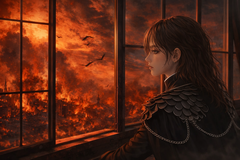
Now she stands still in the middle of a field, eyes closed, face turned toward the sun blazing in a sky so cruelly blue it makes her nauseous. For the first five seconds, savouring the light on her skin is a subtle, almost intimate pleasure; then something is missing, a void that creeps in where the roar once lived.
The quiet of the countryside – the birdsong, the rustle of wind through the leaves – composes a symphony that relaxes her for the first three seconds, until the silence grows too thick, too much like an echo-less tomb. The air is so pure, so sweet it doesn’t scratch her throat, and the first breath is delicious; but immediately afterwards she misses her throat scraped raw by gunpowder dust, misses the fumes of exploding earth, the acrid taste of steel and sweat.
She even misses the pain.
The sun is still there, motionless, indifferent. War is out there, beyond the horizon. Other generals are moving troops, other strategists are signing orders, and she is here, idle, while time flows and someone, somewhere, exhales their last breath. Anxiety clamps her chest like a vice – not because she loves war (that would be an obscene paradox) – but because standing by, helpless, while war rages on means being unable to save anyone. It means letting soldiers die for mistakes that only she could prevent. It means abandoning civilians among the rubble, knowing that if she were in their place, she would have already found a way out.
Not fighting terrifies her more than the enemy does. She doesn’t trust the other generals; they can’t see the whole chessboard, they sacrifice lives lightly, unaware of the weight of each single loss. Only she can end the war, and as long as she stays here, in the sun, in this peace that feels like a grave, every passing second is a second of blood she has failed to stop.
Then she clenches her fists.
A child’s voice tears her from herself, as clear and commanding as only children can be: “Hey, hurry up, the ceremony is about to start.”
Octavia opens her eyes, her face still tilted toward the sky, and slowly lowers her gaze until it meets the small intruder. He stands there, a few steps away, with a flower in his buttonhole and polished shoes – probably one of the wedding pages. For an instant they stare at each other. Then the child’s innocent eyes go wide, he backs away as if he’s seen a ghost, and runs off without looking back, his light footsteps sinking into the grass in a disorderly flight.
Octavia remains still. Is this the effect she has on children? Her gaze must be truly horrible, so chilling that it frightens even those who have not yet learned to know fear.
And yet, paradoxically, she hates those children. She hates them with a dull, secret rage, because they can afford the luxury of living in the countryside, of playing in the fields, of attending weddings without ever having to think about fighting. They don’t know what it means to hold a rifle, nor what it means to lose a comrade under enemy fire.
That luxury is granted to them only because of her. She is the one who keeps rubble and death away from the populated centres, away from the privileged rich who have never seen a corpse except on the evening news.
She, who has become the necessary monster, the scarecrow that protects the grain while everyone sleeps.
Perhaps she too, when she was little, was frightened by a general. Perhaps she too found herself in the same situation as that child: eyes wide, heart in her throat, legs running away uncontrollably.
Yet that is precisely why she must do it too. She must protect those people from the enemy, even if those people fear her. Even if children run from her as if from a shadow.
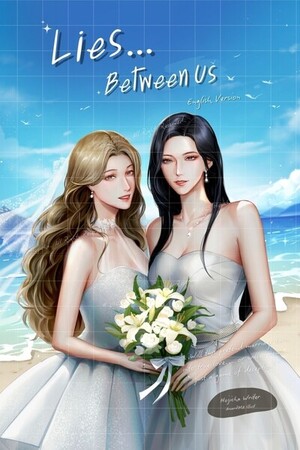
But a wedding awaits her. Her younger sister has decided to celebrate love while the war continues. Octavia will have to enter that hall, smile, shake hands, play the civilian, while inside her the battlefield calls without ceasing.






Please sign in to leave a comment.