Chapter 8:
Chapter 8: Awakening
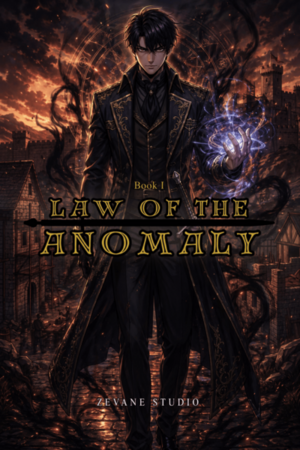
Law Of The Anomaly
This Is Not a Dream
He woke in a weak body… but his mind was untouched.
The room was already full when Adrian opened his eyes again.
He had not slept deeply. The darkness after the coughing fit had been less rest than collapse, a forced surrender imposed by a body too damaged to remain conscious under strain. When awareness returned, it returned whole. There was no drifting ascent, no blurred interval where identity needed to be gathered from fragments. His mind arrived at once—ordered, lucid, continuous. The body beneath it did not.
Pain stood waiting.
Not the sharp, clean pain of injury, not the focused signal of a wound localized enough to be treated as an isolated problem. This was diffuse, structural, spread through the ribs, throat, lungs, joints, and the thin architecture of a frame that seemed offended by the simple fact of continued existence. Even lying still demanded adjustment. Breathing required intention. Each inhale entered a chest that accepted air reluctantly and returned discomfort in exact proportion.
He remained motionless for several seconds and let the variables present themselves.
The mattress beneath him was firmer than the private medical bed in the last world, but better than the floor where he had woken the first time. The sheets had been changed. Someone had washed the dried blood from his skin and hair. The air carried the scent of boiled herbs, wax, linen, wood smoke, and a faint trace of medicinal bitterness clinging to the room itself. Daylight, softened through heavy curtains, spread in pale bands across the carved canopy overhead.
More important than all of that was the pressure of observation.
He turned his head only slightly and found them there.
Lady Elise sat closest, in the chair dragged all the way to the bedside, one hand resting on the blanket near his wrist as if she had not trusted herself to let go even after exhaustion had forced her to doze in pieces through the night. Her hair had been redone hastily, not elegantly. Concern had hollowed her eyes but not weakened their focus. She was watching him with such disciplined attention that he understood at once she had been counting the rhythm of his breath even when he pretended sleep.
At the far side of the bed stood Baron Alistair Valenhart, broad-shouldered and silent, one hand against the carved post as though the act of standing still required something solid beneath it. His face had the closed, iron restraint of a man who had already imagined loss and decided, by force of will alone, that it would not happen under his roof if decision could alter flesh.
Marian stood near the window, too still for a girl her age unless worry had frozen movement into obedience. A book rested closed against her chest, forgotten there. Isaac hovered at the doorway where he had likely been told to remain out of the way and had obeyed only in the technical sense. His expression was open in the way young anger and fear often were—jaw tight, eyes restless, hands clenched because strength meant nothing in a room like this. Garret stood a respectful distance back with the grave composure of a man who had served enough years to know how to make himself unobtrusive without ever ceasing to be useful. Maria lingered beside him, her face pale with the residue of the night before.
And near the foot of the bed, Dr. Veylan held one wrist between careful fingers, measuring pulse with a concentration that bordered on disbelief.
The physician noticed Adrian’s eyes fully open and straightened at once. “Good,” he said, the word carrying more relief than his profession usually allowed. “Do not move.”
Adrian did not intend to. He shifted his awareness inward before he risked any outward response. The mind remained clean. The crossing had not damaged the memory. Earth was still intact within him—cities, systems, markets, wars, names, mechanisms, a lifetime of completed control ending at a threshold no science had opened for him. What existed around that intact mind was the complication.
Lucien Adrian Valenhart.
The name had structure now, though not yet total clarity. The fragments from the night before had not settled into a coherent life. Faces existed. Tones of voice existed. The shape of guilt existed. The knowledge of slow poisoning existed. The final decision existed. But the memories did not yet sit in sequence. They remained as broken panes of colored glass dropped into the same basin of water—close, visible, but shifting out of clean reach whenever he tried to grasp them as chronology.
That would matter later.
For now, reality required testing.
He looked first at Elise’s hand on the blanket. Warm. Slight pressure. No vanishing at the edge of observation. He watched the curtains breathe once in the draft from beneath the window and noted the delay between movement and shadow along the floorboards. Consistent. He listened to the physician’s breathing, to Isaac adjusting his weight near the door, to the faint hiss of the fire, to distant boots somewhere in the manor corridor. Layered. External. Independent of his attention. Not a dream. Not delirium constructed from isolated internal inputs. The conclusion had already been reached the night before; he simply confirmed it again because repetition under controlled observation narrowed error.
This world existed.
This body existed.
The body was weak. The world was real. His mind remained his own.
That was enough.
“You’re hearing me, yes?” Veylan asked.
Adrian shifted his eyes toward him.
The movement alone was enough of an answer.
“Good,” the physician said. “Try not to speak yet. Your throat is damaged, your chest is inflamed, and you lost more blood than I would have liked.”
Maria made a small sound at that, as though hearing the fact again offended her more than the panic had.
Elise’s hand tightened fractionally on the blanket. “Can he swallow?”
“With care. Broth later. Water first.” Veylan leaned closer, studying Adrian with the unnerving fascination of a healer confronted by a body behaving more stubbornly than its condition justified. “Do you know who I am?”
Adrian let one breath pass before answering. The voice, when he attempted it, was little more than scraped air.
“The doctor.”
Veylan’s brows lifted slightly. “Good. And do you know where you are?”
The answer came more slowly, not because he lacked it, but because speaking with too much precision too soon would reveal the wrong kind of strangeness. “Home.”
Elise closed her eyes for one brief second as though the word itself had steadied something inside her.
“Yes,” she said softly. “You’re home.”
Adrian heard the emotion in the sentence and recognized it by type long before he understood what to do with it. Concern. Relief. Exhaustion. Devotion. Love. All of it directed toward the bed with an intensity that, in his first life, would have been strategically useful and personally inconvenient. Here, it was neither. Here, it arrived without a bargain attached.
That made it unfamiliar in a different way.
The physician continued. “What’s the last thing you remember?”
At that, the room changed.
Not visibly, not dramatically, but enough. Elise’s fingers stilled. Alistair’s shoulders hardened. Marian held the book tighter. Isaac went completely motionless. Everyone in the room already feared the answer.
Adrian considered his own, and then—because caution mattered more than clean performance—he let the truth he could use sit closest to the surface.
“The window,” he said.
The effort dragged pain through his ribs, but he finished the thought. “Then… not clearly.”
Veylan exchanged a glance with Elise. “Not clearly how?”
There were several answers available. The most accurate one would be useless. The most useful one would also be true, though not in the way any of them would understand.
“Broken,” Adrian murmured. “Some things are there. Not in order.”
Marian inhaled sharply, then tried to hide it.
Elise leaned forward. “Do you remember me?”
He looked at her.
Yes, and no. He knew her face from fragments. He knew the shape of her care from residue left in Lucien’s dying logic. He knew, more immediately, that she had slept in this chair rather than risk distance. He knew her hand had remained near him even in unconsciousness. He knew she loved the boy whose body he now occupied in a way so unconditional it had helped drive that boy toward death because he could not bear its cost.
He had no practiced response to that.
“You’re… Mother,” he said at last.
The word came out rougher than he intended. Elise pressed her lips together and nodded as if a stronger movement might break something fragile in the room.
“And me?” Isaac said at once from the doorway before anyone could stop him.
“Isaac,” Adrian answered.
Relief flared so openly across the younger boy’s face that it made Adrian look away for a second. It felt indecent to watch affection so unguarded when he had no corresponding habit ready for it.
Marian stepped closer, the book now forgotten entirely at her side. “What about me?”
He turned toward her. Another familiar face. Another unfamiliar feeling. Her eyes were bright with intelligence and strain, and beneath both was a warmth he could detect even before memory arranged her properly.
“Marian.”
She nodded too quickly, almost angry at herself for being close to tears. “Good.”
Veylan remained unconvinced. “And your full name?”
Adrian looked at him.
That question was more dangerous than the physician knew.
Lucien Adrian Valenhart.
He understood the structure at once. Lucien belonged to the old owner of the body. Adrian belonged to him—and, inconveniently, to the body as well, buried as a second name. The overlap was almost elegant. He did not like elegance when coincidence produced it.
The doctor waited.
Adrian answered carefully. “Adrian… Valenhart.”
Silence.
Not long. But long enough.
Elise’s eyes changed first. Not with fear, but confusion. Marian frowned. Isaac looked from one adult to another as though trying to understand what was wrong with a correct answer spoken incompletely. Alistair’s face gave nothing away, which meant he had noticed everything. Garret, standing back, remained motionless enough that Adrian knew the butler had noticed it too.
Veylan said gently, “Lucien Adrian Valenhart.”
Adrian let the correction remain in the air and did not immediately adopt it.
“That name feels distant,” he said, choosing each word because the body did not allow waste. “Adrian doesn’t.”
It was the wrong answer for comfort and the right one for plausibility. Head trauma, poison stress, fever, memory fracture—such things produced stranger outcomes than preference for a second name. Still, the room did not fully relax.
Elise touched the blanket again near his hand. “If Adrian is easier right now,” she said softly, as though she were already protecting him from embarrassment before it had a chance to form, “then Adrian is fine.”
That was the second time in as many minutes that she had accepted a destabilizing statement not by challenging it, but by easing the world around it.
He did not know what to do with that either.
Veylan cleared his throat. “Names can be clarified later. What matters is coherence.” He studied Adrian closely. “Do you remember what happened to you?”
The answer rose from last night’s fragments before Lucien’s broken life could complicate it.
Poison. Overdose. Suicide. Prior poisoning over the years. Family ignorance. Household strain.
He did not speak any of that.
“No,” Adrian said. “Only that my chest… hurt. Then nothing stayed clear.”
“That may be for the best,” Elise murmured before she could stop herself.
Alistair’s gaze shifted to her, then back to Adrian. “The details can wait.”
No one in the room contradicted him.
That alone confirmed what Adrian had suspected from the first moment of waking. Whatever they knew, they had not yet spoken it cleanly even among themselves. They feared poison, perhaps. Suspected it. Felt its outline. But suspicion without proof made noble families cautious, especially declining ones with stronger enemies nearby. He understood the logic. He had once built nations out of weaker calculations than that.
The body interrupted analysis with a sudden tremor low in the lungs.
Adrian closed his mouth at once and focused on breathing through it rather than against it. Slow intake. Measured release. The room tightened around the effort. Maria took one step forward before Garret’s hand, not touching, merely placed in her path, stopped her. Veylan waited, counting the rhythm by eye. Elise did not move at all.
When the tremor passed without becoming a cough, Veylan said, “Enough questions.”
He poured water into a small cup and looked to Elise, who slid one arm carefully behind Adrian’s shoulders. The movement brought him half upright against pillows and triggered immediate pain down both sides of his ribs. He suppressed the reaction, but not completely. Elise felt it anyway.
“Sorry,” she whispered.
The apology startled him more than the pain.
He drank because the body required it. The water was lukewarm, faintly mineral, and better than the taste left in his throat. He swallowed once, then again, and each swallow reminded him how close the poison had come to finishing what Lucien began.
When the cup was taken away, fatigue struck in a wave broad enough to be almost mathematical. Every exchange, every measured answer, every small bodily correction cost more here than it should. The mind could adapt. The flesh had limits and insisted on them.
Veylan replaced the cup and stepped back. “He needs quiet. Short exchanges only. No agitation. No forcing memory. If another cough brings fresh blood, send for me at once.”
“You’re not leaving the manor,” Alistair said.
It was not a request.
Veylan inclined his head. “I had not intended to.”
Isaac shifted at the door. “Can I—”
“No,” Maria and Elise said at the same time.
The younger boy subsided, wounded by the refusal and trying not to show it.
Adrian watched the interaction and catalogued it automatically. The family functioned in overlapping lines of care rather than authority alone. Elise softened. Alistair contained. Marian hovered with silent intelligence. Isaac surged and had to be checked. The servants were not distant hands; they were integrated into the emotional life of the house deeply enough that alarm crossed titles without hesitation. In his previous life, such a structure would have been inefficient by certain strategic standards. Here, lying in a body that had almost died because it could not bear the cost of being loved, he recognized a different truth.
This arrangement was weak in some ways. It was also strong in ways his first world had rarely allowed.
He did not yet know whether that would become useful or dangerous.
Veylan gave final instructions to Maria in a low voice and left with Garret to review medicine outside. Isaac was pushed another two steps into the corridor by Maria’s stare alone. Alistair remained where he was. Marian did not retreat all the way to the window this time. Elise stayed seated by the bed.
Quiet returned, but not privacy.
Adrian turned his attention back inward and began testing reality with the method that had governed every impossible situation he had ever survived.
First: sensation.
He shifted awareness down his left arm without moving it. Response existed, but sluggishly. Muscle weakness was real, not transient. Coordination was impaired by systemic depletion rather than isolated injury. The body had lived with poison long enough that fragility had become design, not a temporary condition.
Second: memory coherence.
Earth remained continuous. The crossing remained continuous. Lucien’s life did not. It existed as unstable clusters—faces, rooms, pain, voices, guilt, the southern wind, a cup at a noble gathering, the smell of lamp oil, Marian saying something kind enough to wound, Isaac’s anger, Elise’s hands, Alistair’s silence, the notion that remaining alive was equivalent to taking. No sequence yet. No full narrative. Only enough to orient behavior.
Third: physics.
Light obeyed consistently. Sound came from beyond his sight in accurate proportion to distance. Pressure, temperature, gravity, and shadow all held. The room was real. The world around it had not behaved like a dream or a hallucination once since the crossing. The impossible event was not the existence of this place, but his arrival in it. Once the arrival was accepted, the rest became data.
Fourth: external human variables.
This family cared for him. Not for advantage. Not for performance. The care was worn, strained, and sometimes poorly hidden, but it remained sincere. He recognized the signs easily enough. What he could not yet do was answer sincerity with anything natural.
He had been shaped for strategy, negotiation, leverage, and command. Not this.
Elise must have mistaken the length of his silence for distress, because she spoke first.
“If the room feels too crowded, I can send them out.”
Adrian looked at her.
She meant it.
No offended pride. No maternal guilt framed as sacrifice. Only a genuine offer to reduce pressure because she believed pressure might harm him. The old him would have accepted or refused based on utility. The present difficulty was that the utility no longer exhausted the calculation. Sending them out would create quiet. Keeping them here would preserve information. Neither category accounted for the subtle strangeness in his chest when he saw Marian watching from the side with open worry, or Isaac pretending he was not terrified.
It was not affection. Not yet. But it was not indifference either.
“They can stay,” Adrian said.
Elise’s expression shifted with almost imperceptible relief. “All right.”
Marian stepped closer still. “You really don’t remember clearly?”
He turned toward her. This question mattered, though perhaps not in the way she meant it to.
“Some things are there,” he said. “Faces. Places. Not enough order.”
“That can happen after fever,” Veylan had said from the doorway just before leaving, perhaps overhearing enough to want the family anchored to a medical explanation. “It may settle.”
Adrian did not know whether it would settle. He suspected it would do something worse and more useful.
Marian studied him carefully, and for one uncomfortable second, he felt as though she might see too much. Then her face softened instead. “If it doesn’t come back quickly,” she said, “I can help. Only if you want.”
Again, that same quality. No demand. No insistence that memory return to spare them all awkwardness. Only offer.
He had once managed presidents more easily than this girl’s gentle restraint.
“I may ask later,” he said.
“That’s enough.”
Isaac finally failed to remain silent. “You scared everyone.”
The bluntness of it would have drawn a reprimand in other noble houses. Here, it only made Elise close her eyes briefly, and Alistair glance once toward the doorway without speaking.
Adrian met the younger boy’s stare. “I noticed.”
“That’s not funny.”
“It wasn’t meant to be.”
Isaac frowned. “You sound strange.”
That one almost earned him a sharper response from the adults, but Adrian answered before they could intervene.
“I probably am.”
Isaac blinked, apparently disarmed by the absence of denial.
The silence after that was less strained.
Alistair finally moved from the bedpost to the chair nearer the fireplace, though he did not sit immediately. “The doctor says you need rest,” he said. His voice was low, steady, used to command but careful not to let that command become pressure. “No one here will force memory. No one will question you beyond what’s necessary. You recover first.”
Recover first.
The phrase contained an assumption. That recovery was possible. That time would be spent toward restoration rather than mourning. That the heir still had a future inside this house. Adrian heard all of it.
“Understood,” he said.
Alistair studied him with the same unreadable intensity Adrian had first seen the previous day, through blood loss and shock. Fathers in his old world had been categorized—absent, useful, weak, ambitious, sentimental, disposable, occasionally respectable. He had never had one worth naming personally. Standing here was a man whose entire body seemed organized around the act of holding the family line upright against the possibility of fracture. Not because politics demanded it, though politics certainly did. Because love and duty, in this house, had apparently become the same language.
That language was new enough to feel almost hostile in its gentleness.
It left him without prepared responses.
Maria returned with fresh clothes and adjusted the lamp, though the light was already sufficient. She did not fuss blindly. Every movement had a purpose. She set the basin, checked the folded linens, corrected the angle of the curtain to spare Adrian the sharper line of direct morning brightness, and only then allowed herself to look properly at his face.
“My young lord,” she said, voice softening despite her effort, “you’ll tell us if you feel another cough building, yes?”
He did not correct the title. “Yes.”
“Good.”
She hesitated, then added, “And if speaking hurts, you don’t have to do it just because someone worries.”
That earned the faintest exhale from Marian that might have been a stifled laugh if fear had not been too near the surface. Even Isaac almost smiled.
Adrian watched the exchange and again felt that same unfamiliar pressure behind the stern logic of his thoughts. Not an obligation. Not a strategy. Something closer to being placed somewhere before he had chosen whether to stand there.
He let it exist without naming it.
The hours that followed were quiet in the outward sense and crowded in the inward one.
Veylan returned twice. The second time, he asked Adrian to follow a moving finger with his eyes, identify pain levels, and test hand strength against his own grip. Adrian complied because refusal gained nothing. The results did not please the physician. No immediate crisis. No real stability either. The poison still lived in the blood and tissues. The long-term damage remained obvious. Weakness defined the body more thoroughly than any ordinary patient of noble birth and age should have tolerated.
At one point, Veylan said, mostly to Alistair, “He survived the night beyond what I would call reasonable.”
Adrian almost answered that reason had always been too small a category for thresholds, but decided the remark would help no one.
By late afternoon, the room thinned. Garret and Maria rotated in and out. Veylan finally allowed broth. Isaac was dragged away to eat and to train because, as Elise put it, “hovering is not medicine.” He objected and obeyed. Marian remained the longest after Elise, sitting near the window with her book open at last, though she turned almost no pages. Alistair left only when estate matters forced him to.
During one such quieter interval, while the fire shifted low and the room carried only the faint scratch of Marian’s page turning, Adrian asked the question that mattered most immediately.
“What day is it?”
Marian looked up. “Third day after council.”
He held that. Enough to build a near-term frame. Enough to know the world had continued around his collapse for longer than he would have preferred. Enough to understand that every missing day widened the gap between ignorance and danger where poisoners liked to move unseen.
“Why?” Marian asked.
“Anchoring.”
She tilted her head. “That sounds like you.”
He looked at her. “Does it?”
“Yes.” Then, after a pause, softer: “Even if the rest feels strange.”
That, more than anything else anyone had said, told him what they were seeing.
Not just memory loss. Difference.
He had been aware of it, of course. The change in speech. The economy of his answers. The absence of Lucien’s habitual softness in certain moments. The fact that when Elise looked afraid, he analyzed first and felt second, if at all. But hearing Marian say it plainly confirmed the risk.
“I remember enough to know I’m not answering the way you expect,” Adrian said.
Marian’s fingers tightened slightly on the book. “Yes.”
“Does it trouble you?”
She thought before answering. Good. That meant she was honest enough to be useful later.
“It frightens me a little,” she said at last. “Not because I think you’re dangerous. Because it feels like you’re very far away while still looking at me.”
The sentence struck with unnerving precision.
He had no practiced defense against being perceived that accurately by someone who was not trying to exploit the perception.
“I’m here,” he said.
It was an inadequate answer. It was also the only true one available.
Marian watched him another moment, then nodded as if choosing not to force the matter into simpler shapes. “Then stay.”
That, too, he did not know how to answer.
By the time evening lowered across the manor, Adrian had reached the only conclusion the day allowed.
He was not dreaming. He was not mad. He had not become a lesser version of himself through death and crossing. His mind remained intact, disciplined, and fully his own. The body was broken but salvageable. The family around it was real, loving, and unfamiliar in exactly the way a man raised without such things would find destabilizing. Lucien Adrian Valenhart’s memories remained incomplete, but enough existed to confirm guilt, poisoning, and the barony’s structural decline. More would come later. Perhaps all of it. For now, the facts already sufficed.
Night approached. The fire was rebuilt. Elise returned with the look of someone who had forced herself to step away only long enough to satisfy others. Alistair came in behind her, carrying estate fatigue like armor. Isaac hovered again at the threshold. Marian reoccupied her chair near the window. Maria adjusted the blankets. Garret took the final lamp on the side table and lowered the flame just enough to soften the room.
They were all there.
Not because politics required performance.
Because they wanted him to remain alive.
He lay against the pillows and let his eyes move from face to face—mother, father, sister, brother, servants who had long ago become more than servants to this house. Familiar features. Unfamiliar feeling. He still did not know what to do with the care arranged around him, only that he no longer felt any immediate desire to reject it. That alone marked how different this world already was from the one he had left behind.
When Elise leaned down to smooth the hair back from his forehead, Adrian did not pull away.
When Marian asked whether the light should be dimmed further, he answered with a slight shake of the head rather than words because the room had finally grown gentle enough to make speech feel unnecessary.
When Isaac muttered, almost to himself, “He really is strange,” no one corrected him because the truth of it had become too obvious to challenge.
And when Alistair said, from beside the fire, “Rest. Tomorrow is soon enough for questions,” Adrian accepted the instruction not because he obeyed easily, but because in this body, tonight, the instruction aligned with reason.
He closed his eyes.
The manor sounds settled around him—distant steps, murmured voices beyond the hall, the shift of wood in old walls, the restrained life of a family refusing to leave his orbit.
One last thought formed with the same clean efficiency that had governed every impossible transition he had survived.
So… this is my second world.






Please sign in to leave a comment.