Chapter 9:
Chapter 9: Memory of the Fragile
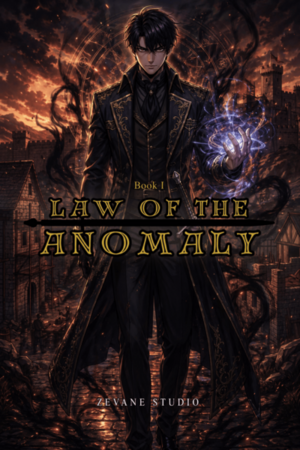
Law Of The Anomaly
A Life He Did Not Live
Memories flood in—not his, yet now his.
The first wave came after sunset.
Until then, the day had held together by discipline alone. Adrian had spent it inside the limits of the broken body, accepting broth, answering only what was necessary, letting the family’s careful presence gather and recede around the bed in measured turns. Elise remained nearest for most of the afternoon. Marian came with books and did not press for conversation when silence was easier. Isaac hovered until forced away, returned, then hovered again with the useless sincerity of younger brothers who could not understand why standing guard helped nothing and still refused to stop. Alistair moved in and out of the chamber with the heavy restraint of a man dividing himself between estate obligations and the bed where his heir still lay, too pale. Maria managed linens, medicines, light, and warmth with the sharp authority of someone who considered panic an indulgence beneath household standards. Garret controlled the door, the servants, the physician’s schedule, and the flow of quiet itself.
Through it all, Adrian had watched.
He watched the rhythm of care. He watched who looked at him first and who looked away first. He watched who spoke in soft reassurance and who disguised fear as practicality. He watched the room the way he had once watched cabinets, war rooms, and board floors—mapping incentives, dependencies, and structure. The difference was that this room was not organized around profit, power, or fear of consequence. It was organized around affection so habitual it had become architecture.
That fact remained more difficult than pain.
By evening, the household quieted again. The manor settled into its nighttime order—distant steps across old corridors, muted voices below, the soft preparation of trays, the hush of doors closing against wind. Veylan had come and gone once more. Maria had insisted on another cup of diluted restorative broth and watched until Adrian finished enough of it to satisfy her. Elise had finally agreed to change her dress and rest for an hour only after Garret promised to send for her at once if even his breathing changed. Marian sat by the window with her book open, but turned only a page every ten minutes. Isaac had been dragged away to training, supper, and then bed in sequence by three different adults and had submitted to none of them gracefully. Alistair remained absent longer than the others, likely in the study with ledgers, reports, and a territory that demanded endurance without offering relief.
Adrian lay still beneath the canopy, eyes half-lidded, breathing within the body’s limits and waiting for the pain behind his ribs to settle into something background enough for thought.
It did not settle.
It opened.
Not in the chest. In the skull.
A hot, violent pressure struck behind his eyes and spread backward through his temples like a blade being driven inward by degrees. He did not move at first. Movement would have been an ordinary response, and this was not ordinary pain. This had shape. Density. It came not from the poisoned body alone, but from somewhere beneath the body’s surface—something long submerged suddenly forcing its way upward.
His fingers tightened once against the blanket.
Marian looked up immediately. “Adrian?”
He heard the name. He could not answer.
The second wave hit before the first fully formed. Light fractured. The lines of the room doubled and blurred. The canopy above dissolved into white, then gold, then a courtyard filled with spring sun and stone bright enough to hurt the eyes.
A boy was running.
Thin legs, too much effort, laughter light and breathless because even joy had always cost him more air than it should. Isaac was ahead of him, turning back mid-run with a grin fierce enough to challenge the entire world into fairness. Marian stood near the steps shouting that both of them would fall if they kept pretending the courtyard was a battlefield. Elise watched from the archway with one hand shielding her eyes from the sun, smiling despite herself. Alistair came in from the outer yard carrying gloves and a riding crop, boots dusty, face stern until Lucien collided clumsily into his side and looked up expecting reprimand. What came instead was a rough hand against pale hair and a voice saying, “If you intend to run, then run straighter. Falling badly is for lesser houses.”
The memory shattered before the sequence could hold it.
Cold cloth over fevered skin. Candlelight. The smell of boiled herbs and vinegar. A bed too large for a child who had curled himself against the chill. Elise was half asleep in a chair beside him, chin lowered to her chest, one hand still resting over the blanket near his arm as though even exhaustion had not convinced her distance was acceptable. Somewhere beyond the door, Alistair’s voice, low and sharpened by anger kept under control, asked the physician whether another healer from the capital would help or simply demand more coin. A reply too soft to make out. Then Marian slipped in before dawn with a book hugged to her chest because if Lucien woke frightened, she had decided that stories were stronger than medicine at keeping the dark from him.
Another break.
A table in the library. Ink. Maps. Arithmetic. Lucien sat straight long after his back had begun to ache because he did not want the tutor to shorten the lesson again. The old scholar, thin and patient, explained the southern trade routes and the difference between toll income and agricultural stability. Lucien listened harder than healthy boys ever did because weakness had made him observational, where others could afford to be careless. He understood figures, perhaps not beautifully, but enough. Enough to know when a household was stretching itself. Enough to notice when Pellen’s ledgers stayed on his father’s desk too long. Enough to count how often the medicine chest emptied and was filled again.
The room returned for an instant.
Marian was on her feet now. “Maria!”
Adrian heard her voice as if from underwater. He tried to raise a hand to stop the alarm and discovered the body had gone cold. The pain in his skull was still climbing. Something inside him had begun to unseal and would not be commanded to close again.
The next memory came harder.
Training yard dust. A wooden blade too heavy in Lucien’s hands, though it had been cut shorter for him by Darius himself. Isaac, opposite him, younger and broader in spirit, was trying to slow his own stance so the session would not become humiliating. Lucien had seen the effort and hated himself for seeing it. Three swings. Four. The fifth pulled fire through his chest. The sixth did not come because the practice sword slipped from numb fingers and struck the dirt. No one laughed. Darius only said, with soldierly mercy, “Again another day, my young lord.” Isaac bent instantly to retrieve the blade and spoke too quickly, too brightly, telling Lucien he had improved, that the grip had been better, that next time would go further. Lucien smiled and thanked him because not doing so would wound his brother more than failure had wounded him. Then he coughed blood into a handkerchief behind the stable wall where no one could see.
This time, when the memory broke, Adrian did move.
Not by choice. His body folded around the pain in his skull and ribs, one breath catching hard enough to threaten a cough. Marian was already beside the bed. Maria burst in with Garret a breath later. The head maid’s face changed instantly from concern to practiced action.
“Don’t force up,” she said.
He had not intended to. His fingers had clenched in the sheets without instruction. Garret placed one hand lightly against his shoulder, not pressing, only anchoring. Marian’s book had fallen soundlessly to the floor.
“Fetch the doctor,” Garret said.
Maria was gone at once.
Adrian closed his eyes and let the wave continue because resisting it had become pointless. The mind that had once mapped governments now had no choice but to endure the broken inheritance of a dying noble boy.
Lucien was not stupid.
That became the first correction.
The world had treated him as weak, and weak people were easily mistaken for simple ones by those who never had to pay close attention. But the memories did not support stupidity. Lucien noticed too much. He understood tones behind words. He understood pauses at doors. He understood when servants gentled their voices because they expected collapse. He understood that Maria had changed the soup when his stomach worsened. He understood that Garret altered household routes so medicine deliveries looked ordinary to lower staff. He understood the look on Pellen’s face when new fees arrived from the capital. He understood that no one said his name besides the word cost only because everyone in the room already knew it belonged there.
Another wave hit.
Banquet lights. Crystal. Music. A neighboring estate, richer, warmer, louder. Lucien sat beside Elise because standing too long made the world tilt. Laughter around him, always around him, never toward him. A noble daughter in pale blue, smiling with the trained sweetness of someone raised to make cruelty sound accidental. “He is lovely,” she whispered to another girl who was not whispering carefully enough. “It’s a pity beauty fades faster in the sick.” A man farther down the table, old enough to know better, was saying softly to his companion, “Valenhart should think more practically. An heir who cannot stand is a tax in silk.” Lucien pretended not to hear. Elise is hearing and smiling harder. Alistair heard and became still in the way dangerous men sometimes did.
Then the servant. A cup. Spiced wine. Bitterness underneath sweetness. The beginning.
The fracture deepened.
He saw the fever after that night not as one event but as a change in the whole architecture of Lucien’s life. Before it, weakness had existed. After it, the decline acquired direction. Days grew shorter in the body. Recovery stopped being expected and became hoped for. The illness settled into patterns no physician could explain cleanly. Lucien heard words like fragility, constitution, inheritance, spiritual imbalance, mana sensitivity, and weak circulation. None fit. That lack of fit mattered more than anyone except a few adults seemed willing to admit.
Merek’s voice in the council chamber: The poisoning should have been investigated when it happened.
Seraphine’s colder reply: Kindness has a cost. Hesitation also has one.
Alistair’s silence.
Elise’s refusal to pursue unproven vengeance without the power to survive it.
Lucien listening.
Understanding too late what his family had likely feared for years and what no one would give him cleanly enough to let him hate the right target.
The old poisoning had made him weak.
The family’s love had made him stay.
The combination had made him gentle to the point of erasure.
The memories kept coming, each one stripping away any easy contempt Adrian might have held for the dead boy.
Lucien apologized after Marian shortened a lesson because the headache had started behind his eyes again. Lucien apologized when Maria carried away untouched food that he could not keep down. Lucien apologized when Isaac had to slow a horse so the ride back to the manor would not leave his brother fainting in the saddle. Lucien apologizes to Elise for the fever. To Alistair for the expense. To the servants for the inconvenience. To physicians for failing their remedies. The apologies were never manipulative. That made them worse. He meant them.
He had built a full moral logic around continued existence as debt.
And because he was observant, the logic had evidence.
Ledgers on Alistair’s desk after midnight. Medicines from the capital, paid for with silver, should have repaired roads. Old tapestries quietly sold and replaced with simpler hangings under the explanation of seasonal refurbishment. Fewer stable hands. Fewer servants in the west wing. Pellen’s jaw tightened when new apothecary invoices arrived. Darius is training double shifts because the estate guard rotation could not be expanded. Elise mending cuffs by hand on evenings when noble ladies should have been doing nothing more difficult than embroidery. Marian gave up her request for additional tutors without argument after overhearing a conversation she had not been meant to hear.
Lucien saw it all and made the wrong conclusion with terrible consistency.
I am the reason.
Adrian understood the structure now. Lucien had mistaken the visible burden for the source of the burden. The boy saw money leave, schedules change, faces tire, and every line seemed to bend around his sickbed. From inside that perspective, it must have looked absolute. He had not known what Adrian already knew from the fragments and from instinct sharpened across one entire world: the poison came from outside. The pressure came from outside. The family’s weakness had been exploited. The illness was not original. It was damage made visible.
But Lucien never reached that clean understanding.
He only reached the final arithmetic.
The last sequence came not in flashes but in long, unbearable continuity.
Night in his chamber. The manor was quieter than usual because the council had run late. Moonlight at the window. The small vial was taken earlier and hidden carefully because even suicide had been planned not as drama, but as a courtesy. Lucien was standing exactly where Adrian had woken in blood later. Looking out over the dark grounds. Thinking of everyone by where they would be in the house. Father in the study. Mother exhausted. Marian reading. Isaac is restless after training. Garret on his rounds. Maria is still checking the medicine trays because she always checks twice. The weight of loving them all too much to keep accepting what they gave him.
Then the cup.
The resin is mixed into the broth.
Hands that trembled only at the very end, and not from fear of death, but from the final cruelty of doing in secret what he believed would free those he loved. Marian’s voice remembered with painful clarity: You are our hero, Lucien. Isaac swore one day he would become strong enough for both of them. Elise adjusted his collar that morning. Alistair is telling him not to offer absence as a courtesy.
Lucien is drinking anyway.
Not because he lacked love.
Because he had too much of it and no structure strong enough to bear its cost.
The final emotion of the old owner was not rage. Not self-pity. Not even despair in its dramatic form. It was relief sharpened by sorrow—the conviction that if love would not release him, then his disappearance would do the work love could not.
He died believing he had solved the problem.
The flood ended there.
Not gradually. Entirely.
Adrian opened his eyes to the dim chamber, the ache behind them still hot but no longer expanding. Veylan stood near the bed now, one hand already reaching for the pulse. Marian had not moved far from his side. Maria was back with fresh clothes and a glass. Garret remained still enough that his concern showed only in the greater precision of his posture.
“You had some kind of memory return,” Veylan said, more observation than question.
Adrian did not answer at once.
He was reorganizing.
That had always been his real gift—not intelligence alone, but speed of structural correction. Facts arrived. Pattern followed. Meaning aligned. He took the entire dead life of Lucien Valenhart and placed it, with no wasted sentiment, where it belonged.
Lucien had been fragile.
Yes.
His body was weak, his will too accustomed to yielding, his instincts shaped by guilt rather than force. He was no strategist, no predator, no conqueror, no hidden prodigy wrongly dismissed by shallow observers. He had been exactly what the world saw: a physically incompetent heir, overprotected, too soft, too apologetic, too ready to call himself a burden before anyone else had to.
That was one half of the truth.
The other half mattered more.
He had also been loved at a level Adrian had never known from inside.
Not loyalty bought through aligned incentives. Not respect earned through fear or utility. Not devotion constructed through dependence. Love that began before usefulness and persisted despite cost. Love in Elise losing sleep beside a fevered bed. In Alistair carrying ledgers alone, so the household could still face the heir without bitterness. In Marian, treating his mind as worthy even when his body failed every test, the world respected him. In Isaac, bringing him scraps of the outside world as if joy itself could be carried indoors. In servants adjusting the entire house around one weak center without ever letting resentment become language.
It was unfamiliar.
He examined that unfamiliarity as he would any new mechanism.
It did not offend him.
That, too, was a conclusion.
“Adrian?” Marian’s voice, careful now. “Can you hear me?”
He turned his head toward her. She looked frightened, but not only frightened. She also looked hopeful in the way people did when they sensed some lost part might be returning and feared the shape it would take if it did.
“Yes,” he said.
The word came out dry and quieter than before, but steady.
Veylan studied him. “What happened?”
“Memories,” Adrian said after a pause.
Elise, who had returned at some point between the first and last waves and now stood at the bedside with one hand pressed lightly to her own throat, whispered, “Do you remember clearly?”
He looked at her.
How was one meant to answer that truthfully?
He remembered the old owner’s life now, yes. Not every second, not every private detail, but enough. Enough to know Lucien’s rhythms, fears, habits, loyalties, humiliations, and final choice. Enough to move in this house without guessing at emotional terrain. Enough to understand the structure of love that had nearly destroyed the boy by being too constant to abandon. Enough to know he, Adrian Vale, had inherited not merely a body and title, but a family already wounded by forces they had not yet named correctly.
“Enough,” he said.
The answer was honest and insufficient in exactly the proportion required.
Elise’s eyes softened with such obvious relief that the room itself seemed to loosen around it.
Marian asked, “Does it feel less broken now?”
He understood what she meant. Not the body. The sequence. The mind. The strangeness.
“Yes,” Adrian said.
That earned a slow exhale from everyone except Garret, who had likely already decided relief would be indulged only after the doctor spoke.
Veylan pressed fingers to Adrian’s wrist and counted in silence. “Good,” he said at last. “Then no more questions tonight.”
“It would help,” Alistair said from the doorway where he had arrived without Adrian noticing, “if helping him stopped looking exactly like an interrogation.”
Neither Veylan nor Elise argued.
Adrian looked toward the baron.
Alistair’s face was as unreadable as ever, but the sight of him now carried memory behind it. Strong hands guiding a child across maps. A voice saying that titles meant nothing if the people under them went hungry. A man too decent to thrive among predators and too stubborn to stop standing against them anyway. A father who had looked at his fragile heir not with disappointment, but with the quiet fury of someone willing to fight the world for a thing the world insisted on calling weak.
That, too, Adrian had never known in his first life.
He accepted the fact without softness, but not without weight.
Maria adjusted the blanket. Marian finally retrieved the fallen book from the floor. Elise resumed her chair. Veylan gave more instructions that no one needed to repeat. The room settled back around him, smaller now that the flood had passed but denser in implication.
Adrian lay still and let the final understanding clarify itself.
Lucien Valenhart had not been the cause of the house’s suffering. He had been its most visible wound. The true causes lay outside him—in poison, in political pressure, in noble contempt, in a declining barony boxed in by stronger enemies and slower truths. But Lucien had lived too close to the coast and too far from the source. So he had done what gentle people often did when forced beyond endurance.
He blamed himself because it felt cleaner than blaming the world.
He had died with that belief intact.
Adrian turned his gaze toward the darkened window where the manor glass reflected only fragments of lamplight and pale faces gathered near the bed.
Lucien had reached the right conclusion only in shape.
A problem did exist.
He had simply mistaken its location.
Adrian closed his eyes once more and let the final sentence settle with the clean, merciless certainty of a solved pattern.
He died thinking he was the problem.






Please sign in to leave a comment.