Chapter 0:
PROLOGUE: Seven Days’ Supply
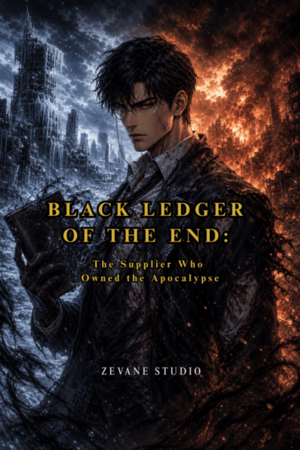
Black Ledger of the End: The Supplier Who Owned the Apocalypse
The Price of Betrayal
The first thing Atlas Silva heard was counting.
Not screaming. Not crying. Not the groan of the warehouse roof expanding under the new heat. Not the floodwater slapping against the lower doors as the melted world tried to crawl inside.
Counting.
Men who had stopped being men stood among his supplies with flashlights in their teeth and rifles hanging loose from their shoulders, counting sacks of rice, sealed water drums, medical crates, fuel cans, batteries, canned protein, dried fish, salt, cartridges, antibiotics, filtration tubes, insulation rolls, and emergency ration boxes. They counted on the urgency of priests reciting prayers over a dying altar. They counted while stepping over broken glass, blood, mud, and the bodies of people Atlas had once paid, fed, trusted, or called by name.
Someone laughed near the cold-storage room.
“Seven days,” a man said.
Another voice answered, hoarse from thirst. “What?”
“Seven days if we stretch it. Maybe six if the wounded eat.”
The warehouse went quiet for a moment. Even the desperate knew when a number was too small to justify the crime that had purchased it.
Atlas breathed through his teeth. His mouth tasted of blood, salt, and rusted metal. His lips were split. One eye had swollen until the world on that side had become a dark blur, and every breath dragged fire through his ribs. His wrists were tied behind a support beam with nylon cord, but the cord was wet from floodwater, sweat, and blood. It had bitten deep into his skin during the first hour. During the second, his hands had gone numb. During the third, he had stopped wondering whether his fingers were still there.
He remained upright only because the beam held him.
His knees had already failed.
February 3, 3000.
That date sat in his mind with a strange clarity, untouched by pain. The old world had trained people to believe dates mattered because governments, banks, courts, schools, hospitals, and markets agreed to pretend they did. Then January arrived, and the planet froze.
They called it an Ice Age phenomenon at first, as if naming the disaster could reduce it. News anchors spoke beneath flickering studio lights about abnormal planetary cooling, global albedo shock, post-war atmospheric collapse, oceanic thermal reversal, and the failure of geoengineering grids. Experts argued that while pipes burst inside hospitals, and fishing boats froze where they were docked. In Cebu, the coastline turned white. In Manila, elevated roads became graveyards of stalled vehicles buried in frost. Ports locked under ice. Crops died upright. Dogs froze beside doorways. People burned furniture, books, plastic, and finally whatever bodies no one had the strength to bury.
Atlas had survived January.
Not by luck.
He had survived because he owned warehouses before the world learned what warehouses meant. He had supplied soldiers before soldiers realized bullets were less important than warm water. He had hidden food while other men still believed money could buy time. He had brought Yasha, Haven, and Lucas behind locked doors, reinforced walls, ration schedules, and backup heat. He had told them it would be hard but manageable. He had believed, with the arrogance of a man who had prepared better than most, that surviving the cold meant he had passed the first test.
Then the transition came.
Two days ago, the ice began to die.
It did not melt like winter surrendering to spring. It collapsed like a corpse rotting under the sun. Frozen roads split open in black lines. Roofs caved as ice turned to water faster than drainage systems could breathe. Ports drowned beneath broken sheets of thawing sea. Warehouses flooded from below. Food that had survived the cold was soaked in contaminated water. Medicine spoiled when the power failed. Fuel tanks lifted from loosened foundations and drifted through streets like dead animals. The flatlands dried and cracked under sudden heat, but the islands drowned first because the ocean remembered it had surrounded them all along.
January had been cold enough to kill.
February was hot enough to make the dead smell.
Atlas’s base had taken damage, but not fatal damage. He had sealed what could be sealed, raised what could be raised, rationed what could be saved, and moved his family into the inner room after the lower storage flooded. He had had enough. Not abundance. Not comfort. Enough.
Enough for Yasha.
Enough for Haven.
Enough for Lucas.
That was all the world had needed to leave alone.
But hunger did not respect walls once someone told it where the door was.
His uncle Jun had told them.
His cousin Dex had led them through the drainage path.
The first shots had come before dawn, hidden beneath thunder, cracking metal, and the roar of floodwater against the side gates. Atlas had thought it was a pressure failure. Then the guards in the east corridor stopped answering. Then Yasha ran out of the children’s room carrying Lucas. Haven followed with her hands over her ears. The lights flickered once, twice, then died. When the emergency lamps came on, men were already inside.
Not strangers.
That was what made the ruin complete.
Strangers would have been easier to hate cleanly.
The looters wore pieces of his world. One had been a warehouse worker who received above-market pay because Atlas did not believe loyal hands should be hungry. Another had driven medical shipments for him during the war. A third had eaten in his house before the pandemic, laughing with Lucas over spilled juice. There were business partners who had once praised his discipline, security men who had sworn to protect the property, and old friends who had borrowed money without hearing him mention repayment.
And behind them, soaked to the knees, stood Jun and Dex.
Family by blood.
Traitors by price.
Jun had not looked ashamed when Atlas saw him. He looked tired, hungry, and defensive, as if betrayal became less ugly when performed by someone with cracked lips.
“Atlas,” Jun had said, lifting both hands while men moved behind him with rifles, “you know we don’t have a choice.”
Dex had avoided his eyes. “The apocalypse made us decide.”
Those words stayed with Atlas longer than the first punch.
The apocalypse made us decide.
As if the world had taken their hands, guided them through the hidden drainage tunnel, showed them which lock had been reinforced and which had not, told them when the outer patrol changed, placed rifles in their fingers, and whispered the names of his wife and children.
Atlas shifted against the beam. The cord scraped a strip of skin from his wrist, and pain briefly sharpened the room. He welcomed it. Pain proved he had not yet followed his family.
Across the warehouse, two men dragged a crate away from the medical bay. Another pried open a sealed box marked for pediatric supplies. Someone found the insulin cooler and shouted for the leader. Someone else cursed when a stack of emergency food tablets turned out to be water-damaged.
Atlas watched everything.
He forced himself to watch.
It was the last discipline left to him.
Yasha lay near the inner-room door, where she had placed herself between the children and the men who entered. Even in the dim light, Atlas could see one of her hands still reaching toward Haven. His daughter had fallen close enough that Yasha’s fingers almost touched her sleeve. Lucas was farther away, near the overturned table where Atlas had dropped the pistol after the first blow to the back of his head.
He had surrendered when they took the children.
He remembered that with perfect cruelty.
His supplies, his walls, his money, his contacts, his contracts, his vehicles, his hidden routes, his ration plans, his emergency codes—everything had collapsed the moment Lucas cried from the wrong side of a rifle barrel. Atlas had lowered his weapon because his son was alive. He had let them bind him because Haven was shaking. He had answered questions because Yasha’s eyes told him to endure. He had handed over codes, keys, maps, and vault access with blood in his mouth and hope rotting in his chest.
He had believed cooperation might buy their lives.
That had been his last act of mercy.
And mercy had returned nothing.
The leader had let the others do the damage first. Not because he lacked cruelty, but because he enjoyed watching desperation organize itself. He had walked through the base like a man inspecting property that should have been his from the beginning, stepping around blood while shaking his head at locked cabinets, false walls, and numbered crates.
Tan.
Atlas’s best friend, once.
The word had become obscene.
Tan Villareal had known him before war contracts, before cold-chain logistics, before military clients and private storage sites. He had been there when Atlas was still proving himself, still angry at being underestimated, still willing to believe that ambition and loyalty could sit at the same table. Tan had borrowed trucks, introductions, warehouse space, men, money, time, and silence. Atlas had given all of it with limits, but he had given.
Not freely.
Atlas had never been that foolish.
But he had believed a man who benefited from him would understand the value of keeping him alive.
That was the first timeline’s central error.
Usefulness was not loyalty.
It was only a delay.
Tan emerged from the office holding one of Atlas’s inventory tablets. The screen was cracked, but still alive. Sweat ran down his temples. The heat made everyone look sick, but Tan moved with the forced calm of a man trying to remain above the animal he had already become.
He glanced toward the men counting crates.
“How much?” Tan asked.
The man near the rice sacks hesitated. “Boss.”
“How much?”
“Seven days. Eight if we cut the children and injured out of the ration count.”
A few of the looters looked toward the bodies near the inner-room door, then away. Shame appeared briefly on one face, then hunger swallowed it.
Tan stared at the supplies.
For the first time that night, something like disappointment crossed his face.
Not grief.
Not regret.
Disappointment.
Atlas let out a sound that might have been a laugh if his ribs were not broken. It came out wet and low.
Tan turned.
“You find that funny?”
Atlas lifted his head slowly. His neck trembled with the effort, and the warehouse tilted before settling back into place. “Seven days.”
Tan’s jaw tightened.
Atlas tasted another mouthful of blood and forced the words through swollen lips. “You opened my gates for seven days.”
Jun flinched near the far wall.
Dex looked down.
Tan walked closer, boots splashing through a shallow pool of thawed ice and dirt. Around them, the warehouse breathed hot air. The refrigeration units were dead. Condensation dripped from metal beams. The smell of spoiled food had begun to mix with blood and wet concrete. Somewhere outside, people were shouting in the flooded yard, fighting over what could be loaded before the water rose again.
“You hid everything,” Tan said.
Atlas watched him without blinking.
Tan crouched in front of him, still holding the tablet. “You had warehouses. Medicine. Fuel. Food. Filters. Weapons. You had enough to keep people alive, and you kept it behind walls. You let us beg.”
“I paid you.”
“You paid us when money mattered.”
“I fed your people in January.”
Tan’s eyes hardened. “Not enough.”
Atlas breathed in. The air scraped his lungs.
There it was.
Not enough.
The oldest verdict in human history.
He had fed them, but not enough. Paid them, but not enough. Helped them, but not enough. Protected them, but not enough. Kept boundaries, and boundaries became proof of selfishness the moment hunger needed a moral excuse.
Jun took one step forward. “Atlas, listen. We tried to talk. You kept refusing relatives. You kept saying there was a system. A list. Rules. We were family.”
Atlas’s gaze moved to him.
Jun stopped walking.
“You brought them to my children,” Atlas said.
Jun swallowed. “We were going to die.”
“You brought them to my children.”
Dex suddenly raised his head, anger and fear twisting together. “And what about us? What about our children? You think because you built walls, you get to decide who matters?”
Atlas looked at his cousin, and memory layered over the present. Dex smiles at family gatherings. Dex is borrowing money. Dex is asking for work. Dex is complaining that Atlas treated relatives like applicants. Dex, in another month, perhaps in another room, telling desperate men which drainage tunnel led under the outer fence.
Atlas’s fingers flexed behind him.
The cord shifted.
Not enough to free him.
Enough to prove the knot had loosened.
He did not look down. He did not let his shoulders change. He let his face remain ruined and still.
Tan followed his gaze toward Yasha’s body. Something like irritation crossed his expression, as if even now he resented Atlas for making the room uncomfortable.
“You should have trusted me,” Tan said. “If you did not hide everything from me, my friend, you would not end up here.”
My friend.
The phrase moved through Atlas colder than January.
He remembered Tan sitting at his dining table while Haven showed him a drawing. He remembered Lucas calling him Tito Tan because children gave names before they understood contracts. He remembered Yasha asking him once if Tan could truly be trusted, and Atlas answering that trust was not necessary when interests aligned.
He had been wrong in a precise and unforgivable way.
Interests changed.
Hunger repriced everything.
The knot slipped another fraction.
Atlas let his head sag as if weakness had taken him. His wrists burned. His shoulders screamed. He drew the wet cord across a jagged edge of the beam where earlier bullets had torn splinters from the support. He moved slowly, no more than the twitch of a dying man. The men around him were tired. The looters were arguing now, shocked by the smallness of their victory. Seven days had infected the room. It made them angry because it proved the massacre had not purchased salvation.
Only time.
A week.
Yasha, Haven, and Lucas for a week.
His parents had died waiting for a cure that government men delayed, redirected, negotiated, and politicized until the old became statistics. Renato Silva, proud even when fever ate his voice. Elena Silva, whose hands had always smelled of soap and rice, had gone before medicine reached the proper district. Mateo and Lilia Reyes, Yasha’s parents, were buried by incompetence dressed as a procedure. The cure had existed. Atlas learned that later. It had been late because someone with authority decided old lives could wait.
Kyla had died in a robbery while moving between shelters.
Zeth had died on a road because bravery without ammunition, fuel, and backup was only a prettier form of suicide.
Jess and Lou had been framed by relatives who needed scapegoats more than truth.
Every death in the first apocalypse had taught Atlas a lesson.
The government taught him that delay kills.
The military taught him that force without supply becomes begging with rifles.
Relatives taught him that blood can become a map for enemies.
Friends taught him that history does not survive hunger.
Workers taught him that above-average compensation becomes meaningless when food leaves the market.
His own mercy taught him that kindness without control is only an unlocked gate.
The cord snapped.
Atlas did not move immediately.
He waited.
Tan stood and turned toward the men near the loading bay. “Take the medicine first. Fuel second. Food third. Leave the damaged crates unless they can be dried.”
A guard beside Atlas lowered his shotgun to wipe sweat from his face.
Atlas moved.
He drove his shoulder into the man’s knees, and they both crashed sideways into the shallow water. Pain exploded through Atlas’s ribs, but he caught the shotgun before it slid away. His fingers, half-numb and slick with blood, wrapped around the grip by instinct more than strength. Someone shouted. Tan turned. Jun cursed. Dex reached for his pistol.
Atlas fired.
The blast filled the warehouse and folded the guard backward into the water. Atlas rolled, dragging air into lungs that no longer wanted to work, and pumped the weapon with a motion trained into him by years of handling tools he had once considered necessary but secondary. Dex fired first. The bullet struck concrete near Atlas’s shoulder. Atlas fired back. Dex spun and dropped against a stack of ration crates.
Jun screamed his son’s name.
Atlas rose halfway, swaying. The world narrowed to heat, blood, and targets.
“Atlas!” Jun shouted, hands raised again, as if the gesture could return him to the category of family. “Wait! Please! I’m your uncle!”
Atlas aimed at him.
For one breath, Jun was not the man who had opened the drainage route. He was the relative who had eaten during fiestas, who had slapped Atlas’s shoulder when business went well, who had called him proud, selfish, difficult, too strict, too cold. A man who believed shared blood was a permanent claim on another man’s pantry.
Then Atlas saw Yasha’s hand reaching for Haven again.
He pulled the trigger.
The blast threw Jun backward against the office partition. The man collapsed beneath the window where Atlas used to review shipment ledgers.
The warehouse erupted.
Bullets struck metal shelves, burst sacks of rice, shattered medicine vials, and sparked against the dead refrigeration units. Atlas fired again, not with clean aim but with hatred so focused it became direction. A former worker fell near the water drums. A business partner screamed as glass cut his face. Men scattered behind crates that had once represented order.
Atlas kept moving because stopping meant dying before he reached Tan.
He took a bullet through the side. The impact stole his balance, but he used the fall to drag himself behind a pallet. Another shot tore through the wood near his head. His breath came ragged. Blood spread warm beneath his shirt, indistinguishable from the heat pressing through the dead warehouse.
The shotgun clicked empty.
Atlas looked at it.
Then he laughed.
This time, the sound came clearer.
A few looters froze.
Tan stepped out from behind the forklift with a rifle in his hands. His face had gone pale, not from fear alone but from the sudden realization that Atlas had still contained violence after losing everything. Men like Tan mistook control for the absence of rage. They did not understand that Atlas had spent his life caging anger because cages made useful things.
The cage was gone.
Tan lifted the rifle. “You should have stayed tied.”
Atlas pushed himself up against the pallet. He had no weapon now except the empty shotgun, shaking legs, and a body already losing too much blood. His vision blurred at the edges. The warehouse lights flickered as the backup battery failed. Red emergency lamps pulsed over water, bodies, crates, and the black volume lying near the office door where Tan had thrown Atlas’s personal effects.
The volume looked untouched.
Black cover. No title. No author. No damage from floodwater, blood, or heat.
Atlas had found it a year ago inside strange cargo wreckage washed onto the Cebu coast. Back then, he thought it was a manual written by someone who understood crisis better than any consultant, general, banker, or politician alive. It taught him how supply chains died, how scarcity moved, how governments lied through procurement, how food became obedience, how medicine became leverage, how people revealed themselves when the pantry thinned.
He had studied it.
Profited from it.
Carried it.
Failed with it.
Now it waited beneath the red lamps like an account book that had not yet been closed.
Tan followed his gaze and scoffed. “That thing again. You and your secrets.”
Atlas looked back at him.
Tan’s rifle steadied. “All of this because you couldn’t share.”
Atlas’s breathing slowed. Not because the pain eased. It did not. His chest felt packed with broken glass. His hunger had become a blade inside his stomach, absurd and insulting even now, as if his body still believed survival required appetite. But his mind, beneath pain and rage, became still.
He saw the room without illusion.
Jun died against the office wall.
Dex fell by the crates.
Workers who had eaten his food had been lying in water that had contaminated water.
Friends turned looters.
Partners turned thieves.
His family is silent behind him.
Seven days of supplies were scattered across the floor.
Seven days.
That was the price of every boundary he had failed to enforce.
That was the value hunger had placed on Yasha’s smile, Haven’s drawings, Lucas’s small hand gripping his fingers, his parents’ prayers, his siblings’ laughter, the home he thought could still exist inside the end.
Atlas lifted his head fully.
Tan frowned at the expression on his face.
It was not pleading.
It was not fear.
It was accounting.
“If hell exists,” Atlas said, his voice rough and low, “I will crawl through it.”
Tan’s finger tightened around the trigger.
“If heaven bars the door, I will burn it open.”
“Enough.”
“If time itself refuses me, I will make it kneel.”
The first bullet struck Atlas in the chest.
He staggered but did not fall.
Tan fired again.
Atlas’s back hit the pallet. The world lurched. Sound stretched thin, then returned in broken waves. Someone shouted for Tan to finish it. Someone else yelled that the floodwater was rising. The heat pressed down, thick and wet, as if February itself had leaned into the warehouse to watch.
Atlas slid to the floor.
His hand landed on the black volume.
The cover was cool.
Impossible, in that heat.
His fingers curled over it.
Tan approached, rifle still raised. He looked down at Atlas with an expression that was almost sad, almost angry, almost human. That offended Atlas more than hatred would have.
“You were always too proud,” Tan said.
Atlas’s blood moved beneath him, touching the edge of the volume.
The black cover drank it.
Not absorbed.
Accepted.
Atlas’s ruined eye widened slightly.
Tan did not notice. He turned away, already finished with the dead.
Atlas gathered the last of his breath. It came from somewhere beneath pain, beneath grief, beneath the place where a man remained a man.
“I will hunt you all,” he said.
Tan paused.
Atlas’s grip tightened on the volume until his broken nails scraped the cover.
“Even in hell.”
The warehouse vanished.
Not all at once.
First, the red emergency light stretched into a black line. Then the heat withdrew. Then the smell of blood, spoiled food, wet concrete, and smoke fell away. The cries of looters became distant, then thin, then silent. Atlas felt his body dying with the detached certainty of a man watching a door close from the wrong side.
Darkness opened beneath him.
Something inside the black volume opened back.
Words appeared where no light remained.
[BLACK VOLUME — SEALED RECORD OPENED]
Carrier Identity Confirmed:
Atlas Silva
Long-Term Contact Recognized.
Emotional Threshold:
Exceeded.
Desire Level:
Catastrophic.
Dominant Impulse:
Preserve bloodline.
Punish betrayal.
Control survival.
Humanity Anchor:
Destroyed.
Authority Conversion:
Beginning.
Atlas could not breathe. He had no lungs left in that place. No ribs. No hands. No blood. Only rage, memory, and the shape of names carved into him with seven days of food.
Jun.
Dex.
Tan.
Every friend who became a looter.
Every worker who opened a gate.
Every partner who priced his trust.
Every official who delayed the cure.
Every soldier who guarded the wrong warehouse.
Every relative who thought blood gave them a right to his pantry.
Every coward who called hunger an excuse.
The darkness tightened.
Then the system spoke without sound.
[BLACK LEDGER AUTHORITY SYSTEM ACTIVATED]
Designation:
Atlas Silva
Authority Type:
Resource Dominion
Currency:
Authority Credits
Initial Balance:
4080 AC
Warning:
Death-state contamination detected.
Selection stability compromised.
Primary Law:
Resources determine obedience.
Secondary Law:
Obedience determines survival.
Mission Generated:
Return.
Prepare.
Own the next ending.
Atlas felt something pull against him.
Not gently.
Not mercifully.
The dead did not return through kindness. They returned like debts being collected.
The warehouse folded into a single point of black light.
Then even that disappeared.
Atlas opened his eyes.
The ceiling above him was white.
Clean.
Whole.
The air smelled faintly of detergent, cold air-conditioning, and Yasha’s shampoo.
For several seconds, he did not move. His body waited for pain that was no longer there. His ribs were intact. His lips were not split. His wrists were free. His lungs filled with blood. The heat was gone. The floodwater was gone. The warehouse was gone.
Beside him, Yasha breathed softly in her sleep.
Atlas turned his head.
She was alive.
The sight struck him harder than Tan’s bullets.
Yasha lay on her side, one hand tucked beneath her cheek, hair loose over the pillow. No blood. No fear. No reaching hand frozen inches from their daughter. Her face carried only the ordinary exhaustion of a wife who had gone to sleep believing tomorrow would ask for bills, breakfast, work, children, and the small arguments of a world not yet dead.
From the next room came a faint sound.
A child shifting in bed.
Then another.
Haven.
Lucas.
Atlas sat up slowly. His hands shook once before he closed them into fists.
On the bedside table, his phone glowed.
January 3, 2999.
One year before the end.
The black volume rested beside the phone, closed and silent, its cover darker than the room around it.
Atlas stared at the date until the numbers stopped being numbers and became ammunition.
Yasha stirred. “Atlas?”
Her voice was soft, half-asleep.
He did not answer at once. He looked toward the children’s room, then toward the black volume, then back to the woman breathing beside him.
In the dark reflection of the phone screen, his face looked calm.
Too calm.
Yasha opened her eyes slightly. “Are you okay?”
Atlas reached for the black volume.
This time, it opened under his hand.
[BLACK LEDGER AUTHORITY SYSTEM]
Regression Confirmed.
Time Remaining Until First Apocalypse:
362 Days.
Main Family Casualty Probability Upon Preparation Failure:
1 / 1
Interpretation:
At least one registered bloodline member will die.
No advisory.
No explanation.
No excess.
Atlas read the final line without blinking.
Then he closed the volume and looked toward the children’s room.
His voice, when it came, was quiet enough not to wake them.
“No one touches my family again.”







Please sign in to leave a comment.