Chapter 1:
CHAPTER 1: The Day Before Mercy Died
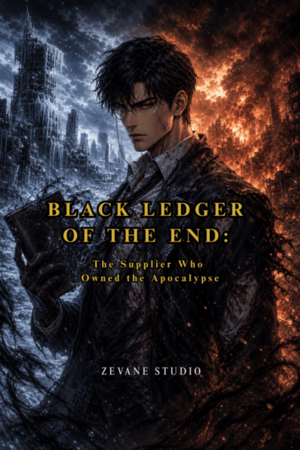
Black Ledger of the End: The Supplier Who Owned the Apocalypse
January 2999
At six in the morning, Atlas Silva woke before the alarm.
That was not his usual routine.
In the life he remembered, six o’clock belonged to the ordinary discipline of businessmen, fathers, and men who still believed schedules could manage the future. Wake up. Check messages. Prepare coffee. Review shipments. Kiss Yasha before she fully opens her eyes. Listen for the children complaining about school, cartoons, breakfast, or each other.
This morning, six o’clock belonged to a dead man.
Atlas lay on his back beneath a clean ceiling, breathing air that did not taste like blood. The room was dim with the blue-gray light before sunrise. The air conditioner hummed with steady indifference. Somewhere inside the walls, water moved through pipes that had not yet frozen, burst, thawed, and drowned the lower floors of shelters. The curtains were still. The bed was warm beside him.
Yasha slept with her back turned slightly toward him, hair loose across the pillow, one hand resting near her face. She breathed with the slow softness of someone who had not been dragged through the end of the world. No bruises. No blood. No torn voice calling his name. No hand reaching across the concrete toward their daughter.
Atlas did not touch her.
His fingers curled once against the sheet, then relaxed.
He turned his head toward the bedside table.
His phone was there.
Black screen. Charging cable connected. No cracks. No mud. No emergency alerts scrolling across it. No final battery warning while men counted his supplies.
Atlas reached for it with a hand that should have been broken. It was whole. His wrist showed no cord burns. His knuckles were uncut. His fingernails were clean. The body that had been tied, beaten, starved, shot, and left beside a black volume had returned without evidence.
Only memory had crossed with him.
He pressed the side button.
The screen lit.
January 3, 2999.
6:01 AM.
Atlas stared at the date until his vision tightened. He unlocked the phone and checked again through the calendar. January 2999. The year before the end. The year before the Ice Month. The year before the Heat Month. The year before Tan shot him in the chest after calling him a friend. The year before Jun and Dex opened a path for looters and called betrayal survival.
He opened the search bar.
Government portals loaded normally. No national emergency banner. No wartime mobilization order. No public quarantine advisory. No global supply rationing declaration. No Ice Age phenomenon. No atmospheric collapse warning. No mass migration map. No list of contaminated provinces. The pages looked clean, bureaucratic, and useless.
He searched international news next.
There were reports about global market instability, energy disputes, climate pressure, defense spending, food-price anxiety, border arguments, and diplomatic tension between major blocs. Nothing had yet become World War III. Nothing had yet been named a pandemic. Nothing had yet taught the public that a government could delay a cure long enough to bury parents.
The world was still dressed in normal clothes.
Atlas scrolled through articles with a face so still the phone did not recognize the storm beneath it. Public officials smiled in photographs. Economists warned of a coming recession using language polite enough to protect markets. Military analysts discussed “strategic recalibration” while pretending countries were not preparing to point weapons at each other. Climate experts warned about worsening heat, ocean instability, and extreme-weather cycles, but their language had the exhausted tone of people paid to speak truth to audiences trained to ignore it.
The apocalypse was already arranging itself.
It simply had not introduced its name.
Atlas set the phone down and looked toward the bedside table where the black volume should have been.
It was not there.
His eyes narrowed.
In the prologue of death, he remembered its cover beneath his blood. In the final moment before the warehouse vanished, the black volume had opened in the dark like an account book accepting payment. Yet now the table held only the phone, a lamp, a glass of water, and Yasha’s folded hair tie.
No book.
No cover.
No physical weight waiting for his hand.
For several seconds, Atlas did nothing. Then the air above the table trembled.
A thin black line appeared.
It widened like paper being unfolded from the inside of space, but it had no thickness. A transparent screen formed in the air, dark at the edges, filled with broken symbols that flickered between letters, numbers, and unreadable marks. The surface glitched, disappeared, returned, and stabilized just enough for words to appear.
[SYNCHRONIZATION IN PROGRESS]
Processing:
40%
Carrier stability:
Unconfirmed.
Regression residue:
Detected.
Death-state contamination:
Severe.
Please wait.
Atlas watched the window in silence.
The words trembled again. The screen shifted closer, as if trying to align with his sight. For an instant, behind the transparent display, he saw another place reflected: a warehouse under red emergency lamps, water across concrete, bodies near an inner door, sacks of rice torn open, Tan’s rifle raised.
His stomach turned.
The room tilted.
Atlas closed his eyes and placed one hand against the mattress. The memory did not arrive as thought. It arrived as a sensation. Cord cutting into his wrists. Heat pressing a wet cloth against broken ribs. Blood filled his mouth. The smell of spoiled food and floodwater. Yasha’s final silence. Haven too still. Lucas was near the overturned table.
He opened his eyes.
The bedroom remained whole.
Yasha remained alive.
The screen glitched again.
[SYNCHRONIZATION...]
Processing:
41%
Atlas lifted his hand and waved it.
The display vanished.
The air returned to normal.
He sat there for a moment, staring at the space. A weaker man might have called it a hallucination. Shock. Brain damage. A dying mind refusing to accept death. But Atlas was not interested in comfort. Comfort was what people chose when truth was too expensive.
He stood carefully.
His legs held.
That small fact should not have mattered, yet he paused after rising from the bed because the last time he had tried to stand, blood had run down his side and Tan’s men had shouted over the floodwater. Now his feet touched clean flooring. His body obeyed. His chest did not burn. His hands did not tremble from injury.
Only rage made them move.
He went to the window and pulled the curtain aside.
Cebu morning sat beyond the glass, ordinary and brightening. Streets still damp from recent holiday rain. A neighbor’s gate. Parked vehicles. A tricycle is passing slowly. A delivery rider is turning at the corner. Houses with decorations left from the New Year. No ice covering rooftops. No people are burning furniture in the street. No bodies wrapped in curtains outside clinics. No heat haze turns the asphalt soft. No looters moving door to door with hungry eyes and borrowed rifles.
The world looked innocent.
Atlas knew better.
He looked at the clock again.
6:07 AM.
He looked at the calendar hanging near the dresser.
January.
He looked at the phone.
His mind accepted the alignment.
Regression was not a dream. It was not mercy either. Mercy had warmth. This felt like a ledger reopened after a failed transaction.
Behind him, Yasha shifted.
“Atlas?” Her voice was low and sleepy. “Why are you up so early?”
He turned slowly.
She had not fully opened her eyes. Her face was half-buried in the pillow, soft with sleep and ordinary trust. The sight entered him like a blade that had learned restraint.
“Just checking something,” Atlas said.
His voice came out controlled.
Yasha murmured, “Work?”
“Yes.”
It was not a lie. Not fully. There was work now. One year of it. Warehouses, land, medicine, water, fuel, shelters, routes, officials, family relocation, betrayal tests, cure precursors, emergency systems, hidden accounts, false inventories, and names that still believed they had not earned punishment.
Yasha turned slightly, already sinking back into sleep. “Don’t skip breakfast.”
“I won’t.”
He watched her for three more breaths before leaving the room.
The hallway was quiet.
Atlas walked toward the children’s rooms with footsteps measured enough not to wake them. Every step carried him across a distance that had once become impossible. A hallway. A door. A sleeping child. Simple things. Sacred because they had been taken.
He opened Haven’s door first.
His daughter slept sideways across the bed, blanket twisted around her legs, one arm hanging over the edge as if she had fought a quiet war with the pillow and lost. A small stuffed animal lay facedown near her feet. Her hair covered part of her face. She breathed through slightly parted lips, unguarded and alive.
Atlas stood at the door and did not enter.
In the warehouse, Haven had been silent from fear.
Here, she slept carelessly.
That difference almost broke his face.
He closed the door with the same care he used around sealed medicine.
Lucas’s room was next.
The boy had kicked his blanket halfway off and slept on his stomach, one fist tucked under his chest. A toy truck sat near the pillow. The curtains were open enough for a line of early light to cross the floor. Lucas made a soft sound in his sleep, then settled.
Atlas’s hand tightened around the doorknob.
He remembered the overturned table.
He remembered lowering his weapon.
He remembered learning that a father could still breathe after becoming useless.
This time, that would not happen.
He closed Lucas’s door.
Downstairs, the house smelled faintly of leftover holiday food, floor cleaner, and the ordinary stale coolness of a closed kitchen before morning. Atlas moved through it like a man inspecting a shelter that had not yet learned it was one. He checked the front lock. The side window. The back door. The small storage room. The gas line. The water dispenser. The refrigerator.
He opened the fridge and took a bottle of cold water.
His hand shook when he unscrewed the cap.
Not fear.
Fear was clean. Fear had direction.
This was rage moving through a body that had not yet earned scars.
Atlas drank half the bottle without stopping. Cold water moved down his throat, and for a moment, the memory of thirst retreated. In February 3000, water had been a throne. Men who once mocked emergency drums had knelt for half a cup. Mothers had traded jewelry for a bottle. Soldiers had aimed rifles at wells. The heat had taught every living thing the same doctrine: the one who controlled water controlled obedience.
He lowered the bottle.
His reflection stared back faintly from the dark microwave door. No swelling. No bruises. No blood. No final bullet wound. Only a thirty-year-old Filipino businessman standing in his kitchen before sunrise with eyes that no longer belonged to the year.
The kettle clicked softly when he set it on the stove.
Breakfast first.
It was such a normal thought that it nearly disgusted him. Yet order began with small acts. Coffee. Rice. Eggs. Warm food. A wife waking without fear. Children coming downstairs hungry for school-break breakfast instead of ration tablets.
He placed rice in the cooker. Took eggs from the tray. Set a pan on the stove. Measured coffee with the accuracy of a man calming his hands through routine.
The water reached boiling point.
Atlas inhaled once, slowly.
Protection first. Revenge after structure.
He poured the coffee.
The smell filled the kitchen.
His fist clenched beside the counter, then relaxed before the mug cracked under his grip.
When the first pan heated, he turned on the television mounted near the dining area.
Morning news appeared with a cheerful jingle that belonged to a country pretending corruption was seasonal noise. The anchors smiled too brightly for the hour. Footage rolled across the screen: politicians visiting unfinished public works, ribbon-cutting ceremonies at facilities that would never operate properly, debates about missing infrastructure funds, accusations of ghost projects buried beneath committees, delayed flood-control upgrades, questionable military procurement, and local officials defending budgets with faces trained by decades of impunity.
Atlas cracked an egg into the pan.
The anchor shifted to climate.
Heat anomalies. Ocean-temperature instability. Agricultural decline. Coastal erosion. Food import pressure. Another expert warned that the Philippines needed long-term climate adaptation before future disasters overwhelmed fragile infrastructure. The segment was short. Too short. Afterward, the broadcast moved to holiday traffic, celebrity scandal, and a mayor denying involvement in a procurement irregularity.
Atlas watched without expression.
The world always whispered before it screamed.
Another segment followed. Analysts discussed the global economy with careful concern. Trade tensions were rising. Defense spending was climbing. Major powers accused each other of resource hoarding. Smaller nations were being pressured into alignment. Energy markets were unstable. There were rumors of naval repositioning, supply-chain protection measures, and back-channel military agreements.
No one on the screen called it the road to World War III.
Names came late.
Causes arrived early.
Atlas turned the eggs over.
Oil hissed softly.
The kitchen remained clean.
He was setting plates on the table when the air above the counter split open again.
This time, the display was larger.
The transparent black screen opened vertically, flickering with layers of text. Symbols crawled across it like insects beneath glass. The edges glitched, collapsed inward, then expanded sharply.
[SYSTEM CALIBRATION COMPLETE]
[BLACK LEDGER AUTHORITY SYSTEM]
Synchronization:
100%
Carrier:
Atlas Silva
Regression Event:
Confirmed.
Timeline Anchor:
January 3, 2999.
Death-State Activation Instability:
Unresolved.
Atlas set the plate down.
He did not speak.
The screen shifted.
[STATUS WINDOW UNLOCKED]
Designation:
Atlas Silva
Level: 1
Title: Regressor
EXP:0 / 100
Strength: 5
Intelligence: 10
Stamina: 7
Durability: 3
Speed: 6
Death Mana: Locked
Skill Points: 0
Currency: Authority Credits [AC]
Balance: 4080 AC
Shop Access:
Granted.
No advisory.
No explanation.
No excess.
Atlas read each line once.
Strength five. Durability three. The system did not flatter him. Good. His body had failed once. It had been restrained, beaten, exhausted, and shot. Preparation without physical capacity had turned him into a tied witness in his own base. That would change.
His gaze settled on the balance.
4080 AC.
A second panel opened before he touched anything.
[AUTHORITY CREDIT CALCULATION]
Recognized Previous Timeline Achievements:
Common Achievements: 8
Rare Achievements: 14
Epic Achievements: 8
Mythic Achievements: 5
Total Authority Credits Earned: 4080 AC
Authority Conversion Note:
Achievements acquired before regression have been partially recognized due to death-state activation.
Atlas’s eyes narrowed.
The system had counted his first life like inventory.
Warehouses secured. Family protected for a time. Ice Month survived. Supplies controlled. Betrayal witnessed. Death endured. It had turned suffering into currency because systems did not mourn. They measured.
The shop opened.
[SHOP INTERFACE OPENED]
SKILLS TRAITS KNOWLEDGE UTILITIES RARE ASSETSAtlas looked toward the stairs. No movement yet. Yasha and the children were still asleep. The rice cooker steamed gently behind him. The eggs waited on a plate. His coffee cooled beside the counter.
He focused on the shop.
“Show preparation-relevant options,” he said quietly.
The screen glitched once, then obeyed.
[PRIORITY FILTER APPLIED]
Category:
Apocalypse Preparation
Available Options:
[SKILLS]
Dimensional Storage I
Cost: 3000 AC
Effect: Grants limited private storage space for non-living registered items.
Value: Extreme.
Supply Chain Foresight I
Cost: 2800 AC
Effect: Highlights future scarcity pressure points based on available data.
Value: High.
Contract Enforcement I
Cost: 2500 AC
Effect: Enables basic binding agreements tied to supply access and secrecy.
Value: High.
Emergency Simulation I
Cost: 2200 AC
Effect: Allows short mental scenario modeling for planning and route testing.
Value: High.
[KNOWLEDGE]
Bunker Engineering Theory I
Cost: 2700 AC
Effect: Provides structural principles for climate-resistant underground shelters.
Value: High.
Cold-Heat Survival Infrastructure Manual
Cost: 2400 AC
Effect: Provides a practical layered design for alternating freeze and heat hazards.
Value: Extreme.
Crisis Procurement Framework I
Cost: 1800 AC
Effect: Improves acquisition strategy during unstable market conditions.
Value: High.
Pandemic Countermeasure Protocol
Cost: 4000 AC
Effect: Unlocks structured knowledge for outbreak vectors, contamination patterns, cure precursors, quarantine routes, immune-risk groups, and early countermeasure production.
Value: Extreme.
[UTILITIES]
Temporal Preservation Field I
Cost: 3500 AC
Effect: Slows decay of registered food, medicine, water, fuel, and sensitive materials in a limited volume.
Value: Extreme.
Water Purification Module I
Cost: 2600 AC
Effect: Generates a system-assisted blueprint for compact emergency filtration and contamination detection.
Value: Extreme.
Off-Grid Power Stabilization Kit I
Cost: 2300 AC
Effect: Provides integrated design for solar, battery, generator, and fuel redundancy.
Value: High.
Thermal Shelter Blueprint I
Cost: 2100 AC
Effect: Provides basic blueprint for insulation, cooling, heating, and ventilation control.
Value: High.
Medical Cold-Chain Protocol I
Cost: 1600 AC
Effect: Provides safe storage standards for medicine during grid instability.
Value: High.
Fuel Degradation Control I
Cost: 1500 AC
Effect: Provides stabilization methods for long-term fuel reserves.
Value: High.
[Rare Assets]
Authority Storage Seed
Cost: 5000 AC
Unavailable. Insufficient balance.
Mobile Fortress Concept Fragment
Cost: 4500 AC
Unavailable. Insufficient balance.
Atlas stopped breathing for one measured second.
There it was.
Everything he had needed in the first life.
Storage that no looter could raid. Preservation that could have kept food and medicine from dying under heat and flood. Contract enforcement that might have made betrayal expensive before rifles reached his children. Water purification. Power stabilization. Thermal shelter design. Bunker theory. Supply-chain foresight.
His hand lifted toward the screen.
Dimensional Storage I tempted him first. With private storage, he could hide medicine, weapons, food, water filters, documents, gold, and emergency reserves outside physical reach. No uncle could reveal what he could not see. No worker could open a vault that existed beyond walls. No looter could count supplies if the real supplies were no longer in the warehouse.
Then his eyes shifted to Temporal Preservation Field I.
Food did not matter if it rotted. Medicine did not matter if heat destroyed it. Fuel did not matter if it degraded before use. Preservation meant time itself bent around resources. It was not glamorous. It was survival.
Water Purification Module I pulled his attention next. The Philippines would flood before it dried completely. Floodwater was not water. It was an infection in liquid form. If he had purification early, he could protect the family through both the Ice Month melt and the Heat Month desperation.
Contract Enforcement, I sat lower on the list.
Atlas stared at it the longest.
A contract would not have saved Yasha if rifles were already inside the room. But before that? Before the drainage tunnel? Before Jun and Dex? Before Tan? Before workers learned routes and guards compared hunger to loyalty? A proper contract could have turned access into obedience and obedience into survival.
He almost selected it.
The screen froze.
Atlas’s eyes narrowed.
The display flickered violently.
[SYSTEM ERROR]
Manual selection failed.
Atlas’s hand stopped midair.
The text is distorted.
Authority conversion instability detected.
Death-state activation residue interfering with shop autonomy.
Automatic acquisition initiated.
“No,” Atlas said.
The word was quiet.
The system did not care.
────────────────────────────
[KNOWLEDGE PURCHASED]
Pandemic Countermeasure Protocol
Effect:
Unlocks structured knowledge for identifying outbreak vectors, contamination patterns, cure precursors, quarantine routes, immune-risk groups, and early countermeasure production.
Additional Effect:
Allows limited interpretation of pandemic-related medical, military, and black-market data before public outbreak confirmation.
Cost:
4000 AC
────────────────────────────
[AUTHORITY CREDIT BALANCE]
Previous Balance:
4080 AC
Purchase Cost:
4000 AC
Remaining Balance:
80 AC
────────────────────────────
[SYSTEM ERROR]
Purchase selection failed.
Automatic acquisition completed.
Refund:
Unavailable.
Reason:
Death-state activation instability.
The kitchen remained silent except for the rice cooker releasing steam.
Atlas stood before the display with both hands resting on the counter.
Eighty credits.
Not enough for storage.
Not enough for preservation.
Not enough for contract enforcement.
Not enough for water purification.
Not enough for the shelter blueprint.
Not enough for any of the obvious foundations that could have made the coming apocalypse easier to own.
His jaw tightened once.
Then the knowledge opened inside his mind.
It did not feel like learning. It felt like remembering a map he had never seen. Outbreak vectors unfolded in layered routes. Shipping manifests. Military medical delays. Quarantine corridors. Hospital overflow patterns. Immune-risk categories. Elderly mortality spikes. Chemical precursor names. Distribution failures. Contamination pathways hidden inside refugee movement, medical transport, and military containment zones. Dates, not exact enough to be prophecy, but clear enough to become leverage.
His parents.
Yasha’s parents.
The elders who had died waiting for a cure that corrupt hands delayed.
Atlas closed his eyes.
The system had stolen his choice.
Fine.
He would use the theft.
When he opened his eyes, the interface had changed.
[MAIN MISSION GENERATED]
Mission:
Prepare for the First Apocalypse.
Time Remaining:
362 Days.
Objectives:
Establish a protected family shelter. Register one primary supply base. Secure long-term food reserves. Secure long-term water reserves. Secure medicine and pandemic countermeasures. Secure heat-resistant infrastructure. Secure cold-resistant infrastructure. Identify future betrayal risks. Create emergency evacuation routes. Keep the immediate family alive until the First Collapse.Reward:
2500 AC
Failure Condition:
Bloodline casualty before January 3000.
System Note:
Preparation is authority before disaster begins.
The screen shifted again.
[SIDE QUEST GENERATED]
Quest:
Gather the Bloodline.
Objective:
Relocate registered family members into one controllable protection radius.
Required Members:
Yasha Silva Haven Silva Lucas Silva Renato Silva Elena Silva Kyla Silva Zeth Silva Mateo Reyes Lilia Reyes Jess Reyes Lou ReyesReward:
800 AC
Optional Objective:
Convince family members without revealing regression.
Additional Reward:
300 AC
Failure Condition:
One registered member remains outside the protection radius during the First Collapse.
Another panel opened beneath it, darker than the others.
[HIDDEN QUEST GENERATED]
Quest:
The Cure Before the Funeral.
Riddle:
Before the world names the sickness,
count the coffins it has not yet built.
Before the generals lock the roads,
Follow the medicine they hide from the old.
Before the cure becomes mercy,
Steal the formula from delay.
Objective:
Identify the pandemic vector before public outbreak confirmation.
Hidden Objectives:
Acquire early contamination data. Identify the cure precursor. Secure laboratory access. Produce or obtain limited countermeasure doses. Administer protection to registered bloodline members.Reward:
1200 AC
Optional Objective:
Prevent public discovery of Atlas Silva’s involvement.
Additional Reward:
600 AC
Failure Condition:
Registered elder died from pandemic exposure.
System Note:
Mercy distributed too widely becomes evidence.
Atlas read the final note twice.
Mercy distributed too widely becomes evidence.
The system was not asking him to save humanity. It was not asking him to become a hero with medicine in both hands and speeches on his tongue. It understood risk in the language he trusted most. Distribution created attention. Attention created a seizure. The seizure created dependency on an incompetent authority. And incompetent authority had already buried his parents once.
Upstairs, a small footstep sounded.
Atlas waved his hand once. The display collapsed instantly into nothing.
The kitchen returned to morning.
Haven appeared at the bottom of the stairs a few seconds later, rubbing one eye with her knuckle. Her hair was a mess. Her pajamas had small printed stars across them. She looked at him, then at the table.
“Papa, why are you cooking early?”
Atlas’s hand rested flat against the counter until he trusted it not to shake.
“Because you’re going to wake up hungry.”
She blinked, still half-asleep. “I’m always hungry.”
“I know.”
Lucas followed behind her, dragging his blanket like a defeated flag. “Is there a hot dog?”
Atlas looked at his son for half a second too long.
Lucas frowned. “Papa?”
“Yes,” Atlas said. “There’s a hot dog.”
Haven had climbed into a chair. Lucas followed with the heavy seriousness of a child still negotiating with sleep. Atlas placed their plates down first. Rice. Egg. Hotdog. Water. Ordinary food for ordinary children in an ordinary January.
Yasha entered a minute later, tying her hair loosely behind her head. She paused when she saw the table already prepared.
“You really are up early,” she said.
“Couldn’t sleep.”
She studied him.
Atlas poured coffee into her mug before she asked. Her eyes softened at the familiar gesture, but suspicion lingered beneath it. Yasha had always been more observant than people assumed. In the first life, she had noticed the cracks in his alliances before he did. He had dismissed some of her doubts as caution without data.
He would not make that mistake again.
“Bad dream?” she asked.
Atlas placed the mug before her.
“Yes.”
Haven looked up from her food. “Monster dream?”
Lucas sat straighter. “I can fight monsters.”
Yasha smiled faintly. “You can barely fight vegetables.”
Lucas frowned at his plate as if betrayed by the category.
Atlas sat at the head of the table.
For a moment, the room held.
Yasha is drinking coffee. Haven is picking at rice. Lucas is trying to eat a hot dog first. Morning news murmuring in the background. Sunlight is beginning to enter through the window. His family is alive within arm’s reach.
Atlas let the image settle into memory, clean and exact.
Then the unseen screen opened again at the edge of his vision, visible only to him.
[SYSTEM WARNING]
Long-Term Projection:
If preparation stagnates until the end of World War Event—
Main Family Casualty Probability:
1 / 1
Interpretation:
At least one registered main family member will die.
No direct penalty assigned.
Consequence remains absolute.
Atlas’s expression did not change.
He picked up his coffee and drank.
The bitterness grounded him.
Across the table, Yasha watched him over the rim of her mug.
“Atlas,” she said quietly, “what happened in that dream?”
He set the cup down with care.
“Everyone was far away.”
Yasha’s face changed slightly. “What does that mean?”
Atlas looked at Haven. Then Lucas. Then Yasha.
“It means we’re going to start keeping family closer.”
Lucas looked up. “Like vacation?”
Atlas’s eyes remained calm.
“Something like that.”
The system warning stayed in the corner of his sight, cold and patient.
Main Family Casualty Probability:
1 / 1
Atlas folded his hands on the table, hiding the fist beneath the stillness.
One year.
Three hundred sixty-two days.
The world thought January was the beginning of another year.
Atlas knew it was the last day before mercy began to die.




Please sign in to leave a comment.