Chapter 1:
Chapter 1
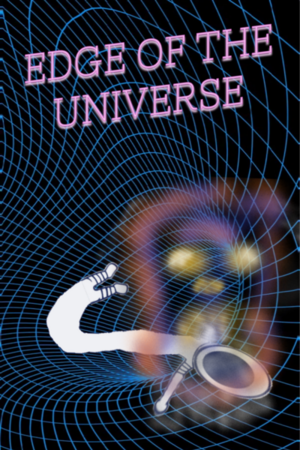
Edge of the Universe
What happens at the edge of the universe?
At one point, humanity thought there was no end to it. That space continued forever into infinity. Vast stretches of limitless galaxies beyond what the speed of light told us was perceivable.
But then, we broke those limits. We found travel throughout the universe feasible. And then, the end was discovered.
It was sudden. First, a few scouting units disappearing from their established path, right off the universal map. And next, entire spaceships.
The very space that looked so continuous before us became a point of no return, objects entering the boundary disappearing instantly. And like fools, we kept tossing things in to double check.
Every law of science made it hard to believe that matter simply ceased to exist. But the instruments didn’t lie. Nothing existed beyond that boundary. There was an edge to the universe that created a new mystery.
Where did they all go?
A row of sensors flickered before my vision. I stared up at a map of the universe, a diorama of solar systems and galaxies that logged my home sector, one of the numerous being investigated. Piecing each of these maps together was an endeavor, a hope that every known location since mankind began its journey into the stars ages ago would be documented. Earlier today, I had launched a set of probes, right into that abyss where nothing existed. That was my job aboard the space station, Serendipitous. Yes, I was one of those fools as well.
“Dr. Liebermann. We have received a new batch of signals. Shall I add them to the map?” a woman turned to me, face slightly uncanny, just enough of a reminder that she was the onboard support android.
“Naturally, Becky. Throw them on there.”
In time, it was discovered that the geometry of the universe was flat, but that only held true within the boundaries. Beyond the edge, it curved back inwards. That distorted reality and caused all sorts of calculations to become nonsensical. Yet, it still followed some rules, just vastly different ones that we were used to.
For example, any object sent to its reaches, which would immediately rebound and be slung back into the confines of the universe.
However, it wasn’t like the probes sent in would come back like cannon fire seeking revenge. No, it was sent to a temporary subspace existing outside of the universe. Rather, the object in question would tunnel underneath the flat portion of where reality was contained until it lost momentum from the rebound, materializing somewhere in the universe at that point.
In the eyes of a human, it happened in an instant. The wait came as the signal traveled at hyperspeed to the space station where it could be documented.
I grumbled to myself as I picked up my mug, slamming back the caffeine brew. It tasted like a fond memory of decades back, when I stood upon solid ground. Setting down the empty cup, the sensor immediately brought up a holographic list of my favorites, what I had before right at the top of the list. I waited for the flickering data points on the map to populate fully before deciding.
“Another miss, huh.”
I added a shot of whiskey to the next brew.
“Coordinates for Probe A-1496 were correct within a satisfactory margin of 3.51 meters. Rotational speed optimal. However, the time stamp shows an overshoot of 4.72 years. Recalibration of entry speed of 0.0024 meters per second and mass of 5.62 milligrams suggested.”
“This level of preciseness kills me every time. That’s all that stands between us and access to all of time-space,” I said, taking a big swig to settle my nerves. At least, nothing was likely to have moved into the area during that time frame. It was a far cry from when the error was millions of years, long enough for topography of a planet to change.
Human progress was impressively scary.
It was barely a generation ago when humanity discovered that time no longer followed the rules of nature outside the boundaries. Researchers noticed how some of the probes they recovered had degraded significantly from aging.
Cosmic Microwave Background Radiation (CMBR) revealed that those probes had existed long before they were created. A variation of age from years to millenia was recorded. Longer than that, and the likelihood of them surviving diminished. Not only did the forces outside of the universe fling objects back inside, but they also sent them back in time as well.
Immediately, the frontier reopened again. Those who were convinced that the entire universe was mapped had been reinvigorated. Now, an entire new atlas could be created that included time. Tons of researchers flooded the market and were sent to the farthest corners of space. Better and hardier probes were invented to give off a signal surviving even millions of years.
Enter me – Dr. Matthew Liebermann, a researcher of 24 years exploring these boundaries on Serendipitous at one edge of the universe. I had been chosen as the representative to map out my home sector.
One can imagine that being placed at the extremes of existence wouldn’t be most people’s cup of tea. After all, the nearest inhabited planet was a few weeks journey away, even with how advanced manned travel had become.
However, it was the perfect job for someone who had no one left to go home to.
“Dr. Liebermann, your vitals are getting erratic,” Becky chimed in. She turned to me with an artificial look of concern that made it clear that she was serious. “As the quota for today has been fulfilled, I strongly reiterate that nutrition and rest are needed in preparation for tomorrow.”
“Fine, I’ll clock out for the day. Leave it to an android to enforce fair work hours.”
It was a daily ritual by now. Send out probes, collect the data, add to the map of the space-time continuum. Bitch at the droid for its courtesy. Rinse and repeat. It was a tedious and monotonous job, but someone had to do it.
My eyes lingered upon the map, zooming in on the planet Mercurus, which was my home before this space station. Even now, I had no idea if I would ever make it back there. It had been 24 years, almost half of my life dedicated to populating a silly model that would map out space-time.
By now, there were so many probes all across the planet and the space around it that one would wonder why all of them were needed. But taking into account that all of them existed at different points in time made it obvious that even that wasn’t enough to fully model the rebound to a satisfactory degree.
Imagine being able to go to any place in history to revisit important events. Imagine influencing the course of history with tiny bits of aid. That was the dream behind this endeavor. Mankind wanted complete mastery of even its past.
Naturally, that went the same for me. Such bright hopes kept me going day after day.
Of course, it wasn’t like people could be sent to these moments. Nothing organic could survive the strain of being displaced across space-time in an instant. That method of breaking reality was still very much science fiction.
A training video created some six years back attempted to send a chicken through the end of the universe. Given the fragility of living organisms, it had imploded from the instantaneous pressure difference. Molecules forcefully rearranged didn’t necessarily go back to the same place, so only the hardiest and uniform materials could survive the journey.
Instead, cataloging all of these moments was necessary when such possibility bore fruit. The romance of being able to travel to lost civilizations made historians salivate at the thought.
“Please commence self-care routines, and have a nice evening,” Becky reiterated, having grown tired of my lack of inertia.
I relented and got out of my chair, heading out of the lab. One final jab at the perfect assistant danced on my lips.
“Alright, alright. I’ll move this bag of bones to self-maintenance. I’m still young enough to not need my bed pan changed by Nurse Android. This arthritis doesn’t mean I’m a cripple.”
The Serendipitous was a completely autonomous living space meant for long exploration. As such, it contained all the necessities required for a standard life. The emblem of Actiphi Corporation, a universally-known conglomerate, made this unit particularly held in high regard for those managing one. Still, that didn’t mean it felt any less like a prison.
As my eyes stared at the replicator forming dinner before me, my mind turned to the thousands of others who were likely in the same position, studying their remote corner of the universe.
“Ding! You’re chicken carbonara is served!” a happy robotic voice echoed, followed by a quick jingle of completion. I used to balk at the dish after seeing that training video, but time had numbed it. As if any of the food actually came from a living organism.
I dug right in, ignoring the slight taste of organic filament used to form the protein, carbs and fat restructured to simulate the real thing. Once I had it enough times, the belief that nothing was real anyways set in.
After the meal, a short exercise routine to minimize any bone loss in my joints was forced upon me before taking a shower.
Sitting on my bed afterward, my gaze lingered at the photographs on the wall. The sight of my wife and daughter, with me next to them, hung there, unchanged for all this time I resided here. A sigh escaped my lips, and then, the loneliness hit. But before it materialized fully, the door to my bedroom opened.
“Dr. Liebermann, Shall I set up the usual?” Becky suggested.
“Damn, right. Otherwise, I’ll be tired as shit and won’t get jack done.”
I lay back in bed and watched as Becky walked over and slid a speaker-like object over my head. Turning it on, a soothing melody lulled my senses, causing my vision to blur. It gave me no time to worry about how isolated I was, out here on the edge of the universe. The delta waves overpowered it all, ensuring that I would be well-rested for the next day.
“Sweet dreams, doctor.”









Please sign in to leave a comment.