Chapter 2:
Chapter 2
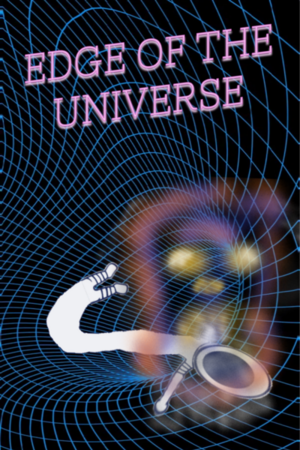
Edge of the Universe
Sending probes into the boundary was a bit like playing darts… on a constantly moving target. The curvature at the end of the universe was not constant. It fluctuated due to the instability where all rules of physics began to break down.
One could see this boundary as an ever-changing sheath, the laws of physics constantly fighting the breakdown until it formed a quasi-stable cycle of oscillations. One could easily imagine that the calculations depended also on where along that periodic wave the probe came in contact with the boundary.
As such, the onboard computer systems recorded these oscillations to calibrate the exact moment to launch the probe forward. For me, it was just another pain in the ass variable.
After all, sending a probe into the peak and valley of each oscillation could place it into completely different galaxies and time periods. That was part of why it had taken decades to map out different points and understand the model for where something would land. Figuring out that correlation took ages, and likely, different parts of the universe had their own unique oscillation.
As I had proven the other day, spatial placement had been more or less resolved within meters of the predicted location, making sure to steer clear of other objects. Obviously, one wouldn’t want to send a probe to a place that overlapped with another object, so a quick scan of an area would show any obstructions within a reasonable time window in the past. Every newbie researcher it seared in their eyes what would happen by sending a probe to the same place as an existing object.
The video started off with a lone box in a test facility. But then, the box shattered and a giant wave of energy struck the camera. A separate camera set outside recorded the explosion that proceeded to take out that entire facility. It was the pure result of the instantaneous repulsion of atoms occupying the same place, not dissimilar to nuclear fission let loose.
Now imagine trying to predict where that same probe would land, some unknown moment in the past? What was the guarantee that something or someone wouldn’t happen to be there?
Many researchers would grow cold at that disaster waiting to happen, as there was hardly a convenient map of the universe at every moment in time. Fortunately, the most up to date models even included safety precautions.
“Please consider taking a break after this round, Dr. Liebermann.”
And that explanation was why Becky was currently hounding me to take a rest, so as to not make any mistakes.
“Yes, in a few.”
“I insist that you take a short rest, Dr. Liebermann.”
“How long do you think I’ve been doing this?”
“Sir, even a well-trained researcher such as yourself cannot be complacent. My programming dictates that I must do everything possible to optimize the results. And currently, age-related exhaustion presents the highest possibility for a risky decision.”
I stopped inputting the parameters for the next probe.
“Are you calling me an old fart? How rude.”
“Better rude than negligent. Complacency was the result of Starship Ixion and its crew’s demise.”
Starship Ixion. A well-documented voyage by the top of the line space craft, hundreds of years ago. It was one of the best cases for warning the public of what happens by charging too far ahead.
They were a crew sent to document the farthest reaches of the universe. But rather than sending probes to scout the area ahead, it continued moving forward at hyperspace until it hit the boundary, thinking that there were no obstructions.
Needless to say, the entire crew perished, and it wasn’t until many decades later that they found the remains. Apparently, it had struck some primordial planet and nearly wiped out life there. Fortunately, that planet recovered, even though it set back intelligent life many millions of years.
“Of course, I won’t make that big of a blunder. Not with how tiny the probes I’m allowed to send.”
The onboard AI prevented such dangerous measures from ever happening again. There was also a limit to how large a probe could be to minimize the impact of any issues that happened upon reemergence. After choosing parameters like mass, velocity, and spin, it would automatically calculate the trajectory and give a margin of error in terms of coordinates and timeline.
Using this range, the system cross-checked known map data for any obstructions, flagging me to make fine adjustments to avoid them completely. The vast emptiness of space made such things trivial, but issues did occasionally pop up.
I pressed the submission button and watched as the computer went through these checks, showing all green before I confirmed the launch. And then, I sat back in my chair and closed my eyes for a bit.
Of course, someone had to gather that data to begin with. That was why I had been arduously sending out probes for years, unveiling the fog that hindered the model predictions. In the early days, there was more manual guesswork. Having a probe land near important things would create distortions in space-time that became documented as ‘anomalies’.
Anomaly was a funny word to me. That was because the red dots on my map that marked them were all caused by me. Granted, none of them were malicious in nature. They were simply poor guesses that resulted in dangerous outcomes.
The mis-landing of one probe had knocked out an entire army on the surface of one primitive planet, making the surviving side wonder if a deity had intervened. Science had yet to reach a level where they even believed in aliens.
Another mishap with a giant probe had rewritten the entire geography as it landed between tectonic plates. Fortunately, mother nature had smoothed over that disturbance.
There was no telling what kind of unpredictable results would happen, so for everyone’s sake, it was best to have some tact in choosing landing points, lest the local population misinterpret futuristic technology as some unexplained phenomena, or heaven forbid, ‘magic’.
Not to mention, the insurance companies had recently sniffed out new ways of exploiting retroactive accidents caused by us. ‘The statute of limitations’ no longer applied when all timeframes were now technically accessible. That must have caused quite the debacle in court.
Because of that, it was best to make a good amount of distance. Fortunately, there was plenty of empty space around planets to improve the model accuracy before attempting a terrestrial landing. One just had to avoid the space junk naturally swirling around the upper atmosphere.
“The signals have been received, Sir,” Becky called out to me, stirring me from my nap.
I looked up to see a shiny new dot in red among the green ones added.
“Eh? There was an error. How could that be?”
I pressed the red dot to check the details.
The CMBR gave a date of 537 years ago, where the signal was lost an instant after it materialized, resulting in an error. Fortunately, the coordinates pointed to somewhere in the middle of the largest ocean on Mercurus.
Looking up the archives for any news around that date, I stumbled upon a small article.
Volcanic eruptions claim several uninhabited islands – extinguishing the last known habitat of Frodo birds.
I closed the article, feeling Becky hovering over my shoulder.
“You forgot to scan for cosmic debris before launching that probe. Collision with a 2-centimeter particle resulted in a 1.7% reduction in rotational and translational velocity, thereby sending it offcourse-”
I stuck my hand out to stop her.
“Yes, I know. Complacency. It could have been worse. Itcouldhavebeenworse. If you’ll excuse me, this old fart has to print some hard booze for the nerves.”
My hands shook as I dialed for the refreshment.
Not even the most state of the art AI could prevent everything bad from happening. That was why humans were staffed for these occasions. Actiphi Corporation could write off these mishaps as ‘human error’. Far be it that their models and algorithms were at fault in these cases.
“Becky, handle the potential fallout for me, would you.”
“Very well, have a good rest, Doctor Liebermann.”
I could only sigh at what meaning my two decades of work even held at this point. Creating an anomaly still had me shaken up even now.









Please sign in to leave a comment.