Chapter 1:
EPISODE 1 - "AN ORDINARY TUESDAY, MORE OR LESS"
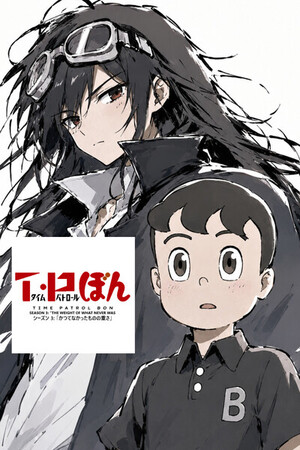
T・P BON — SEASON 3: "THE WEIGHT OF WHAT NEVER WAS" - Original Series By Fujiko F. Fujio
PART ONE: BREAKFAST
The toast was burned on the left side.
Not catastrophically. Not the specific ruin of toast that had been forgotten entirely and achieved the color and density of something archaeological. Just: slightly too dark. The kind of burned that was technically still edible but that communicated itself clearly with every bite as a small, recurring reminder that attention had been elsewhere.
Bon ate it anyway.
"You're eating the burned part again," his mother said. Not angry. Just: noting. The specific tone of a person who had watched someone she loved eat the burned part of things for fourteen years and had reached a place of genuine spiritual peace about it.
"It's still toast," Bon said. "There's unburned toast right there." "That toast didn't need me," Bon said. "This one did."
His mother looked at him across the kitchen table with the expression that lived specifically on the face of parents who had cared for a child they couldn't entirely explain. Not disappointment. Something closer to bewildered affection. The specific look of someone who loved a person very much and also genuinely could not account for them.
[BON'S INTERNAL MONOLOGUE: The toast is fine. I don't know why everyone has opinions about toast. Toast is toast. You eat it and then your day continues. This is what toast is for.]
His phone buzzed. He looked at it. A message from Ream: Mission briefing in forty minutes. Don't be late. I will not spend another briefing explaining to Gayler why you were late.
He looked at the message. Then at his toast. He ate faster.
PART TWO: THE BRIEFING
Gayler was already annoyed when Bon arrived.
This was not unusual. Gayler existed in a state of low-grade ongoing annoyance that occasionally spiked into something more acute during missions and returned to baseline afterward, like weather. Bon had learned to read the specific gradations of it — the clipboard-held-slightly-higher annoyance, the glasses-adjusted-twice annoyance, the specific silence that meant something had already gone wrong before Bon got there and Bon was about to find out what.
Today was the glasses-adjusted-twice annoyance. Moderate. Manageable. "You're three minutes late," Gayler said. "I'm here," Bon said. "Being here and being on time are different things."
"They overlap significantly," Bon said.
Ream, standing beside the mission display with her arms crossed and her expression doing the thing it did when she was deciding whether to be exasperated or fond and had not yet committed to either, said: "Bon."
"I'm here," Bon said again.
"We can see that," Yumiko said from the far side of the briefing table. She had her field terminal open and her notes already written — the specific quality of someone who had arrived early enough to be prepared and was now waiting with the patient energy of a person who had quietly accepted that waiting for Bon was simply a component of every mission. She looked up at him. "The toast again?"
"How do you know about the toast?" "You have crumbs on your collar." Bon looked down. He did have crumbs on his collar.
Gayler pressed on. "1666. London. September second." The mission display shifted — the specific holographic architecture of Time Patrol's briefing system assembling the target's information with the efficient precision of an organization that had been doing this for longer than Bon had been alive. "The Great Fire begins tonight. Your mission target is here." The display highlighted a narrow street in the city's eastern quarter. "Thomas Crane. Twenty-three years old. Bookseller. He dies at approximately eleven PM when the building he is sheltering in collapses ahead of the fire's path." A pause. "His survival carries no historical consequence. He is yours."
[BON'S INTERNAL MONOLOGUE: Thomas Crane. Twenty-three. A bookseller. He died in the middle of the most famous fire in London's history and nobody recorded his name anywhere because there were so many dying and the fire was so enormous and individual names disappeared into the scale of the event. But he had a name. He had a bookshop. He had — he had a Tuesday morning somewhere in his life where he ate breakfast and didn't know what was coming. That's — that always gets me. The not-knowing. The ordinary Tuesday before the not-ordinary one.]
"Any complications?" Ream said.
"Standard urban fire environment. Visibility will be poor after nine PM. The crowds will be moving east — you move with them, you won't stand out." Gayler looked at the three of them over his clipboard. The specific look. The one that meant he was about to say something that was technically procedural but was actually personal. "Standard protocols apply. You do not interact with anyone beyond the target. You do not engage with the historical event beyond the extraction. You go in, you bring Thomas Crane out of the building before it collapses, you come home." He paused. "Cleanly. This time."
"Last time was clean," Bon said. "Last time you nearly set fire to a curtain." "That was Buyoyon."
Buyoyon, floating near Bon's left shoulder with the specific quality of an entity that was choosing not to engage with this particular conversation, made a small sound that communicated nothing definitively either way.
"It was an accident," Bon said. "Curtains don't care about accidents," Gayler said.
PART THREE: 1666
London was burning.
Not yet — not at the moment they arrived, stepping out of the time boat into the warm September evening of a city that still had hours before everything changed. But the specific quality of the air communicated it. The heat that had been sitting in the city for weeks. The dryness. The way the wooden buildings stood close together on their narrow streets with the particular architectural intimacy of structures that had been built before anyone thought seriously about what fire did to intimacy.
Bon stood at the edge of Pudding Lane and felt the weight of knowing.
[BON'S INTERNAL MONOLOGUE: The people walking past me right now don't know. The baker on the corner — he doesn't know. The figure with the basket of cloth going toward the market — she doesn't know. By tomorrow morning the city will be unrecognizable. By the end of the week the sky above London will be the color of everything ending. And they're just — walking. They're just living the evening. The specific ordinary evening before the specific catastrophic morning. And I know and they don't and I cannot tell them because the rules exist and the rules exist for reasons and I understand the reasons and I still — I still feel the specific weight of knowing something and being unable to say it.]
"Don't," Ream said quietly beside him. Not unkind. Just: knowing him well enough to see where his face was going. "We have one person. We do the one person well." "I know," Bon said. "You're doing the face."
"I'm not doing the face." "You're doing the face where you think about everyone we can't save and it makes you look like someone kicked your pet dog you love allot." "I don't have a dog." "Then someone kicked a dog you were briefly emotionally attached to for some reason," Ream said. "Stay with me. Thomas Crane. Eastern quarter. Let's go."
Yumiko was already moving — the specific efficiency of someone who had learned, across months of fieldwork, that the best response to the weight of historical foreknowledge was to direct it immediately into purpose. Into the task. Into the one person who was theirs to bring home. She looked back over her shoulder at both of them. "We have four hours before the timeline requires action. We should find him now."
They found him in forty minutes.
Thomas Crane was not what Bon had expected. He was — small was the word. Not in a diminishing way. In the specific way of a person who moved through space with the careful economy of someone who had always known the world was not entirely designed with him in mind and had made his peace with navigating it thoughtfully. He was organizing books. In a burning city. On the evening before the Great Fire. Organizing books with the patient deliberate attention of a crafts person who believed in the specific value of things being where they belonged.
[BON'S INTERNAL MONOLOGUE: He's organizing books. He's going to die tonight and he's organizing books. And the thing is — the thing is that's not tragic. That's just — that's just the specific texture of a life lived with attention. He cares about where the books are. That's — that's not nothing. That's actually something quite significant.]
Bon watched him through the window of the small shop. The warm light inside. The dust that moved through it. Thomas Crane placing a volume carefully on a shelf and stepping back to look at it and making a small adjustment of half an inch and then nodding at the result with the specific satisfaction of someone for whom half an inch mattered.
Bon felt something tighten in his heart. "He doesn't know," Bon said quietly.
"No," Yumiko said. She was standing beside him. Her voice doing the thing it sometimes did — the controlled precision briefly softening into just: the actual response. The genuine one. "He doesn't know." They stood there together for a moment. The three of them. Watching Thomas Crane organize his books in a city that was going to burn. "We know," Ream said. Quietly. "That's why we're here."
PART FOUR: THE EXTRACTION
It happened fast when it happened.
The fire reached the eastern quarter at ten forty-seven PM — earlier than the historical record suggested, the specific chaos of a disaster that did not move according to the neat timelines that later centuries would assign it. Bon was already inside when the building across the street became a wall of orange and the crowd outside transformed from hurrying to running and the specific sound of a city losing its argument with fire filled every available space in the air.
Thomas Crane was on the upper floor. Retrieving something — of course he was retrieving something. Bon took the stairs three at a time and found him standing in the small room above the shop holding a wooden box with the expression of someone who had calculated, incorrectly, that he had more time than he had.
"We need to leave," Bon said. "Right now." Thomas Crane stared at him. "Who are you?" "Nobody important. Can you walk?" "What—"
The ceiling on the far side of the room made a sound that meant the structural argument was over and the fire had won. Bon grabbed Thomas Crane's arm. The box came with him — Thomas Crane held it with the specific grip of someone who had decided that if he was going to move he was taking this with him and no further discussion was necessary.
They went down the stairs. Ream was at the bottom — she had come in the back way, Yumiko outside managing the crowd's movement, Buyoyon above them providing the specific luminescent guidance that in this century would look enough like a divine signal that people moved away from it instinctively. They went out the back. Into the alley. Into the dark and the heat and the roaring that was all around them now, the fire having opinions about everything.
Thomas Crane stumbled. Bon caught him. The specific weight of a person — real, present, breathing, alive — landing against Bon's shoulder.
[BON'S INTERNAL MONOLOGUE: He's alive. He's here. He's — he's holding his box and he's alive and in six hours this street won't exist anymore but he will. He will exist. He'll go somewhere and build something new and nobody in any history book will record his name but he will be alive to not be recorded and that — that matters. That specifically matters.]
They got him clear. Into the street beyond the fire's current path. Ream released a memory-wipe at careful distance — the specific procedure, the field standard, the necessary removal of an encounter that could not be explained in 1666 or any other century. Thomas Crane blinked. Looked around. Looked at the fire, now visibly consuming the block he had been inside thirty seconds ago. His expression moved through several things — shock, disorientation, the specific human response of a body that understood it was alive and was processing the significance of this fact.
Then he walked. Away from the fire. Carrying his box. Into the future that was his to have. Bon watched him go.
PART FIVE: THE SHADOW
They came home at 2 AM.
The mission log was filed. The debrief with Gayler was brief — three sentences of assessment, one question about the curtains, confirmation that no curtains had been involved, end of debrief. Ream went home. Yumiko went home. Buyoyon settled into the specific hovering stillness that was his version of sleep.
Bon sat at his desk. Not tired — the specific post-mission wakefulness that made sleep feel distant and unnecessary. He opened Buyoyon's ambient visual record. Standard procedure — the records were always filed, always reviewed, the passive environmental data that Buyoyon's eyes collected throughout every mission compiled into a document that usually contained nothing of significance. Pudding Lane, September 2nd, 1666. The crowd. The firelight. The backs of people running.
He was looking at the street they had stood on. Watching Thomas Crane through the window. The three of them outside. Ream. Yumiko. Himself. And across the street. Thirty meters back. Standing in the specific stillness of someone who was not running. Who was not moving with the crowd or against it. Who was simply: standing. Watching.
A figure.
The clothing was wrong. Not 1666 wrong — wrong in a different direction entirely. The specific wrongness of someone wearing nothing that belonged to any visible century. Young. Angular face. Very dark eyes, even at this distance, even in this firelight, communicating something that Bon could not name but that landed in his heart with the specific weight of something that mattered.
The figure was looking at them. Not at the fire. Not at the crowd. At them. At Bon specifically.
[BON'S INTERNAL MONOLOGUE: That's — who is that. That's not — that's not a civilian. That's not someone who belongs in 1666. That's not someone who belongs in any year I can immediately identify. That's someone who is watching us work and who came here to watch us work and who is standing in the middle of the Great Fire of London with the specific stillness of someone who is exactly where they intended to be. That's — I need to look again. I need to—]
He rewound. Three seconds. Looked again. The figure was gone.
The spot where they had been standing was empty. The crowd moving past it as if nothing had ever been there. The firelight filling the space. Just: London burning. Just: the ordinary catastrophe of a documented historical night.
Bon sat at his desk at 2 AM with Buyoyon's visual record open on the screen and the specific cold feeling of something beginning. He didn't know what it was yet. He just knew — the specific knowing of someone whose body understood things before the brain caught up — that something had looked at him tonight.
And that it would look again.
[NARRATOR: This is how it begins. Not with fire — there's already fire, there's always already fire, fire is the oldest thing history does. It begins with a figure standing still while everything burns. It begins with the specific quality of being watched by something that knew your name before you knew it existed. It begins on a Tuesday. With burned toast. With a bookseller who lived. With three young people who did their job well and came home and did not yet know that someone had been in the crowd, watching them do it. Season 3 begins here. In the stillness after the fire. In the three seconds of visual record that Bon will rewind seventeen more times before morning. In the empty space where someone was standing. The Great Fire of London burned for four days. What began tonight will take twelve episodes to extinguish. And unlike the fire — unlike history's fire, which burned what was already there — what began tonight was made. Deliberately. By someone who had been planning it for a very long time. Welcome to Season 3. Welcome to when someone noticed Bon Namihira. Welcome to when that became the most dangerous thing in the world.]
TO BE CONTINUED — EPISODE 2: "THE BEING WHO KEPT THE RIVER"







Please sign in to leave a comment.