Chapter 2:
Eleven Days
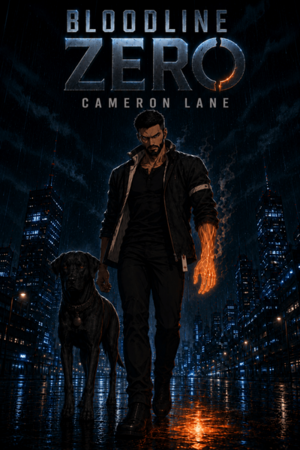
Bloodline Zero
Reed made it three blocks before the wound started dragging at every step.
Blood still ran hot beneath the black coat, but the cut along his side had already begun to pull closed. Muscle drew inward. Skin crawled. Under the torn flesh, tissue knitted toward the shape it was supposed to hold.
His body remembered too fast.
Reed stopped under the narrow overhang of a closed pharmacy and pressed a hand to his ribs. Rainwater slid off the black coat in thin dirty lines. Every screen in the storefront window ran the same bright Lumen ad on a loop: a smiling paramedic, a white emergency jacket, a child wrapped in a silver blanket.
LUMEN. A safer tomorrow. Together.
The slogan held his attention until the next pulse in his side made his fingers tighten.
“Yeah,” he muttered. “Together.”
Enough of that.
Hart Street was six minutes behind him and already becoming a story he wouldn't be allowed to own. By now the first responders would be locking down the block, and Lumen would be cutting feeds, collecting glass, tagging blood, moving faster than the city police understood. The people with phones thought they had proof. They had raw material, and Lumen would decide what it meant.
Reed pushed off the window and kept walking.
His left side pulled with every step. It hurt less than it should have, and that bothered him more than the pain would have. Pain made sense. This didn't.
His altered biology had taken the creature's claws, registered the damage, and already started repairing: the same way his bones had braced after the first collision, the same way his balance adjusted before the third impact, some buried reflex correcting before the same break could happen twice.
The repair helped. Reed hated that it helped.
He cut through the mouth of an alley, ducked under a fire escape, and came out on a service lane where delivery trucks idled behind a row of restaurants.
He didn't run. Running drew eyes. Limping or hurrying would draw hunters. So he walked with his shoulders low and his pace even, another man in a black coat leaving a bad part of the city on a worse morning.
Eleven days. That was how long he'd been in Calder.
Eleven days of rented rooms paid in cash, bad coffee, short sleep, exits checked before he sat down. Eleven days of wearing a name that wasn't his, keeping his face off cameras, watching Lumen buildings pretend to be ordinary.
Calder was deliberate.
He'd come because the pattern led here: Calder Memorial, three Lumen-connected clinics, two false incident reports filed as gas leaks, a missing ambulance log, and footage that lasted until it could be requested, then vanished before anyone outside Lumen could copy it.
And Hart Street, the ugly center of the map. A clean office tower. A public clinic sign in the lobby. A sealed outreach office two floors up with no posted hours and too many after-midnight deliveries.
Reed had watched that tower because the trail kept circling it.
Then the third-floor windows bent outward.
So now he knew. The lead was real. The only question left was how deep it ran.
A bus hissed to a stop at the next corner, and Reed stepped into the loose crowd gathering at the doors: office workers, a courier, a woman with a stroller tucked under the shelter, one hand over her child's head against the rain.
The doors opened. At the same moment, the traffic camera above the intersection rotated.
He caught it in the reflection of a puddle: a small movement, a bad angle.
He dropped his head and moved with the crowd while the bus blocked the camera's line, his reflection broken across the wet pavement into pieces of black coat and tire spray. The camera kept turning. He let the last passenger board, then crossed behind the bus in one controlled rush and vanished from the frame before the engine coughed and the doors folded shut.
By the time the camera found the sidewalk again, he was under the awning of a convenience store across the street, beside a newspaper rack and a dead lottery machine.
The screen above the register changed. The weather report vanished, and a gray emergency banner took its place.
PUBLIC SAFETY NOTICE HART STREET INCIDENT AVOID AREA — LUMEN RESPONSE ACTIVE
A grainy still appeared beneath the text. Black coat. A smear of orange pressure.
His expression hardened.
The image was bad: rain smear, motion blur, half his face hidden. It wouldn't hold for identification by itself. Lumen needed less than that.
The woman with the stroller came in behind him, shaking rain from her sleeves. She glanced at the screen, then at his coat. Her eyes paused just long enough.
Reed reached past a rack of protein bars, took the cheapest canned coffee, and set it on the counter.
The clerk barely looked up. "Two ninety-nine."
Reed put down a five.
The woman's gaze came back to his cuff. He turned his wrist so the torn sleeve faced inward.
"Keep the change," he said.
The clerk snorted. "Hero."
"Wrong day for that."
He left before the woman finished deciding whether she knew him.
Outside, the rain had thickened. Good. Rain made people look down and washed blood off pavement.
He cut west, toward the next piece of danger.
The freight corridor ran behind Calder's medical district, old service lines and newer Lumen infrastructure stitched together under a decade of public-private development signs. Most people saw rail fencing, warehouses, loading bays, roads that always seemed half closed.
The deliveries told him more. Supplies arriving at clinics that listed no deliveries. Lumen vans leaving Calder Memorial with their public trackers dark. Waste trucks that ran empty by weight and full by schedule. Calder's hidden routes ran west.
At the corner, one of those clinics lit up.
Its front windows had been dark when Reed passed them two nights ago: chairs stacked behind glass, pediatric posters smiling at an empty waiting room, the kind of after-hours quiet built to look harmless. Now a cold white strip burned behind the blinds for three seconds, and something under his ribs pulled toward it, sour and faint.
Then the light died.
A Lumen van with no public ID rolled out of the alley beside the clinic, too clean for the rain, and turned west without headlights until it reached the next block.
A billboard flickered above the next block, the same woman in the lab coat smiling down through the rain. Reed kept walking.
His wound pulled again. He slipped into a narrow passage between two apartment buildings and stopped beside a rusted stairwell. No cameras. No windows facing him. The nearest civilian would see only a shadow.
He opened the coat.
The shirt beneath was torn black and wet red. The claw marks should have gaped, but the skin had drawn itself together in rough, uneven seams, pale at the edges and hot to the touch.
The repair was fast, ugly, and Reed didn't trust it.
He touched the wound with two fingers, and a flash of Hart Street hit him: the creature's ribs folding under his fist, its shoulder twisting back into the socket, its jaw closing around the next breath.
The pattern came back clearer than memory should have.
Cold settled under Reed's ribs.
"No,” he said, low in the rain. “That wasn’t instinct.”
The wound tightened under his fingers. Reed pressed harder until pain cut clean through the memory.
Better. Pain put him back in his body.
He closed the coat.
The lost one on Hart Street had broken pattern in three ways.
First, it changed too fast. A fresh lost one should come out hungry and confused, all violence and no pattern. That one had learned during the fight: taken an angle, protected its broken side, turned Reed's rescue position against him.
Second, its healing was rougher than Reed's, but close enough to prickle the back of his neck.
Third, it chose.
Low ones didn't choose like that. They chased heat, blood, motion: the nearest scream, the easiest body. Hart Street had handed it all of those: the man under the coffee cart, the woman by the curb, the delivery driver, half a dozen people closer than the girl at the bus shelter.
And it had turned toward Mara anyway, something inside it pointing her out.
He pictured her face briefly. Wide eyes. Rain in her hair. Glass around her knees. The phone still in her hand. What are you?
He pushed the thought away before it could stay. The girl wasn't the mission.
But the choice mattered. If the lost ones were choosing, Calder was in deeper trouble than he'd thought.
A siren cut across the far end of the block. Reed looked up. Different pitch than police. Lumen response vehicles used a softer tone, engineered to sound calm, almost helpful. People trusted it. They stepped aside and filmed with relief.
The sound moved east, toward Hart Street.
Good. Let them crowd the wound after the blood had already spread.
By the time Reed reached Harrow Street, the rain had soaked through the back of his shirt and the coffee had gone cold in his hand.
The Harrow Street culvert sat under a dead stretch of rusted road, its concrete mouth blocked by chain-link and weeds tall enough to hide a body.
He climbed the fence without touching the top wire. His boots hit mud on the far side. A rat vanished into a drainage pipe.
"Smart," Reed said.
The culvert smelled like runoff, oil, and old city water. He followed the narrow ledge along the water to the third support pillar, where a maintenance panel sat slightly crooked, one screw newer than the rest. He worked it free with a thumbnail and opened the panel.
Inside: a wrapped bundle the size of a lunchbox. Dry black shirt. A compact black-charcoal jacket, folded flat and sealed against the rain. Cash. Burner phone. A folded city map marked in pencil. A cheap digital watch with a cracked face.
He changed shirts first. The old one peeled off the wound with a wet drag; he set his teeth, paused once, and pulled it free. The skin underneath had sealed another quarter inch.
He didn't thank it.
He wrapped the torn shirt in plastic, pushed it deep into the culvert water, and watched the current take it into the dark.
Then he unfolded the map.
Calder Memorial, circled once. The Hart Street tower, circled twice. Three clinics formed a crooked triangle around them: Northline Family Care, Calder Pediatric Outreach, and Westbridge Emergency Annex.
Lumen's name sat on all three, but never the same way twice. The labels shifted between partnership, fellowship, response support, and medical innovation grant. The same company under different names.
He traced the pencil marks with a finger. False gas leak. Missing footage. Sealed outreach office. Late deliveries. Freight corridor. West service spur.
After Hart Street, the lines met behind the tower. Under it. Moving away from the public clinic and into the service infrastructure Lumen didn't advertise.
He tapped the west spur once. "There you are."
The burner phone buzzed before he touched it.
The device sat in his palm. The screen was black. No number. No alert. A faint tremor against the concrete, like it had caught a signal too weak to become a message.
Then the cracked watch beside it flashed. 00:00. It hadn't worked in eight months.
He froze.
Only the sour pull remained under his ribs, leading west through the culvert wall toward a buried signal under rain, concrete, and city noise.
A fresh Origin trace shifted beneath the city, barely strong enough to feel.
He closed his fist around the broken watch until the plastic casing creaked.
The source was deeper. Hart Street had been overflow.
He packed the map, cash, and phone into the flat waterproof pouch hidden behind the panel. Then he stripped off the black coat.
It was visible now, soaked with Hart Street and blood, easy for Lumen to teach the city to recognize. He wrapped the black coat in plastic and shoved it into the black runoff, letting the culvert take the worst of Hart Street with it.
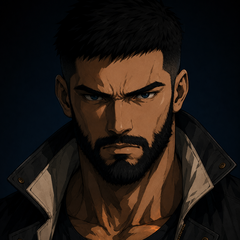
The backup jacket went on last. Short black-charcoal, open over the dry black shirt, with bone/off-white lining at the collar and inner edge. One worn bone/off-white armband sat on the left sleeve; the right stayed plain. A small side tab hung near the hem, scuffed enough to look personal instead of marked. Clean dark pants. Dark black-brown laceless boots. Nothing clean enough to look heroic or close enough to match the black-coat footage.
Reed stepped out of the culvert and into the rain.
The west service spur waited beyond the freight corridor, past a row of warehouses and a clinic that should have closed six hours before its lights came on. His side ached. His body kept healing anyway. Lumen had the whole city waking around him, and the public would know the black coat before they knew the dead man in the lobby had ever had a name.
None of it changed the next move. He needed to find the leak before it made another Hart Street.
He started west.
Three steps later, he stopped.
The rain behind him changed. Not much. A soft scrape under the culvert lip. A pause. Then another.
Too low for a person. Too careful for a rat.
He turned slowly. Nothing moved in the open, only rain, concrete, weeds bending under water.
Then, from inside the dark mouth of the culvert, a familiar presence breathed.
His hand closed at his side. The Origin trace pulsed again, faint, and familiar in a way that didn't belong to Calder. The pull ran under his ribs, sharp enough to make him stop breathing.
This time, the pull swung away from the west spur and into the dark behind him.





Please sign in to leave a comment.