Chapter 3:
The Official Version
Bloodline Zero
Mara woke to white ceiling panels and a voice telling her she was safe.
The first lie.
The woman sounded kind, calm, practiced. But Mara remembered Hart Street: glass bending outward, the creature dropping low across the road, the man in the black coat hitting it and making the air explode.
Safe didn't belong anywhere near that memory.
"Mara?"
She turned her head too fast, and pain flashed down the side of her neck.
A nurse leaned over the bed. Pale blue scrubs, soft eyes, a Lumen badge clipped clean at her chest.
LUMEN INCIDENT SUPPORT
E. VALE — RESPONSE CARE
"There you are," the nurse said. "Easy. Don’t sit up too fast."
Mara looked down. Her jacket was gone, and the sleeve of her off-white top had been cut away near the shoulder. A strip of gauze wrapped her thumb where the paper cut had been.
Such a small injury, dressed like evidence.
"Where am I?"
"Calder Memorial. Observation floor." The nurse smiled. "You’re stable. Minor concussion signs, bruising across your back and shoulder, a few superficial cuts. Nothing that looks dangerous right now."
Mara tried to sit up, and the room tilted.
"Slow, Mara." The nurse guided her back without force. "Your body’s still catching up."
The badge held her attention until her mouth filled with the taste of rain and metal.
"My phone."
"It’s with your things."
"I need to call my mom."
"We called your emergency contact when you came in. She knows you’re alive."
Alive. The word felt chosen, not comforting.
Past the nurse's shoulder, a wall-mounted screen played a muted news broadcast. Hart Street filled the frame.
But it was the wrong Hart Street.
The footage began after the street had already broken, after the creature was dead, after the man in the black coat had come out of the lobby on one knee. It froze on him there: black coat, orange pressure caught around the impact, blood thinning in the rain. A banner unrolled beneath it in calm red letters.
LUMEN CONTAINS HART STREET BIOLOGICAL THREAT
Mara stopped breathing.
The nurse followed her gaze and lowered the remote. "You shouldn’t watch that yet."
"What are they saying?"
"Mara—"
"What are they saying?"
The nurse hesitated. Then she turned the sound on.
A woman with grave eyes and perfect hair faced the camera from behind a Lumen podium, two Calder officials and a line of white-jacketed personnel arranged behind her. No one looked panicked. No one looked unsure.
The room had been staged that way.
"Lumen Response confirms that today’s Hart Street event involved an unregistered enhanced individual interfering with active containment," the spokesperson said. "Thanks to rapid coordination between Calder emergency services and Lumen field personnel, the biological threat was neutralized before further civilian casualties occurred."
The footage looped as she spoke.
It showed the man in the black coat standing in the street.
It didn’t show the creature lunging for Mara, or him stopping it inches from her face, or the bad angle he took so the people behind the shelter lived.
The video started too late, and it changed the story.
"Current guidance is simple," the spokesperson went on. "If you saw the individual in the black coat, do not approach him. Do not attempt to assist him. Contact Lumen Response or local authorities immediately. He may appear injured. He may appear protective. These behaviors are consistent with threat manipulation observed in prior incidents."
Mara's fingers curled into the blanket.
Threat manipulation. The words were so clean they almost sounded medical.
"He saved us," she said.
The nurse's expression adjusted by one careful degree.
"You were in shock," she said gently. "That's common after exposure events. Memory tends to organize around the most visible figure."
"No." Mara's voice came out rough. "I saw what happened."
"I'm not saying you didn't."
"You are."
The nurse let the remote settle in her lap, and Mara noticed for the first time the tablet balanced beside it: a form already open, several fields filled in. Name. Time admitted. Incident location. Witness category. Potential exposure: pending.
"Mara, I need to ask you a few things while the details are fresh."
"About him?"
"About the incident."
The distinction sounded rehearsed.
The nurse drew a stool to the bedside and sat, bringing herself lower than Mara. It only made the bedside feel smaller.
"Did the individual in the black coat speak to you?"
Dark eyes through rain. Get out of here. Before they decide you saw too much. Her thumb throbbed under the gauze.
"He told me to get down."
The nurse typed. "Anything else?"
Mara watched the screen reflect small and bright in the woman's eyes.
"What did the creature from the building do to the people it hit?"
"We'll get to that."
"No. You won't." Mara pushed herself higher against the pillow. "You're making it sound like he was the threat."
"Mara, that statement is based on verified response data."
"I was there."
"Yes," the nurse said, softer. "That’s why we want your account to stay accurate. Not shaped by trauma."
Care, used to hold her still.
On the screen, the footage replayed. The man in the black coat rose from one knee. Phones lifted around him. Sirens washed him red and blue. The broadcast froze on his face the instant he turned away, and the chyron changed.
LUMEN REQUESTS PUBLIC ASSISTANCE IDENTIFYING HART STREET FUGITIVE
Cold moved down Mara's arms.
They showed the escape instead of the rescue.
That was the official version.
"Did you see his face clearly?" the nurse asked.
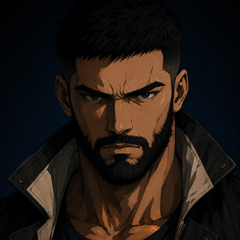
Mara had. Pieces of it. Dark hair, short beard, sharp eyes, a wound that should have put him on the floor.
Her attention dropped to the Lumen badge on the woman's chest. Then to the gauze around her thumb.
"No," she said.
The nurse stopped typing. "You're sure?"
"I was scared. There was rain, and glass." Mara held her gaze. "I don't remember his face clearly."
A few seconds passed. The nurse smiled again, smaller this time, and made a note Mara couldn’t read.
"That's all right. We'll help you sort through it."
Mara lay back beneath the image of the man in the black coat, frozen under his red banner. Dangerous. Fugitive. Threat.
She closed her hand around the sheet.
For the first time since she'd left home, she knew one thing clearly.
She would not help them turn him into the monster.
By late afternoon, Reed watched Voss lie on a television above a gas station coffee machine.
The coffee was terrible, and the lie was worse.
He stood at the back of the store in the short black-charcoal jacket, open over a faded black shirt that still clung damp at the ribs. One hand rested around a paper cup, the other loose at his side. His wound had stopped bleeding, and he didn't like that either. Every time he shifted, the sealed skin along his ribs pulled tight and hot beneath the open jacket, accelerated repair doing its work whether he liked it or not.
Whatever had breathed in the Harrow culvert had followed him this far. It kept to the outside, low and patient, somewhere past the rain-streaked windows and the pumps. Familiar enough for Reed to feel it in his blood. Quiet enough that he hadn't turned around.
Dangerous, but not hunting him.
So he let it stay there. The west service spur mattered more.
On the screen, Director Voss stood behind the Lumen podium with the same calm face Reed remembered through glass.
He looked older now, in a better suit, but the eyes were the same.
"Calder residents should remain calm," Voss said. "There is no evidence of an ongoing public threat beyond the individual already identified in connection with prior Lumen security events."
Reed almost laughed.
Prior Lumen security events. Reed had other words for cages, blood draws, and locked rooms.
The clerk turned up the volume. Two men arguing lottery numbers by the cooler went quiet to watch.
"Hart Street is contained," Voss continued. "Lumen is assisting local hospitals, supporting affected families, and conducting a full biological assessment. We ask the public not to circulate unverified footage. Edited clips create confusion and put more lives at risk."
Reed took a sip. Burnt. Thin. Still not the worst thing in the room.
Voss was burying Hart Street and tightening the box around it.
He left out the first rupture and the third-floor windows. He also left out the part Reed cared about: why a fresh lost one had healed like that, and why it had chosen a girl at a bus shelter over half a dozen easier bodies.
Reed had enough. Lumen already knew this was bigger than one incident, and Voss was smoothing the edges before anyone could make out the shape underneath.
The screen cut to a still frame. Reed in the black coat, orange pressure frozen around the strike, a half-second caught between impact and blood.
One of the lottery men whistled. "That guy looks like trouble."
The other shook his head. "They’re saying he caused it?"
"They wouldn’t say it if it wasn’t true."
Reed looked into the paper cup. "People say all kinds of things."
The lottery man glanced over. "You defending him?"
Reed looked up. The man took one read of his face and developed a sudden, deep interest in the chips aisle.
The bell over the door chimed, and Reed saw them in the curved security mirror before they saw him.
Two men came in from the rain with dark jackets and neutral faces. Their shoes were too clean for the weather, and neither one looked at the cashier first.
Recovery. Low-grade Lumen assets, human enough to pass, with enough of Lumen’s work in their blood to be more than ordinary.
One drifted toward the drinks while the other took the aisle by the restroom, splitting the store without spooking the civilians. Professional.
They were late.
Reed set the cup down.
Above him, Voss kept talking. "If you encounter the fugitive, do not engage. Lumen personnel are trained for recovery contact."
Recovery contact. Reed almost smiled.
The man by the restroom reached into his jacket.
Reed crossed the aisle before the weapon cleared fabric, caught the wrist, folded it inward, and drove the elbow into the metal shelving. Three rows of windshield fluid came down in bursting blue puddles.
The second man turned. Reed threw the first into him, and they went into the snack rack together.
The clerk shouted. The lottery men dove behind the beer display.
The second agent came up faster than a man should, pupils flashing pale for an instant, Lumen’s work burning just under the surface.
The pale flash confirmed it.
He swung low for Reed's ribs. Reed gave back one step; the punch cut air. Then he brought the paper cup down across the man's eyes, and scalding coffee did the rest.
The agent flinched, and Reed hit him once in the chest. He held back enough to leave him breathing and hit hard enough to make his lungs useless. The man left his feet, crossed half the aisle, and cracked the freezer doors in a spiderweb pattern.
The first agent struggled up. Reed set one boot light against his wrist, and pressure tightened beneath the skin along Reed's forearm, just enough for the agent to see.
"Don't," Reed said.
Whatever the man saw in his face, it was enough. He went still.
On the television, Voss said, "We are asking for trust."
Reed looked up at the screen, and Voss looked back from somewhere else.
The clerk's hand hovered near the panic button.
Reed stepped off the agent's wrist.
"No one's dead," he said. "Tell them that part before they edit it."
Then he walked out into the rain.
Behind him, the agent dragged in a breath and whispered into his collar. "Contact confirmed."
Reed heard it through the door and kept walking.
Good. Let Voss know he was still moving and wonder where.
The west service spur was waiting.
And somewhere under the city, a familiar presence had breathed in the dark.
Director Voss watched Hart Street die twelve different ways.
On the largest screen, public footage held Reed Mercy in the street. On the second, traffic data tracked the creature's first movements. On the third, a silent overhead angle showed the bus shelter, the girl, and the moment the lost one changed direction.
Voss stood in the Calder Recovery Room with his hands folded behind his back. The room was quiet: soft keys, low voices, the steady hum of ventilation. He preferred quiet rooms.
"Play it again," he said.
The analyst at the front desk swallowed. "From breach?"
"From target acquisition."
The footage rewound. The lost one erupted through the lobby. Civilians scattered. The creature turned toward the nearest motion, then stopped. Its head lifted. Its whole body reoriented.
A line drew itself across the screen, projected from its face to the bus shelter.
Mara.
Voss's eyes narrowed. "There."
The analyst froze the frame.
Several victims were closer. One bled. One crawled. One had fallen and couldn't rise. The lost one ignored all of them.
"Newly turned subjects don’t choose like that," Voss said.
"No, Director."
"Could it have reacted to Reed?"
"Reed hadn't moved yet."
"Sound?"
"No meaningful spike from the girl's position."
"Blood?"
The analyst checked a side panel. "Minor trace. Right thumb. A small open cut."
Voss studied the frozen frame: a girl with wet hair, a phone still in one hand, standing behind broken glass with no idea the world had just marked her.
"Mara Ellis," the analyst read. "New arrival. Calder–Lumen Emergency Medicine Fellowship. Orientation tomorrow. No prior flags."
Voss didn't answer right away. He watched Reed enter the frame.
The rescue was brutal and controlled.
Reed crossed the street faster than the cameras liked, and the image smeared: a hard orange streak through rain and motion. Then the impact, and the lost one stopped inches from the girl while Reed took the whole force through his shoulders and legs.
He should have killed it in the first exchange.
He hadn't, and Voss kept that detail.
"Classification?" Voss asked.
"Initially Class Two."
"Initially."
The analyst shifted. "Post-event review suggests unstable variance. Regeneration was above range, and it adapted during the fight."
"Who authorized local disposal?"
The room got quieter.
The analyst's fingers moved once across her tablet. "Calder pilot data is compartmentalized above my access."
"I didn't ask what you could read."
A pause. "No local disposal authorization appears in the active response chain."
Voss turned back to the screens.
So. Hart Street had exposed Reed and Calder.
The pilot was leaking badly enough to throw a public rupture, and Reed had been standing in front of the right building when it burst.
Reed Mercy didn't wander into pressure points.
"Bring up the pre-incident map."
A screen shifted. Calder Memorial. The Lumen clinics. False gas reports. Missing footage requests. A sealed outreach office. The freight corridor. The west service spur.
Voss read it once. He didn't need to read it twice.
"He came here for this," he said.
No one answered. They all understood what it meant. Reed had been watching the pressure point before it blew.
The analyst at the side station lifted a hand to her earpiece. "Director, field contact. Two recovery officers engaged Mercy at a North Harrow gas station."
"Status?"
"Alive. Both disabled. No civilian fatalities."
A trace of amusement crossed Voss's face. "Of course."
"Mercy is moving west."
The west service spur glowed on the map.
Voss studied it. Then Mara Ellis, frozen on the overhead screen. Then Reed in the half-second before impact, caught between rain, motion, and blood.
The room had given him three problems at once: the leak, the girl, and the source.
He pointed at Mara's file. "Flag her for soft contact. No hard pressure yet. Suspend fellowship access pending review, but do not frighten her into running."
"Yes, Director."
"If she saw the rescue, she'll resist the public account. Let her believe that matters."
The analyst nodded. "And Mercy?"
In the corner screen, the gas station replayed: Reed moving through the agents with no wasted motion. Stronger than recovery estimates, and still conserving despite the injury.
Teams like that could find him and slow him. They couldn't contain him.
Recovery was no longer enough.
Voss stepped closer to the glass, and for a moment Hart Street burned in his eyes: the monster, the girl, the black coat, the orange pressure caught around the impact. Then the reflection shifted into an older memory.
Private.
"Send the one he will not run from."






Please sign in to leave a comment.