Chapter 4:
Dead Boy's Papers
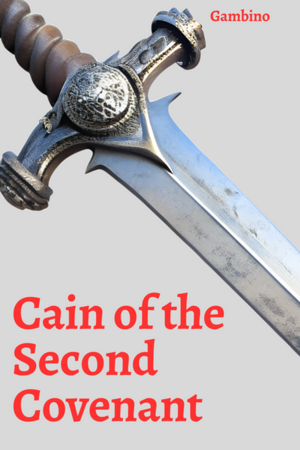
Cain of the Second Covenant
Two days later.
Cain stood before a shop that hadn’t changed since he first found it two years back.
The same three books, a prayer-book, a tide almanac, and a book of herbs, still stood spine-out in the window, their covers faded to the pale color of weak tea.
The brass bell hanging over the door had been dead that first day and remained dead still. The forger didn’t trust a bell that a careful stranger could easily silence. She trusted the third floorboard from the door, the one that always made a sound when weight was put upon it.
Cain stepped on the board and let it announce his arrival.
She sat where she always sat at the low table under the north window. A folding knife and a pot of thick paste sat at her elbow, and a lamp was still burning though it was midday. Cain waited out of the lamp’s reach. That was how this worked.
She finished the stroke she was on, then lifted her hands from the page. “You’re back,” she said. “It’s been a while.”
“They changed the seals at midsummer,” Cain said, keeping his voice low. “The guild halls started checking them at Harvest Home.”
“Well, I know when they started,” she said, holding out a pale hand, palm up, her eyes still locked on her work. “Half the forged papers they’re squinting at came off this table. Let me see what you’ve been carrying.”
The seals weren’t something Cain could ignore. Every set of papers carried one in the corner, a small stamped mark that told a clerk a real office had put the kingdom behind the name. Guild halls looked at that before they read anything else. So when they cut new seals at midsummer, the old mark on his papers became useless.
His papers said he was a dockhand named Kell, born up the coast in a town he had never seen. All of it had come off this table two years ago, and none of it would pass a clerk who checked the stamp.
He set the packet in her palm. Two years of weather had softened the oilcloth at the folds and furred the edges of the sheets. The ink had gone pale grey where his thumb kept finding the same corner.
She untied the string and laid the sheets out under the lamp, careful with them, then looked up at him the same way she had looked at the paper.
The lamp caught his face while she looked him over. She took in the salt-cracked boots and the rope scars laid thick over older calluses a prince’s sword had left behind.
Two years ago she had looked at him the same way and told him to walk less like the floor belonged to him. He did not carry that royal stride anymore.
“Hmm,” she said, a small satisfied sound. “It looks like it fits you now.”
She did not mean the paper.
The work took her the rest of the afternoon. He sat on the stool between the press and the wall, out of sight of the window. From there he watched her scrape and wash the sheets, lift the old seals with a heated knife, and cut new ones in wax the color of dried blood.
She worked without hurry, and it was the first thing in weeks he had liked watching. Somewhere in the middle of it she spoke again.
“Bounties are up this season,” she said. “You should keep your head down out there.”
“I’ve seen the posters.”
“Then you know why I’m saying it.”
“The one they want is fourteen,” Cain said. “That’s two winters gone and it doesn’t look much like me now.”
“You’re right, it doesn’t.”
That heavy silence marked the end of it, as it was the closest either of them had come in two long years to saying the truth out loud. The metal paste-pot ticked softly against her knife as the lamp burned lower into the evening.
As the street outside darkened, she finally set the remade packet in front of him. The new oilcloth was stiff at the folds, protecting papers that had somehow aged fifteen years in a single afternoon.
Fresh, legally binding seals sat under honest-looking wear, and the ink was faded to the exact grey of the old document.
Cain gave the papers a read.
Name.
Place of birth.
And on the second sheet was the dead boy’s birthday.
Born the twelfth of Firstgreen.
It had ridden in the pocket of his coat for two years, and he had never once looked at it. Some unknown clerk had written it down the week the boy was born, and the boy had carried it for sixteen years before he stopped needing it. Now the name went on without him, renewed and aging backward, far better cared for than a grave.
Cain held the sheet a moment longer than the reading of it required. The dead boy’s date sat there in the ink, and under it, for one thin breath, something older tried to rise, his own name, the real one, the one she had never written.
Saying nothing, he folded the heavy packet and slid it deep into the inner pocket of his winter coat.
She was wiping her knife clean and setting her table back in perfect order. She snuffed the dying lamp and took his heavy copper coins without a trace of sentimentality. She walked him the four short steps to the door, and as they stood before the dead bells, she looked him over one last time.
“Don’t come back,” she told him softly into the cold street. “There’s nothing left on you to forge.”
On the way back he bought something hot from a stall for supper, ate half of it without much interest, and left the rest. He walked up to the loft over the rope-yard with the new packet against his ribs.
He had slept four hundred nights under that ceiling, most of his two years in Averdmouth. Then he lay down and let the day go.
Sleep took him under before he could stop it.
In the dark he was fourteen again, back in his first winter. He had enough copper in his hand for a heavy coat or a plain iron knife, but not both.
The coat meant warmth every night.
The knife meant a way to deal with the man who had started following him home from the docks at dusk.
The cold would kill him for certain if he chose wrong. The man might. He weighed it for three days with his fingers stiffening in the frost.
He bought the knife.
He had been right about the man, and being right was the worst part of it. It would have been better to freeze and be wrong.
The heavy bells woke him at the second hour.
They were the temple night-bells, ringing soft over the sleeping port. Two slow strokes carried across the water and over the roofs. The sound was meant to be gentle.
Cain was on his feet before he was awake, back hard against the freezing wall, iron knife drawn and pointed at the dark.
He came back to himself, heart slamming as he stared at a door that nothing had touched. His mind had already found the window and the hatch, both ways out.
The second stroke finished and left the city quiet.
Cain stood still until the sound was gone. Then he stood there in the cold a while longer.
Moving slowly, he lowered his arm and set the iron knife back on the crate by his bed. He crawled under his thin blanket to lie staring up at the dark ceiling.
He asked himself nothing about the fear that had seized him. Over the years, he had gotten good at doing that.











Please sign in to leave a comment.