Chapter 37:
Interwar Period – Widerstand (7)
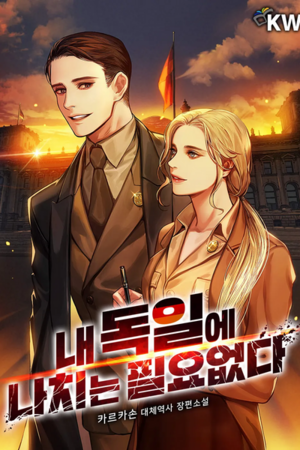
I Don’t Need Nazis in my Germany
July 28, 1939, pub in downtown Berlin, northern Germany
"Hahaha, diplomacy is war waged in peacetime. Fools who don't understand that can't conduct proper diplomacy. But all our Foreign Ministry people are like that!"
"Fufu, Minister Ribbentrop is very resourceful. From Anschluss to the Munich Agreement—aren't British and French diplomats going mad dealing with you?"
In a downtown Berlin pub, Ribbentrop, who had been summoned Friday evening ostensibly for reporting purposes, was still buzzing with excitement.
Claudia, who had been listening to Ribbentrop for two hours, was growing irritated and anxious, but maintained a smile as she humored him.
"Hahaha, as expected, you understand! Ah—drinking with a wise beauty like this makes the beer taste even better!"
"I'm very happy to work with the world's finest foreign minister."
Claudia answered Ribbentrop while sipping her beer, thinking, 'If you've drunk that much, shouldn't you need the bathroom at least once?'
Gradually, closing time approached and the number of customers decreased significantly. Claudia struggled to resist the urge to bite her lip, dealt with him patiently, and pondered what to do.
"Haha, I notice every time I see you—you truly are a beautiful woman. If my wife were as lovely as you, I'd rush home from work every day just to see her! Haha!"
"Ah, yes..."
If you're this drunk, just go ahead! The desperate thought of wanting to act made her tense. The Abwehr agents waiting outside must be equally tensed.
Ribbentrop half-emptied his beer mug, then slammed it down with a bang and grinned.
"You know, I really like Miss Reporter. You're communicative, beautiful, and don't say useless things. I wish all our Foreign Ministry staff were like Miss Reporter."
"I'm always grateful for your consideration. Thanks to the Minister, I can hold my head high at work."
When Dietrich, her lover, had invited her to join the resistance, she'd first resigned after consulting with her editor.
While Claudia entertained Ribbentrop, she glanced around as the last diners left the pub.
Now only she and Ribbentrop remained in the establishment.
"Heh heh, then I'll give my favorite reporter a present."
Seeing no other customers in the store, Ribbentrop wore a suggestive expression and leaned closer to Claudia.
Claudia flinched and almost pushed him away, but managed to regain composure by the time Ribbentrop whispered in her ear.
"I'm working on something magnificent that will make all traditional foreign policy obsolete."
At that moment, Claudia made her decision. Praying her voice wouldn't tremble, she responded to Ribbentrop's words.
"Oh, really? I'm truly looking forward to what it is. Someone of the Minister's caliber working secretly..."
As she spoke, she gripped the capsule in her pocket. Unable to look down to open it, she struggled with sweaty fingers that kept slipping.
"...just enough to tell you about it."
She wasn't sure if the confident smile she normally wore appeared genuine, or if her struggle with the capsule was obvious.
"Haha, but to give you such a wonderful gift, shouldn't there be compensation?"
Ribbentrop continued whispering, keeping his head close to Claudia.
"Compensation... what kind?"
Claudia laughed at his words but was struggling with cold sweat on her back.
"Oh, beautiful Miss Reporter, don't be so nervous. It's nothing serious. I just want us to have a more 'private' meeting. Hahaha."
"A 'private' meeting..."
Normally, she would have been outraged that this madman wanted to make her his mistress, but that wasn't the current problem.
Claudia finally succeeded in opening the capsule after struggling, looking directly at Ribbentrop, who misinterpreted her stiff expression as nervousness.
"That's right, Miss Reporter. As long as you agree, I'll ensure you get amazing scoops faster than anyone else in the world. Haha... Isn't that beneficial for both of us?"
"Aha, that's true."
Smiling at Ribbentrop, who continued staring at her face from close range, Claudia cautiously reached toward Ribbentrop's beer glass, holding the capsule in her right hand.
"So, what's your answer, Miss Reporter?"
"Hmm..."
Claudia pretended to be troubled and, after careful maneuvering, finally located his beer glass, but he began pulling away, disappointed by Claudia's apparent hesitation.
"...You're impatient."
With sudden determination, Claudia reached out with her left hand and gently grasped his chin, pulling him closer with a deep smile.
Seeing Ribbentrop's startled face flush at her smile, Claudia poured the capsule's contents into his beer mug.
"I'm not cheap, Minister. If you want to meet me 'privately', I want to hear first whether the Minister's 'great' news is worth it."
"Ha ha ha ha! Oh, this one's got spirit! I like a woman who challenges someone of my stature. Damn, I need a drink!"
Ribbentrop's expression clearly said 'cheeky girl,' but that was fine with Claudia.
She felt nervous watching Ribbentrop sip his beer, as if seconds had turned into minutes.
"Well, alright. Haha, you're a woman worthy of hearing this. I'm building a bridge between Germany and the Soviet Union..."
Ribbentrop, speaking about his grand plan, suddenly became dizzy and slowly began to fall to the side.
Claudia, prepared in advance, caught him and laid him on the table.
"Oh my goodness, I told you that you drink too much..."
Claudia spoke exaggeratedly on purpose, and with an apologetic expression, placed money and a generous tip on the table, supported Ribbentrop, and rose from her seat.
"I'm sorry, owner. Have we stayed too long?"
"Oh—haha, no problem! Have a good evening!"
The owner wore an expression that said, "You can't throw out a Nazi dignitary, but when will these lovebirds leave?" When he saw the large tip, he smiled and saw them off.
As Claudia struggled to half-carry Ribbentrop outside, the car she'd been waiting for stopped directly in front of her and quickly loaded him into the back seat.
"...Auf Wiedersehen. (Goodbye)"
As Claudia bid farewell with a cold expression, the car departed with Ribbentrop aboard.
August 20, 1939, Moscow, capital of the Soviet Union
Joseph Stalin, General Secretary of the Soviet Union that occupied vast Russia, sat in his office listening to reports with a furrowed brow.
"They say France can mobilize 100 divisions while Britain only 4 divisions. Meanwhile, the condition is that the French won't venture beyond the Maginot Line..."
The speaker was Marshal Kliment Voroshilov, Stalin's closest confidant and friend, but his reporting manner was rather cautious.
The shadows of the Great Purge, which had eliminated countless numbers, still haunted the Soviet Union.
Stalin had been displeased since Britain rejected his request to send Foreign Secretary Lord Halifax.
The negotiating team—far below the level of sincerity they had prepared—came leisurely by passenger ship, then spent a day sightseeing in Leningrad (now St. Petersburg) instead of rushing to Moscow.
"These damn capitalist pigs have no intention of forming an alliance with us."
At Stalin's blunt remark, Voroshilov hesitated before speaking.
"I believe so, Koba."
Stalin sighed and turned his gaze to Lavrenty Beria, head of the Soviet secret police NKVD, standing beside Voroshilov.
Though he was the architect of the Great Purge feared throughout the former Soviet Union, he too cowered with a servile laugh before Stalin.
"I conducted research as instructed, but this wasn't the Red Orchestra's work. Judging from the suspect's obscure whereabouts and professional execution, it clearly wasn't a simple hate crime but was supported by German internal forces, Comrade General Secretary."
The murder of German Foreign Minister Ribbentrop made headlines worldwide. A case where a minister was assassinated, yet the Nazis failed to arrest the suspect—greatly damagdd their credibility and leading to belated investigation.
Rather than killing an individual, it was discovered that the perpetrator had approached Ribbentrop by working as a journalist for a news company for several years, leading to criticism of Soviet involvement.
"...Or perhaps it's the British or French wanting us to bleed alongside Germany..."
In a situation where attempts to form an alliance with Britain and France against Germany—which relentlessly advocated anti-communism—were thwarted by their absurd attitude, Stalin naturally harbored such suspicions.
"Comrade General Secretary, there have been reports of secret contacts between German officials and Britain recently."
Beria's report further fueled Stalin's suspicions. Multiple contacts made by German resistance forces had all been exposed to Soviet agents in Britain.
They didn't know exactly what was transpiring.
"Well, I won't let them proceed as they please. While the fascists occupy the capitalist pigs' attention, we'll take Finland."
Stalin concluded thus.
August 28, 1939, Neue Reichskanzlei, Berlin, Germany
"Damn it, damn it, damn it! That idiot champagne salesman was obsessed with some blonde-haired whore and got himself killed!"
Hitler screamed and smashed his desk. After the Munich Agreement, the regime's ever-rising support was gradually overshadowed by war fears as Germany, Poland, Britain, France, and the Soviet Union vehemently criticized each other.
Public support remained at decent levels, but Wehrmacht morale was even more serious. They were decisively opposed, saying that if war came now, not only Britain and France but also the Soviet Union would participate.
"You idiots! You cowards consumed by defeatism! The Anglo-Soviet talks were fruitless! They won't go to war! It's the same as the Munich Agreement—why don't you understand this!"
Göring and Himmler sweated as they listened to Hitler's tirade. Hitler sighed and asked Göring after calming slightly.
"How much gold remains?"
"Mein Führer, regrettably, a credit crisis cannot be avoided at this rate. Companies unpaid for Mefo bills for several years are on verge of bankruptcy, and Czechoslovakia's gold reserves were less than anticipated..."
"Damn it! This economy, this damned economy!"
Despite Hjalmar Schacht's warnings, after diligently printing Mefo bills and operating munitions factories, Germany had robbed the Czechoslovak Central Bank's gold yet remained short of money to pay companies.
They desperately needed war. Whether the military opposed it or not, without war, the country would go bankrupt and the regime would collapse.
Finally, Hitler looked at Himmler and gave orders.
"Even the damn Wehrmacht will have no choice if Poland declares war first. Implement the 'Operation Himmler.'"
"Jawohl, mein Führer!"
August 31, 1939, Eastern Germany, 8th Military District, Breslau (Silesia), Gleiwitz
One day before World War II's outbreak in original history.
The city of Gleiwitz, located on Silesia's plateau on the German-Polish border, housed a broadcasting station with the tallest wooden transmission tower.
[Grandmother is dead. Repeat. Grandmother is dead.]
"Grandmother is dead, understood."
At the operational start code transmitted by radio, SS-Sturmbannführer Alfred Naujocks and SD members, who had been waiting at Gleiwitz for some time, sprang into action.
"I've waited long enough. What about the 'cans'?"
"Alive, but still unconscious."
The so-called cans were prisoners Heydrich had selected from camps and condemned to death by poisoning.
"Operation begins. Change into Polish uniforms, and from now on speak only Polish, not German. This is a crucial mission. Make no mistakes!"
"Jawohl!"
The Nazis, wanting to avoid other powers' participation in war during Poland's invasion, planned to disguise Poland's war declaration with the idea that Poland should declare war first.
The so-called 'Operation Himmler' was to attack Gleiwitz's broadcasting station while wearing Polish military uniforms and read a war declaration in Polish.
Then, to appear as if repelled by Germans, the unconscious prisoners would be dressed in Polish uniforms and shot, then disclosed to media as actions by the Polish army.
Britain and France ultimately participated in the war anyway, but it was a covert operation that made Nazis appear justified, even though Poland shed the most blood among Allied powers except the Soviet Union in original history.
The truth that this case was thoroughly fabricated by the SD was only revealed at war crimes trials after the war's end.
"Ahhh... I'm sleepy... When's the shift change... Huh?!"
The station's guards had no choice but to raise their hands as men in Polish uniforms suddenly appeared pointing guns.
"Pl-please spare me, spare me... Argh!"
The 'Polish Army' struck the guard with rifle butts without speaking.
"What, what—Poles?!"
"Don't shoot, don't shoot! We're civilians!"
SD agents, needing to appear as realistic 'Polish Army,' showed no mercy, and unfortunately, employees on night watch at the broadcasting station were mercilessly beaten and tied with ropes in a corner.
SS-Sturmbannführer Naujocks, having easily subdued the station, smiled. Everything was proceeding smoothly. Now they just needed the most Polish-fluent operator to read the Polish war declaration and properly shoot only the prisoners.
They'd need to appear shot while fleeing, so shooting from behind would be best. As he considered this leisurely, suddenly all broadcasting station lights went out.
"What?"
"What's happening!"
As Naujocks frowned and his crew spoke German without thinking, boot sounds echoed through the station and German troops poured through the door with a crash.
"What?!"
The 'Polish Army,' including Naujocks, was quickly subdued. Naujocks initially thought he'd been purged, but soon reconsidered.
This operation was too important to ruin that way. Something was clearly wrong with Heydrich, the police, him, or the military.
Unable to identify himself as German or explain, he could do nothing until a man wearing leutnant colonel insignia entered.
Naujocks carefully produced his SD identification to show it, but was struck hard by a rifle butt wielded by a watching soldier and had to spit out broken teeth.
"Hey, damn it! I'm not armed! I'm not trying to draw a weapon! We're SD! You're disrupting an important operation for the reich..."
Before finishing, Naujocks was struck in the stomach by the 'Leutnant Colonel' and collapsed.
"I know you very well, SS-Sturmbannführer Naujocks."
"Leutnant Colonel, the people outside have also been subdued!"
Upon receiving the report, the Leutnant Colonel—Abwehr Deputy Director Hans Oster—nodded and instructed crews to release the station staff.
"My God, what on earth is happening?"
"The SS committed treason to drag Germany into war against Poland. The situation is chaotic but we'll protect you."
"Oh... th-thank you."
The broadcasting station staff who suffered this ordeal would be valuable witnesses, so they must be protected. Oster observed this and picked up the telephone when station power was restored.
Asking the operator to connect and waiting momentarily, Oster swallowed nervously.
Now there was no turning back. But was this truly right?
[This is Captain Schacht.]
"...Grandmother is not dead."
[...Thank you, Colonel. The first operation succeeded.]
A sigh of relief was heard around Captain Schacht, and Oster hesitated momentarily. His conviction that Germany must be liberated from the demon Hitler had never wavered.
But how many Germans would die in this operation? Oster had long pondered whether he was prepared to face countless deaths.
As he remained silent, Captain Schacht's voice came through the receiver.
[Colonel, I don't know what the future holds, but I can tell you one thing for certain. If we leave Hitler's Germany as it is, the number of dead will be something we can't even fathom.]
"Yes."
This young captain had been more zealous than anyone, clinging to this mission as if he had no alternative. Sometimes he seemed to read minds, like now.
Oster suddenly realized he wouldn't have come this far without this comrade. And having come this far, he couldn't stop.
"...Operation Widerstand, permission to execute."
After sounds of the phone being handed to another person over the handset.
A deep, heavy silence passed.
As Oster waited, swallowing nervously, he heard Ludwig Beck's voice.
[Operation Widerstand, permission granted. ...God bless us and Germany.]
"Confirmed. Operation Widerstand begins. God bless you."
The dice that would change history were cast.


Please sign in to leave a comment.